


Australians are increasingly keen to get back out into the world, and for many, NRMA Travel Insurance has become a familiar name at the checkout screen. But buying a policy in a few clicks is one thing. Discovering what that coverage is really like when flights are cancelled, luggage disappears or you end up in a foreign hospital is something else entirely. This article breaks down NRMA Travel Insurance using its current Product Disclosure Statement, along with real-world examples and traveller feedback, to give you a clear-eyed view before you buy.
Get the latest updates straight to your inbox!
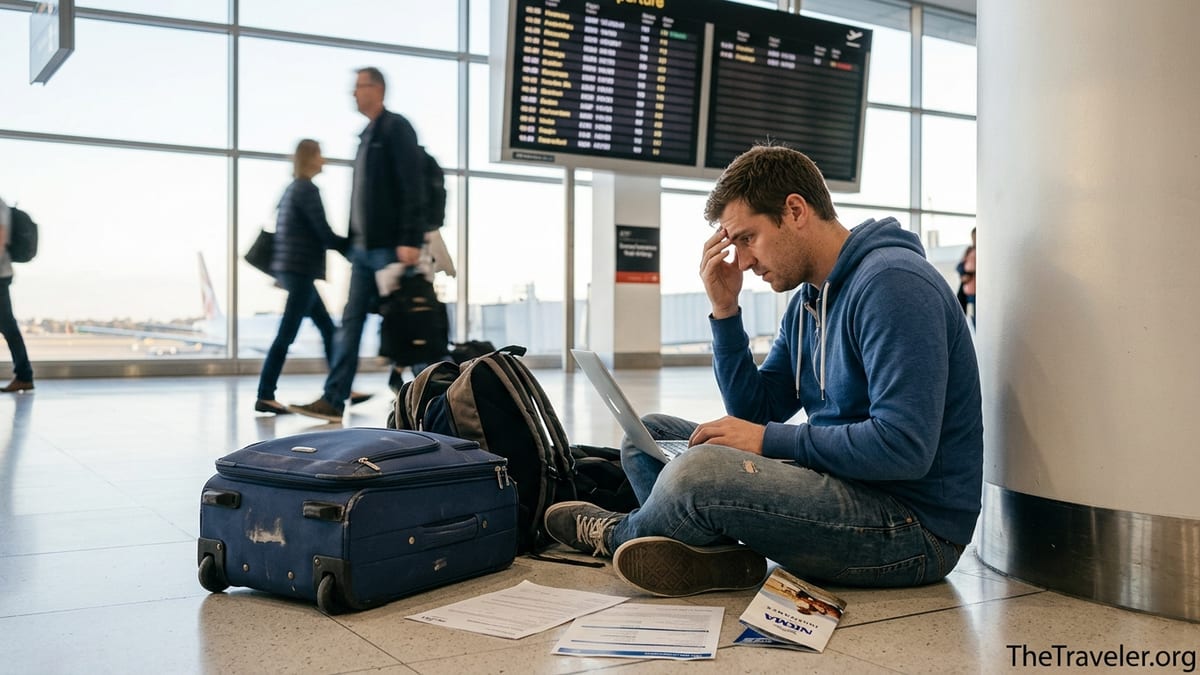
Who Actually Underwrites NRMA Travel Insurance Today
The NRMA brand is widely recognised in Australia, but the travel policies sold under the NRMA Insurance banner are not underwritten by NRMA itself. According to the latest Product Disclosure Statement, NRMA Travel Insurance is issued by Zurich Australian Insurance Limited and arranged and administered by Cover-More Insurance Services, with NRMA Insurance acting as the distributor. In practice, that means the blue NRMA logo you see when you buy the policy is separate from the specialist travel insurer and claims handler sitting behind it.
This structure matters when you need to claim. A traveller who buys their policy in a quick online transaction might later be surprised to find that claim emails and portals are branded Zurich or Cover-More rather than NRMA. It can also explain why some online reviews talk about difficulty getting through to "the travel team" even though customers are used to NRMA’s local presence for car and home cover. The travel product sits in a slightly different ecosystem with its own service standards and processes.
For you as a traveller, the practical takeaway is to treat NRMA Travel Insurance like any other specialist travel insurance policy rather than assuming it will work exactly like your NRMA car or home insurance. The key document is the travel PDS, not your existing motor or home policy. If you have questions about cover, you will usually be dealing with the travel insurance arm or claims administrator rather than your local NRMA branch.
It also means that public reviews and word-of-mouth often reflect a mix of experiences: some relate to NRMA’s roadside assistance or general insurance, while others specifically address the Zurich / Cover-More travel product. When you research experiences, filter for comments that clearly mention travel policies, claims for overseas incidents, or the NRMA travel portal, so you are comparing like with like.
Breaking Down the Core Cover: What You Really Get
NRMA currently offers several tiers of international travel cover, typically branded as International Essentials, Comprehensive and Annual Multi-Trip. Based on the latest PDS, the flagship comprehensive single-trip cover includes unlimited overseas medical expenses for emergencies, additional expenses if you must extend your stay for medical reasons, cancellation and amendment costs up to the level of cover you choose, and a range of benefits for luggage, travel documents and delays. There is also a separate domestic travel option with lower limits focused on cancellations, bags and rental car excess.
The headline feature for many long-haul travellers is the unlimited overseas medical cover on international comprehensive policies. In real terms, this could mean the difference between a ruinous hospital bill and a manageable inconvenience if you suffer appendicitis in the United States or break your leg skiing in France. For instance, an emergency operation and a few nights in a US private hospital can easily reach tens or even hundreds of thousands of Australian dollars. NRMA’s policy is designed to pick up those medically necessary costs, along with medically required repatriation back to Australia, subject to the usual conditions and exclusions.
Non-medical benefits are more nuanced. Luggage and personal effects on comprehensive international cover are typically capped at around 12,000 Australian dollars in total, but individual items like phones, laptops, cameras, jewellery and drones often have sub-limits of about 1,000 to 4,000 dollars each unless you pay to specify higher values. In practical terms, that means a traveller who loses a 4,500 dollar camera body and a 3,000 dollar lens on a trip to Japan might only receive up to the listed sub-limits, not the full replacement cost, unless they had declared and insured the items separately at purchase.
Another important line item is the rental car insurance excess benefit, which can be up to around 10,000 dollars on comprehensive cover. Many Australian travellers skip the daily excess reduction sold by car hire desks in Europe or New Zealand because their travel insurance policy will reimburse the excess if they have an at-fault accident or the car is damaged. If your car in Italy is sideswiped overnight and the rental company charges your card 2,800 euros for damage and loss of use, NRMA’s travel policy is designed to step in, subject to its terms, instead of you bearing that full cost.
COVID-19, Cancellations and the Fine Print That Bites
Like many Australian brands, NRMA now includes specific COVID-19 benefits across its international plans, but these are tightly defined. The PDS sets out when you are covered for COVID-related cancellation, medical costs and additional expenses, and when you are not. For example, if you test positive just before flying from Sydney to London and your doctor confirms you are unfit to travel, you may be able to claim non-refundable flight and accommodation costs. However, if you simply decide not to travel due to rising case numbers at the destination without a specific covered event, you are unlikely to be covered.
Real-world feedback shows that cancellations are one of the most contested areas. Travellers have posted reviews describing frustration when their claim for a cancelled European cruise or a missed tour was declined because the trigger did not match the policy wording. A typical scenario might be a traveller who cancels a trip to Thailand after hearing of political unrest or new entry restrictions. Unless the government has issued a formal "do not travel" warning or another specific insured event applies, those change-of-mind situations often sit outside the policy’s cancellation section.
Another area where expectations clash with reality is pre-existing medical conditions. NRMA’s travel insurance, like many competitors, treats specified pre-existing conditions differently from acute, unexpected illnesses. If you have a history of heart issues or diabetes, you may need to answer medical screening questions, pay a higher premium, or accept that certain complications will be excluded. A traveller with long-standing back problems who books a hiking holiday in Canada might later be surprised to find a claim for cancelled tours declined if the back condition worsens but was never disclosed in the original application.
Even where cover applies, documentation requirements can be demanding. For a COVID-related claim, you may be asked to provide positive test results, vaccination history, doctor’s certificates, airline confirmations and evidence of refunds or credits offered by airlines or tour operators. Online reviewers regularly mention the back-and-forth involved in supplying extra information. Travellers who keep meticulous email records and ask providers for formal written confirmations tend to fare better than those who rely on verbal assurances or incomplete documents.
Luggage, Gadgets and Money: What Happens When Things Go Missing
Luggage cover is one of the most visible features of NRMA’s travel insurance, yet also one of the most misunderstood. According to the PDS, the comprehensive international plan provides up to around 12,000 dollars for luggage and personal effects, with sub-limits for particular item categories and an expectation that you will take reasonable care. In everyday terms, that means the policy is designed to respond to genuine loss, theft or damage, not simple forgetfulness or leaving valuables unattended in a public place.
Consider a realistic scenario: you are flying from Brisbane to Athens via Doha and your checked suitcase never appears on the carousel. If the airline formally declares it lost and provides a written confirmation, NRMA’s policy would typically contribute to replacing clothes, toiletries and other contents, up to the policy limits and after accounting for wear and tear. Some travellers also receive a small "delayed luggage allowance" if bags are delayed beyond a set number of hours, helping to buy essentials while they wait for bags to catch up.
The situation looks different if a bag is left unattended. If you walk away from your table at a busy café in Barcelona, leaving your laptop and camera bag behind while you use the restroom, and return to find everything missing, the insurer may argue that you did not take reasonable care. Real-world claim stories often hinge on those details. Police reports, photos of forced entry, and airline property irregularity reports all help demonstrate that the loss was beyond your control. In contrast, claims where valuables were left on a beach towel or on a hotel barstool while the owner swam or danced are much more likely to be scrutinised and potentially declined.
Cash and travel money are another point of friction. NRMA’s travel insurance offers only modest cover for stolen cash, often in the low hundreds of dollars for comprehensive international plans, and no cover at all under some lower-tier options. A traveller carrying several thousand dollars in cash in a backpack through South America would therefore be largely self-insuring. Reviews across the Australian market show repeated frustration from travellers who assumed large amounts of cash would be reimbursed. In practice, insurers expect you to use safer instruments such as debit cards, credit cards and pre-paid travel cards, which are easier to secure or cancel if stolen.
Claims in the Real World: Speed, Service and Common Frustrations
To understand what NRMA Travel Insurance is really like when you need it, you have to look beyond the brochure. Public review platforms paint a mixed picture. Many customers praise NRMA’s pricing, ease of purchase and the reassurance of dealing with a familiar Australian brand. However, when you filter down to travel-specific claims, you also find a number of complaints about slow responses, repeated information requests and a sense that claims are scrutinised more heavily than expected.
On ProductReview and similar Australian sites, several travellers describe claims taking weeks or even months to resolve, particularly for complex medical or cancellation cases involving multiple bookings and providers. One reviewer notes submitting a claim and waiting more than ten business days without a clear update, while others contrast the quick, smooth process of buying the policy with the more drawn-out experience of proving entitlement to benefits once something went wrong. These experiences are not unique to NRMA, but they illustrate the gap between expectations and the reality of modern travel insurance claims handling.
There are, however, positive stories. Some travellers report that straightforward claims for delayed luggage or minor medical bills were settled relatively quickly once documentation was submitted. For example, a traveller treated for food poisoning in Bali who kept all hospital invoices and receipts for medication might see a claim reimbursed with minimal debate, especially if the amounts were moderate and the cause clearly accidental. Similarly, a simple claim for rental car excess after a minor collision in New Zealand, supported by the rental company’s damage report and invoices, can often be processed on standard timeframes.
The most contentious cases usually involve large sums of money and grey areas in the wording: long-running illnesses, substantial pre-paid tours, or trip changes due to events that are arguably outside the policy’s defined "insured events." In those situations, NRMA’s travel arm may take a strict reading of the PDS, leaving travellers feeling that reasonable, human circumstances have not been treated with much flexibility. The lesson for prospective policyholders is twofold: understand that insurers are bound closely to their wording, and plan your documentation as carefully as you plan your itinerary.
How NRMA Compares With Other Australian Travel Insurers
NRMA competes in a crowded market that includes brands such as Cover-More, Allianz, Southern Cross Travel Insurance, World Nomads and various white-label policies sold through airlines and supermarkets. When you compare policies on aggregator sites, NRMA’s comprehensive plans typically sit around the middle to upper range on price, reflecting relatively generous medical limits but fairly standard sub-limits on baggage, cancellation and rental car excess. Many travellers are willing to pay slightly more for the perceived stability and name recognition of a large Australian group.
However, customer perceptions of claims handling are less straightforward. Reviews of almost every major travel insurer in Australia show a disproportionate number of unhappy customers, particularly among those who had claims declined or significantly reduced. On forums, travellers often comment that when you sort reviews by "most helpful," nearly every brand appears "terrible". NRMA is no exception. Some customers rate their NRMA travel experience as excellent, but others recount long waits and complex disputes over coverage, similar to what you will see for competitors.
One practical way to compare is to take a specific trip scenario and run quotes across several providers with identical trip dates, destinations and coverage levels. For instance, consider a 21-day trip from Melbourne to Italy and France for a couple aged 45, including a rental car in Tuscany and a side-trip to the Dolomites. Price out NRMA’s comprehensive cover against a few other mainstream brands and then compare not only the premium but also the sub-limits for valuables, the terms for skiing or hiking above certain altitudes, and the wording around pre-existing conditions. Often, the differences that matter are buried deep in the detail rather than obvious on the quote page.
Another angle is to look at service channels. NRMA, through its travel partner, offers online claims portals and phone assistance, but some travellers prefer brands that also provide app-based claims lodgement or 24/7 live chat, particularly when dealing with emergencies in different time zones. If you are planning an extended multi-country trip with a higher likelihood of disruptions, that ease of communication can weigh just as heavily as price when choosing a provider.
Realistic Scenarios: When NRMA Travel Insurance Could Help or Disappoint
To move beyond theory, it helps to picture concrete scenarios based on the current PDS. Imagine a family of four from Sydney flying to Los Angeles and then Orlando for a theme park holiday. Two days into the trip, one child develops a serious asthma attack and needs hospitalisation. Under NRMA’s comprehensive international policy, the hospital costs and any medically necessary changes to flights would typically fall within the unlimited overseas medical and additional expenses sections, provided asthma was appropriately disclosed or accepted as a covered condition. The family may also be covered for additional accommodation if they must stay longer while the child recovers.
In another scenario, a solo traveller in their thirties heads to South America with a bag full of expensive camera gear. Midway through the trip, their hostel locker is forced open and the camera is stolen. If they obtain a police report and documentation from the hostel about the break-in, NRMA’s luggage benefit should respond, but the payout would be capped by item limits. If the stolen camera and lens are worth far more than the per-item cap, a significant portion of the loss would fall back on the traveller. Had they specified those items when buying the policy and paid extra premium, the outcome could have been different.
Consider a third example with more ambiguity. A couple books a European river cruise a year in advance and buys NRMA Travel Insurance at the same time. Six months later, an elderly parent’s health declines. The couple decides they can no longer travel but cannot secure a full refund from the cruise line. Whether NRMA reimburses their lost funds depends on when the parent’s condition became evident, what medical evidence is provided, and how the PDS defines "relative" and "unforeseen" events. Online stories from travellers in similar situations highlight how crucial timing and documentation are; two seemingly similar cases can have very different outcomes based on those details.
Finally, think about a domestic scenario. A traveller books flights and a rental car for a week-long road trip along the Great Ocean Road. A few days before departure, severe storms damage their home, making it unsafe to live in. They must cancel the trip to deal with repairs. Under NRMA’s domestic travel policy, they may have a valid claim for cancellation costs if the damage meets the policy’s definition of an insured event affecting their residence. In contrast, if they simply decide not to travel due to bad weather forecast at the destination, with no direct impact on their home or health, the policy is unlikely to respond.
The Takeaway
After breaking down the coverage and looking at real experiences, NRMA Travel Insurance comes across as a solid but not magical safety net. The medical cover on international comprehensive policies is strong and in line with major competitors, making NRMA a credible choice for high-cost destinations like North America, Japan or Western Europe. Benefits for luggage, rental car excess and travel documents are broadly comparable to the rest of the Australian market, with familiar sub-limits and conditions.
Where travellers most often feel let down is not in the existence of cover, but in the gap between their assumptions and what the PDS actually says. Cancellations, pre-existing medical conditions, unattended valuables and partially refundable bookings are repeated flashpoints in reviews and complaints. Some NRMA customers describe fast, fair outcomes, especially for straightforward medical or delay claims, while others report long waits and strict interpretations of the fine print.
If you are considering NRMA Travel Insurance, the most realistic approach is to treat the PDS as your roadmap. Match the policy to your actual plans, your health profile and the value of what you are taking with you. Be prepared to keep thorough records, from airline emails to hospital invoices, and to answer further questions during a claim. Used with clear expectations and careful planning, NRMA’s travel cover can play an important role in protecting your trip, but it is not a blanket guarantee that every loss or change of plan will be reimbursed.
FAQ
Q1. Is NRMA Travel Insurance good for expensive medical emergencies overseas?
NRMA’s comprehensive international policies provide unlimited cover for overseas emergency medical expenses, which can be very valuable in high-cost destinations, provided your condition is covered and not excluded as a pre-existing illness.
Q2. Does NRMA Travel Insurance cover COVID-19 related cancellations?
NRMA includes specific COVID-19 benefits, but cover is limited to clearly defined situations, such as testing positive and being declared unfit to travel. General fear of travelling due to case numbers or changing rules is usually not covered.
Q3. Are my laptop and camera fully covered if they are stolen on a trip?
They may be covered, but payout is subject to per-item sub-limits and proof that you took reasonable care. High-value gadgets can easily exceed those limits unless you declare and insure them separately when you buy the policy.
Q4. How long does it take to get a claim paid by NRMA Travel Insurance?
Timeframes vary. Simple claims with clear documentation can be processed relatively quickly, while complex medical or cancellation claims may take weeks or longer, especially if extra information is needed from doctors, airlines or tour operators.
Q5. Does NRMA Travel Insurance cover rental car damage excess?
Most comprehensive plans include a rental car insurance excess benefit up to a defined limit, which can reimburse the amount the rental company charges you for damage or theft, subject to policy conditions.
Q6. What are the main reasons NRMA Travel Insurance claims are declined?
Common reasons include exclusions for pre-existing medical conditions, losses involving unattended valuables, cancellations that do not meet the policy’s defined insured events, and incomplete or missing documentation.
Q7. Is NRMA Travel Insurance suitable for adventure activities like skiing or hiking?
Some activities are covered automatically while others require upgrades or are excluded. Before booking activities such as skiing, trekking at high altitude or adventure sports, check the PDS to confirm whether they are included.
Q8. Can I buy NRMA Travel Insurance if I already have an NRMA car or home policy?
Yes. Many customers hold multiple NRMA-branded policies. Travel insurance is a separate product, often with its own terms and providers, so you should still read the travel PDS in full before purchase.
Q9. Does NRMA Travel Insurance cover domestic trips within Australia?
NRMA offers domestic travel policies focused on cancellations, luggage and rental car excess within Australia, but they do not include overseas medical cover because residents are generally covered by Medicare and local health systems at home.
Q10. How can I improve my chances of a smooth claim with NRMA Travel Insurance?
Buy the right level of cover early, disclose relevant medical conditions, keep detailed records of bookings and payments, obtain written reports for any loss, and submit all requested documents promptly through the claims portal or by email.