

For a few years, the Free Spirit Travel Mastercard and its bigger sibling, the Free Spirit Travel More World Elite Mastercard, were central to Spirit Airlines’ pitch that budget flying could still feel rewarding. Co-branded with Bank of America and tightly tied to the Free Spirit loyalty program, these cards promised fast-earning points, money-saving perks and, more recently, even free checked bags. But how did those benefits really play out once you got beyond the marketing copy and into real-world travel planning, online bookings and airport check-in lines?
Get the latest updates straight to your inbox!
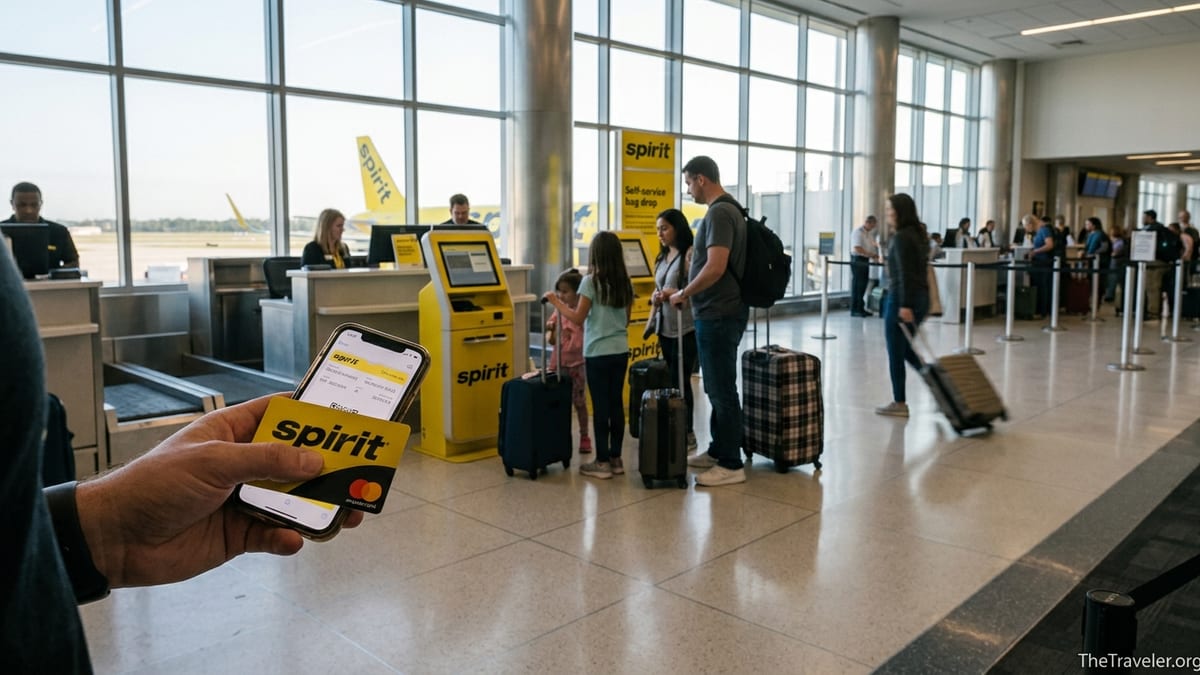
The Basics: How the Free Spirit Travel Mastercard Fit Into Spirit’s World
The Free Spirit Travel Mastercard sat at the entry level of Spirit’s credit card lineup. Issued by Bank of America, it was the no-annual-fee option designed for travelers who flew Spirit occasionally and wanted a low-commitment way to keep points active and earn a little faster on flights, bags and seat fees. Above it was the Free Spirit Travel More World Elite Mastercard, which carried an annual fee and richer perks like bonus categories and, eventually, free checked bags.
Both cards plugged directly into the Free Spirit loyalty program. Instead of earning miles based on distance flown, Spirit awarded points based on what you spent. Regular Free Spirit members typically earned 6 points per dollar on base fares and 12 points per dollar on extras like seat selection and bags, with higher earn rates for Silver and Gold status members. The cards layered on extra points when you used them to pay for Spirit flights and add-ons, turning a simple long weekend booking into several different streams of rewards.
For a traveler who flew Spirit a few times a year from, say, Dallas to Cancun or Fort Lauderdale to San Juan, the Travel Mastercard was intended as a simple way to participate: no annual fee to justify, no complex transfer partners, and a clear path to using points directly on Spirit-operated flights and options. The trade-off was that the card was narrowly focused. Its best value only showed up if you were willing to keep flying Spirit and booking directly with the airline.
In practice, this meant the card was most attractive to travelers who already saw Spirit as their go-to for cheap nonstop routes to Florida, the Caribbean or Latin America, and who could reasonably plan two or three trips a year that would put the card’s benefits to work. Casual fliers who only ended up on Spirit once every couple of years often found that a more flexible travel card or even a general cash-back card fit their habits better.
Earning Points: When the Multiplier Really Mattered
The headline benefit of the Free Spirit Travel Mastercard was straightforward: you earned 2 points per dollar on Spirit purchases and 1 point per dollar on everything else, with no foreign transaction fees. On paper, that does not sound flashy compared with some premium travel cards, but for a budget airline customer it could add up faster than it looked at first glance.
Consider a typical family booking from Chicago to Orlando for a school break. Spirit’s base fares might be around 80 dollars each way per person, but by the time you added advance seat assignments, a checked bag for each adult, and perhaps a carry-on or two, the total for two adults and two kids could easily reach 700 to 800 dollars. As a Free Spirit member paying cash, you were already earning points based on that spend. By putting the same purchase on the Free Spirit Travel Mastercard, you layered an additional 2x on Spirit charges, picking up roughly 1,400 to 1,600 points from the card alone on that single family trip.
For frequent Spirit users, those extra points became more noticeable. A Miami-based traveler flying to Medellín two or three times a year and to New York or Atlanta for domestic trips might put 2,000 to 3,000 dollars of Spirit purchases through the card annually. At 2x, that translated into 4,000 to 6,000 extra points each year on top of what the flight activity itself earned. Over a couple of years, that could be enough to cover a one-way off-peak redemption on a route like Fort Lauderdale to Bogotá or a domestic hop, especially if combined with points from bags and seat fees.
On everyday spending, the card was less remarkable. Earning 1 point per dollar at grocery stores, gas stations and coffee shops was better than nothing, but most travel experts pointed out that a general travel or cash-back card could be more rewarding away from Spirit purchases. In reality, many Free Spirit cardholders treated the Travel Mastercard as a “Spirit-only” card, pulling it out for flights and ancillaries, and using something else for weekly errands and big non-travel expenses.
Redeeming Points: How Far Your Rewards Really Took You
Redemption was where many travelers discovered what the Free Spirit ecosystem actually felt like in day-to-day use. Free Spirit points could be redeemed directly through Spirit for flights, and cardholders could often combine points and cash to fill in gaps. Award pricing was revenue-based and dynamic, which meant that a flight from Las Vegas to Los Angeles might cost 2,500 points one day and 4,500 the next, depending on demand, timing and how far in advance you booked.
In real terms, many travelers found their points went furthest on off-peak or less competitive routes: midweek flights from Fort Lauderdale to San José in Costa Rica, early-morning departures from Dallas to Cancun in the shoulder season, or short-haul domestic hops like Orlando to Atlantic City. A cardholder who focused their Travel Mastercard spending on Spirit bookings and then watched for lower-priced award days could often piece together a free or nearly free round-trip every year or two.
One practical upside of holding a Free Spirit credit card was that it helped keep your points active. Spirit had historically enforced relatively short expiration windows on inactive accounts, which meant occasional fliers could lose small balances between trips. Using the Free Spirit Travel Mastercard periodically for a Spirit purchase, or even a small everyday charge, typically reset the activity clock and preserved accumulated points, which mattered if you were slowly saving for a family trip to a destination like Montego Bay or Cartagena.
On the downside, the tight integration with Spirit and lack of transfer partners meant that points were essentially locked into the airline. If later you decided you preferred to fly Southwest or Delta from your home airport, your Free Spirit balance could feel much less useful. That lack of flexibility became more evident any time Spirit trimmed schedules or adjusted routes, leaving some cardholders holding points that no longer matched their most convenient nonstop options.
The Travel More Upgrade: Annual Fee, Bonus Categories and Free Bags
For travelers willing to pay an annual fee, the real action was with the Free Spirit Travel More World Elite Mastercard. This card charged an annual fee in the neighborhood of 79 dollars, with no promotional waiver in the first year for many applicants, but it offered a more robust set of benefits in return. Cardholders earned 3 points per dollar on Spirit purchases, 2 points per dollar on dining and groceries, and 1 point per dollar everywhere else, plus the same no foreign transaction fees that made the no-fee version attractive for cross-border trips.
In practice, the bonus categories mattered for everyday life. A frequent Spirit flyer living in Orlando who put 500 dollars a month in grocery spending and 200 dollars in restaurant tabs on the Travel More card could pick up around 16,800 points a year from those categories alone. Layer in 1,500 to 2,000 dollars in Spirit purchases at 3x, and total annual earnings could reach well over 20,000 points from card spend without counting the points from the flights themselves.
The real headline change came in late 2025, when Spirit announced that primary Travel More cardholders would receive up to two free checked bags on every Spirit trip booked with their eligible card. That perk brought the card closer to what legacy airline cards had long offered, but with a bigger twist: two checked bags per trip for the primary cardholder, which could be worth a substantial amount of money on routes where travelers tended to check more luggage, like long stays in San Salvador or family visits between New York and Port-au-Prince.
Imagine a couple from Detroit flying to Montego Bay with scuba gear and wedding attire. Without the card, two checked bags each way could easily cost more than 60 dollars per person round-trip. With the Travel More card’s two free checked bags benefit properly applied to a booking made through Spirit’s website or app, the savings on baggage alone could effectively cover the card’s annual fee in a single trip. The catch was that cardholders had to follow the rules carefully: the cardholder needed to be the primary traveler, the booking had to be made through Spirit with the card, and the benefit sometimes required extra verification at check-in if systems did not automatically recognize it.
Status, Perks and the Fine Print Travelers Actually Felt
Beyond raw points and baggage savings, the Free Spirit cards tied into elite status and small but meaningful airport perks. Travel More cardholders, especially, could earn Status Qualifying Points (SQPs) from everyday spending, typically at a rate of 1 SQP for every 10 dollars in net purchases. Since Spirit’s Silver and Gold status required a set number of SQPs, a traveler who put a large share of their annual spending on the card could reach status thresholds sooner, even with modest flight activity.
In real life, a road warrior from Houston who flew Spirit monthly between Texas and Florida for work might not hit Gold status on flights alone, especially if most bookings were on lower promotional fares. By channeling 1,500 to 2,000 dollars a month in business expenses through the Travel More card, they could generate an additional stream of SQPs and push themselves over the line into Silver or Gold. That translated into benefits like priority boarding, better earning rates on flights and, at higher tiers, more flexibility with changes and cancellations.
For many casual cardholders, the daily experience of the card was less about status and more about small quality-of-life improvements. Having a Spirit-branded card at check-in felt reassuring to some, signaling that they were “regulars” who understood the airline’s stripped-down approach. Others found that the main fine print they noticed came at unexpected moments: a bag fee that did not automatically drop off because the reservation was not correctly tied to the card, or confusion when trying to use points and cash together on a high-demand holiday weekend departure from cities like Newark or Los Angeles.
Customer reports also highlighted the double layer of servicing. Because the cards were issued by Bank of America but marketed heavily by Spirit, travelers sometimes found themselves bounced between the bank and the airline when disputes arose over missing points, baggage fee credits or companion vouchers. Resolving a single misapplied free bag benefit before a spring break flight from Minneapolis to Las Vegas could require calls to both companies, and that friction shaped many people’s overall perception of the program.
Real-World Use Cases: When the Card Shined and When It Did Not
To see what the Free Spirit Travel Mastercard and Travel More card were really like, it helps to look at concrete travel patterns. One common scenario was the budget-conscious family in a city like Philadelphia or Baltimore that Spirit served with nonstop routes to Florida. Parents might sign up for the no-fee Travel Mastercard mainly to keep points from expiring and to collect modest 2x bonuses on two or three vacation bookings a year, accepting that they would still pay for bags and seat selections separately.
Another scenario involved a frequent Spirit flyer in South Florida, where Spirit’s route network was densest. Someone flying several times a year to Caribbean and Latin American destinations such as Cartagena, Lima or Santo Domingo would gain more from upgrading to the Travel More card. Between 3x on Spirit, 2x on groceries and dining, and the potential for free checked bags after the 2025 enhancement, the card could quickly move from “nice-to-have” to “core travel tool,” especially if they were regularly checking luggage with gifts or supplies for long family visits.
There were also edge cases that showed where the cards did not fit as well. Travelers based in cities with limited Spirit presence, such as smaller Midwestern airports where Spirit only flew a few routes, often discovered that having a Spirit-focused card locked too much value into an airline they rarely used. For them, a general Bank of America travel card or a competitor’s co-branded card with broader route options made more practical sense, even if that meant giving up the occasional free checked bag on a rare Spirit flight.
Finally, travelers navigating major life changes, such as moving from New York to Seattle or switching jobs and travel patterns, sometimes found their Free Spirit cards suddenly mismatched to their new routines. A card that once paid for a yearly family trip from Fort Lauderdale to Cancun could quickly become a drawer card with an orphaned points balance when Spirit no longer fit the new home airport’s best schedules or destinations.
The Takeaway
Viewed from the ground, rather than from a marketing brochure, the Free Spirit Travel Mastercard and its Travel More counterpart were highly targeted tools. They worked best for travelers who lived near a strong Spirit airport, booked directly with the airline several times a year and were comfortable navigating Spirit’s unbundled model of fares, bags and seat fees. For those travelers, the extra points on Spirit purchases, the ability to keep points from expiring and, in the case of the Travel More card, the free checked bags and status-boosting spend could easily outweigh any annual fee and make a meaningful dent in trip costs each year.
For others, the cards revealed their limits quickly. The narrow redemption options, occasional servicing friction between Spirit and Bank of America, and the need to pay close attention to booking rules in order to trigger benefits like free checked bags meant that casual or highly flexible travelers often did better with a more general travel rewards card. Someone who splits their flying between several airlines or who values flexibility to switch routes as prices change might find that locking rewards into a single ultra-low-cost carrier is too confining.
If you flew Spirit regularly on specific routes, used the cards strategically for Spirit purchases and grocery or dining spend, and kept track of the nuances around baggage benefits and status, the Free Spirit Travel Mastercard family could genuinely enhance your budget travel lifestyle. If, however, your flying patterns were unpredictable or you preferred a simpler, more flexible rewards ecosystem, the real-world experience of these cards likely felt more restrictive than rewarding.
FAQ
Q1. What was the main difference between the Free Spirit Travel Mastercard and the Travel More card?
The no-fee Travel Mastercard focused on 2x points for Spirit purchases and basic earning, while the Travel More card added an annual fee but offered higher multipliers, bonus categories, the ability to earn status-qualifying points from spending and, eventually, free checked bags for the primary cardholder.
Q2. How did free checked bags work with the Free Spirit Travel More Mastercard?
The Travel More card’s free checked bag benefit applied to the primary cardholder on Spirit-operated flights when the trip was booked directly on Spirit’s website or mobile app and paid for with the card. When recognized correctly by the system, it could cover up to two checked bags per trip, significantly reducing baggage costs on routes where travelers tended to check more luggage.
Q3. Were Free Spirit points earned with the cards flexible like other travel points?
No, Free Spirit points were closely tied to Spirit. Cardholders could redeem them primarily for Spirit flights and certain add-ons, often with the option to combine points and cash. Unlike some bank travel programs, points were not generally transferable to other airlines, which meant their value depended heavily on how often you chose to fly Spirit.
Q4. Did using a Free Spirit credit card help you earn elite status faster?
Yes, particularly with the Travel More card. Everyday spending could generate Status Qualifying Points, which counted toward Silver and Gold status in the Free Spirit program. Frequent users who charged both Spirit trips and significant monthly expenses to the card could sometimes reach status levels with fewer flights than they would have needed otherwise.
Q5. Was the Free Spirit Travel Mastercard a good choice for everyday spending?
It depended on your habits. The card earned 1 point per dollar on non-Spirit purchases, which was better than earning nothing but often less competitive than general travel or cash-back cards that offer higher returns on groceries, gas or streaming services. Many cardholders chose to use it primarily for Spirit purchases and relied on other cards for daily spending.
Q6. How did cardholders typically use points they earned through the Free Spirit cards?
Most cardholders redeemed points for flights on Spirit, often targeting off-peak dates or routes where award pricing tended to be lower. Examples included midweek flights from Florida to the Caribbean, shoulder-season beach trips or short domestic hops where cash fares were low enough that a blend of points and cash could cover most of the ticket cost.
Q7. Were there common frustrations with the Free Spirit credit cards?
Yes. Travelers sometimes reported confusion over benefits not triggering automatically, such as free checked bags, especially if the booking was not properly tied to the card or was made through a third party. Others mentioned the challenge of resolving issues when Spirit and Bank of America each pointed to the other for help with missing points or disputed fees.
Q8. Did having a Free Spirit card prevent points from expiring?
Holding the card itself was less important than using it. Regular activity on the card, such as putting a Spirit ticket or even occasional purchases on it, helped keep the account active and reduced the risk of points expiring during long gaps between flights, which was especially valuable for travelers who flew Spirit only once or twice a year.
Q9. Who got the most value from the Free Spirit Travel More card specifically?
The Travel More card tended to deliver the best value for travelers living near major Spirit bases who flew the airline several times a year, checked bags frequently and spent significantly on groceries and dining. For these travelers, the combination of higher earning rates, status-qualifying spend and baggage savings could quickly offset the annual fee.
Q10. When did it make more sense to avoid a Spirit-branded credit card?
It generally made more sense to skip the card if you flew Spirit only rarely, if your home airport had limited Spirit service, or if you valued the flexibility to redeem rewards across multiple airlines. In those cases, a more general travel rewards or cash-back card often provided better long-term value and fewer constraints on how you could use your points.