


If you fly Southwest regularly, the Southwest Rapid Rewards Priority Credit Card is often pitched as the premium choice in the airline’s consumer card lineup. On paper it comes with a higher annual fee but also a bundle of travel perks that promise to offset the cost. In practice, the value you get depends heavily on how you fly, how often, and whether you actually use those benefits. After comparing the Priority card head to head with the cheaper Southwest consumer cards and running the numbers on real itineraries, some truths about this card become very clear.
Get the latest updates straight to your inbox!
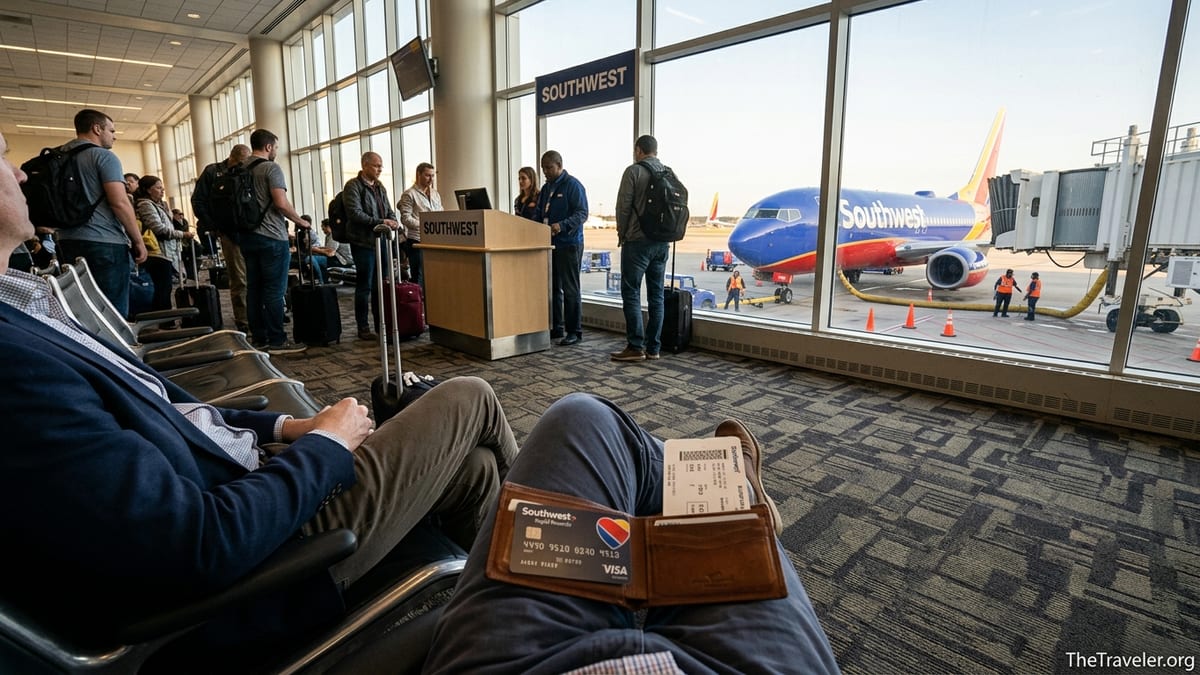
The Core Benefits of the Southwest Rapid Rewards Priority Card
The Southwest Rapid Rewards Priority Credit Card, issued by Chase, typically carries an annual fee in the low‑to‑mid $100s and sits above the Plus and Premier cards in the personal lineup. Its headline benefits include an annual Southwest travel credit, anniversary bonus points, credits for Upgraded Boarding purchases, and a 25 percent statement credit on inflight purchases. All three consumer cards earn the same multipliers on Southwest purchases and everyday categories, so what you are really paying for with the Priority version is a richer set of perks when you actually fly.
Most cardholders will notice three benefits most often in real life. First is the annual Southwest travel credit, which automatically erases eligible Southwest purchases made with the card until you hit the yearly cap. Second is the 7,500‑point anniversary bonus that posts every account anniversary, regardless of your spending that year. Third is the Upgraded Boarding credit, which refunds the fee for a limited number of A1–A15 boarding position purchases each cardmember year when you pay with the card. If you routinely fly at busy times or on popular routes like Dallas to Denver or Chicago to Phoenix, those early boarding spots can matter.
On top of that, the Priority card earns tier qualifying points (TQPs) toward A‑List and A‑List Preferred elite status for every set amount of spending, and it waives foreign transaction fees. Those features are less flashy in the marketing copy but can be meaningful for frequent travelers who are chasing status or booking Southwest flights that touch international destinations such as Cancun, Montego Bay, or San José, Costa Rica.
When you add it all up, the Priority card’s structure is built for someone who is already loyal to Southwest and expects to keep flying the airline several times a year. Occasional or one‑off Southwest flyers will see the perks, but they are less likely to squeeze enough value from them to justify paying more than they would for a lower‑tier card.
Putting Real Numbers to the Annual Fee
To understand what the card is really like to live with, you have to run numbers on actual trips. Travel analysts and points sites generally value Southwest Rapid Rewards points around 1.3 to 1.5 cents each when redeemed for Wanna Get Away or Wanna Get Away Plus fares, depending on the specific route and date. That means the 7,500‑point anniversary bonus is roughly worth somewhere in the neighborhood of 95 to 110 dollars in flights most years, enough to cover much of the card’s annual fee by itself if you redeem those points for typical domestic routes such as Houston to Orlando or Las Vegas to Oakland.
Next consider the annual travel credit. If you buy Southwest tickets directly with the card, that credit will automatically offset eligible charges until you reach the yearly limit. Travelers who simply purchase two or three one‑way tickets a year can usually trigger this credit without changing their habits. For instance, a Denver based flyer booking a 200 dollar roundtrip to San Diego in March and another to Chicago in October would likely see the full travel credit kick in over those purchases with no extra effort. When you pair this travel credit with the anniversary points, many regular flyers effectively wash out, or even beat, the annual fee before thinking about any other benefits.
Then there is the Upgraded Boarding credit. Southwest typically sells A1–A15 boarding for a variable price that commonly ranges from about 30 to 80 dollars each way, depending on route and demand. If you use the card to buy four of these upgrades per cardmember year and prices average 40 dollars each, that is roughly 160 dollars in fees refunded back as statement credits. For a business traveler who regularly flies routes like Baltimore to Nashville on Sunday evenings, or a parent taking peak season flights to Orlando, those upgrades can be worth their weight in stress relief alone. Used strategically, they can push the card’s effective value well beyond its cost.
Altogether, a realistic traveler who flies Southwest three or four times a year, uses the full travel credit, redeems the anniversary points at typical value, and takes advantage of the Upgraded Boarding credit will often see total annual value that is two to three times the card’s annual fee. A traveler who flies once a year or forgets to use key perks may barely break even, which is why the Priority card can feel fantastic to some and underwhelming to others.
How the Priority Card Compares to Other Southwest Consumer Cards
From a distance, all three Southwest consumer cards look similar. Each earns elevated points on Southwest purchases and modest rewards on other categories like local transit, streaming, or dining. The real differentiators are the annual fee level and the package of recurring perks. The Plus card typically carries the lowest fee and provides a smaller anniversary points bonus, no travel credit, and no Upgraded Boarding credits. The Premier card sits in the middle, with a higher annual fee than Plus, more anniversary points, and no foreign transaction fees, but still no annual Southwest travel credit or Upgraded Boarding reimbursements.
In side by side comparisons, the Priority card’s benefits are designed to appeal to someone who is already flying Southwest several times each year rather than someone who just wants to earn points on a one time sign up bonus. If your main goal is to grab a big initial haul of Rapid Rewards points to help earn a Companion Pass and then downgrade the card later, a lower fee option like the Plus or Premier can be more efficient. But if you expect to keep the card long term, the richer package of credits and anniversary points on the Priority card tends to offer better ongoing value.
Consider two travelers who both live in Phoenix. Emily flies Southwest once or twice a year to visit family in Kansas City, usually on midweek flights costing around 250 dollars roundtrip. She does not care much about boarding order and often checks in manually at the 24 hour mark. For Emily, a cheaper card with a modest annual fee and smaller anniversary point bonus may be the smarter match. In contrast, Carlos flies Southwest at least once a month for work between Phoenix and major business cities like Denver, Dallas, and Chicago, and his company reimburses his airfare but not seat upgrades. For Carlos, a Priority card that delivers a substantial travel credit, more anniversary points, and several upgraded boardings a year represents a clear win.
The new seating and boarding changes Southwest is rolling out, including expanded seat selection on some fares and routes, only sharpen this contrast. The more you care about getting on early to secure an aisle seat or a pair of seats for your family, the more meaningful it becomes to have multiple reimbursed opportunities each year to buy an A1–A15 boarding group through the Priority card instead of paying cash outright.
Where the Priority Card Really Shines for Travelers
In real world use, the Priority card feels most powerful for travelers who hit a few specific patterns. The first is families and groups flying at peak times. Imagine a family of four flying from Chicago Midway to Orlando for spring break. Wanna Get Away fares for March might run about 350 dollars per person roundtrip, and the cheapest tickets do not come with EarlyBird Check In. Rather than purchasing EarlyBird for everyone, a parent with the Priority card could instead use Upgraded Boarding on the outbound and return for themselves, board early with an A1–A15 slot, and hold seats together toward the back of the cabin as their group boards with later positions. That simple move can turn the Upgraded Boarding credit into a very tangible perk on a trip that matters emotionally and financially.
The second pattern is the working traveler based in a Southwest stronghold city such as Dallas Love Field, Baltimore, Denver, or Las Vegas. These flyers often book short notice work trips where fares might swing between 200 and 500 dollars roundtrip. For someone who pays out of pocket, the annual travel credit effectively becomes a discount on the first few tickets they buy each year. For someone whose company reimburses airfare, putting those flights on the Priority card can still trigger the travel credit while the employer covers the underlying ticket cost, leaving the traveler with more value from the card than they ever paid in annual fees.
A third sweet spot is for travelers aiming for the Companion Pass. Because the Priority card’s welcome bonuses and ongoing spending earn qualifying points toward this coveted perk, pairing the card with targeted Southwest flying can shorten the path to the pass by months. A traveler in Los Angeles who strategically piles everyday expenses onto the Priority card, grabs a large welcome bonus early in the calendar year, and flies a couple of paid roundtrips to destinations like Honolulu or Cabo San Lucas can often reach the Companion Pass threshold sooner than someone relying on flights alone. Once earned, the Companion Pass can make every point and every dollar of Southwest airfare twice as valuable for the rest of that year and the next.
On top of those marquee use cases, the Priority card’s lack of foreign transaction fees matters any time you find yourself using it in destinations Southwest serves outside the United States. Swiping the card at a cafe in Cabo, a resort in Cancun, or a dive shop in Cozumel does not trigger the 3 percent international fee that many basic cards still charge. For travelers who take even a single international trip a year, that fee waiver can quietly save enough to cover a noticeable slice of the annual cost.
The Limits and Frustrations Cardholders Actually Encounter
For all its strengths, living with the Priority card is not universally positive. One of the most common complaints from cardholders is forgetting to use the Upgraded Boarding credits or the full amount of the travel credit before the end of the cardmember year. Because both benefits require you to purchase something first with the card and then receive a statement credit, it is easy for casual travelers to leave value on the table. A traveler who flies once a year from Portland to Las Vegas, books EarlyBird Check In instead of Upgraded Boarding, and forgets that certain fees can be offset by the travel credit might finish the year having used only a fraction of what they paid for.
Another limitation relates to the dynamic nature of Southwest points and prices. While Rapid Rewards remains relatively straightforward compared with traditional award charts, the point cost of a ticket still fluctuates alongside the underlying cash fare. On high demand holidays such as Thanksgiving weekend or the week between Christmas and New Year, a route like Los Angeles to Honolulu might jump sharply in cash cost and in points, shrinking the effective cents per point value of your anniversary bonus and everyday earnings. Travelers who expect to routinely see outsized value on the level of some premium international award redemptions will likely be disappointed.
There is also the broader reality of airline loyalty and devaluations. Southwest, like many carriers, has gradually adjusted how many points you earn per dollar and how far those points go when you redeem. Frequent flyers have noticed that the same Dallas to New Orleans hop which might once have cost 8,000 points can now sit closer to 11,000 or more on similar dates, eroding some of the perceived value of the points you earn through the Priority card. While the card’s travel credit and Upgraded Boarding reimbursements are fixed dollar benefits, the points side of the equation is more vulnerable to future change.
Finally, the card does not offer the sort of airport lounge access or broad travel protections you might find on some premium general travel cards that carry similar or slightly higher annual fees. If you often mix and match airlines and want features like global lounge networks, primary rental car insurance, or rich trip delay coverage, pairing a general travel card with a lower tier Southwest card can be a more flexible strategy than relying solely on the Priority card for all of your travel needs.
Making the Most of the Priority Card in Everyday Use
For travelers who decide the Priority card is a good fit, maximizing its value becomes a simple habit project. The first step is to ensure that every Southwest ticket you pay for, whether it is a budget 120 dollar hop from Atlanta to Fort Lauderdale or a 450 dollar holiday roundtrip from San Jose to Chicago, goes on the card until you have fully triggered the annual travel credit. Many travelers like to front load this benefit by charging their first couple of Southwest bookings of the year to the card and then checking their statement a few days later to confirm the credit has posted.
Next, be deliberate about how you use the Upgraded Boarding credits. Since Southwest sells those A1–A15 boarding positions on a per flight, per person basis and prices vary, it often makes sense to save them for busier flights where boarding order matters most. Think Sunday evening returns from Las Vegas, peak morning departures from Denver in ski season, or early flights from Orlando at the end of school holidays. On quieter midweek hops between secondary cities, the cabin may not fill up enough to justify burning one of your limited credits.
You can also use the Priority card to stack value on inflight purchases. Because Southwest offers a 25 percent rebate on eligible inflight spending when you use the card, buying a pair of drinks and a Wi‑Fi session on a cross country flight from Baltimore to Los Angeles effectively costs less than the sticker price once the statement credit hits. Business travelers who frequently expense onboard Wi‑Fi while working in the air can quietly earn back meaningful savings over a year of flights.
Finally, remember that every dollar you run through the card on Southwest purchases and everyday spending earns points that keep your Rapid Rewards account active and growing. Even if you only redeem once or twice a year, it is much easier to justify the card’s place in your wallet when you are consistently collecting points from grocery runs, rideshares to the airport, restaurant meals on trips, and of course the flights themselves.
The Takeaway
After comparing the Southwest Rapid Rewards Priority Credit Card against its lower tier siblings and stacking its perks against real domestic and near‑international trips, the card emerges as a targeted but powerful tool. For travelers who live in or near Southwest focus cities, fly the airline at least three or four times a year, and care about boarding early or squeezing reliable value from anniversary points and credits, the Priority card often more than pays for itself. Used thoughtfully, it can turn a typical year of flights into one with cheaper effective fares, better boarding positions, and consistent point accrual toward future trips and potentially a Companion Pass.
On the other hand, occasional Southwest flyers, travelers who prioritize flexibility across many airlines, or people who tend to forget about credits and perks until it is too late may find the card underwhelming despite its shiny benefits list. The key is to be honest about how you actually travel: how many Southwest flights you really book, whether you care about boarding position enough to buy upgrades, and if you will reliably use the annual travel and inflight credits.
Seen through that lens, the Southwest Rapid Rewards Priority Credit Card is not a one size fits all solution but rather a high value niche product. In the right hands it turns an already straightforward loyalty program into a steady stream of small, tangible wins every time you fly. In the wrong hands it becomes another annual fee on your statement that you struggle to justify. Knowing which kind of traveler you are before you apply makes all the difference.
FAQ
Q1. Is the Southwest Rapid Rewards Priority Credit Card worth its annual fee? For travelers who fly Southwest several times a year and use the annual travel credit, anniversary points, and Upgraded Boarding credits, the total value can comfortably exceed the annual fee. Occasional flyers who rarely use these perks may not see enough benefit to justify the cost.
Q2. How much are the 7,500 anniversary points on the Priority card really worth? Based on common valuations of roughly 1.3 to 1.5 cents per Rapid Rewards point on typical Southwest flights, 7,500 points are often worth somewhere around 95 to 110 dollars in airfare when redeemed for Wanna Get Away or similar fares.
Q3. How does the annual Southwest travel credit on the Priority card work? When you use the card to pay for eligible Southwest purchases such as airfare or certain fees, statement credits are automatically applied until you reach the card’s yearly cap. You do not need to enroll in advance, but you do need to make qualifying purchases with the card for the credit to trigger.
Q4. What exactly is Upgraded Boarding and how do the card’s credits apply? Upgraded Boarding allows you to buy an A1–A15 boarding position for a specific flight, which usually means getting on the aircraft early and choosing from more open seats. When you pay for Upgraded Boarding with the Priority card, the fee for a limited number of purchases per year is refunded as a statement credit, effectively giving you several early boarding opportunities at no net cost.
Q5. Does the Priority card help me qualify for the Southwest Companion Pass? Yes. Points earned from the card’s welcome bonus and everyday spending generally count toward the Companion Pass qualifying total, in addition to the points you earn from paid Southwest flights. Many travelers use a combination of card spending and strategic flight bookings to reach the Companion Pass threshold more quickly.
Q6. How does the Priority card compare to the Southwest Plus and Premier cards? All three cards earn similar rewards on Southwest purchases, but the Priority card charges a higher annual fee in exchange for a larger anniversary points bonus, an annual Southwest travel credit, Upgraded Boarding credits, and no foreign transaction fees. The Plus and Premier cards have lower fees but also smaller perk packages, which may suit occasional flyers better.
Q7. Can I use the Priority card internationally without extra fees? Yes. The Priority card does not charge foreign transaction fees, so you can use it in destinations Southwest serves outside the United States, such as Mexico or the Caribbean, without paying an extra percentage on each purchase in foreign currency.
Q8. What type of traveler gets the most value from the Priority card? The card tends to work best for travelers based in Southwest heavy markets who fly the airline at least three or four times a year, care about boarding early, and are organized enough to use the annual travel credit and Upgraded Boarding reimbursements before they expire.
Q9. Are there any major downsides to using the Priority card? The main downsides are the higher annual fee compared with other Southwest cards, the risk of unused credits if you do not fly often, and the fact that Rapid Rewards points can be devalued over time as fares and point pricing shift. The card also lacks benefits like airport lounge access that some general travel cards at similar fee levels provide.
Q10. Should I keep the Priority card long term or downgrade after earning a bonus? If you plan to keep flying Southwest regularly and consistently use the card’s recurring benefits, keeping it long term can make sense. If your Southwest travel will drop off, or you mainly wanted the welcome bonus, downgrading to a lower fee Southwest card or switching to a more general travel card could be more cost effective after the first year.