


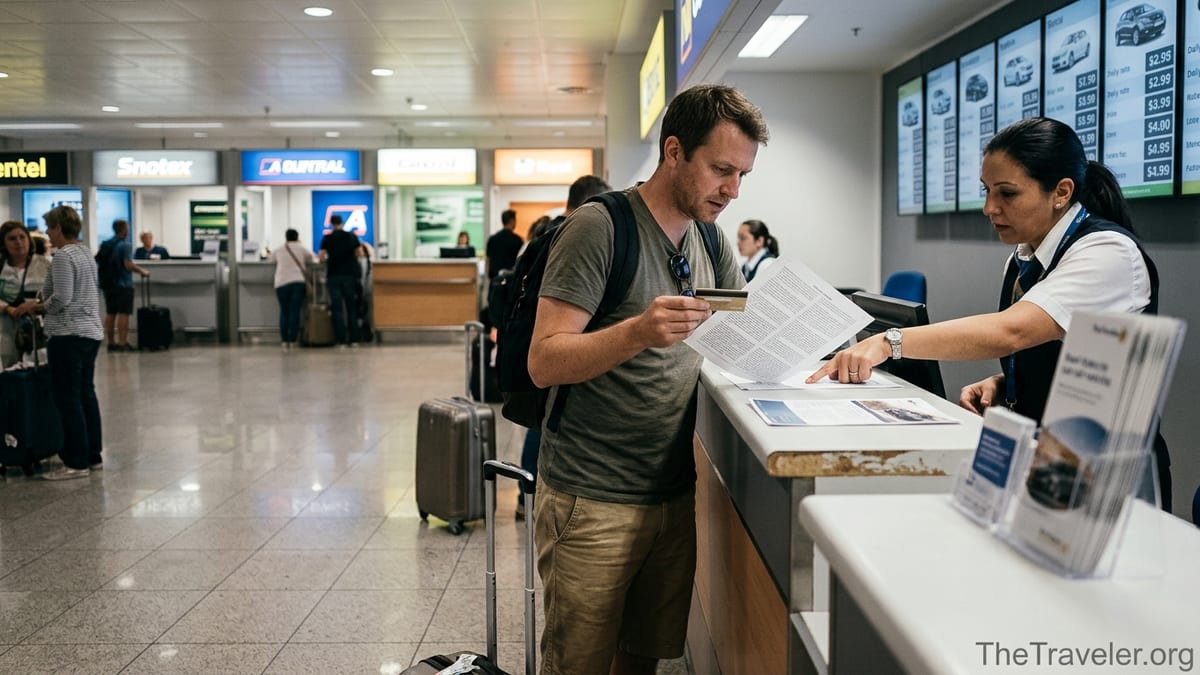
Car rental comparison sites like EconomyBookings.com promise low prices and simple bookings. Yet if you spend a few minutes reading recent reviews and complaint boards, a different picture emerges. Many travelers only discover the true cost of their rental when they are already standing at the counter, credit card in hand. The platform itself insists it does not add hidden fees, but the way suppliers’ terms are shown, how insurance is sold, and how deposits and cancellations work can still lead to very expensive surprises.
Get the latest updates straight to your inbox!
Why “Broker” Sites Create So Much Confusion
EconomyBookings is a broker, not a car rental company. It compares offers from hundreds of local and international suppliers and lets you book through its platform, while the actual rental is fulfilled by firms like Europcar, Hertz, or smaller regional outfits. On paper, this is good news: you can see multiple prices in one place and often find a slightly cheaper deal than booking directly with the big brands.
In practice, this split between platform and supplier is where hidden costs creep in. EconomyBookings markets a low daily rate and collects a prepayment or full payment online. The supplier, however, controls the fuel policy, insurance requirements, deposit amount, age surcharges, and many other fees. The result is that the price you lock in on your phone is only part of the story. If you have not read the supplier’s terms in detail, you may discover mandatory extras at the pickup desk that were technically disclosed but easy to miss.
Recent independent reviews note that EconomyBookings generally shows the base rental cost clearly, but that critical conditions like required insurance and deposit levels often sit several clicks deep in the fine print, either in the supplier’s “rental conditions” or in a PDF-style section that most people skip. Travelers who assume that “paid in full” means no further charges frequently report being asked for hundreds of extra dollars when they arrive at the counter.
To understand the most common pain points, it is worth looking at the specific categories where travelers most often feel misled: insurance, deposits, fuel, cancellations, and the way “full coverage” refunds are handled after the trip.
Insurance: The Classic “You Must Buy Ours at the Counter” Problem
By far the most frequent complaint around EconomyBookings involves insurance. The platform sells its own “Full Coverage” or similar add-ons that promise to reimburse you if you are charged by the rental company for damage or certain fees. At the same time, the underlying supplier has its own rules about what insurance is mandatory in that country. The gap between these two systems is where many travelers feel trapped.
Consider a typical scenario in Mexico, Italy, or the Balkans. A traveler pays EconomyBookings in advance for a car and adds full coverage online for peace of mind. Their confirmation may show “payment at pickup: 0.00,” which looks like everything is taken care of. Yet at the counter, the local rental agent insists the customer must purchase the company’s own collision damage waiver or liability package, sometimes adding 20 to 30 dollars per day. Several real-world reviewers describe showing proof of their EconomyBookings full coverage and personal credit card insurance, only to be told these are “third party” products that do not satisfy the supplier’s mandatory coverage rules.
One traveler who booked through EconomyBookings reported paying full coverage online, then being charged an additional daily insurance fee of around 24 dollars at pickup because the supplier did not accept third-party insurance. Another stated that, after paying for coverage on the site, they were hit with nearly 500 dollars of added insurance at the desk in the United States when the local company refused to release the car unless they bought its own policy. In both cases, the online price was technically accurate, but the real cost of renting the car could only be seen once the local company’s mandatory insurance was added in person.
EconomyBookings’ own help pages explain that their full coverage product is a reimbursement service. It can refund eligible damage-related charges after the rental, but it does not replace the basic insurance required by law in many destinations. That nuance is easy to miss during the booking flow, especially when banners emphasize “full protection” and “zero excess.” The result is that travelers feel pressured into double-insuring the same risk: once online and again at the counter, simply to be allowed to drive away.
Deposits, Credit Card Blocks, and Age Surcharges
Another major source of friction is the security deposit. EconomyBookings’ own research acknowledges that deposits of 500 to 2,500 euros are often mentioned only in fine print, and that many travelers reach the counter without realizing how large a hold will be placed on their card. If your available credit limit is modest or if you are using a debit card, this can be a trip-ending surprise.
Imagine landing in Lisbon or Dubrovnik late in the evening, walking up to the desk, and being told that a deposit of 1,200 euros will be blocked on your credit card for the duration of the rental. If your bank only leaves 1,500 euros of available credit after flights and hotels, that hold may cause later transactions to be declined, or it might simply be impossible if you tried to use a debit card. Real complaints mention deposits that were not clearly highlighted in the summary screen, even though they were technically present in a separate “rental conditions” page.
Age-related surcharges create another layer of unexpected cost. Many EconomyBookings offers look affordable at first glance, with a compact car in a European city advertised for around 20 to 25 euros per day. However, young drivers under 25 or senior drivers over 70 can face daily surcharges that double the effective cost. These fees come from the supplier, not the broker, and may only appear if you expand specific sections of the terms. Travelers have reported walking away from counters after discovering that a seemingly cheap two-week rental for a 23-year-old driver suddenly required an extra 15 to 25 euros per day in young driver fees, turning a 300-euro booking into something closer to 600 euros.
Deposits can also become contentious after the trip. There are cases where travelers returned the car in good condition but reported that the local supplier delayed or withheld the deposit, blaming small scratches or administrative fees. Because EconomyBookings is not the company holding the money, its role is limited to mediating complaints. Some customers describe long email exchanges and slow resolutions when they sought help reclaiming blocked funds or disputing post-rental damage charges.
Fuel Policies, Location Fees, and Other Add-ons That Inflate the Final Bill
Fuel policies are another area where the real cost diverges from the headline price. EconomyBookings lists the supplier’s fuel rules in its rental conditions, but they may not be obvious on the main results page. A “full-to-full” policy, where you return the car with a full tank, is usually straightforward and fair. However, some suppliers use “full-to-empty” or “pre-purchase” policies where you pay for a full tank up front, often at a premium rate, and receive little or no refund for unused fuel.
For instance, a family booking a weeklong rental in Spain through EconomyBookings might see a great deal on a compact car. Only when they collect the keys do they learn that the local partner requires them to pay for a full tank at the counter at a marked-up price, plus a nonrefundable service fee. If they drive mostly short distances along the Costa del Sol and return the car with half a tank, they have effectively overpaid for fuel they never used. Their online booking confirmation may mention the fuel policy in small text, but without clear examples of how it affects the total cost, it is easy to underestimate the impact.
Location-based surcharges also matter. Airport fees, premium location charges for downtown depots, one-way drop-off fees, and out-of-hours pickup costs are usually set by the supplier and can add tens or hundreds of dollars to a rental. EconomyBookings generally shows one-way fees in the rental conditions, yet many complaints come from travelers who missed that a one-way trip from Milan to Florence, for example, carried a substantial extra charge only visible after scrolling. Similarly, picking up a car late at night may incur an out-of-hours fee that is not obvious in the initial quote.
Additional drivers, GPS units, child seats, and cross-border fees are another cluster of add-ons that are rarely included in the broker’s advertised price. A traveler who plans to share driving duties with a partner across several European countries might find that the cost of adding a second driver and paying cross-border surcharges at the desk nearly doubles their overall spend, even though the comparison site’s headline price appeared extremely competitive when they booked.
Cancellation Policies, Credits, and Service Fees
EconomyBookings markets flexible options like “Last Minute Cancellation” and offers e-wallet credits for certain canceled reservations. On the surface, this appears traveler-friendly. The reality is more complicated, and a number of customers discover only after canceling that they will not receive a straightforward cash refund.
Some travelers report clicking “cancel” on their booking and being immediately confirmed as canceled, without a prominent summary of the financial consequences. They then discover that only part of the prepayment is refunded to an EconomyBookings wallet, sometimes after deducting a service fee, while the rest is forfeited. Requests to withdraw wallet credit back to the original card can involve additional steps or fees and may be limited by strict timelines that were not obvious at the moment of cancellation.
One common complaint pattern is that customers believed they would receive a full refund if they canceled at least 48 hours before pickup, only to find that a “huge service fee” or handling charge was retained. The platform’s help center explains that different cancellation rules apply depending on the supplier and whether optional protections were purchased. Yet that complexity is hard to absorb during a quick online booking, especially when marketing messages highlight “free cancellation” without making the nuances equally prominent.
There are also reports of customers who accepted e-wallet credit for a canceled trip and later struggled to convert that credit back into cash when their plans changed again. In these cases, EconomyBookings staff sometimes pointed to fine-print limitations that restrict when and how credit can be withdrawn. For travelers who assumed that a credit balance was equivalent to cash, these rules feel like a trap, especially if the booking they hoped to make later is no longer available or if prices have increased.
How “Full Coverage” Refunds Really Work After the Trip
Many travelers purchase EconomyBookings’ full coverage because it sounds like a simple way to avoid risk. You pay a bit more upfront, and if something happens, you expect the broker to handle it. In reality, these policies are reimbursement products that often involve a long and sometimes frustrating claims process after the rental has ended.
Typical complaints describe a pattern: the local supplier charges the customer’s card for damage, roadside assistance, or admin fees after the vehicle is returned. The customer then submits documents to EconomyBookings to claim reimbursement under full coverage. Weeks or even months can pass before a decision is reached. Some travelers state that they had to resubmit forms multiple times due to alleged technical glitches, or that they were asked for additional proof that was difficult to obtain once they had left the country.
One traveler who filed a full coverage claim reported still waiting for a resolution more than six months after the incident, despite repeated follow-ups. Another noted that they nearly lost several thousand dollars while trying to recover charges through the reimbursement process and felt they had little legal recourse, since the broker is based in Latvia and does not have a physical office in the United States. While these are individual experiences rather than universal outcomes, they illustrate the gap between the reassuring marketing language around “full protection” and the reality of cross-border claims handling.
The structure of full coverage also increases the risk of disputes between the broker and the supplier. If the local rental company alleges that damage was the customer’s fault or classifies a charge as a “cleaning fee” rather than damage, the claim may fall outside the coverage terms. The traveler is then left in the middle, with the supplier insisting on its invoice and the broker citing exclusions. Without clear, timely communication and a straightforward claims process, what was meant to be a safety net can start to feel like another hidden cost.
Practical Steps to Avoid Nasty Surprises on EconomyBookings
Despite these issues, many travelers do use EconomyBookings successfully and save money, particularly on simple rentals in well-regulated markets. The key is to treat the platform as a comparison tool rather than a final authority on your rental’s true cost. That means slowing down during the booking process and actively looking for the kinds of fees that tend to surface later.
Before confirming any booking, open the detailed “rental conditions” for the exact car and supplier you are considering. Look specifically for the security deposit amount, mandatory insurance requirements, fuel policy, age-related surcharges, and any fees for one-way rentals, border crossings, or out-of-hours pickups. If a compact car in Rome shows a weekly price of 180 euros but requires a 1,500-euro deposit and forces you into a pre-purchase fuel policy, it might be wiser to pay 220 euros with another supplier that has a lower deposit and a true full-to-full fuel rule.
Think carefully about whether to buy full coverage from the broker, from the supplier, or rely on your credit card’s rental insurance. If you choose a reimbursement product like EconomyBookings’ full coverage, budget extra time after the trip in case you need to file a claim and be prepared to keep all paperwork, photos, and receipts. If avoiding hassle is more important than squeezing out the lowest possible upfront price, paying a bit more to book directly with a major brand that offers a clear, all-inclusive rate can sometimes be the better choice.
Finally, treat cancellation and refund promises cautiously. Before clicking “cancel,” re-read the policy, paying attention to how much you will receive back, whether it is cash or credit, and what deadlines apply. If you are booking a trip many months in advance and your plans are uncertain, consider deals with genuinely flexible terms, even if the daily rate is slightly higher.
The Takeaway
EconomyBookings sits in a gray zone that is increasingly common in modern travel. On one hand, it offers competitive prices, a wide network of suppliers, and a smooth online interface. On the other, it operates in an industry where the most important costs are set not by the platform but by the rental companies behind each listing, and where those costs are often buried in layers of small print.
The platform itself argues that it does not charge hidden fees and that surprises at the counter stem from travelers skipping the details of supplier terms. There is some truth to that. At the same time, the way prices and protections are presented encourages quick clicks and gives a sense of security that does not always match the legal reality at pickup. When a traveler who believes they have paid in full is told they must spend hundreds more on insurance, fuel, or deposits just to leave the parking lot, it is understandable that they feel misled.
If you decide to use EconomyBookings, the best defense against hidden costs is awareness. Approach every low price with a few targeted questions: What insurance is truly mandatory in this country and who provides it? How large is the deposit and will my card handle it? What happens if I cancel and how will refunds be paid? By answering these questions before you confirm, you can turn a tool that often frustrates into one that genuinely helps you find value on the road.
FAQ
Q1. Does EconomyBookings itself charge hidden fees, or do they come from the rental companies?
Most extra costs arise from the local rental companies, not from EconomyBookings directly. However, these supplier fees are sometimes buried in rental conditions that are easy to overlook, so travelers often experience them as hidden even if they were technically disclosed.
Q2. Why was I forced to buy extra insurance at the counter after paying for full coverage online?
EconomyBookings’ full coverage is usually a reimbursement product, not the basic insurance required by law. Many suppliers insist you buy their own collision or liability package at pickup, even if you already purchased coverage through the broker or rely on a credit card policy.
Q3. How can I find out the real deposit amount before I book through EconomyBookings?
Open the detailed rental conditions for the specific car and supplier before confirming. Look for a section labeled deposit, excess, or security hold. The amount is often between 500 and 2,500 euros and can be a deal-breaker if your credit limit is low.
Q4. What should I check in the fuel policy to avoid overpaying?
Prefer full-to-full policies, where you return the car full. Be cautious with pre-purchase or full-to-empty rules, which may require you to pay for a full tank at a premium rate plus a service fee, with little or no refund for unused fuel.
Q5. Are cancellations through EconomyBookings always refundable?
No. Refunds depend on the supplier’s rules and on whether you bought optional protections. Some cancellations return only partial amounts or issue credit to an EconomyBookings wallet instead of cash. Always read the cancellation section carefully before confirming or canceling.
Q6. Is it safer to book directly with a car rental company instead of using EconomyBookings?
Booking directly can simplify disputes and may reduce the risk of miscommunication, but it is not always cheaper. EconomyBookings is useful for comparing options, as long as you thoroughly check the terms for each supplier before you commit.
Q7. How can young or senior drivers avoid surprise surcharges on EconomyBookings?
Enter the correct driver age during the search and then read the age-related sections in the rental conditions. Look for per-day young or senior driver fees and factor them into your total cost comparison before booking.
Q8. What documentation should I keep if I plan to rely on EconomyBookings’ full coverage?
Keep the rental agreement, damage reports, photos of the car at pickup and return, receipts, and any email exchanges with the supplier. These documents are often required to support a reimbursement claim after the rental.
Q9. What can I do if a supplier withholds my deposit or charges unfair damage fees?
Start by disputing the charge directly with the rental company in writing, then contact EconomyBookings with all supporting documents. If that fails, you may also explore a chargeback with your card issuer, although cross-border disputes can be complex and time consuming.
Q10. When is using EconomyBookings most likely to work smoothly?
Travelers tend to report the fewest problems on straightforward rentals in well-regulated markets, with mainstream suppliers, clear full-to-full fuel policies, reasonable deposits, and no unusual age or cross-border conditions. In these cases, the broker’s comparison tools can deliver genuine savings without major surprises.