


Landing at Nice Côte d’Azur Airport can be the start of a dream Riviera escape or a stressful scramble through crowded terminals and confusing transport options. The difference often comes down to what you organize before the wheels touch the runway. From airport transfers and tram tickets to rental cars, lounges and SIM cards, a few smart bookings in advance can turn arrival day into one of the easiest parts of your trip.
Get the latest updates straight to your inbox!
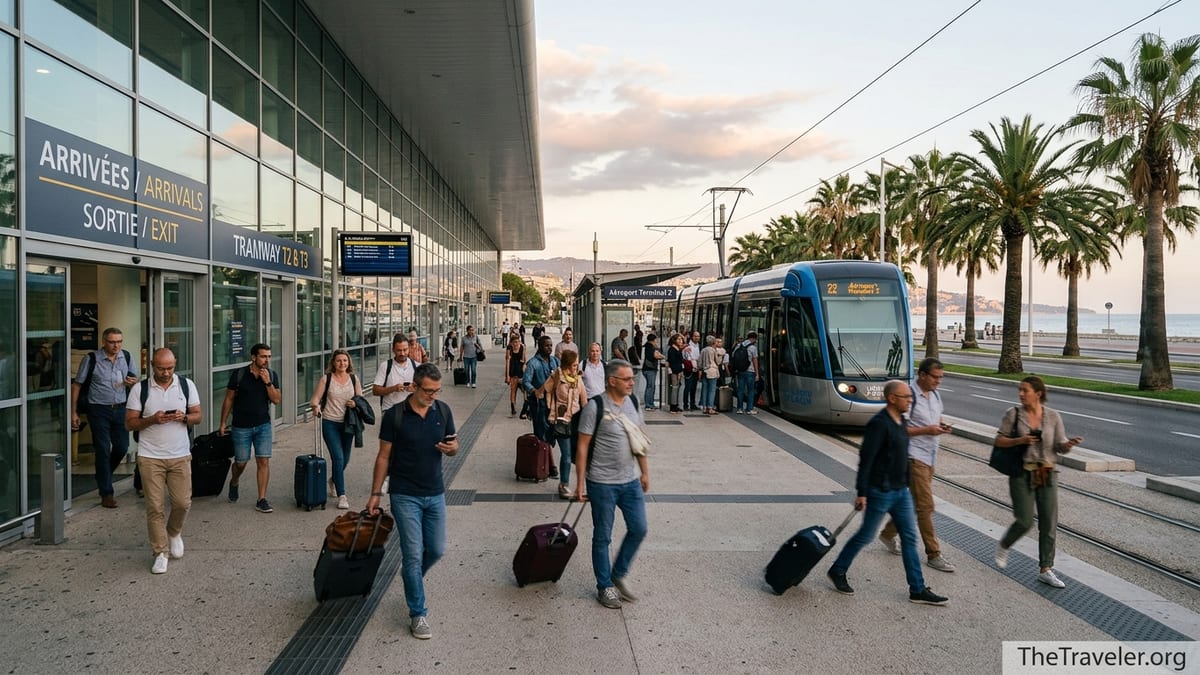
Understand Nice Airport Before You Book Anything
Nice Côte d’Azur Airport sits right on the Mediterranean, about 6 kilometers southwest of central Nice. It is the second-busiest airport in France, with two main terminals connected by a free shuttle and the city tram. Most full-service carriers and long-haul flights use Terminal 2, while many low-cost carriers, including numerous easyJet services, use both terminals depending on the route. Knowing which terminal you arrive at and depart from is the first step to planning smooth connections.
Two tram lines serve the airport area. Line 2 links Terminal 2, Terminal 1 and the city, continuing all the way to Port Lympia near the Old Town in around 30 to 35 minutes. Recent timetables show trams starting shortly after 5 am and running roughly every 8 to 10 minutes at peak times, which makes the tram the backbone of airport access for many locals and visitors. Another tram line, currently labeled line B on Lignes d’Azur maps, operates as a direct service between Terminal 2 and the administrative district at CADAM, while line 3 branches off toward the Allianz Riviera stadium and the shopping area at Saint-Isidore.
For travelers, this means that you rarely need a car or taxi just to reach central Nice. However, if you are heading further along the Riviera toward Cannes, Antibes, Monaco or inland hill towns, or if you are landing late at night with bulky luggage, advance bookings for other services can make a noticeable difference. Before you reserve anything, map your arrival time, terminal and onward destination, and look at whether you will travel at rush hour, evening or early morning.
Finally, Nice’s popularity means that peak periods such as the Monaco Grand Prix in late May, the Cannes Film Festival in May, and the height of summer in July and August bring surging crowds. During these times, queues for taxis, rental cars and even tram ticket machines can be long. Thinking ahead about what to book before you arrive becomes especially valuable when nearly every flight seems to land packed.
Airport Transfers and Public Transport: What to Reserve Early
For many visitors staying in Nice itself, the tram is the simplest and cheapest way into town, and you generally do not need to book it in advance. The tram stations are directly outside both terminals, and tickets are sold at vending machines on the platforms. Current information from the regional transport authority shows departures from Terminal 2 starting roughly around 5:20 am and running until just before 1 am most days, with a journey of about 30 to 35 minutes to the city center. This reliability makes prebooking unnecessary for most daytime arrivals.
However, there are good reasons to organize other transport ahead of time. If you are staying in Cannes, Antibes or Monaco and arrive with heavy luggage, a prebooked airport coach or private transfer can be worth the cost. For example, the Nice Airport Xpress coach toward Cannes typically requires advance reservation for guaranteed seats during busy periods, and some services ask you to confirm at least 36 hours before travel. Booking early helps you avoid sold-out departures and long waits at the bus bay, particularly if you land on a Friday evening in summer.
Private transfers from companies that specialize in Riviera routes often offer fixed prices that are competitive with metered taxis over longer distances. A couple arriving in the evening and heading directly to a hotel near Cannes’ Croisette might prebook a sedan transfer instead of relying on a taxi queue that could stretch across the forecourt. Many of these operators provide a driver who monitors your flight and waits in arrivals with a sign, a welcome stress relief after a long-haul leg.
Within Nice itself, some travelers still prefer a door to door ride. Prebooking a ride service or licensed taxi can be useful if you arrive late at night when public transport is sparse, or if you are staying in a steep hillside neighborhood in Cimiez or Mont Boron where hauling cases from a tram stop is not appealing. In that case, booking ahead allows you to compare approximate fares, arrange a child seat if needed, and avoid last minute haggling.
Mastering the Nice Tram and Local Tickets Before You Land
If you plan to rely primarily on public transport, it helps to understand the ticket system before you stand in front of a blinking machine outside Terminal 2. The Lignes d’Azur network, which covers trams and most city buses, uses reloadable smart cards and single use paper tickets. As of mid 2026, a simple tram ride from the airport into town typically costs just a few euros, and journeys are time based rather than distance based within the city limits.
In practice, visitors often buy a paper ticket from the tram machine at the airport, then consider purchasing a day pass or multi day pass later in the city once they understand how much they will use the system. Machines usually accept coins and bank cards, though international cards can occasionally fail on the first attempt. Some travelers arriving from countries used to tap to pay systems have reported confusion because direct phone based payments are not yet universally supported at the turnstiles for every trip combination. Knowing this, it is wise to have a physical card or some euro cash on hand for your first ticket rather than assuming Apple Pay will work seamlessly.
While you cannot generally buy official Lignes d’Azur tram tickets for Nice in advance from abroad, what you can do before landing is download the local transport app, check the current line maps and look over schedules for the time of day you will arrive. Timetables published in June 2026 show frequent departures from the airport during the morning and evening peaks, with only slightly longer gaps in the late evening. By the time your plane taxis to the gate, you will already know whether you will aim for line 2 toward Port Lympia or will need to change to another tram or bus line at a node like Jean Médecin or Garibaldi.
For those planning to explore beyond Nice, consider advance research on regional tickets that combine trains and local buses along the Côte d’Azur. Various passes, sold at SNCF stations and online, offer discounted travel between Nice, Antibes, Cannes, Menton and Monaco. While you may not be able to activate them before arrival, understanding which pass works for your itinerary will let you buy the right product as soon as you reach a station such as Nice Ville or Nice Saint Augustin, only one tram stop from the airport.
Rental Cars and Parking: Secure the Right Vehicle Early
Nice Airport is one of the major car rental hubs in southern France. Between the two terminals and the dedicated Car Rental Center behind Terminal 2, you will find desks for brands such as Avis, Budget, Hertz, Sixt, Europcar, Enterprise and Goldcar. Current airport information notes that vehicles for most companies are collected and returned at a consolidated Car Rental Center next to parking area P5 at Terminal 2, with some counters also present in the arrivals halls of both terminals.
In high season, particularly from June through September, walk up rentals can be either extremely expensive or simply unavailable in the vehicle category you want. Booking in advance is almost essential if you need an automatic transmission, a larger SUV for a family, or extras like child seats. For example, a compact automatic reserved weeks ahead might cost noticeably less than a manual car hired on the day, and you are more likely to secure pickup directly at the airport rather than at an off airport depot that requires a shuttle ride.
Choosing where to base your rental is another decision worth taking before you arrive. If you are staying several days in central Nice, it can be more economical to delay car pickup until the day you leave the city, because hotel parking near the Promenade des Anglais can be costly and street parking is heavily regulated. One common strategy is to take the tram into town upon arrival, spend a car free weekend enjoying the Old Town, Cours Saleya market and coastal walks, and then return to the airport or a downtown rental office on Monday to collect a car for drives to hilltop villages such as Èze, Saint Paul de Vence and inland valleys.
Parking reservations are also worth considering in advance if your accommodation does not include a dedicated space. Several private garages and hotel car parks in Nice, Cannes and Antibes allow online reservations for specific dates, guaranteeing you a spot during busy weeks like the Cannes Lions advertising festival. Knowing you have both a car and a parking space lined up before you land turns the process from a gamble into a manageable part of your itinerary.
Skip the Stress: Fast Track, Lounges and VIP Services
Nice Airport is compact compared with some major hubs, but at peak periods security lines and departure gates can still feel crowded. If you value a calmer experience, some services are worth arranging well ahead of time. Nice Côte d’Azur operates several branded VIP lounges, such as the Infinity Lounge in Terminal 2, which accept premium cabin passengers from specific airlines and also sell access to economy passengers for a fee. Airport information updated in 2024 highlights that access is typically limited to a set time window before departure, often around two hours for Schengen flights.
Many travelers choose to book lounge access through third party platforms or as an add on from their airline before reaching the airport. This can be especially useful on the return leg of your trip if you know you will arrive early from a regional connection and need a quiet space to work or allow children to rest. Lounge bookings often include complimentary snacks, drinks, Wi Fi and charging points, turning an ordinary wait at a gate into a more relaxed interval.
Fast track security and immigration services are another element you might want to organize in advance, particularly if you are connecting to another flight or traveling with young children. Several specialist providers and airline partners offer priority lanes through security and, in some cases, a personal escort from curb to gate. One current brochure for services at Nice mentions fast track access through security plus optional lounge access, with reservations completed online and vouchers presented on a mobile phone at the airport.
For high stakes trips, such as a tight same day connection to a Monaco helicopter shuttle or a business meeting in Sophia Antipolis, a premium meet and assist service can be worth the investment. These services typically must be reserved at least a day or two in advance so that staff can be assigned to your flight. By arranging this before you set off, you shift a lot of the airport logistics onto professionals who know the terminals intimately.
Accommodation, Check in and Connectivity: Plan the First 24 Hours
Accommodation is one of the biggest factors in how easy or difficult your arrival day feels. Booking a hotel or apartment with clear access from the tram line can simplify everything. Properties near stops such as Jean Médecin, Alsace Lorraine or Port Lympia allow you to roll your bag straight from the platform without changing lines or navigating steep alleys. In contrast, an apartment high in the Old Town or on the Mont Boron hillside might look charming in photos but require hauling luggage up staircases or relying on taxis.
Consider what time your flight lands when choosing your first night’s accommodation. If you arrive after 10 pm, a hotel with a 24 hour staffed reception near the airport tram line can remove the risk of wrestling with out of hours key boxes or unresponsive hosts. Some travelers landing close to midnight even choose to spend the first night at an airport area hotel within walking distance or a very short tram ride, then transfer into the city center fresh the next morning.
Prebooking early check in or at least arranging luggage storage can also make a difference. If your transatlantic flight arrives mid morning but your rental apartment check in is not until 4 pm, it is worth choosing accommodation that partners with a nearby luggage storage service or offers a staffed reception where you can drop bags. That way you can ride the tram into town, check in your suitcase, and head straight to the seafront or market without dragging baggage around all day.
Connectivity is another aspect to think about before arriving at Nice Airport. You will find free Wi Fi in the terminals, but speeds can vary during busy times. If you rely heavily on data for maps and ride hailing, consider preordering an eSIM for France from a major provider that you can activate in the air before landing. Alternatively, check whether your home carrier offers a reasonably priced roaming plan for the Schengen area. Having mobile data active as you exit customs makes it much easier to follow live tram timetables, communicate with your host, or adjust plans if a flight is delayed.
Money, SIM Cards and Practicalities to Arrange in Advance
While it is increasingly easy to pay for almost everything in Nice with a card, it remains helpful to arrive with a small amount of euros in cash. This can cover unexpected situations like a tram ticket machine temporarily refusing foreign cards, a cafe that prefers cash for small purchases, or a luggage locker that still requires coins. Rather than counting on the first ATM at the airport, you may get better exchange rates and lower fees by ordering euros from your bank at home or by using a debit card with low foreign transaction fees.
For many travelers, the simplest approach is to use a no fee travel credit card for most expenses and a backup debit card for cash withdrawals. Ordering such a card weeks before departure can save you from scrambling to deal with high fees once you land. At the airport itself you will find ATMs from major French banks, but be wary of dynamic currency conversion offers on the screen that invite you to be charged in your home currency at a poor rate. Choosing to be charged in euros and letting your own bank convert usually yields a better deal.
SIM cards and eSIMs are another practical area where advance planning helps. Many international visitors now choose eSIM data packs from brands such as Orange, SFR or independent travel eSIM providers. These can often be installed by scanning a QR code sent by email, activated just before landing, and used immediately upon arrival. Buying a physical SIM at Nice Airport is possible at some newsstands and electronics shops, but opening hours may not match late night arrivals and queues can be long on weekends at the start of school holidays.
One more detail to address before arrival is travel insurance that covers medical needs and disruptions such as missed connections or lost bags. While you can buy insurance at almost any point before departure, reviewing coverage before you fly into Nice lets you verify that the policy is valid in France and neighboring Monaco and Italy if those are on your itinerary. In an era of strikes, weather disruptions and busy summer schedules, having documentation ready on your phone can speed up claims if your onward plans from the airport are affected.
The Takeaway
Nice Côte d’Azur Airport is an efficient gateway to one of Europe’s most alluring coastlines, and with a bit of advance planning your arrival can be as relaxed as a stroll along the Promenade des Anglais. Map out your terminal, landing time and final destination, then decide what needs to be locked in before you leave home: perhaps a rental car and parking space, a private transfer for a late night arrival, lounge access for a long layover, or an eSIM and no fee travel card so that you can navigate with confidence.
You do not need to prebook every element. The tram into town is frequent and inexpensive, and many city hotels are a short walk from major stops. But by taking care of the few items that regularly trip up visitors at Nice Airport, you can step off the plane knowing that someone is waiting for you, your room is ready, your phone will connect, and your first glimpse of the Côte d’Azur will not be overshadowed by logistical headaches.
FAQ
Q1. Do I need to book the tram from Nice Airport to the city center in advance?
You do not need to book the tram in advance. Trams run frequently from both terminals, tickets are bought at machines on the platforms, and there is usually space even at busy times.
Q2. When is it worth prebooking a taxi or private transfer from Nice Airport?
Prebooking is helpful if you arrive late at night, travel with young children or heavy luggage, or are heading beyond Nice to places like Cannes, Antibes or Monaco where a fixed price transfer can be better value than a metered taxi.
Q3. Should I reserve a rental car at Nice Airport before I arrive?
Yes, especially in summer or during big events. Automatic cars, family size vehicles and extras like child seats can sell out or become much more expensive if you wait until arrival to book.
Q4. Is it better to pick up my rental car at the airport or in downtown Nice?
If you plan to stay several days in central Nice without driving, it can be cheaper and easier to take the tram into town first and collect a rental car later from the airport or a city office when you are ready to explore the wider region.
Q5. Do I need to prebook lounge access or fast track security at Nice Airport?
You can often pay on the spot if there is capacity, but booking lounge access or fast track before your travel date is wise during peak seasons, as space and time slots can be limited.
Q6. Can I buy public transport passes for Nice before I land?
In most cases you cannot buy official city tram passes from abroad, but you can study the Lignes d’Azur options online, then purchase the right ticket or pass from machines or staffed points after you arrive.
Q7. Is it necessary to arrange euros before flying into Nice?
It is not strictly necessary, but having some euros on arrival is useful for tickets or small purchases if a card machine temporarily fails or an ATM queue is long. Many travelers order euros from their bank before departure.
Q8. Should I order a French eSIM for Nice before my trip?
Ordering an eSIM before you travel is convenient. You can install it at home, activate it just before landing, and have data immediately for maps, messaging and transport apps when you leave the terminal.
Q9. How far in advance should I book accommodation for a smooth arrival at Nice Airport?
In peak months and around events like the Monaco Grand Prix or Cannes Film Festival, it is sensible to book accommodation several months ahead, focusing on locations close to tram stops or with easy late night access.
Q10. Do I need travel insurance specifically for flying into Nice Airport?
You do not need airport specific insurance, but comprehensive travel insurance that covers medical care in France, trip disruptions and lost luggage is strongly recommended and should be arranged before departure.