


Nice Côte d’Azur Airport is the gateway to the French Riviera, sitting right on the Mediterranean and just a short ride from central Nice. With two main terminals, a growing mix of low-cost and full-service airlines, and several ways to reach the city and nearby resorts, a bit of advance knowledge can save you time, money, and stress. This guide walks you through how the airport works in 2026, how to move between terminals, the smartest transfer options, and practical tips based on how travelers are really using the airport today.
Get the latest updates straight to your inbox!
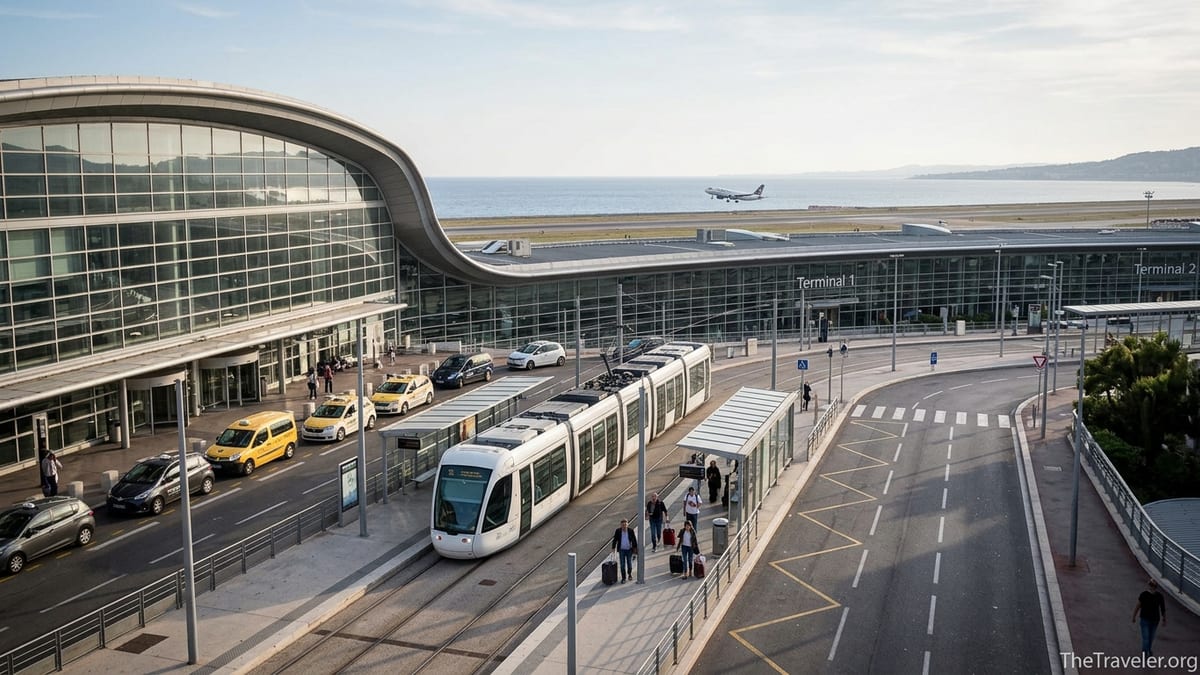
Getting Oriented: Layout and Terminals at Nice Airport
Nice Côte d’Azur Airport (NCE) sits about 6 to 7 kilometers southwest of central Nice, between the sea and the Promenade des Anglais. There are two main passenger terminals: Terminal 1 and Terminal 2. Both handle Schengen and non-Schengen traffic, and both see a mix of low-cost and traditional airlines. In practice, many easyJet, Transavia and Vueling flights use Terminal 1, while Air France, British Airways, Emirates and some easyJet routes operate from Terminal 2, but this can change by season and route, so always check your booking or boarding pass before you arrive.
Terminal 1 is the older, more compact building, closest to the main airport bus station and within a short walk of some on-site hotels. It has a straightforward horseshoe layout, with arrivals on the ground level and departures above, plus landside cafés and a few shops. Terminal 2 is more modern and larger, with multiple piers and more space for security and passport control. If you are connecting from a long-haul flight, such as Emirates from Dubai or Air Canada from Montreal, you will almost certainly arrive into Terminal 2.
The two terminals are only a few minutes apart by tram or shuttle, but not something most travelers will want to tackle on foot with luggage. Landside, you will find clearly signed exits for taxis and rideshares, tram stops just outside each terminal, and car rental desks concentrated in and around Terminal 2’s car rental center. The airport is compact enough that once you understand where your airline operates, navigating to the right check-in area or exit is relatively simple.
Check-in and security at Nice can be busy at peak holiday times, particularly Saturday mornings from late May through September when departures for the UK, Scandinavia and other European leisure markets spike. In high season, arriving at least two hours before a European flight and closer to three hours for long-haul departures is a sensible buffer, especially if you need to check bags.
Moving Between Terminals: Shuttle, Tram and Walking
For connections or mixed-airline itineraries, it is common to arrive at one terminal and depart from the other. The airport operates a free, fully electric shuttle that runs roughly every 10 to 15 minutes between Terminal 1, Terminal 2 and the more distant car parks from early morning until after midnight. The journey between terminals usually takes only 2 to 3 minutes. The shuttle stops are clearly signposted outside arrivals in each terminal; you simply board, no ticket required.
The tram is another easy way to move between terminals. Nice’s tram network includes a line that links Terminal 2, Terminal 1, the Grand Arénas transport hub and onward to the city. The short hop between the terminals on the airport tram is generally treated as a free segment when you ride only between Terminal 1, Terminal 2 and Grand Arénas, so many travelers use it as a quick inter-terminal transfer. The platforms are directly outside each terminal building, so you avoid crossing car parks or busy roads.
Walking is technically possible, but the layout of roads and parking areas means it is only really practical between Terminal 1 and nearby spots such as the Grand Arénas hub or the Nice Saint-Augustin train station, which is about a 5-minute walk using marked pedestrian routes and footbridges. With luggage, children or in summer heat, using the tram or shuttle is usually the more comfortable option.
One important seasonal quirk is May 1 (Labour Day in France), when normal public transport often runs on reduced schedules or not at all. On that day the airport typically maintains an internal shuttle between the terminals even if trams are limited, but services beyond airport grounds can be patchy. If you are connecting on May 1, build in extra time and check transport updates before you travel.
From Airport to Nice City: Tram, Bus, Taxi and Rideshare
The most popular way to reach central Nice in 2026 is the tram, which runs from both terminals towards the city. Standard single tickets for local public transport cost around 1.70 euros, and that fare covers most urban journeys away from the airport. Travel time from the airport to central stops such as Jean Médecin or Garibaldi is typically around 25 to 30 minutes, with frequent trams throughout the day. For a typical couple with hand luggage, the tram is the best combination of cost and reliability.
However, the airport and city have introduced special “airport” tram tickets sold at certain machines by the terminals at a much higher price, around 10 euros per person. Visitors sometimes buy these by default, thinking they are required to use the tram, when in practice many locals and informed travelers prefer to ride the short free airport segment to Grand Arénas, then purchase a normal 1.70 euro ticket from a standard ticket machine or via the Lignes d’Azur smartphone app for the rest of the journey. The result is the same tram into town, but at a far lower cost.
If you prefer door-to-door travel, official Nice taxis wait in dedicated ranks outside each terminal. For central Nice, there is a regulated flat fare, which in recent years has been in the low-30-euro range for daytime rides, with typical journey times of 15 to 25 minutes depending on traffic. This can be good value for families or small groups with several suitcases, especially if your accommodation is uphill or far from a tram stop. Taxis accept cards, but it is still wise to confirm payment options with the driver before departure.
Rideshare services like Uber and Bolt also operate at Nice Airport. They usually pick up from signed rideshare zones near the terminals, not directly in the taxi rank. Prices vary with demand: in quiet periods you might pay similar to or slightly less than an official taxi, while during peak arrivals late at night, surge pricing can easily push the cost above the taxi flat rate. For example, arriving around 23:00 on a busy summer Friday, some travelers report Uber quotes above 50 euros into town, making the official taxi or even a late tram a smarter choice.
Beyond Nice: Cannes, Antibes, Monaco and the Riviera
Nice Airport is the main air gateway not just for Nice but also for a string of Riviera destinations including Antibes, Cannes and Monaco. If you are heading west towards Antibes and Cannes, one practical approach is to take the tram from the airport to Nice Saint-Augustin train station, then board a regional TER train. Trains to Antibes and Cannes run frequently, and journey times are usually around 20 minutes to Antibes and 35 to 45 minutes to Cannes. This combination of short tram ride plus train is often cheaper and faster than sitting in motorway traffic in a taxi.
There are also regional buses from the airport, such as the 620 line (formerly numbered 200) which runs along the coast via Saint-Laurent-du-Var, Cagnes-sur-Mer, Villeneuve-Loubet, Antibes and onwards. This bus is handy if you prefer not to change from tram to train, or if your accommodation is close to one of the intermediate stops rather than the main railway stations. Journey times by bus are longer than the train, so for a direct Cannes run many travelers now prefer the faster express buses operated under the Zou brand, or a train from Nice after a short tram hop.
For Monaco and the eastern Riviera, you can again combine tram and train. From the airport, ride the tram to Nice-Ville or Nice Riquier, then take a TER train to Monaco-Monte-Carlo, which typically takes about 25 minutes. Some visitors choose a direct airport-to-Monaco shuttle bus, which costs more but removes the need to transfer between tram and train with luggage. Taxis and private hires from the airport to Monaco are convenient but significantly more expensive; the bill can easily exceed 100 euros, especially with traffic on the A8.
At the premium end, helicopter transfers run between Nice Airport and Monaco in around 7 minutes, departing from dedicated helipads near the terminals. These services are priced as a luxury option but can appeal to travelers on tight schedules connecting from long-haul flights or major events such as the Monaco Grand Prix or Cannes Film Festival. For most visitors, however, the tram plus train combination offers a realistic balance of cost, comfort and reliability.
Inside the Terminals: Check-in, Security and Amenities
Check-in areas at both terminals are modern and mostly self-service friendly, with many airlines encouraging or requiring passengers to check in online and use automated bag-drop machines. At popular departure banks, such as Saturday morning UK flights in summer or Sunday evening returns, queues for bag-drop and security can build quickly. It is best to complete as much as possible online before you reach the airport, including seat selection and digital boarding passes, to reduce time at the desks.
Security screening at Nice is generally efficient by European standards, but queuing times vary widely by time of day and season. Early morning and late afternoon tend to be busiest. There are dedicated fast-track options for some premium cabin and elite-status passengers, as well as paid priority lanes that can be worthwhile if you are connecting or arriving at the airport later than planned. Families with small children and travelers with reduced mobility can request assistance lanes; booking support in advance through your airline is strongly recommended.
Once airside, both terminals offer a reasonable selection of cafés, bars, duty-free shops and fashion brands, though the range is broader in Terminal 2. You will find familiar names for coffee and sandwiches, local bakeries selling croissants and socca chips, and boutiques featuring Riviera-style clothing and accessories. Prices tend to be typical of major European airports rather than city supermarkets, so many travelers choose to eat a light meal in town before heading to the airport, then use the terminal for a last espresso, a pastry or a small souvenir.
Free Wi-Fi is available throughout the terminals under the NiceAirportFreeWifi network, with no strict time limit. Connecting is straightforward: you select the network, accept the terms and you are online, which is particularly useful if you need to download tram tickets to the Lignes d’Azur app or confirm accommodation details. Power outlets and USB charging points have been added in many seating areas, but in older corners of Terminal 1 they can still be scarce, so carrying a small multi-port adapter is a smart move.
Practical Money-Saving and Time-Saving Tips
A few practical habits can make your Nice Airport experience smoother and cheaper. First, decide in advance how you will get from the airport to your accommodation. If you plan to use the tram, download the Lignes d’Azur app before you fly and set up a payment method. This allows you to purchase standard tickets at local prices, instead of relying on the more expensive airport-specific machines. A typical real-world example: a couple arriving on a Tuesday afternoon, staying near Place Masséna, might pay around 3.40 euros in total for two regular tram tickets from Grand Arénas to the city, instead of 20 euros for two “airport” tickets bought directly at the terminal.
Second, travel as light as your trip allows. The tram and trains are perfectly manageable with a suitcase and backpack, but navigating crowded platforms in July or August with oversized luggage can be stressful. A cabin-size roller and a single checked bag per couple is usually a good target. If you know you will be moving along the coast between towns like Antibes, Cannes and Menton, packing for easy mobility will pay off every time you board or disembark.
Third, plan your timing around local rush hours and big events. On days surrounding the Monaco Grand Prix, Cannes Film Festival or major concerts at the Allianz Riviera stadium, both airport security and regional trains can be noticeably busier. In those windows, consider arriving earlier for flights, booking train tickets ahead where possible, or budgeting for a taxi rather than assuming you can always get into the city cheaply and quietly.
Finally, keep a small amount of cash in euros for incidental expenses such as a coffee from a small kiosk or tips for hotel staff, but expect to pay most things by card or contactless phone. Tram ticket machines, taxis and airport shops all routinely accept contactless payments. A traveler arriving late at night with only cards will still be able to ride the tram, buy a snack and reach their accommodation without hunting for an ATM.
The Takeaway
Nice Côte d’Azur Airport is one of the more manageable large airports in Europe: compact, close to the city and well connected by public transport. Understanding the difference between the official but pricey airport tram tickets and the standard local fares can save you a surprising amount of money, particularly if you are traveling as a couple or family. Once you know which terminal your airline uses and how to reach either the tram stop or train station, most of the logistics fall into place.
For city stays, the tram remains the most sensible default, with taxis and rideshares reserved for late-night arrivals, heavy luggage or hard-to-reach addresses. For wider Riviera trips, combining the airport with regional trains via Nice Saint-Augustin or Nice-Ville is both economical and time-efficient. By planning ahead just enough to choose your transfer, download the right app and allow realistic time for security, you can turn your arrival in Nice from a source of stress into the first, simple step of your French Riviera break.
FAQ
Q1. Which terminal will my flight use at Nice Airport?
Airlines are split between both terminals, with many low-cost carriers in Terminal 1 and larger network airlines in Terminal 2, but assignments change by route and season. Always check your booking or boarding pass before you travel rather than relying on past experience.
Q2. How long does it take to travel from Nice Airport to the city center?
By tram, the journey from the terminals to central stops like Jean Médecin usually takes about 25 to 30 minutes. A taxi or rideshare to a central hotel typically takes 15 to 25 minutes, depending on traffic along the Promenade des Anglais and in the city streets.
Q3. Is the tram from the airport really free?
The airport segment of the tram between Terminal 1, Terminal 2 and Grand Arénas is generally treated as a free link when used just between those stops. Once you travel beyond Grand Arénas toward the city, you need a valid ticket, which for most journeys costs around 1.70 euros if you buy a standard local fare rather than an airport-specific ticket.
Q4. Should I take a taxi or tram from the airport?
If you are cost-conscious and traveling light, the tram is usually best value, especially for solo travelers or couples. A taxi becomes competitive for families or groups with several bags, late-night arrivals when trams are less frequent, or if your accommodation is far from any tram stop or up steep hills where walking with luggage would be difficult.
Q5. How do I get from Nice Airport to Antibes or Cannes?
Most travelers take the tram from the airport to Nice Saint-Augustin or Nice-Ville station and then a regional TER train west to Antibes or Cannes. This is usually faster than local buses and avoids motorway traffic. There are also coastal buses and, at certain times, express services, but they tend to be slower and more affected by congestion.
Q6. How do I reach Monaco from Nice Airport?
For Monaco, a common option is the tram from the airport into Nice followed by a TER train from Nice-Ville or Nice-Riquier to Monaco-Monte-Carlo, which takes about 25 minutes. Higher-priced alternatives include direct shuttle buses or private taxis and, at the luxury end, helicopter transfers between the airport and Monaco’s heliport.
Q7. Is Nice Airport easy to connect through between flights?
Nice is a relatively compact airport, and connections within the same terminal are usually straightforward as long as you have sufficient layover time. If you need to change terminals, the free shuttle or tram ride typically takes only a few minutes, but you must also account for immigration, security and any re-check of baggage if you have separate tickets.
Q8. Are there good food and shopping options at the airport?
Both terminals offer a range of cafés, bars and shops after security, with a larger choice in Terminal 2. You will find international coffee brands, local bakeries, duty-free stores and boutiques selling fashion and travel essentials. Prices are in line with other major European airports, so many travelers eat a more substantial meal in town and then snack at the airport.
Q9. Is Wi-Fi and charging available at Nice Airport?
Yes, free Wi-Fi is available throughout the terminals via the NiceAirportFreeWifi network, with no strict time limit. There are also power outlets and some USB charging points in most seating areas, though they can be limited in older spaces, so a compact travel power strip can be useful if several people need to charge devices at once.
Q10. What should I watch out for to avoid overpaying on arrival?
Be cautious about buying high-priced “airport” tram tickets if a standard local ticket would cover your trip after the short free segment to Grand Arénas. Also compare the regulated taxi flat fare with any rideshare quotes before committing, especially at busy times when surge pricing can make app-based rides more expensive than official taxis.