

From the terraces of Naples and the ruins of Pompeii, Mount Vesuvius looks deceptively close and easy. Many travelers assume it is a simple hop on a bus, a quick stroll to the crater, a few photos of the Bay of Naples and back in time for pizza. In reality, the volcano is a tightly regulated national park, access rules change, transport can be confusing and the short but steep hike catches plenty of visitors by surprise. Here are the most common mistakes people make when hiking Mount Vesuvius and how to avoid them, based on how trips actually work today.
Get the latest updates straight to your inbox!
Misunderstanding Tickets, Time Slots and Park Rules
One of the biggest mistakes is assuming you can simply show up, buy a ticket at the gate and start walking. Access to the main Gran Cono crater trail is controlled by Vesuvius National Park and entry is limited to timed slots. The park states that tickets for the Gran Cono can only be purchased online in advance, and recent seasons have seen popular late-morning and late-afternoon slots sell out, especially on weekends and in summer. Travelers who ride all the way up from Naples or Pompeii without a prebooked ticket often end up stuck at the upper car park, looking at the entrance turnstiles but unable to go in.
Another frequent misunderstanding is about where the ticket is checked. Your online booking is tied to a specific entry window at the Gran Cono gate near the Quota 1000 car park, not to the road entrance lower down. Some visitors print their voucher, leave it in a hotel room, or forget to download the QR code, assuming their name will be enough. Staff at the turnstiles usually require the actual QR code on paper or on your phone screen, so turning up without it can mean a scramble for mobile data on a mountain road with patchy signal.
People also forget that the crater path is inside a protected area, not a casual city park. Rangers at the gate can refuse entry if you arrive significantly outside your booked time, or if the volcano is closed due to strong wind, heavy rain or high seismic alerts. Travelers who plan a tight schedule, for example trying to squeeze Vesuvius into a half-day between flights, run into trouble when a sudden weather closure or delay on the access road pushes them outside their slot. It is wise to treat your reservation time as a target, not something you can miss by half an hour and still count on getting through.
A final rules-related mistake is not checking the official park information the week of your visit. In recent years the park has occasionally altered quotas, shifted opening hours and adjusted requirements such as mandatory guides on certain days. Many older blogs still report outdated details about buying tickets at kiosks or walking up from alternative trailheads, so relying on information that worked in 2019 can lead to disappointment in 2026.
Underestimating the Hike: Fitness, Footwear and Weather
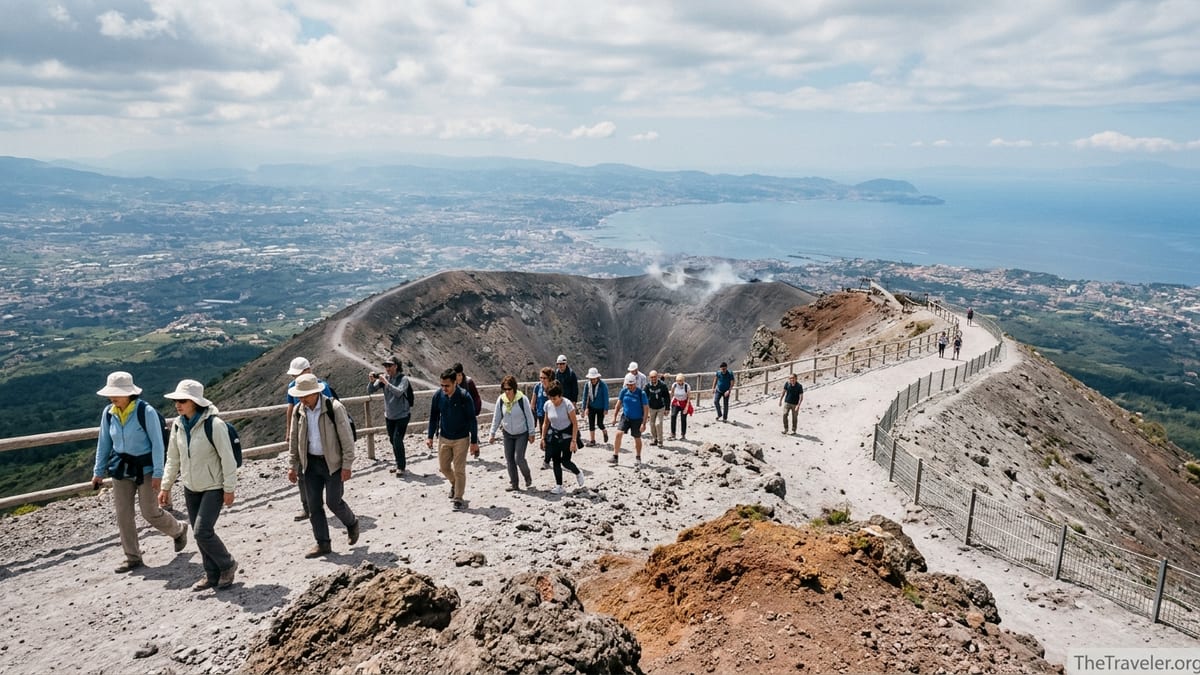
From a distance, the summit road looks like a gentle slope and guidebooks often describe the hike as “easy.” While it is not a technical climb, the Gran Cono trail is a sustained uphill walk on loose volcanic gravel at altitude. The main path from the Quota 1000 parking area to the highest accessible viewpoints is roughly 30 to 45 minutes up for a reasonably fit person, but many visitors underestimate the combination of gradient, heat and footing. It is common to see people in the first 200 meters already stopping to catch their breath, especially on hot days.
Footwear is a frequent problem. Tourists arrive in smooth-soled sneakers, sandals or even flip-flops picked up on the seafront in Naples. The path surface is made of fine ash and small pumice stones that behave a bit like dry sand or marbles; underfoot it can be slippery both on the ascent and especially on the way down. Local guides and ranger notices consistently recommend closed shoes with a decent tread. Trail runners or basic hiking shoes are ideal, but even standard athletic trainers with grippy soles are far safer than fashion sneakers. People who ignore this advice often end up sliding, getting dust inside their shoes, or turning ankles on the uneven surface.
Weather on Vesuvius is another trap. In Naples in summer it may feel blazing hot, yet the crater rim, more than 1,000 meters above sea level, can be several degrees cooler and much windier. On shoulder-season days in April or October, visitors board the train in short sleeves and arrive at the gate to find dense clouds, strong gusts and a chill that requires a jacket and hat. Conversely, in full sun at midday, the dark volcanic surface reflects heat and the path offers little shade, so hikers without hats or sunscreen quickly burn. Real-world trips show the same pattern: people from cruise ships turning back early, shivering in T-shirts during spring fog, or struggling in August after bringing no water because “it looked short.”
Another subtle issue is altitude tolerance. While 1,200 meters is not extreme, some travelers coming straight from sea level feel slightly breathless from the combination of slope and thinner air. Those with respiratory or cardiac conditions sometimes underestimate the strain of walking uphill on a dusty path. The best way to avoid problems is to start slowly, bring any necessary medication, and accept that there is no shame in turning around before the final viewpoint if your body tells you it has had enough.
Getting Transport Wrong: Trains, Buses, Tours and Timing
A classic mistake is assuming there is a simple “direct bus from Naples to the crater every hour” and not looking up the current options. In practice, most independent visitors take the Circumvesuviana or Campania Express train from Napoli Garibaldi to Ercolano Scavi or Pompei Scavi. From there, a dedicated Vesuvio shuttle run by EAV or private operators like Vesuvio Express connects to the Quota 1000 car park near the trailhead. Timetables are seasonal and can change with little notice, and day-to-day punctuality is not the same as in northern Europe. Travelers who build an itinerary on the assumption that the shuttle is perfectly on time often end up waiting 30 minutes in the sun or missing their preferred train back.
Another transport pitfall is not budgeting enough total time. Many people try to “do Pompeii and Vesuvius” in one rushed day from Naples, assuming a quick morning at the ruins and an afternoon hike. In reality, the train ride to Ercolano or Pompeii, the wait for the bus, the upward drive to Quota 1000 on a narrow road, ticket checks at the gate, the 30 to 45 minute hike up, time at the summit and the return journey can easily add up to five or six hours by themselves. Travelers who book a dinner reservation in central Naples at 7 p.m. after a 3 p.m. crater entry time often find themselves racing down the path and anxiously watching for a late bus.
Ticketing confusion on the buses is another source of stress. Reports from recent visitors mention that on certain EAV lines you can buy the ticket on board at a slightly higher price, while at other times it is cheaper to buy a specific bus ticket in advance from a ticket office. Drivers may speak limited English and are focused on keeping the schedule, so relying on on-board explanations can be frustrating. People who step on without cash, or without small bills, sometimes find themselves turned away or overpaying because change is not readily available. A practical workaround is to purchase bus tickets at station newsstands or tabacchi shops when you buy your train ticket, and to carry coins and small notes specifically set aside for transport.
Finally, some travelers book private transfers or guided tours without realizing what is included. A “Mount Vesuvius tour from Naples” sold by a hotel concierge might cover only the bus from the city to Quota 1000 and back, leaving you to buy your own crater ticket on arrival. Other packages bundle timed crater entry, transport and a short guided explanation at the summit. Misreading what your voucher covers leads to expensive duplication, such as paying for an organized shuttle but then also needing to buy the park ticket separately under time pressure.
Ignoring Safety, Volcanic Reality and Park Closures
Another mistake is treating Vesuvius as just a scenic hill rather than an active volcano. While major eruptions are rare and the Italian monitoring system is sophisticated, this is still a live volcanic crater with fumaroles, fragile rock and steep drops. Some visitors step off the marked trail to get a better selfie, or lean over low fences to take photos looking into the caldera. The path has sections with loose scree next to sharp descents and the interior crater walls are unstable; rangers frequently remind visitors to stay behind barriers precisely because rockfall and sudden erosion do happen.
People also underestimate how quickly conditions can change on the rim. On clear mornings the crater may look calm, but rising clouds can sweep in within minutes, bringing cold wind and drastically reducing visibility. There have been countless trips where groups arrive under blue skies and leave in a gray fog, unable to see Naples or the bay below. Hikers who start in a T-shirt and light shoes, imagining a slow stroll, can find themselves battling stinging dust carried by gusts. Wearing layers, bringing sunglasses to protect from blown grit and keeping electronics in zipped pockets or bags are simple ways to avoid unnecessary discomfort.
A specific safety oversight is ignoring park notices about closures. The Gran Cono trail can be shut for reasons beyond weather, such as maintenance work on the path, road issues or seismic events recorded by the Osservatorio Vesuviano. In those cases, security staff may stop vehicles at lower checkpoints, well below the usual parking areas. Travelers who insist on being dropped “as close as possible anyway” or who try to argue with rangers only waste time; no taxi or private transfer can override a closure imposed by the park or civil protection authorities.
Another aspect of safety that people overlook is sun and hydration. Because the hike is relatively short, many travelers decide they do not need to carry water or sun protection. The reality is that in summer the temperature on the ash path can feel much hotter than in Naples due to reflection from the pale ground and lack of trees. Heat exhaustion is not uncommon, particularly among visitors arriving straight from air-conditioned coaches. Buying water at the small kiosks near Quota 1000 is possible, but prices are naturally higher than in the city. Bringing at least a half-liter bottle per person and a simple cap or hat is an inexpensive way to avoid cutting your crater time short.
Showing Up Unprepared for Cash, Facilities and Comfort
Even well-organized hikers often misjudge how basic the services are once you get close to the summit. There are no cafés or full restaurants at the rim itself, and toilet facilities are limited and sometimes rustic. Some days, portable toilets or small WC blocks near the entrance have queues during peak times. Visitors who count on grabbing lunch or a bar-style snack at the top often end up buying only a quick coffee or packaged snack from the kiosks near the parking areas, or going without. Bringing a simple sandwich or snack from Naples or Ercolano is a practical solution.
Cash is another recurring pain point. While the official online ticketing system for the Gran Cono requires a card payment in advance, the independent bus operators, car parks and some kiosks may be cash-only or card-unfriendly. Travelers coming from Northern Europe or North America, used to tapping a card for every transaction, sometimes step off the train in Ercolano or Pompeii with no euros at all. When they then try to pay a shuttle driver, buy water, or use a paid toilet near the car park, card machines may not work or may not exist. Carrying a modest amount of cash in small denominations makes everything smoother.
Clothing and comfort choices also lead to regrets. Many people come straight from exploring Naples’ historic center in city outfits, carrying no backpack. Once on the trail they have nowhere to store a shed layer when they heat up, or to put on a warmer garment as the wind picks up higher on the rim. Family groups with young children sometimes skip bringing a light jacket or even a small snack for the kids, assuming the whole outing will take an hour. By the time they have queued for the bus and climbed to the crater, the children are cold, thirsty and unhappy, cutting the visit short.
Another element that surprises visitors is how dusty everything becomes. The fine, light ash clings to clothes and shoes. Without sunglasses, grit can blow into your eyes, and without a small pack to store your camera or phone between photos, electronics can get coated in dust. Bringing a simple drawstring bag or daypack, and accepting that your shoes may be dirty for the rest of your trip, helps you enjoy the views instead of worrying about every speck of ash.
Mismanaging Expectations About Views, Crowds and Experience
Some disappointments on Vesuvius have nothing to do with logistics and everything to do with expectations. Travelers often imagine an empty, wild volcano with just a narrow footpath and silent crater. In reality, the Gran Cono circuit is one of the most popular short hikes in southern Italy, and on a busy summer day hundreds of people may be on the path at the same time. When cruise excursions, school groups and multiple tour buses arrive together, the viewpoints can feel crowded and photo spots require patience. Visitors expecting solitude may find the experience more like a busy alpine lookout than an off-the-beaten-path adventure.
Another expectation issue is the view. On postcards, Vesuvius looks crystal clear above the bay, with Capri and the Sorrento Peninsula in crisp detail. In person, atmospheric haze is common, especially in the warmer months, and the industrial outskirts of Naples and the A3 motorway are clearly visible below. On days with low cloud, you might barely see the bay at all. Some travelers arrive, encounter thick fog, and feel their ticket was wasted. Others, embracing the mood of swirling clouds around an active crater, find the atmosphere unforgettable. Accepting that you cannot control visibility, and focusing on the unique feeling of walking on a volcano rather than on replicating a brochure image, makes for a better trip.
There is also misunderstanding about how much of the crater you can see. The marked trail runs along a section of the rim with several viewpoints and short side spurs supervised by rangers and occasional guides who offer explanations in Italian and English. You do not typically walk all the way around the caldera. Visitors expecting a full circumnavigation feel shortchanged if they do not realize ahead of time that the open section is limited for safety reasons. On the other hand, hikers who understand that the reward is a close look at fumaroles, the steep inner walls and expansive views of Campania appreciate the experience for what it is.
Finally, some people conflate Vesuvius with Pompeii and Herculaneum as a single “volcano plus ruins” activity. In practice, hiking the volcano is a nature and landscape experience with a light layer of geology and history, not a deep archeological visit. There are no extensive exhibits at the summit explaining the 79 AD eruption in detail. Travelers wanting in-depth context often enjoy visiting a museum or the archeological sites on a different day, or at least not rushing directly from a long hike into several hours of walking among ruins.
The Takeaway
Hiking Mount Vesuvius from Naples is entirely achievable for most visitors, but it rewards those who prepare realistically. The most common problems are not dramatic accidents but small, avoidable frustrations: missing timed entry because a shuttle was late, wearing slick-soled shoes on loose ash, arriving with no water on a scorching afternoon or counting on buying a ticket at the gate when sales are now online-only. Travelers who plan their transport around current train and bus schedules, prebook their crater slot, bring modest cash and a bit of extra clothing, and accept that crowds and clouds are part of the experience, tend to leave with exactly what they hoped for: the memory of standing on the edge of a legendary crater high above the Bay of Naples.
FAQ
Q1. How long does it actually take to hike from the car park to the Vesuvius crater rim?
The walk from the main Quota 1000 car park to the highest accessible viewpoints usually takes about 30 to 45 minutes uphill and 20 to 30 minutes down, depending on your fitness level and how often you stop for photos or to catch your breath.
Q2. Do I really need to buy my Mount Vesuvius crater ticket online in advance?
Yes, in practice you should. The park’s current system requires online purchase for the Gran Cono trail with timed entry, and same-day slots often sell out in high season, so arriving without a reservation is a common way to waste time and money on transport.
Q3. What kind of shoes are best for the Vesuvius hike?
Closed shoes with good grip are strongly recommended, such as trainers with a textured sole or lightweight hiking shoes. The path is made of loose volcanic ash and small stones, which can be slippery in smooth-soled sneakers, sandals or flip-flops.
Q4. Is the hike suitable for young children and older travelers?
Many families with children and older visitors complete the hike, but it is a steady uphill walk at altitude with loose footing. Allow extra time, take frequent breaks, and be prepared to turn back early if anyone in your group feels unsteady or breathless.
Q5. Can I visit Pompeii and hike Mount Vesuvius in the same day from Naples?
It is technically possible, but it makes for a long and tiring day. Both sites involve a lot of walking and transport connections, so most travelers enjoy each destination more if they dedicate a separate day, or at least keep one visit relatively short.
Q6. What should I bring with me for a comfortable visit to Vesuvius?
Bring your prebooked crater ticket QR code, a light jacket or extra layer, a hat and sunscreen, at least a half-liter of water per person, some cash in small notes and coins, and a small bag to carry these items and protect your camera or phone from dust.
Q7. Are there toilets, cafés or shops at the crater itself?
Facilities are limited near the entrance gate and car parks, and there are no full cafés right on the rim path. You may find basic kiosks selling drinks and snacks near the parking areas, but it is best to arrive having already eaten or carrying a simple snack.
Q8. What happens if the weather turns bad or the volcano is closed on the day of my visit?
If strong wind, heavy rain, fog or volcanic alerts make the trail unsafe, the park authorities can close access, sometimes with little notice. In that case, buses and tours may stop lower down and crater tickets are usually refunded or rebooked via the official seller, but you may still have transport costs.
Q9. Is it safe to walk close to the edge of the crater for photos?
The marked trail and fenced viewpoints are designed to keep visitors at a safe distance from unstable slopes and loose rock. It is important to stay behind barriers, follow ranger instructions and avoid stepping off the path, even for a better selfie.
Q10. Do I need a guide to hike the main Vesuvius trail?
For the standard Gran Cono route, a guide is not usually mandatory and most visitors walk independently, although rangers and local guides are often present along the path. Some organized tours include a short guided explanation in English or Italian, which can add useful context about the volcano and its eruptions.