


Holafly is one of the best known travel eSIM brands, especially for its “unlimited data” plans across popular destinations like Europe, Japan, Mexico and global bundles. Before you click buy, though, it is worth understanding how Holafly actually works in real life: what unlimited really means, how fast the data tends to be, what it costs compared with rivals such as Airalo and Nomad, and what kinds of issues real travelers report from the road. This guide walks through exactly what to expect before buying a Holafly eSIM, with concrete examples so you can decide if it fits your trip or if another provider would be a better match.
Get the latest updates straight to your inbox!
How Holafly eSIMs Work in Practice
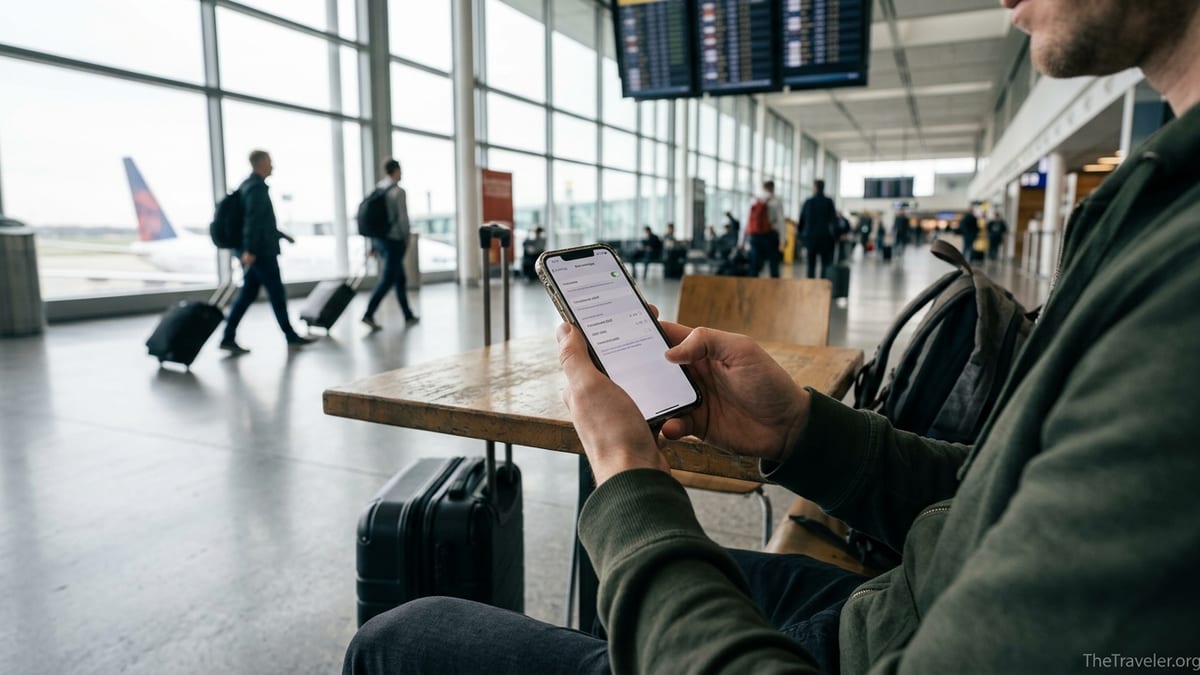
Holafly sells prepaid eSIM data plans that you buy online and install by scanning a QR code on your phone. Instead of picking up a physical SIM card on arrival, you keep your existing SIM in the phone but switch data to the Holafly eSIM. In practice, this means you can land in Rome, Tokyo or Cancún, turn off airplane mode and start using apps without hunting for a kiosk. Many travelers buy and install the eSIM the night before departure so it is ready to go the moment they arrive.
The company offers country, regional and global plans. For example, there are specific eSIMs just for Japan, for Europe-wide travel that covers countries like France, Germany, Italy and Spain, and global options that work in well over a hundred countries. In most cases these plans are data only, so traditional calls and SMS still run on your home SIM while messaging and calls over apps like WhatsApp, FaceTime and Telegram use Holafly’s data. A newer global product adds a phone number in some markets, but most travelers still treat Holafly as a data solution first.
Once installed, a Holafly eSIM usually connects to one or more local partner networks in your destination. For instance, a Holafly Europe plan might connect to Orange in France and Vodafone in Spain, while a Holafly Japan plan could connect to KDDI or SoftBank depending on arrangements at the time. On your phone you simply see a local network name and a 4G, LTE or sometimes 5G indicator. Behind the scenes, Holafly routes your traffic through its infrastructure and applies its own fair use rules, which is where many of the real-world pros and cons appear.
In app stores, Holafly generally has strong ratings on both iOS and Android, and independent comparisons in 2026 often put it near the top of the pack on ease of use. At the same time, Reddit threads and specialist review sites contain plenty of mixed experiences, from trips where everything “just worked” to stories of slow speeds, aggressive throttling and frustrating support chats. Understanding why those differences exist will help you set realistic expectations before you pay.
Plans, Pricing and How Holafly Compares
Holafly markets itself heavily around unlimited data. For example, a 15-day unlimited data eSIM for Europe is typically priced in the ballpark of 47 to 60 US dollars, depending on promotions and exchange rates. A similar 10-day unlimited plan for Japan may cost somewhere in the 35 to 50 dollar range, while a 30-day global data plan can climb well above 100 dollars. These prices are generally higher than metered alternatives from competitors like Airalo and Nomad, which often sell fixed data bundles such as 10 GB for 30 days in Europe for roughly 20 to 30 dollars.
The trade-off Holafly is betting on is predictability. With an unlimited plan, a family of four road-tripping around Italy does not have to watch every gigabyte. One parent can stream Google Maps navigation, the other can scroll Instagram, and the kids can watch YouTube in the back seat without stressing over top-ups. However, that peace of mind only holds if you stay within Holafly’s fair usage expectations, something the marketing tends to downplay.
When you compare per-gigabyte costs, Holafly can look expensive. A digital nomad spending a month in Bangkok, for instance, might be able to buy a local physical SIM with 50 to 100 GB of high-speed data for the equivalent of 20 to 30 dollars, or use a metered eSIM from another provider at a few dollars per gigabyte. Holafly’s month-long unlimited option for the same destination could cost two to three times as much. Travelers who mostly check email, message on WhatsApp and look up train times will rarely need unlimited data and may be better off with a smaller, cheaper bundle.
Where Holafly becomes more compelling is for short, data-heavy trips or multi-country itineraries where convenience matters more than price. A group of friends doing a 7-day rail trip through France, Switzerland and Germany may be willing to pay a premium to avoid juggling three different local SIMs and multiple apps. For that kind of traveler, the higher cost might feel reasonable if the connection remains fast enough for maps, social media and occasional video calls.
What “Unlimited” Actually Means: Fair Usage and Throttling
Perhaps the most important thing to know before buying a Holafly eSIM is that unlimited does not mean you get maximum-speed 4G or 5G data without limit. Like many providers, Holafly applies a fair usage policy. Independent reviewers and community reports in 2025 and 2026 describe daily or trip-long thresholds where speeds are reduced, sometimes dramatically, once heavy use is detected. Holafly does not always make these thresholds crystal clear on each product page, which is a recurring source of frustration for customers.
Real-world examples vary. Some travelers report using 3 to 5 GB in a day streaming HD video and maps with no slowdown, while others say they hit a wall after only a couple of gigabytes during a busy day of navigation and cloud backups. A common pattern in complaints is that everything works fine for the first few hours of a day, then speeds suddenly drop to the point where video will not load and even Google Maps can struggle. In extreme cases, people describe speeds so low that basic web browsing becomes difficult, effectively turning “unlimited” into “very limited” for the rest of the day.
It is also worth understanding that throttling may be influenced by the local carrier network as well as Holafly’s own policies. On a crowded evening in Tokyo’s Shinjuku district, for instance, the network itself can be saturated, and prepaid roaming connections like Holafly are usually deprioritized behind local subscribers. That means that even if you have not used much data, your speeds could drop at peak times. Conversely, in rural areas of Portugal or Mexico where the network is quiet, you might see impressively fast speeds on the same Holafly plan.
Before you buy, think carefully about how you use data on the road. If you plan to stream Netflix on a laptop via hotspot every night, upload large batches of RAW photos to cloud storage, or tether multiple devices for long work sessions, Holafly’s fair usage limits are likely to bite. On the other hand, if your typical day is messaging, searching for restaurants, booking train tickets and occasionally posting to social media, the practical effect of throttling may be minimal, especially on shorter trips.
Speed, Coverage and Hotspot Tethering Expectations
On paper, Holafly advertises 4G, LTE and in some destinations even 5G speeds, using the same local networks that residents use. In practice, performance depends on a combination of the local carrier, your phone, and how Holafly routes traffic. Independent tests in 2026 and numerous traveler reports paint a mixed but recognizable picture: in major European cities like Paris, Berlin and Barcelona, daytime speeds are often good enough for smooth navigation and social media, while dense areas of East Asia can swing between blazing fast and frustratingly slow depending on time and crowding.
Coverage is generally strong in popular tourist regions. Holafly’s Europe plan, for example, is frequently praised by people moving between capitals and major train lines. Many who used it on a two-week loop from Amsterdam to Prague via Munich report that they rarely lost signal, apart from inside tunnels or remote mountain sections. However, reports from parts of Mexico, some areas of Southeast Asia and rural stretches of South America describe patchier service or situations where colleagues on a local SIM enjoyed full bars and fast speeds while the Holafly connection felt sluggish.
Hotspot tethering is another key expectation to clarify before buying. Some Holafly plans limit or technically block tethering altogether, while others allow it in theory but travelers find that heavy hotspot use triggers throttling much faster. A typical scenario: a couple buys a single Holafly unlimited eSIM for a 10-day trip to Italy and plans to share the connection with both of their phones and a laptop. For the first few days, light tethering for email works fine. Then one evening they decide to stream a movie on a laptop via hotspot and wake up the next day to painfully slow speeds, which customer support attributes to fair usage.
If hotspot use is important, check the specific product details for your destination and search for recent user experiences for that plan. In some countries, it may be better to have each traveler install their own smaller data eSIM from a provider that clearly allows tethering, rather than relying on a single “unlimited” plan that quietly discourages sharing.
Activation, Setup and Common Pitfalls
Setting up a Holafly eSIM is usually straightforward, but there are a few details that can make or break your first day abroad. After purchase, Holafly emails you a QR code and instructions. Many travelers scan this code while still at home, which downloads the eSIM profile to the phone. Then, after landing, they simply toggle the eSIM on in settings, set it as the primary data line and ensure data roaming is enabled. When everything goes right, the phone connects to a local network within a minute or two and you are online.
Common problems typically fall into a few buckets. First, some people activate the eSIM too early without realizing that the validity period starts on activation rather than on first use in the destination. For example, a traveler might install and activate a 5-day Holafly plan a couple of days before flying, only to find it expires halfway through their long weekend in London. Others accidentally leave their home SIM set as the active data line on arrival and assume Holafly is not working, only to discover later that their domestic carrier has been silently roaming the whole time.
Another recurring pitfall is incomplete setup. Holafly usually includes detailed steps for iOS and Android, but under airport stress it is easy to skip one. Forgetting to flip on data roaming for the Holafly line, picking the wrong network in manual carrier selection, or leaving VPN apps running can all prevent a successful connection. Real-world reports mention people stuck at Madrid Barajas or Tokyo Haneda airports, frantically tapping through menus while support asks them to repeat the same checklist of steps they thought they had already completed.
The safest approach is to install the eSIM at home, but wait to activate or switch the line on until the day your plan is meant to start, following Holafly’s written instructions carefully. Take screenshots of your order confirmation and QR code, and make sure you know how to switch back to your physical SIM for calls and texts if needed. If you are connecting a less common device like an eSIM-capable tablet or an older phone, double-check compatibility on Holafly’s site before purchase so you are not trying to troubleshoot an unsupported device from a hotel lobby.
Customer Support, Refunds and Real Traveler Experiences
Holafly offers customer support via chat and messaging apps, and in many reviews travelers praise the team for quick responses and simple fixes. There are plenty of accounts of people who had minor issues with tethering or initial connection, contacted support and were guided step-by-step to adjust settings, change the preferred network or reset an eSIM profile. For someone stuck at a train station in Vienna or a cafe in Seoul, that kind of prompt help can make an immediate, tangible difference.
At the same time, a visible share of online complaints focuses on inconsistent support quality and refund policies. Some users describe long waits, repeated scripted troubleshooting and representatives who blame local congestion or user error for persistent issues. Others recount being denied refunds after activation even when the eSIM never worked properly in their destination. A traveler who bought a month-long unlimited plan for a complex multi-country Asia trip, for instance, might find that it never connects reliably in one of the key countries and then struggles to convince Holafly to compensate for that part of the journey.
Refund conditions are especially important to understand before paying. Holafly typically allows refunds when an eSIM has not been installed or activated, since in that case it can be resold. Once the QR code has been scanned and the line activated, however, refunds become far more restrictive. Someone who buys a global plan weeks in advance and changes their itinerary may be fine if they never install the eSIM, but a traveler who activates early to “test it” in their home country might inadvertently lock themselves out of a refund even if the service later disappoints abroad.
The mixed real-world experiences suggest treating Holafly like any other travel service: excellent when it works as intended, but not a guaranteed safety net. If connectivity is mission-critical, such as when you are traveling for a live-streamed conference talk or remote client work with strict deadlines, it can be smart to have a backup, whether that is a second eSIM from Airalo or Nomad, a cheap local physical SIM, or the international roaming plan from your home carrier for emergencies.
When Holafly Is a Good Fit … and When It Is Not
Holafly tends to work best for travelers who value simplicity and are prepared to pay a premium for it. A classic use case is a couple flying from New York to Paris for a 9-day vacation, hopping by train to Brussels and Amsterdam. They do not want to research local SIMs in each country, they plan to use maps constantly, post plenty of photos and rely heavily on WhatsApp. For them, a Holafly Europe unlimited plan that just keeps working as they cross borders can feel like money well spent, even if it costs more than piecing together local deals.
It also suits short, intense trips where data usage will be heavy but the duration is limited. Imagine a week-long music festival road trip in Spain, where you will be streaming live sets, coordinating meetups in huge crowds and constantly sharing videos. In that scenario, the risk of hitting fair usage limits is real, yet the cost of running out of data altogether might feel higher than paying extra for a generous, if imperfect, unlimited plan. Many travelers in this category also appreciate that installation can be done before leaving home, avoiding language barriers at kiosks on arrival.
On the other hand, Holafly is rarely the cheapest option and is often a poor fit for long stays or low-intensity users. A remote worker spending three months in Lisbon, for example, will almost certainly get better value from a local Portuguese SIM with a large high-speed allowance, or from carefully chosen eSIM bundles from other providers. Likewise, a budget-conscious backpacker who mainly uses hostel Wi-Fi and only needs mobile data for occasional maps may find a 5 or 10 GB eSIM from a competitor at half the price does the job perfectly.
Holafly is also less ideal if hotspot tethering and consistent high-speed performance are non-negotiable. If your plan is to run video calls on a laptop for hours each day or share a single connection with several people, you will be bumping up against the same fair usage limits and deprioritization that drive many of the negative reviews. In those scenarios, buying separate data plans per person, or pairing a smaller global eSIM with local high-capacity options, tends to be more robust.
The Takeaway
Before buying a Holafly eSIM, go in with clear eyes about what you are paying for. You are buying convenience, borderless coverage across many destinations and the psychological comfort of seeing the word “unlimited” on your plan. You are not buying a magic pipe of infinite high-speed data that ignores network congestion, local carrier priorities or fair usage limits. For many travelers on short holidays or multi-country trips, that trade-off is perfectly acceptable and Holafly delivers a smooth, hassle-free experience.
To stack the odds in your favor, read the product details carefully for your specific destination, especially notes about hotspot use and any mentions of fair usage or speed limits. Install but do not activate too early, double-check your phone’s settings before leaving the airport, and consider carrying a backup option if your plans involve critical online work or remote areas. Crucially, compare Holafly’s price to at least one or two alternatives, such as a local SIM or a metered eSIM from Airalo or Nomad, so you can be confident that the extra cost, if any, is buying you something you genuinely value.
Holafly is neither a scam nor a silver bullet. It is a modern travel tool with clear strengths and real limitations. Understand those in advance, and you can decide whether it deserves a place in your packing list for your next trip.
FAQ
Q1. Is Holafly’s unlimited data really unlimited?
In practice, Holafly’s unlimited plans are subject to fair usage rules. After a certain amount of high-speed data in a day or over a trip, speeds may be reduced, sometimes significantly, even though the connection technically remains “unlimited.”
Q2. How much does a typical Holafly eSIM cost for Europe?
Prices change over time, but as of 2026 a common range for a 10 to 15 day unlimited Europe plan is roughly 40 to 60 US dollars, depending on promotions and currency.
Q3. Can I use hotspot tethering with Holafly?
Some Holafly plans allow hotspot use, while others limit or discourage it, and heavy tethering often triggers throttling sooner. Always check the details of the specific plan for your destination before relying on hotspot for laptops or multiple devices.
Q4. Does Holafly work on my phone?
Holafly works on most recent iPhone and Android models that support eSIM, such as iPhone XR and newer or many flagship Samsung and Google Pixel phones. Older or budget devices without eSIM support cannot use Holafly eSIMs.
Q5. Is Holafly cheaper than buying a local SIM card?
Usually not. Local physical SIMs in countries like Thailand, Portugal or Turkey often offer much larger data allowances for less money. Holafly tends to cost more but offers the convenience of remote setup and multi-country coverage.
Q6. What happens if my Holafly eSIM does not work when I land?
If your eSIM does not connect, first double-check your phone’s settings, especially data roaming and which line is set for mobile data. If it still fails, contact Holafly support with screenshots. Results vary: some travelers get quick fixes, while others report slow responses or limited solutions.
Q7. Can I get a refund from Holafly if I change my plans?
Holafly is more flexible before activation. If you have not installed or activated the eSIM, refunds are often possible. Once you scan the QR code and activate the line, refunds become much harder to obtain, especially if the service technically works, even with slow speeds.
Q8. Is Holafly secure to use for banking and sensitive apps?
Holafly uses standard telecom infrastructure and partners with established carriers, so the security level is broadly similar to other roaming and prepaid solutions. As always when traveling, it is wise to use trusted apps, keep your phone updated and avoid entering sensitive data on unsecured public Wi-Fi.
Q9. How does Holafly compare to Airalo and Nomad?
Compared with rivals like Airalo and Nomad, Holafly often charges more but emphasizes unlimited data and simplicity. Airalo and Nomad typically offer cheaper, metered plans and clearer data limits, which can be better value for light and moderate users.
Q10. Should I rely only on Holafly for critical remote work?
If reliable connectivity is essential for work or emergencies, it is safer not to rely solely on Holafly or any single eSIM. Many frequent travelers carry a backup option, such as a second eSIM from another provider, a local SIM, or their home carrier’s international roaming as an emergency fallback.