


More news on this day
Alaska Airlines’ rapid push into long-haul international flying with Boeing 787 Dreamliners is facing turbulence from its own cabins, as flight attendants challenge the carrier’s service model, staffing levels and rest arrangements on extended flights out of Seattle.
Get the latest news straight to your inbox!
A New Long-Haul Strategy Built Around the 787
Alaska Airlines has tied a central part of its growth strategy to the Boeing 787, positioning Seattle as a long-haul gateway to Europe and Asia. Publicly available information shows that Alaska now operates a small but growing fleet of 787-9 aircraft, supplemented by additional Dreamliners associated with its acquisition of Hawaiian Airlines, with plans to expand international flying over the next several years.
The airline’s latest fleet commitments include firm orders for new 787s that are intended to support at least a dozen long-haul destinations by the end of the decade. Corporate disclosures describe the 787 as a platform for global expansion, emphasizing fuel efficiency and passenger comfort on missions that can stretch well beyond 10 hours.
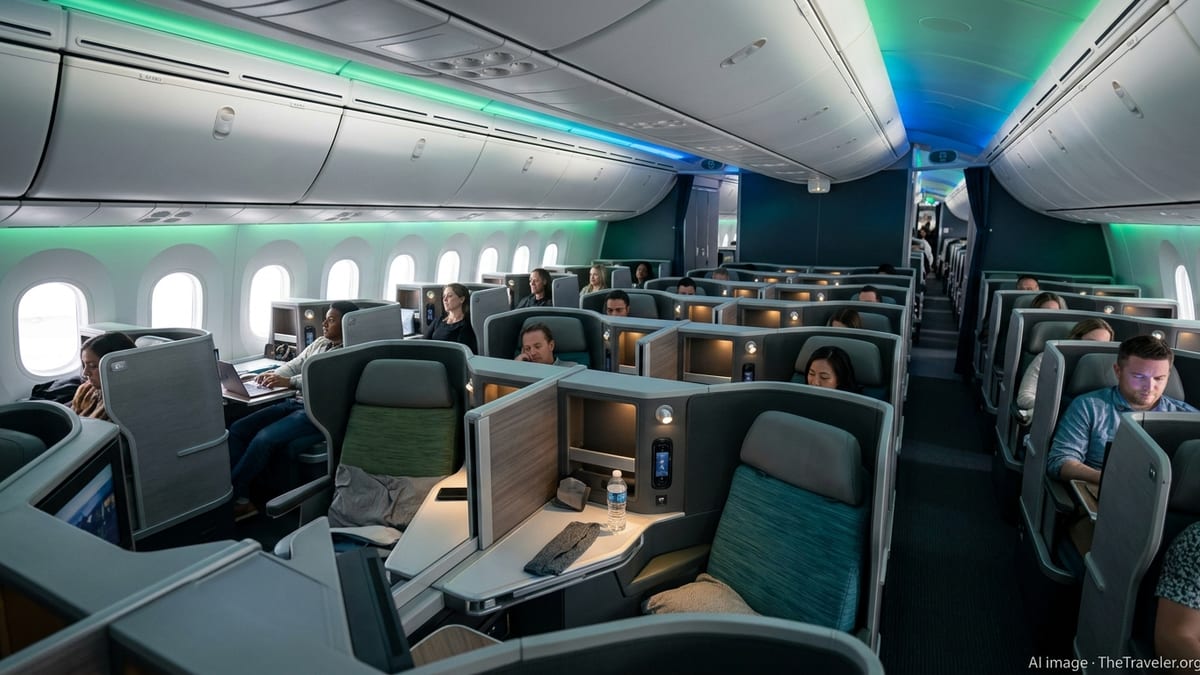
Alongside the new aircraft, Alaska has rolled out a bespoke long-haul product, highlighted by enclosed business-class suites, upgraded meal service across cabins and a refreshed global livery. Marketing materials present the Dreamliner as the centerpiece of a more premium Alaska brand on intercontinental routes, particularly from Seattle.
However, as the airline layers an ambitious service concept on top of that strategy, flight attendants are becoming increasingly vocal about how the model performs in real-world operations, especially in the main cabin.
Service “Train” Model Raises Workload Concerns
A key point of friction is Alaska’s decision to operate what internal communications describe as a “train” style service in the main cabin on 787 international flights. According to union-side briefings and commentary shared with members, the carrier adapted elements of a Hawaiian Airlines service routine for use on Alaska-branded 787 routes from Seattle, then added its own touches for snacks, beverages and buy-on-board items.
Flight attendants say this approach creates a dense sequence of service events, particularly in economy, running from initial beverage offerings to full meal delivery, midflight offerings and pre-arrival service. Reports from crews indicate that the flow is challenging to complete within predictable timeframes while still addressing individual passenger needs and safety duties.
Union summaries characterize the model as labor intensive, with tight turnaround times between courses and limited built-in pauses. Some flight attendants have raised questions about whether the current staffing pattern on the 787 provides enough hands on busy sectors such as Seattle to London or Tokyo, given the aircraft’s roughly 300-seat configuration and high load factors on many departures.
The Association of Flight Attendants, which represents cabin crew at Alaska, has echoed these concerns in updates to members, suggesting that either additional crew or a streamlined service pattern may be necessary to sustain the model on consistently long sectors.
Rest Facilities and Contract Interpretation Under Scrutiny
The dispute over the 787 service model intersects with a broader debate about rest facilities and scheduling on ultra-long routes. Industry contracts at several carriers specify access to dedicated crew rest seats or overhead bunks on widebody aircraft, especially for flights scheduled beyond certain duration thresholds.
Union documents and discussion among Alaska flight attendants indicate that contractual language around rest is a focal point as the Dreamliner program scales up. Representatives have signaled that they are reviewing how rest provisions that date from a primarily narrowbody network are being interpreted on the new widebody flights.
Some materials shared with flight attendants raise the possibility that the current rest setup on specific 787 rotations does not align with what crew members believe is implied by their agreement for extended-range flying. These materials point to industry norms on other North American and transoceanic carriers, where long-haul crew typically have access to designated lie-flat rest areas or bunk facilities.
Alaska’s management has emphasized publicly that the 787 offers a modern, comfortable cabin environment for both guests and crew. The question now emerging within the airline is whether those physical attributes, combined with existing staffing levels and schedules, meet the expectations of front-line staff tasked with delivering the expanded service.
Legacy Hawaiian Experience Meets Alaska Work Rules
Complicating the rollout is the integration of Hawaiian Airlines operations and staff under the Alaska Air Group umbrella. Many of the flight attendants initially operating the 787s on long-haul missions have prior experience with Hawaiian’s widebody service patterns and rest practices, which evolved under a different labor agreement and corporate culture.
Public discussion in aviation forums notes that Alaska has adopted elements of Hawaiian’s 787 service but layered them onto Alaska’s own brand standards and work rules. This hybrid approach can create friction, as crews trained under one set of expectations adjust to another, while management seeks consistency across two legacy brands.
Passengers commenting in online communities describe a mixed picture on early long-haul flights, with some praising the new business-class suites and meal quality, and others observing variability in service pacing and crew visibility during cruise. These accounts suggest that Alaska’s ambitious brand promise on the 787 is still in the process of being standardized on board.
For flight attendants, the transition raises practical questions about how many service elements can be delivered, at what staffing levels and with what kind of rest, particularly when working under a contract negotiated before the airline’s pivot into long-haul widebody flying.
What It Means for Travelers Watching Alaska’s 787 Expansion
For travelers, the internal debate over the 787 service model could have visible implications in the months ahead. If flight attendants succeed in pressing for modifications, Alaska may adjust onboard routines, re-sequence meal and beverage services, or add crew on certain high-demand routes.
Any changes would come against the backdrop of strong competition on key transatlantic and transpacific markets served from Seattle, where legacy carriers and alliance partners already offer mature long-haul products. Alaska’s ability to maintain a distinctive service while addressing staff concerns will be closely watched by frequent flyers evaluating new options for Europe and Asia.
Industry observers note that it is not unusual for airlines to refine service designs in the first years of a new long-haul program, especially when shifting from a predominantly domestic and short-haul network to true intercontinental operations. Adjusting staffing formulas, fine-tuning galley provisioning and modifying service scripts are common steps as data on actual flight conditions accumulates.
As Alaska continues adding long-haul destinations and more Boeing 787s enter its fleet, the outcome of the conversation between the airline and its flight attendants will help define what passengers ultimately experience on board. The balance the airline strikes between ambitious service promises and sustainable working conditions is likely to shape its reputation in the long-haul market for years to come.