


Sending a large sum of money across borders can feel stressful, especially if you are relocating, buying property abroad, or funding a child’s overseas studies. OFX is one of the best-known specialist money transfer providers, but before you move thousands of dollars through any non-bank service, it helps to understand precisely what to expect. From how OFX sets its exchange rates to the documents you may be asked for at the last minute, this guide walks you through the practical details so there are fewer surprises when it is time to click “confirm.”
Get the latest updates straight to your inbox!
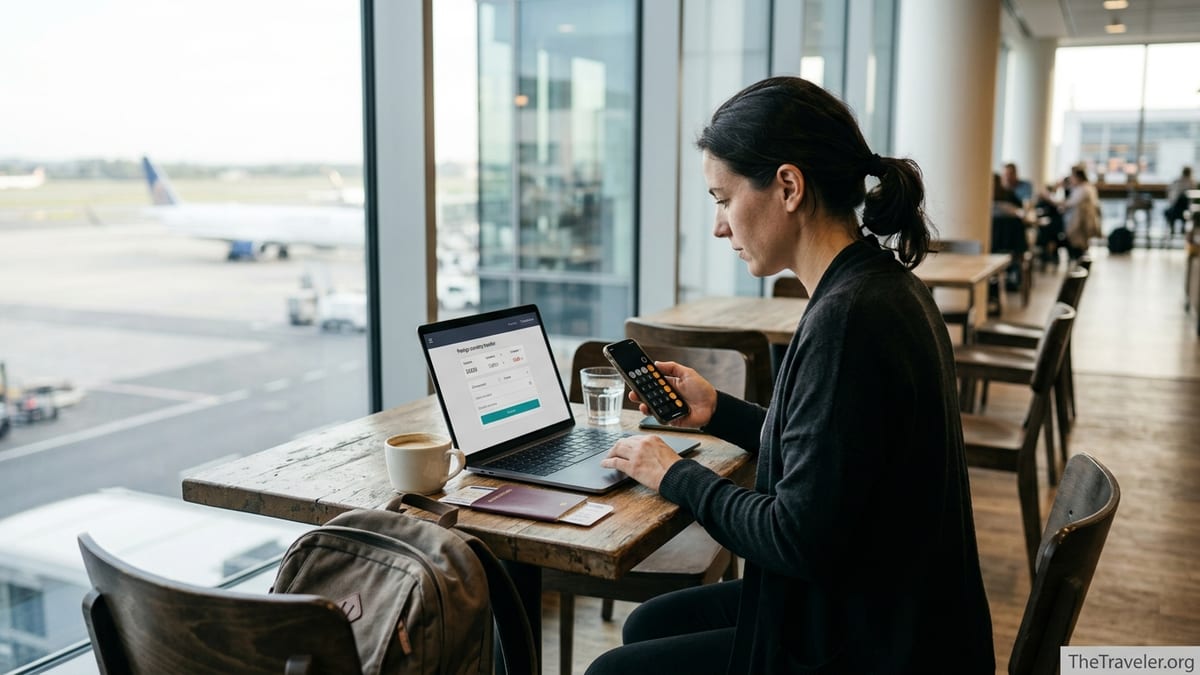
How OFX Works Behind the Scenes
OFX is not a traditional bank. It is a specialist foreign exchange and international payment provider that sits between your bank and your recipient’s bank. When you book a transfer, you are not sending money directly from your bank in, say, New York to someone’s account in Paris. Instead, you send US dollars to OFX’s local US account, OFX converts those funds at its customer exchange rate, and then OFX pays out the equivalent euros from its local euro account to the recipient. Because the money usually moves as domestic transfers on each side, costs can be lower and transfer tracking is more transparent than with a single international wire.
In practice, a typical transaction might look like this: you book a 10,000 US dollar transfer to euros in the OFX app. Your bank sends 10,000 dollars by domestic wire or ACH to OFX’s US account. Once OFX receives the money, it converts it to euros at the rate you locked in and then sends the euros via the European banking network to your recipient’s account in France, Spain, or Germany. You see status updates change from “Funds received” to “Transfer in progress” to “Paid” in the OFX app or website.
Because OFX is focused on currency exchange, it also offers tools that banks seldom provide to retail customers, such as the ability to set up forward contracts or rate alerts. For example, if you are a US citizen planning to buy a property in Portugal in three months, you could agree today to exchange 200,000 dollars into euros at a fixed rate close to the current market level, shielding you from a sudden move in the EUR/USD rate that might otherwise blow up your budget.
The trade-off is that the experience is more “FX focused” than many app-based competitors. You will see explicit customer rates and commentary about margins, and you may be asked to speak to a currency specialist by phone for unusually large or complex transfers, something that seldom happens with lightweight peer-to-peer apps.
Fees, Exchange Rates and the Real Cost of an OFX Transfer
OFX markets “bank-beating” rates and very low or no transfer fees, and for many routes that claim is accurate compared with big high street banks. On its own calculator for a 10,000 US dollar transfer to euros, OFX recently showed a zero dollar transfer fee and a customer exchange rate that would deliver roughly 8,644 euros to the recipient, illustrating that OFX typically earns its revenue through a spread between its rate and the mid-market rate rather than a visible service fee.
In real terms, that spread is often under 1 percent on major currency pairs for private clients, and can shrink further for higher-value transfers or corporate customers. Independent comparisons that model a 1,000, 5,000 and 10,000 dollar transfer from US dollars to euros in mid‑2026 suggest OFX’s total cost, including the exchange margin, sits in the range of about 0.7 to 1 percent on common routes, which is materially cheaper than most US banks and often competitive with large cash-transfer brands where margins of 2 to 4 percent are not unusual.
However, there are a few extra costs you should expect. First, your own bank may charge a fee to send a domestic wire to OFX, often around 15 to 30 dollars in the United States if you do not use ACH. Second, in some cases an intermediary or recipient bank can deduct a small incoming wire fee or intermediary bank fee from the amount, particularly when the recipient account is in certain markets or currencies. OFX itself warns that these third-party deductions are outside its control and are not shared with OFX, so the recipient might see a slightly smaller credit than you expected.
The best way to get a concrete sense of cost is to run a live quote in the OFX calculator and compare it to the mid‑market rate you see on a widely used currency site at the same moment. If, for example, the real EUR/USD mid‑market rate is 0.90 and OFX offers you 0.892 on a 10,000 dollar transfer, the roughly 0.8 percent gap is essentially your all-in FX cost. Doing the same comparison with your bank or another service such as Wise or Western Union gives you a realistic, apples-to-apples view of which provider leaves more in your recipient’s hands.
Transfer Limits, Timing and When Your Money Actually Arrives
OFX is generally designed for medium to large transfers rather than tiny remittances. In the United States there is typically a minimum transfer amount of around 1,000 dollars equivalent for personal customers, which already tells you who OFX is targeting: people moving savings, paying tuition or purchasing assets rather than those sending 50 or 100 dollars to friends and family every week. For very large amounts, such as above 100,000 dollars, OFX may ask for additional information or a phone call before approving the trade, both for compliance and for customer protection.
Speed depends on two steps: how quickly your money reaches OFX, and how fast the payout system in the destination country settles the funds. If you fund your transfer by domestic wire early on a weekday, OFX often receives the dollars the same day and can send out the converted currency either the same day or the next business day. For major corridors such as US to the United Kingdom, US to Canada, or US to Australia, end‑to‑end delivery is commonly one to two business days when everything goes smoothly. Using ACH instead of a wire to fund the transfer may add a day to the timeline because ACH credits move more slowly.
On the payout side, European SEPA transfers in euros, UK Faster Payments in pounds, and similar modern clearing systems are often near‑instant once OFX initiates the payment, but there can still be delays caused by recipient bank processing cycles, weekends, or public holidays. If you are sending money to a country where the banking infrastructure is less automated, or where additional checks are common on incoming foreign funds, it can realistically take three to five business days before the recipient can spend the money, even though OFX has already sent it.
A useful practical example: a US couple selling a house in California in May and moving to Spain might schedule a 300,000 dollar transfer with OFX to fund the purchase of their new apartment in Madrid. They agree with OFX to send their dollars by wire on a Monday morning. The funds hit OFX on Monday afternoon Pacific time; OFX processes the conversion overnight and sends euros via SEPA on Tuesday. Their Spanish bank posts the euros to their account on Wednesday morning local time. If the buyers had left this to the last day of completion, a one‑day delay in their US bank’s wire cutoff or a Spanish bank holiday would have caused serious stress. Planning for at least a couple of buffer days is wise whenever there is a legal or contractual deadline involved.
Verification, Compliance Checks and Possible Transfer Delays
Like any serious international payment provider, OFX is bound by anti‑money laundering and counter‑terrorism finance regulations in the countries where it operates. That means you should expect to go through an identity verification process when you first open an account and potentially additional checks when you send unusually large or unusual transfers. This is not unique to OFX; it is part of the regulated nature of cross‑border finance.
At a minimum, you will usually be asked for proof of identity, such as a passport or driver’s license, and sometimes proof of address like a utility bill or bank statement. For larger transfers linked to events such as a home purchase, inheritance or sale of a business, OFX may ask for documents showing the source of funds. For example, a user wiring 500,000 Canadian dollars to the United Kingdom after selling a property might be asked to upload the sale contract or a lawyer’s letter confirming the transaction. If you are paying overseas tuition, a copy of the university invoice typically satisfies the requirement.
Real-world experiences shared by customers show that most transfers go through without major friction once the account is fully verified, but there are also reports of transfers being held for extended periods when OFX’s compliance team is not satisfied with the information provided or when they detect unusual activity. People who had used OFX without issues for years sometimes discovered that a change in their typical pattern, such as sending to a new country or suddenly tripling the size of a transfer, triggered deeper review and weeks of back‑and‑forth before the money was either released or returned. While such cases are not the norm, they are important to be aware of if your transfer is time‑sensitive.
To reduce the risk of delays, it helps to set up your OFX account well before you need to move money, complete all requested identity checks early, and be ready with documentation that explains where the funds come from. If you know you will be selling a property, receiving a large bonus, or moving retirement savings, ask OFX support in advance what documents they are likely to request. Having those ready can turn a stressful scramble into a routine upload that does not materially slow down your transfer.
Security, Regulation and How Your Money Is Protected
Before trusting any provider with tens or hundreds of thousands of dollars, it is reasonable to ask how secure it really is. OFX has been operating since the late 1990s and is supervised by a range of regulators worldwide. In the United States, its operations are registered with the Financial Crimes Enforcement Network, while in other key markets it is regulated by authorities such as the Australian Securities and Investments Commission and the UK’s Financial Conduct Authority. In practical terms, that oversight means OFX must follow strict rules on safeguarding client funds, monitoring transactions for suspicious activity, and handling customer data.
Operationally, client funds are typically held in separate accounts from OFX’s own corporate money, reducing the risk that your transfer would be affected if the company had a business issue. OFX also works with global banking partners and uses layered fraud prevention systems to flag suspicious logins or transfer instructions. For the everyday user, this usually surfaces as two‑factor authentication when you log in from a new device, transaction confirmation emails, and sometimes verification calls for very large or unusual transfers.
It is important to understand that using OFX is not the same as holding money in a bank account covered by US deposit insurance or an equivalent scheme elsewhere. OFX is a payment institution and currency broker rather than a full bank. Its job is to move your money, not to store it long‑term. For that reason, a healthy practice is to initiate transfers when you are ready to move funds and avoid leaving large balances sitting unconverted or unassigned in your OFX profile. Treat the service as a bridge between two bank accounts, not as a place to park your savings.
From a practical risk‑management perspective, many travelers and expats choose to test a provider with a modest transfer first, such as 2,000 or 5,000 dollars, to build confidence in the process and see how long it takes to arrive. Once they are comfortable, they move larger amounts. This staged approach makes particular sense if you are uneasy about online transfers or have not previously dealt with a specialist FX company.
How OFX Compares With Banks and Other Transfer Services
When deciding whether to use OFX at all, you are usually choosing between three broad options: a traditional bank wire, a modern app‑based provider such as Wise, or a specialist like OFX that leans toward higher‑value transfers. Banks tend to be the most convenient if you already hold accounts and prefer to manage everything from one place, but they are typically the most expensive, with visible international wire fees that can run to 35 to 50 dollars from a US bank and less competitive exchange rates that add another 2 to 4 percent in hidden cost.
App‑based providers such as Wise often show the mid‑market rate directly and charge a transparent percentage fee on top. For small and medium transfers, especially when you prioritize speed and a slick mobile interface, this model can be very attractive. However, percentage‑based fees can become significant for large transactions. For instance, a fee of 0.7 percent on a 10,000 dollar transfer is 70 dollars, and on a 100,000 dollar transfer it becomes 700 dollars. For large sums, customers sometimes find that OFX’s lower percentage margin, combined with no fixed transfer fee, yields a better total outcome even if the published rate looks similar at first glance.
Meanwhile, cash‑focused brands like Western Union excel when the recipient needs to pick up cash in person or when sending to locations where bank coverage is patchy. That flexibility comes at a cost: even where the advertised transfer fee is low or temporarily zero, the exchange rate margin can be several percentage points worse than the mid‑market rate, particularly for cash pickup. Comparisons that model typical transfers from the United States suggest that on a 1,000 dollar remittance, such providers can sometimes cost double or more what a specialist FX firm like OFX charges in total margin.
For a traveler or expat, the practical conclusion is to match the service to the job. If you are wiring a 250,000 dollar property deposit or moving a life’s savings from one country to another, it is worth speaking to OFX or similar players to negotiate a sharp rate and benefit from human support. If you are simply splitting rent with a friend abroad or sending a few hundred dollars for a short‑term trip, a low‑friction app may be more convenient. Knowing in advance that OFX is optimized for larger, bank‑to‑bank transfers helps set expectations and reduces frustration if it feels less instant than a pure mobile wallet.
Practical Tips Before You Hit “Send” With OFX
Beyond understanding fees and security, there are several practical steps that make using OFX smoother. First, gather accurate recipient banking details in the correct local format. For a transfer to Europe, that means the IBAN; for the United Kingdom, the sort code and account number; for Australia, the BSB and account number. A single digit entered incorrectly can lead to rejections or, in rare cases, misdirected funds that take days or weeks to trace and recover. Double‑checking with your recipient or their bank before you book a large transfer is a simple but powerful safeguard.
Second, pay attention to time zones and banking cutoffs. If you are in California sending to Europe, initiating a transfer late on a Friday afternoon Pacific time may mean the funds are not received by OFX until Monday, and the euros may not reach the European account until Tuesday or Wednesday. If you have a completion date, tuition deadline or property exchange set for a specific week, work backwards and aim to have the money in place several business days earlier than strictly necessary.
Third, decide how actively you want to manage the exchange rate. OFX offers options to lock in a rate immediately, set up a forward contract, or wait for a better rate using alerts. For example, an Australian family planning to pay 80,000 euros of French university fees over the next year could lock in a forward contract to protect against a sharp fall in the Australian dollar, or they could split their transfers into several chunks spread across the year to average out currency movements. Each approach carries trade‑offs between certainty and flexibility, so it is worth discussing your plans with an OFX representative if the sums are large.
Finally, make sure the transfer fits comfortably within your own bank’s daily transfer limits and security policies. Some US banks cap online wires below the amount you intend to send, or require you to set up new external payees a day or two in advance. Sorting out those details with your bank a week before your OFX transfer gives you room to maneuver if something unexpected crops up.
FAQ
Q1. Is OFX safe to use for large international transfers?
OFX is a regulated money transfer provider supervised by financial authorities in multiple countries and uses segregated client accounts and security controls. While it is not a bank and does not offer deposit insurance, it is generally considered a secure option for moving significant sums when used as intended for short‑term transfers between bank accounts.
Q2. How much does OFX really cost compared with my bank?
OFX typically charges little or no explicit transfer fee and instead earns a margin on the exchange rate, often under 1 percent on major currencies for personal clients. When you add this to any fee your bank charges to fund the transfer, OFX is usually substantially cheaper than a traditional bank wire, which often combines a high service fee with a less favorable rate.
Q3. How long will my OFX transfer take to arrive?
For common routes such as US to the United Kingdom, Europe, Canada or Australia, many transfers arrive in one to two business days once OFX receives your funds. Using ACH rather than a domestic wire, sending near a weekend, or transferring to countries with slower banking systems can extend the total time to three to five business days.
Q4. What documents will OFX ask for before I can send money?
Expect to provide proof of identity such as a passport or driver’s license and sometimes proof of address when you open your account. For larger or less typical transfers, OFX may also request documents showing where the money comes from, such as a property sale contract, inheritance letter, or investment statement.
Q5. Can my OFX transfer be delayed or blocked?
Yes. If OFX’s compliance team needs more information about you or your transfer, the payment can be paused until you provide satisfactory documents or explanations. In most cases this is resolved quickly, but some users have reported longer delays when documentation was incomplete or when their activity did not match their usual pattern.
Q6. What are the minimum and maximum amounts I can send with OFX?
In the United States, OFX usually has a minimum transfer size of around 1,000 dollars equivalent for personal customers. There is no fixed public maximum, but very large amounts may require additional checks or a conversation with an OFX specialist, and your own bank’s daily transfer limits may also constrain what you can send at once.
Q7. Will my recipient have to pay any fees to receive money from OFX?
OFX does not generally charge the recipient, but some banks impose their own incoming wire or intermediary fees, which can reduce the final credited amount by a small sum. These charges vary by bank and country and are outside OFX’s direct control, so it is sensible to ask the recipient to check with their bank in advance if this is a concern.
Q8. Can I cancel or change an OFX transfer after booking it?
Once you have locked in an exchange rate and OFX has begun processing your transfer, cancelling or changing it may not be straightforward, especially if the funds have already been converted or sent out. In some cases OFX can attempt to reverse a transfer or unwind the trade, but you may be exposed to currency movement or fees. If you need to adjust details, contact OFX support immediately.
Q9. Is OFX better for one‑off transfers or regular payments?
OFX can handle both, but it is particularly popular for larger one‑off transfers such as property purchases, relocations or sizeable investments. For smaller, recurring payments such as monthly rent or family support, some travelers prefer providers with lower minimums and automated recurring payment features, although business clients may still find OFX’s tools attractive for regular invoices or payroll.
Q10. What should I do before using OFX for the first time?
Open your account well ahead of when you need to move money, complete all identity checks, test the service with a modest transfer, and gather any documents that explain your source of funds. Compare OFX’s live quote with your bank and at least one other transfer service so you understand the cost and timing before you rely on it for a time‑critical payment.