


Hong Kong International Airport is once again one of Asia’s busiest hubs, and its lounge scene has bounced back strongly. The challenge for travelers in 2026 is no longer finding a lounge, but deciding which of the many options is actually worth the time, money, or miles. From flagship Cathay Pacific spaces to pay-per-use lounges popular with economy passengers, some deliver hotel-level comfort while others feel like crowded food courts with better chairs. This guide focuses on real experiences, current access rules, and concrete examples so you can make a smart choice on your next transit through Hong Kong.
Get the latest updates straight to your inbox!
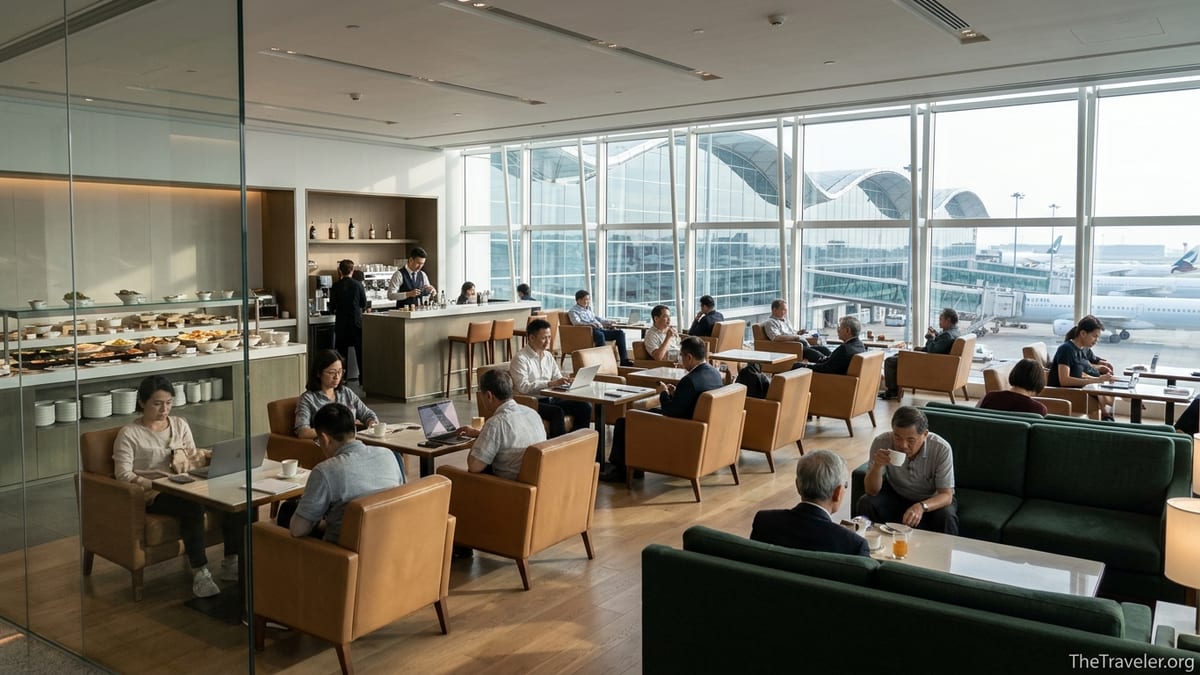
Cathay Pacific’s Flagship: The Pier First Class Lounge
If you have access to The Pier First Class Lounge near Gate 63, it should almost always be your first choice. Widely regarded by frequent flyers as one of the best oneworld lounges in the world, it combines low lighting, natural materials, and quiet corners that feel closer to a boutique hotel than an airport. Recent reviews describe a calm space even at peak evening departure banks, with passengers noting that it often feels half-empty compared with business lounges even when Hong Kong is busy.
The signature experience here is the sit-down Dining Room, which operates like a small restaurant. Since late 2023 the menu has featured rotating dishes created in partnership with Rosewood Hong Kong, such as handmade pasta or refined takes on classic Italian mains, served on proper tableware with full restaurant service. A typical meal might start with a light salad, continue with a seasonal pasta dish, and finish with plated dessert and barista coffee, all included in your lounge access. Many travelers schedule their connection specifically to have a full meal here instead of eating on board.
Beyond the restaurant, The Pier First offers private day suites in The Retreat, where you can close the door, lie down on a proper daybed, and control your own lighting. These can be a lifesaver on long connections after overnight flights from Europe or North America. Showers are finished in stone and brass, with rain showers and amenities that would not feel out of place in a luxury hotel. For oneworld Emerald members and first class passengers, the combination of quiet, quality dining, and genuinely restful spaces makes this lounge the top “worth it” choice at Hong Kong.
Access, however, is limited. You need to be flying first class on Cathay Pacific or another oneworld carrier, or hold oneworld Emerald status such as Cathay Diamond, American Airlines Executive Platinum, or Qantas Platinum. If you qualify, it is almost never worth spending time in a third-party lounge instead.
The Pier Business Class: The Best All-Rounder
The Pier Business Class Lounge, also near Gate 65, is the workhorse choice for many travelers. Cathay refurbished it with warm woods, fabric partitions, and zones that feel more like a co-working space or café than a traditional lounge. Recent reviews in 2025 and 2026 consistently highlight its layout and food quality, and many business travelers consider it the best business-class lounge in the terminal.
What makes The Pier Business particularly worth visiting is the Food Hall and Noodle Bar. Instead of only a buffet, you order freshly prepared Hong Kong dishes such as wonton noodle soup or dan dan noodles, along with dim sum and local-style milk tea. Travelers often point out that a hot bowl of noodles here beats most inflight meals on regional routes. There is also a Western section with salads, simple mains, and desserts if you prefer something familiar. During peak evening hours, the kitchen manages to keep up, although you might wait 5 to 10 minutes for made-to-order dishes.
For passengers who need to work, The Pier Business offers individual work bays, USB and power outlets at almost every seat, and reasonably fast Wi-Fi that can handle video calls. Families appreciate the kids’ play area and the quieter corners toward the back of the lounge. Showers are plentiful and finished to a high standard, which matters if you are connecting from Europe to Australia or vice versa and want to freshen up before a second long-haul sector.
Access is available to Cathay Pacific and oneworld business-class passengers, as well as oneworld Sapphire and Emerald status holders traveling in any cabin. If your flight departs from the higher gate numbers in the 60s, The Pier Business is usually the most convenient and highest-value option, and it is generally a better experience than most pay-per-use alternatives even when slightly crowded.
The Wing, The Bridge and Qantas: When Location Matters Most
Not every connection in Hong Kong leaves you near The Pier. For departures near the lower gate numbers, Cathay’s other lounges and the Qantas Hong Kong International Lounge can be more practical and still very worthwhile. The Wing Business and First lounges, close to the main security area, remain popular because you can be seated with a drink within minutes of arriving airside. Even though parts of The Wing have been under phased renovation, the signature features like the Champagne Bar and the famous cabana-style rooms in The Wing First still attract loyal fans looking for a quick shower and glass of bubbles before short-haul flights.
Further along the concourse, The Bridge has returned as a strong mid-terminal option after its phased reopening. Frequent flyers highlight its calmer atmosphere and a more traditional buffet-style setup that works well if you just want a quick meal before boarding. A typical visit might involve a short walk from a mid-30s gate, a plate of hot Asian or Western dishes, a drink at the bar, and a shower, all within an hour-long layover. For many oneworld passengers, the choice between The Bridge and The Wing simply comes down to which is closer to the gate printed on their boarding pass.
The Qantas Hong Kong International Lounge, located near Gate 5, is another excellent option, particularly for evening departures to Sydney, Melbourne, and other Australian cities. After Qantas reopened the space and refreshed its food program, travelers report a relaxed, Australian-flavored environment with signature dishes inspired by Qantas’ long-running partnership with chef Neil Perry. Typical offerings include small plates like salads with Asian accents, pasta dishes, and a made-to-order bar for items such as toasted sandwiches or simple stir-fries, plus Australian wines and a full bar.
From a “worth it” perspective, these lounges shine when your gate is nearby or your connection is short. Walking from Gate 5 to The Pier at Gate 63 can easily take 15 to 20 minutes each way, so if you have only a 90-minute connection, using The Wing, The Bridge, or the Qantas lounge often gives you more net time to relax, eat, and shower without clock-watching.
Plaza Premium Lounges and Other Pay-Per-Use Options
For economy passengers without elite status, Hong Kong’s Plaza Premium Lounges remain the most realistic way to buy your way into some comfort. The main Plaza Premium Lounge near Gate 1 and another near Gate 35 both work on a pay-per-use model, either via direct payment at the door, advance purchase through the lounge’s website, or via membership programs like Priority Pass and DragonPass. Prices vary with demand and provider, but in 2026 many travelers report walk-up rates typically in the range of the equivalent of 50 to 70 US dollars for a three-hour stay, with discounts sometimes available for advance online bookings.
Plaza Premium’s value depends heavily on timing. At quieter times, such as mid-morning on weekdays or late evenings outside the main departure banks, you are likely to find comfortable seating, hot buffet items like fried rice, noodles, and stir-fried vegetables, a salad bar, and a basic but functional drink selection including beer and house wine. For a traveler facing a four-hour layover after a long-haul economy flight, that can be a worthwhile trade-off compared with sitting at a crowded public gate.
However, during peak evening hours, especially when multiple long-haul departures leave within a short window, reports from 2025 and 2026 note that the Plaza Premium lounges can become uncomfortably crowded. Guests mention waitlists at the entrance, difficulty finding seats near power outlets, and food that struggles to keep up with demand. In those situations, the experience may not feel meaningfully better than the main terminal seating, particularly if you are paying out of pocket at the higher end of the price range.
If you hold a credit card that includes complimentary Priority Pass or a similar program, Plaza Premium can still be a good backup option, but it is rarely worth choosing over a Cathay or Qantas lounge when you are eligible for those. For travelers who must pay cash, it is important to weigh the expected crowd levels at your time of travel and ask at the desk about current occupancy before committing to a multi-hour paid stay.
Newer Independent Lounges and Emerging Concepts
Hong Kong’s lounge landscape has started to diversify beyond the traditional airline and Plaza Premium offerings. One of the more notable developments has been the rebranding of the former Chase Sapphire Lounge by The Club into the Kyra Lounge in early 2026. While core features like a design-forward interior, proper cocktail bar, and upgraded buffet have remained, access rules and partnerships have shifted. Some premium credit card holders who previously entered under the Chase branding now find that they need to verify whether their card still grants complimentary access or if a discounted pay-in rate applies.
The Kyra Lounge and similar independent concepts aim to offer a more upscale, boutique feel than the typical contract lounge. Think craft coffee, more thoughtfully plated small dishes rather than large steam-table buffets, and bar staff able to make classic cocktails on request. These spaces can be a very pleasant alternative for travelers who value atmosphere and food quality and who do not have status with Cathay or another oneworld airline. However, because they often rely heavily on partnerships with card issuers, the exact value proposition can vary significantly depending on which plastic you carry.
There are also smaller contract lounges sometimes used by specific airlines during particular time slots. For example, a mid-tier carrier might direct its premium passengers to a non-branded lounge for a few evening hours, after which that same space serves Priority Pass guests overnight. The experience in these lounges is typically functional rather than memorable: light snacks, basic hot food, soft drinks, beer, and a few bottles of spirits behind the bar. They can still be worthwhile if included with your ticket, but they are rarely worth a separate cash payment if you have other options.
As these newer concepts evolve, the key for travelers is to check not just whether they can enter, but what the lounge actually offers at their specific time of travel. A lounge that feels exclusive and calm at 10 a.m. might feel crowded and ordinary at 9 p.m. when several credit-card partnerships funnel passengers through the door.
How to Decide Which Lounge Is Worth It for You
Choosing the right lounge at Hong Kong International Airport depends on three main factors: what access you have, where your gate is, and how long your connection lasts. A traveler flying Cathay Pacific business class from London to Sydney with a four-hour layover has very different needs from someone flying economy on a regional low-cost carrier with a two-hour stop.
If you hold oneworld Emerald or are flying first class, The Pier First should almost always be your default, unless your gate is extremely close to security and your connection is under an hour. The combination of restaurant-quality dining, quiet rest areas, and high-end showers simply outclasses other options. Oneworld Sapphire and business-class passengers should look first to The Pier Business if their gate is in the 60s, or choose between The Wing, The Bridge, and the Qantas lounge based on proximity if departing from lower gate numbers. That approach minimizes walking and maximizes time spent actually enjoying the lounge.
For travelers without status, the calculation is more nuanced. Start by checking whether your ticket or credit card already includes access to a particular lounge. For example, some premium cards in Asia provide limited free entries each year to Plaza Premium or to newer lounges like Kyra. Compare that “free” option against paying out of pocket for three hours, which at current pricing could easily cost as much as a decent sit-down meal in central Hong Kong. If you are on a tight layover of 90 minutes or less, you may be better off grabbing a takeaway meal from an airport restaurant and finding a quiet gate area rather than paying lounge fees for a rushed visit.
It is also worth thinking about what you value most. If a hot shower and quiet are your priority after an overnight flight, then even a basic lounge can be worthwhile, provided it has enough shower rooms and is not overrun during your time window. If you mainly care about a proper meal and drinks, the quality gap between Cathay’s premium lounges and most pay-per-use spaces is significant. In that case, earning status or booking into a higher cabin on key long-haul trips may yield more real-world comfort over a year than paying individually for multiple contract-lounge visits.
The Takeaway
Hong Kong International Airport’s lounge network in 2026 offers a clear hierarchy of value. At the top sit Cathay Pacific’s flagship spaces, led by The Pier First and The Pier Business, which combine thoughtful design, strong food and beverage programs, and facilities that genuinely help long-haul travelers rest and reset. The Wing, The Bridge, and the Qantas Hong Kong International Lounge provide excellent alternatives when location is more convenient, especially for shorter connections or flights departing from the lower gate numbers.
Plaza Premium and other pay-per-use lounges fill an important gap for economy travelers, but their value depends heavily on timing, crowd levels, and whether you access them through a membership program or pay full price at the door. Newer independent lounges like the rebranded Kyra Lounge add welcome variety for credit-card holders but require a bit of homework to understand changing access rules and peak-time congestion.
For most travelers, the lounges that are truly worth visiting in Hong Kong are the ones that meaningfully improve the most uncomfortable part of their journey, whether that is a need for real rest after a red-eye, a proper meal between long-haul legs, or simply a calm, well-designed space away from the main terminal. By matching your access options and schedule to the strengths of each lounge, you can turn a routine connection at Hong Kong International Airport into one of the more pleasant stretches of your trip instead of a long wait at the gate.
FAQ
Q1. Which lounge at Hong Kong International Airport is the best overall?
The Pier First Class Lounge is widely regarded as the top choice for those who qualify, thanks to its restaurant-style dining, quiet day suites, and hotel-quality showers. Among business-class lounges, The Pier Business is often considered the best all-rounder.
Q2. I am flying economy with no status. Is it worth paying for a Plaza Premium Lounge?
It can be worthwhile on a long layover of three hours or more, especially after an overnight flight, but value drops sharply during peak evening periods when the lounge becomes crowded. Always check current occupancy and pricing at the door before paying.
Q3. How much should I expect to pay to access a pay-per-use lounge in Hong Kong?
Typical walk-up rates for major pay-per-use lounges such as Plaza Premium are often in the region of the equivalent of 50 to 70 US dollars for about three hours, although exact prices vary with demand and booking channel.
Q4. Is it worth walking from my gate to The Pier if my flight leaves from a low-numbered gate?
Walking from a gate near security to The Pier around Gate 63 can take 15 to 20 minutes each way. If your connection is under about two hours, you may be better off using The Wing, The Bridge, or the Qantas lounge if you have access, so you can relax instead of rushing back to the gate.
Q5. Which lounges have the best food at Hong Kong International Airport?
The Pier First is known for its full-service restaurant with seasonal menus, while The Pier Business offers made-to-order local dishes in its Noodle Bar and a solid buffet. The Qantas lounge also earns praise for its Australian-influenced menu and wines.
Q6. Do all Cathay Pacific lounges in Hong Kong have showers?
Yes, Cathay’s main lounges such as The Pier, The Wing, and The Bridge all provide shower facilities, with The Pier in particular often praised for hotel-style shower suites. At busy times, you may need to join a short waitlist at reception.
Q7. Can I use Cathay’s lounges if I am flying another oneworld airline?
Generally yes, provided you meet oneworld status or cabin requirements. For example, a business-class ticket on a oneworld partner or oneworld Sapphire or Emerald status typically grants access to designated Cathay lounges, subject to any temporary operational changes.
Q8. What is the Kyra Lounge, and who can access it?
The Kyra Lounge is an independently operated lounge that evolved from the former Chase Sapphire Lounge concept. Access is typically via selected premium credit cards, lounge membership programs, or paid entry, but the specific rules depend on current agreements, so travelers should confirm with their card issuer.
Q9. Is lounge hopping between different Cathay lounges worth it?
Some frequent flyers enjoy sampling multiple lounges on a long layover, for example starting at The Wing near security and then moving to The Pier closer to departure. This can be enjoyable if you have three hours or more, but with shorter connections you will get more value by picking one lounge close to your gate.
Q10. If I have a Priority Pass membership, which lounge should I aim for?
Priority Pass typically offers access to Plaza Premium or other independent lounges rather than Cathay’s own spaces. In that case, choose the Plaza Premium or similar lounge closest to your departure gate and try to avoid peak evening hours when they are busiest, to get the best experience from your membership.