


More news on this day
The United Kingdom has updated its travel advice for Oman in response to a surge in Iranian military activity across the Gulf, warning that further attacks could occur at short notice and that air travel in the region may face sudden disruption.
Get the latest news straight to your inbox!
Heightened Concerns After New Iranian Strikes Across the Gulf
Recent reports of Iranian missile and drone attacks targeting locations across the Gulf, including in Oman, have sharpened security concerns for travelers and airlines operating in the region. Coverage from European and regional outlets indicates that strikes and attempted strikes have been directed at or near civilian and infrastructure sites in several states adjacent to the Strait of Hormuz, underscoring the strategic vulnerability of key air and sea corridors.
Analyses of the latest round of attacks describe a pattern of pressure aimed at coastal states and commercial shipping along one of the world’s most critical energy and trade routes. Oman, which borders much of the southern side of the strait, has previously emphasized its role as a neutral mediator, yet publicly available reporting suggests it has not been insulated from the fallout of escalating confrontation between Iran and Western-backed security initiatives in regional waters.
European governments, including the United Kingdom, France and Germany, have jointly condemned what they describe as reckless Iranian actions against Gulf states and commercial vessels, calling for the rapid restoration of safe maritime transit. The UK’s updated travel advice for Oman fits into this broader context of tightening warnings on travel, aviation and shipping across the wider Middle East.
UK Travel Advice Stresses Unpredictable Security Environment
The UK Foreign, Commonwealth and Development Office has been gradually tightening its language on regional risks since early 2026, reflecting what it calls an unpredictable security situation linked to Iran and its partners. While detailed country pages vary, recent updates to advice on Oman and its neighbors highlight the possibility that further Iranian or Iran-linked attacks could resume or intensify with little warning, even during apparent lulls in hostilities.
Publicly available parliamentary records and official statements show that British officials have repeatedly referenced Iranian strikes against Gulf states, including Oman, in the context of debates on regional security. The UK has also reiterated its separate stance advising against all travel to Iran, citing the risk of arbitrary detention, while noting that any renewed military escalation could have immediate spillover effects on nearby territories, transport networks and critical infrastructure.
For Oman, the updated advisory language emphasizes vigilance, close monitoring of news and official updates, and readiness to adjust travel plans quickly. Travelers are encouraged to stay informed about developments in the Strait of Hormuz and surrounding areas, where the risk profile can change rapidly in response to military moves, diplomatic friction or maritime security incidents.
Potential for Short-Notice Flight Disruption Over Oman and the Gulf
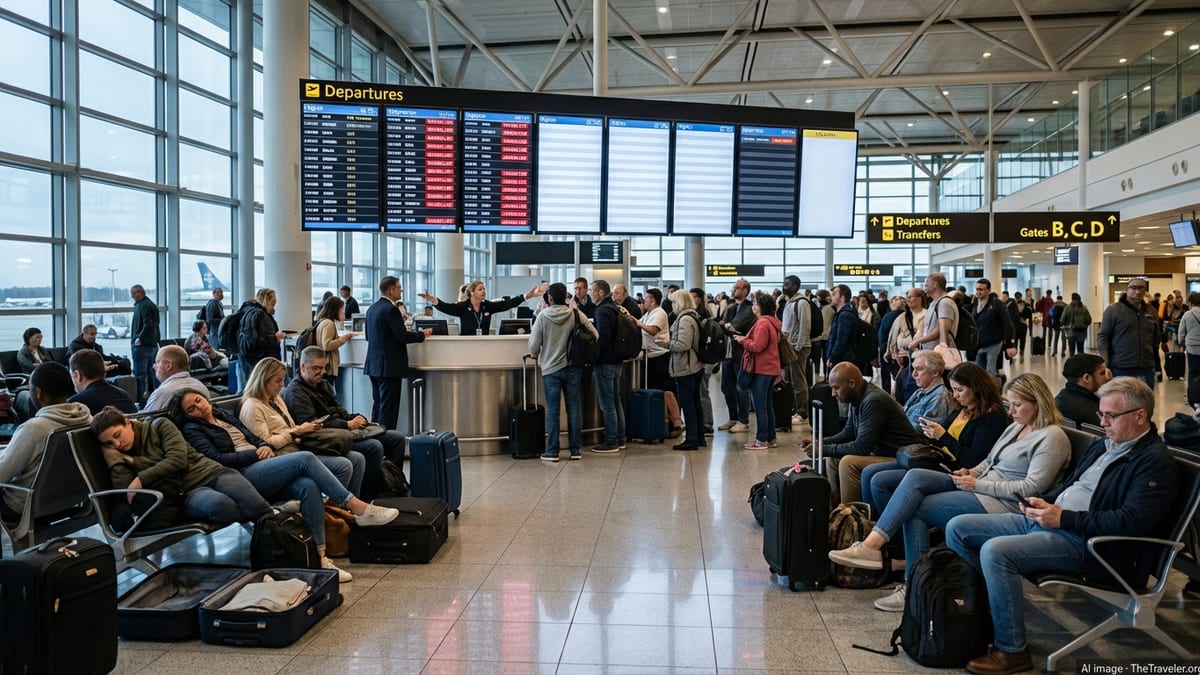
The aviation sector has been one of the most immediate channels through which regional tensions are felt by travelers. Industry and security advisories released in recent months describe a pattern of rolling disruptions, including temporary airspace restrictions, rerouted flights and last-minute cancellations affecting destinations across the Gulf.
Specialist security bulletins focusing on the Middle East note that while Oman’s airports remain operational, their connectivity can be affected by instability in neighboring skies and by airline-level decisions on routing away from perceived risk. Earlier phases of the current crisis saw airlines suspend or curtail flights to several Gulf hubs at short notice, forcing rapid itinerary changes and complicating crew movements and passenger transit.
Risk consultancies tracking aviation conditions in the region have underlined that schedules remain fluid and that airspace closures can be triggered quickly by new missile launches, drone incidents or alerts issued by local authorities. Travelers heading to or transiting through Oman are advised to maintain close contact with airlines, regularly check flight status, and allow extra time for potential rebooking or diversions.
Strategic Importance of Oman and the Strait of Hormuz
Oman’s geography gives it a central role in any escalation that touches the Strait of Hormuz. Its northern Musandam enclave overlooks the narrowest point of the waterway, while ports along its Arabian Sea coastline provide alternative anchors for commercial and naval traffic. This positioning is a key factor in the UK’s cautious tone on travel and transit risks, even though Oman itself has not been the primary focus of recent confrontations.
Maritime security assessments published in late June point to attempts by international bodies and Oman to organize safer transit routes for merchant shipping along the Omani side of the strait. These initiatives are designed to reduce exposure to Iranian territorial waters, but commentary from analysts suggests they may also prompt further attempts by Iran to exert leverage through targeted attacks or heightened military signaling.
Any sustained disruption to shipping around Oman could have knock-on effects for port operations, coastal infrastructure and nearby aviation routes. The UK advisory reflects this interconnected risk environment, implicitly recognizing that even limited or localized incidents at sea may translate into wider uncertainty for travelers on land and in the air.
Practical Guidance for Travelers Weighing Trips to Oman
For prospective visitors, the updated UK travel advice does not mean that all travel to Oman is suspended, but it does indicate a more cautious official stance on the risk landscape. The guidance encourages British nationals to carefully review safety and security sections before departure, register for official updates where available, and maintain flexible arrangements that can accommodate rapid changes.
Security analysts recommend that travelers consider contingency plans such as refundable tickets, comprehensive travel insurance that explicitly covers conflict-related disruption, and backup routing options that avoid the most exposed air corridors if conditions deteriorate. Travelers already in Oman are advised in public advisories to remain alert to local announcements, familiarize themselves with shelter locations at accommodation sites, and keep essential documents and communication devices accessible.
The evolving UK advisory on Oman illustrates how quickly Gulf travel conditions can shift under the pressure of wider geopolitical tensions. As Iranian actions and responses from regional and international actors continue to play out, the risk of further attacks at short notice and associated flight disruption is expected to remain a central factor in official guidance and traveler decision-making.