


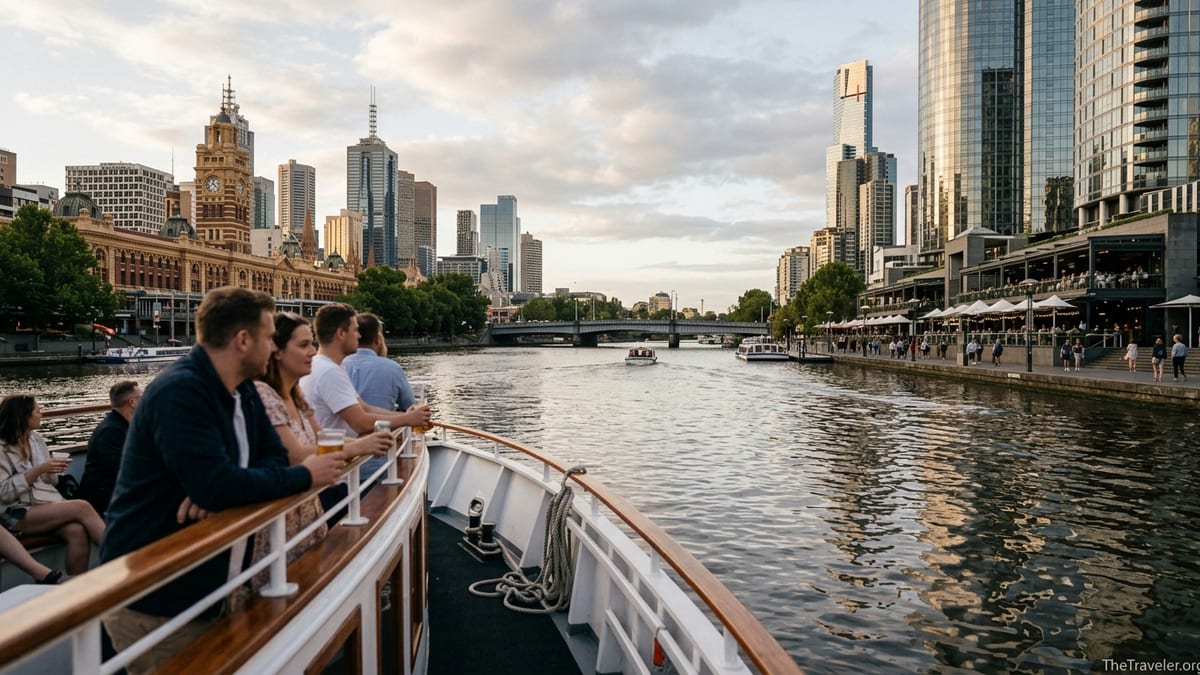
Melbourne has plenty of ways to impress first-time visitors, but few manage to capture the city’s personality as completely as a cruise along the Yarra River. Gliding past glass towers and heritage bridges, watching Southbank’s restaurants fill for the night, or drifting quietly under plane trees near Herring Island, you see the city from an angle most travellers never experience on foot. Whether you choose a one-hour sightseeing spin, a sunset dinner, or a self-drive electric boat with friends, a Yarra River cruise quickly earns its reputation as one of Melbourne’s essential experiences.
The Yarra: Melbourne’s Story Told from the Water
Spend even a short time in Melbourne and you will notice how often locals use the Yarra River as a reference point. The waterway cuts through the central business district, with Federation Square and Flinders Street Station on one bank and Southbank’s promenade, restaurants and high-rise apartments on the other. Southbank itself has grown into one of the city’s major entertainment precincts, with waterfront dining, bars and the Crown Melbourne complex all lining the river’s edge. From the deck of a boat you get an unbroken view of this riverside skyline, from the historic Princes Bridge to the modern glass of South Wharf.
The river is also a thread through Melbourne’s sporting heart. As you cruise east from the city you pass close to the sporting precinct that includes the Melbourne Cricket Ground and Melbourne Park, home of the Australian Open tennis. A commentary on most sightseeing cruises will point out how the river shaped the placement of these venues and how crowds still stream across the bridges on big game days. Seeing the stadium lights rise beyond the trees while you float by gives a sense of how compact and connected the city really is.
Head in the other direction towards Docklands and the character changes again. The high-rise apartments of NewQuay, Marvel Stadium and the modern footbridges over the river speak to Melbourne’s ongoing reinvention of its waterfront. Many cruises now start or finish in Docklands, and operators like Yarra River Cruises and Tramboat base their boats at marinas here. The transition from the historic city centre to this newer district is far more obvious from the water than it is at street level.
Beyond the built-up core, the river softens into green corridors and quiet bends. Some longer cruises and self-drive experiences continue upstream past parkland, rowing clubs and the Main Yarra Trail. On a still morning or late afternoon, the reflections of gum trees and boathouses replace the city’s neon. This contrast between urban energy and calm suburban stretches is a big part of why a Yarra cruise feels like a complete snapshot of Melbourne in a single outing.
Sightseeing Cruises: The Easy First-Timer Choice
For most visitors, the simplest way to experience the Yarra is to join a scheduled sightseeing cruise. Companies such as Melbourne River Cruises operate daily departures from central berths near Southbank and Federation Square, typically offering itineraries that run either up-river towards the sports precinct and Herring Island or down-river towards Docklands and the port. A common option is a one to one-and-a-half hour cruise with live or recorded commentary covering the history of the river, local architecture and current points of interest.
Prices vary by operator and season, but as of 2026 you can usually expect to pay in the region of 30 to 45 Australian dollars per adult for a standard daytime sightseeing cruise, with reduced fares for children and families. Many boats provide complimentary tea or coffee and have licensed bars for paid drinks, so it is possible to sit out on deck with a flat white or a glass of Victorian wine while the skyline slips by. Some operators run small-group boats with open sides and large windows, making them a good choice if you are keen on photography and want unobstructed views of landmarks like Federation Square and Eureka Tower.
One advantage of these scheduled cruises is how easy they are to slot into a busy city itinerary. Services often depart several times a day, particularly on weekends and during Australian school holidays, and tickets can usually be bought on the day from kiosks along Southbank Promenade if there is space. That means you can decide spontaneously after a visit to the National Gallery of Victoria or a stroll along the river that you want to see the city from the water. For families, the commentary and constantly changing scenery tend to keep children engaged more effectively than a museum or walking tour might.
Sightseeing cruises also suit travellers who appreciate context. On a typical run towards Docklands, the captain may explain how the working port operates, point out street art under the bridges and highlight new residential precincts taking shape along the river’s edge. Travel upstream and you will likely hear about the rowing culture on the Yarra, the transformation of former industrial sites into parkland and the significance of locations such as Birrarung Marr. By the time you step back onto the wharf you have not only seen the city but also collected a set of stories to frame the rest of your stay.
Sunset and Dinner Cruises: Melbourne’s Skyline at Its Best
If your schedule allows, it is hard to beat a cruise timed with sunset or the early evening. As the light softens and office workers filter into Southbank’s bars and restaurants, the city’s glass towers begin to glow and the river turns reflective and calm. Several operators focus specifically on this golden window of the day, offering sunset sightseeing trips or full dinner cruises that combine views with a sit-down meal.
Dedicated dinner cruise companies on the Yarra typically run two to three hour itineraries that depart from Docklands or Southbank in the early evening. A typical package includes a multi-course menu prepared in partnership with local caterers, along with a selection of Victorian wines and local beers. Pricing depends on the level of inclusions, but many public dinner cruises fall in a broad range around 120 to 180 Australian dollars per person, with premium or private charters costing more. On these cruises you can expect table service, linen-clad tables by the windows and large outdoor decks for taking photos of the skyline.
Other operators take a more casual approach. Tramboat Cruises, for example, offers an evening “Fish ’n’ Chip Dinner Cruise” that pairs a relaxed 2.5 hour journey with takeaway-style seafood served onboard. Guests collect their hot fish and chips en route, then continue cruising past city landmarks as the lights flicker on and the casino’s gas flames burst along the riverfront. This style of cruise generally costs significantly less than a full fine-dining experience, which makes it attractive to families, student groups and travellers who prefer something informal and budget-friendly.
Whichever format you choose, the lasting memory of a sunset or dinner cruise is usually the atmosphere. You might find yourself gliding quietly past Crown Melbourne as bursts of fire from its riverside features reflect in the water, or pausing mid-river for an uninterrupted view of the city’s office towers and footbridges lit up in blues and golds. In summer, outdoor decks fill with people taking photos while a warm breeze moves up the river; in winter, heated interiors with large windows allow you to enjoy the same views without braving the cold. For many visitors, this is the moment when the phrase “world’s most liveable city” starts to make emotional sense.
Private Charters and Self-Drive: Make the River Your Own
Beyond scheduled sightseeing and dinner departures, Yarra cruises have evolved into a flexible platform for almost any kind of gathering. You can charter a private boat for a birthday party, corporate event or small wedding, tailoring the route, duration and onboard experience to suit your group. Some vessels accommodate intimate gatherings of eight to twelve guests, while larger boats handle functions of 50 people or more, often with space for a dance floor and DJ setup.
Pricing for private charters naturally covers a wide range, but many operators quote packages based on an hourly vessel hire plus catering and beverage options. A small self-catered charter in off-peak times might start in the low hundreds of dollars per hour, whereas a fully catered weekend evening event on a large vessel can reach several thousand dollars for the group. The benefit is complete control over your schedule and experience: you might decide to board at a Docklands marina, cruise upstream for sunset photos near the city centre, then continue on to a quieter stretch of river for speeches and dessert.
A particularly appealing option for independent travellers and locals is self-drive boat hire. Companies like ON A BOAT in Docklands specialise in small, easy-to-operate electric boats that do not require a licence. These vessels usually carry around eight or nine passengers and can be hired by the hour or for half-day blocks. As of 2026, typical rates for a small self-drive electric boat on the Yarra commonly sit in the approximate range of 150 to 250 Australian dollars for a couple of hours, depending on group size, day of the week and whether catering is included. Guests are often encouraged to bring their own picnic, drinks and music, turning the boat into a floating living room with city views.
In practice, a self-drive session might look like this: a group of friends meet at a Docklands marina, receive a short safety and navigation briefing, then motor slowly upstream towards Southbank, passing under bridges as commuters watch from the promenades. They stop the boat near a quieter section of bank to share a cheese platter and locally made sparkling wine, then time their return to coincide with the last glow of sunset. For families, the novelty of steering the boat and spotting landmarks like Flinders Street Station or the Melbourne Skydeck makes the outing memorable for children as well as adults.
Where the River Meets the City: Southbank, Docklands and Beyond
One of the strengths of a Yarra cruise is how seamlessly it connects several of Melbourne’s key precincts without the need for trams or taxis. Southbank Promenade, for example, stretches along the southern bank of the river from St Kilda Road to Queensbridge Street and beyond, forming a lively strip of restaurants, bars and public art. River cruise berths sit directly in front of complexes like Southgate and near Crown Melbourne, meaning you can step off your boat and be at the door of a wine bar or restaurant within minutes.
To the west, Docklands has matured into a waterfront neighbourhood with its own attractions, including Marvel Stadium, the Melbourne City Marina and a collection of harbourside cafes. Many cruises depart from or pass through this district, giving passengers views of modern pedestrian bridges, public sculptures and moored yachts. If you are staying in one of Docklands’ high-rise hotels or serviced apartments, a river cruise is effectively on your doorstep. Travellers who begin their cruise here often choose to pair it with a stroll along NewQuay Promenade or an early dinner at one of the area’s restaurants before or after they sail.
Head east along the river and you come to the arts and sports corridor. Landmarks such as the Arts Centre spire, the National Gallery of Victoria and the parklands of Birrarung Marr slide into view on one side, while the Yarra’s north bank offers glimpses of Federation Square and the historic facades along Flinders Street. Further along, near Richmond, the river twists past rowing clubs and leafy walking trails. Some cruises and self-drive hire routes focus on this quieter stretch, which feels surprisingly removed from the CBD despite being only a short distance away.
These different settings allow travellers to tailor their river experience to the mood of their trip. A couple on a city-break weekend might base themselves in Southbank, wander the gallery in the afternoon, take a pre-theatre cruise and then walk directly to a restaurant overlooking the water. A family staying near Docklands could combine a daytime cruise with a visit to the nearby aquarium or a game at Marvel Stadium. Outdoor enthusiasts might use a self-drive hire or guided kayak tour to explore the greener upstream sections before joining friends in the city for dinner. In each case, the river becomes the organising feature of a day in Melbourne rather than just a backdrop.
Planning Your Cruise: Practical Tips, Seasons and What to Expect
Because the Yarra winds through the centre of Melbourne, most cruises are straightforward to access on public transport. Berths at Southbank are a short walk from major tram stops along St Kilda Road and Flinders Street Station, while Docklands marinas sit close to stops on tram routes that serve Harbour Esplanade and surrounding streets. Travellers arriving from further afield can often time their arrival by suburban train to coincide with a cruise departure, then return to their accommodation by tram afterwards. Unlike some coastal excursions that require a long drive, you can usually step from your hotel lobby onto a river boat within a matter of minutes.
Melbourne’s weather, however, is famously changeable, so it is worth planning with a bit of flexibility. Summer, from December to February, offers warm evenings and long twilights that are ideal for open-deck cruising, though popular dinner departures can book out days or weeks in advance. Spring and autumn often bring crisp, clear days and softer light that photographers love, while winter can still be enjoyable thanks to enclosed cabins and heating on many boats. If your heart is set on outdoor decks for sunset, consider checking the forecast and, where possible, choosing a refundable ticket or one that can be shifted to another day if the weather turns wet or windy.
When comparing cruise options, pay close attention to what is included in the ticket price. Some sightseeing services include complimentary hot drinks but charge extra for snacks and alcoholic beverages. Dinner cruises may bundle drinks into a set price or operate on a pay-as-you-go bar system. Self-drive boat hires sometimes include fuel and cleaning fees in the hourly rate but add surcharges for catering packages or peak-time departures. Asking a few detailed questions at the time of booking can prevent surprises and help you compare options on a like-for-like basis.
It is also sensible to think about comfort and accessibility. If you are travelling with small children, check whether lifejackets are provided and if prams can be brought onboard or need to be folded. Travellers with limited mobility should ask about access ramps, step-free boarding and onboard restroom arrangements, as facilities vary considerably between older and newer vessels. Most operators will outline these details on their booking pages or over the phone and are used to working with a wide range of guests, from multi-generational family groups to corporate delegations and wedding parties.
Sustainability and Seeing the River with Respect
Like many cities, Melbourne has spent recent decades reconsidering its relationship with its main waterway. Once treated largely as an industrial corridor, the Yarra is now at the centre of bike trails, parklands and environmental initiatives aimed at improving water quality and habitat. Cruises provide a front-row seat to these changes, from re-vegetated riverbanks and public art celebrating the river’s importance to signage acknowledging the traditional custodians of the land. Many commentaries now weave in information about the river’s Indigenous name, Birrarung, and its ongoing cultural significance.
From a visitor’s perspective, choosing operators that take sustainability seriously is one way to support this shift. Electric-powered self-drive boats reduce emissions and noise, creating a calmer experience for both passengers and wildlife. Some cruise companies highlight their use of modern engines with cleaner fuel technology or showcase waste-reduction efforts, such as minimising single-use plastics on board and sorting recyclables at their docks. While it is not always possible to verify every claim, asking about these measures when booking encourages operators to keep improving their environmental performance.
Individual behaviour on board also plays a role. Small choices like using the bins provided, securing loose items that might blow into the water and keeping music at reasonable levels in quieter stretches all help maintain the river’s appeal for others. If you are hiring a self-drive vessel, following the navigation guidelines and speed limits protects not just your group but also kayakers, rowers and other small craft sharing the water. The Yarra’s central sections can be surprisingly busy on sunny weekends, and courteous navigation keeps the experience enjoyable for everyone.
For travellers with extra time in Melbourne, combining a cruise with a walk or cycle along the Yarra River Trail or the Capital City Trail offers a broader appreciation of the waterway’s ecosystem. You might cruise past a section of river one day and then return on foot the next, noticing birds, public artworks and quiet picnic spots that were harder to pick out from the boat. Approaching the river as both a scenic backdrop and a living environment enriches the experience and explains why so many locals are protective of it.
The Takeaway
Ask a dozen Melburnians to recommend an essential city experience and you will hear a wide range of answers, from coffee tastings in hidden laneways to watching a match at the MCG. Yet a Yarra River cruise appears again and again on those lists for good reason. In the space of a single outing you can see the city’s evolving skyline, its culinary and entertainment districts, its sporting landmarks and its quieter green stretches, all without the hassles of traffic or navigation. Whether you are on a budget-friendly sightseeing boat, a self-drive picnic cruise or a fully catered dinner departure, the perspective from the water makes familiar landmarks feel new.
For first-time visitors, that means a cruise is an efficient introduction to Melbourne’s geography and character. For returning travellers and locals, it offers a fresh way to mark a celebration or simply appreciate a city they thought they already knew. The Yarra is both working river and social hub, cultural touchstone and scenic playground, and time spent gliding along its surface tends to linger in memory long after you have stepped back onto the wharf. If you are planning a trip to Melbourne and trying to decide which activities deserve a spot on your itinerary, giving the river a few unhurried hours is one of the easiest choices you can make.
FAQ
Q1. How long does a typical Yarra River sightseeing cruise last?
Most standard sightseeing cruises run for about one to one-and-a-half hours, although some operators offer shorter or longer options depending on the route and time of day.
Q2. How much should I budget for a basic Yarra River cruise?
As a general guide, adults can expect to pay roughly 30 to 45 Australian dollars for a daytime sightseeing cruise, with discounted fares often available for children, families and seniors.
Q3. Do I need to book my cruise in advance?
Advance bookings are highly recommended for sunset and dinner cruises, weekends and public holidays, while some daytime sightseeing services may have tickets available on the day if they are not already full.
Q4. Are Yarra River cruises suitable for children?
Yes, most cruises welcome families and children, and many kids enjoy the changing scenery and commentary, but it is worth checking age policies, lifejacket availability and stroller access before booking.
Q5. What should I wear on a Yarra River cruise?
Dress for the weather and remember that it can feel cooler on the water, so a light jacket or extra layer is useful even in summer, along with comfortable shoes for moving around the deck.
Q6. Can I bring my own food and drinks?
Policies vary by operator: some sightseeing and self-drive hire boats allow BYO snacks or drinks, while many dinner cruises require you to purchase food and beverages on board as part of a package.
Q7. Are Yarra River cruises accessible for people with limited mobility?
Accessibility differs between vessels, so travellers with mobility concerns should contact operators in advance to ask about ramps, step-free boarding and accessible restrooms on specific boats.
Q8. What is the best time of day for a Yarra River cruise?
Daytime cruises are great for clear views and photography, while sunset and early evening departures offer dramatic city lights and a more atmospheric experience along Southbank and Docklands.
Q9. Do I need a boat licence for self-drive Yarra River hire boats?
Many small electric hire boats on the Yarra are designed to be licence-free, with operators providing a safety briefing and simple controls so that first-time skippers can manage them confidently.
Q10. Will the cruise still go ahead in bad weather?
Most cruises operate in light rain or cool conditions thanks to enclosed cabins, but departures may be postponed or cancelled in severe weather, so operators will usually contact passengers with options if that occurs.