


Cunard’s Queen Victoria is a mid-size, classically styled cruise ship that attracts travelers who prefer ballrooms and string quartets over waterslides and neon lights. With strong recent reviews and a loyal repeat following, she often tops lists of Cunard’s best-rated ships, yet not every traveler will appreciate her traditional atmosphere. This review brings together the latest information on Queen Victoria’s layout, cabins, dining, itineraries and on-board vibe so you can decide, before you book, whether she matches your travel style and budget.
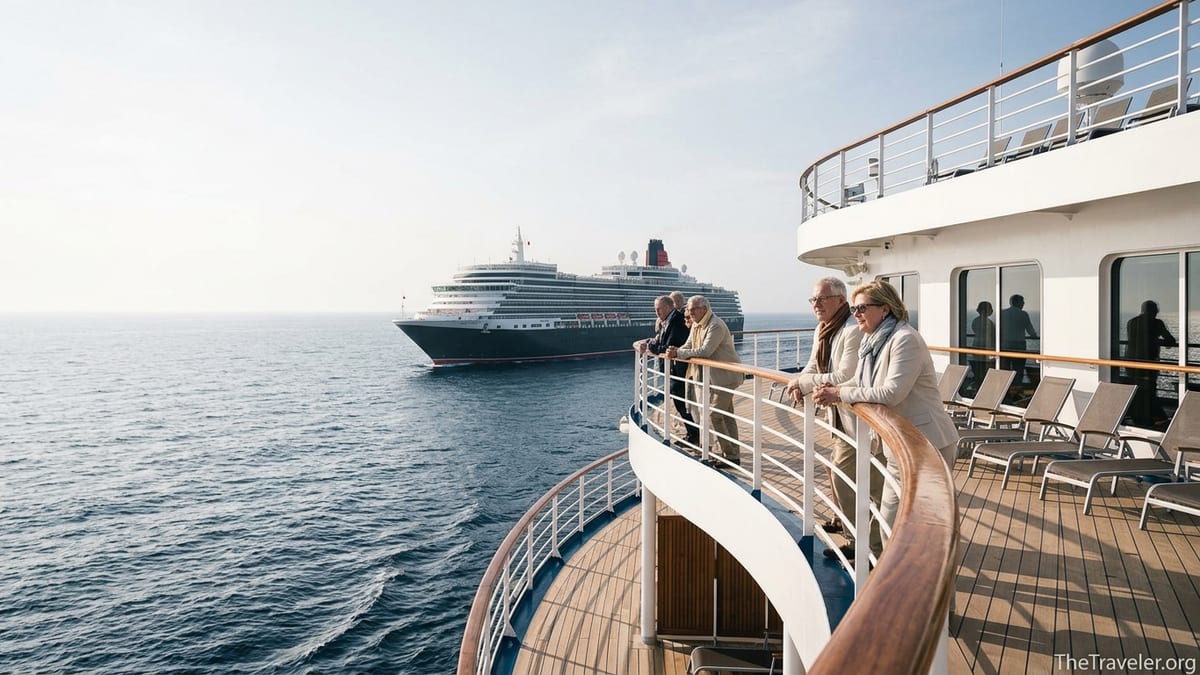
Queen Victoria at a Glance: Size, Style and Recent Feedback
Launched in 2007 and built by Fincantieri in Italy, Queen Victoria carries a little over 2,000 passengers at full capacity, with around 1,000 crew. That makes her noticeably smaller than many modern mega-ships, which regularly sail with 4,000 to 6,000 guests, and gives the ship a more intimate, club-like feel. Her interiors lean into Cunard’s “modern classic” identity: polished wood, marble, chandeliers and sweeping staircases rather than flashy theme-park decor. Walking into the triple-height Grand Lobby, where a large bas-relief of the ship presides over the space, sets the tone for the voyage.
Queen Victoria is often described as the most “cosy” of the Cunard fleet, compared with the larger ocean liner Queen Mary 2 and the similarly sized but slightly brighter Queen Elizabeth. Public rooms like the Queens Room ballroom and the wood-paneled Library reinforce the sense that this is a ship for readers, dancers and afternoon-tea devotees. This atmosphere appeals especially to travelers who enjoy classic European hotels and older-style luxury rather than resort-style entertainment.
Recent feedback from cruise reviewers and aggregators in 2025 and early 2026 suggests Queen Victoria remains one of Cunard’s best-regarded ships, with an average rating a little under 4 out of 5 and often ranked as the line’s top overall performer. At the same time, some 2026 passengers have reported visible wear and tear such as rust spots and leaks in public areas on certain sailings, a reminder that the ship is now approaching two decades in service and ongoing maintenance matters. When you read reviews, pay close attention to sail date and itinerary, as experiences can differ between a short holiday cruise and a longer voyage.
In practice, travelers choosing Queen Victoria are trading high-octane attractions for ambiance, service and tradition. If you are debating between this ship and a contemporary mega-ship in the Caribbean, it helps to be honest about what you value more: quiet lounges and formal dinners, or waterslides and late-night deck parties. Queen Victoria clearly leans toward the former, and the crowd she attracts reflects that.
Itineraries and Who the Ship Is Best For
Queen Victoria spends much of the year in Europe, often sailing from Southampton to destinations such as the Mediterranean, the Canary Islands, the Norwegian fjords and the Baltic. She also operates longer voyages, including grand voyages to South America or sectors of world cruises, where passengers may be on board for 20 to 50 nights or more. These longer sailings attract a high percentage of British, European and Australian guests, along with North Americans who have the time and budget for extended travel.
For example, a typical 7-night Mediterranean itinerary might call at ports such as Barcelona, Marseille, Livorno for Florence, and Civitavecchia for Rome, with a sea day or two for enjoying the ship. Fares for these summer cruises often start in the region of 1,200 to 1,800 US dollars per person for an inside cabin when booked early, rising for balcony cabins and premium suites. Longer voyages, such as a 30-plus-night South America circumnavigation, can run into several thousands per person even in lower cabin categories, especially once port taxes and gratuities are factored in.
The on-board demographic tends to skew 50-plus, particularly on longer itineraries outside school holidays. You will see multi-generation families during summer breaks and at Christmas, but Queen Victoria is not designed around children the way many mainstream ships are. There are children’s clubs and a small pool, but no big waterparks or character parades. For honeymooners or younger couples deciding between this ship and a resort-style line, imagine your evenings more like a classic hotel: ballroom dancing, jazz in the lounge, maybe a late-night drink in the Commodore Club, rather than karaoke competitions and DJ-led deck parties running past midnight.
Queen Victoria works particularly well for travelers who enjoy sea days, are happy to dress up at least occasionally, and appreciate a quieter, more traditional cruise environment. She is less ideal for families seeking constant high-energy entertainment or travelers who dislike dress codes. If your perfect day at sea involves a good book, a lecture in the theater, and formal afternoon tea followed by a string quartet performance, Queen Victoria is likely to feel like a good fit.
Cabins and Suites: What You Really Get for Your Money
Queen Victoria offers a wide range of accommodations, from compact inside cabins to large, butler-serviced suites. Over 80 percent of the staterooms are outside, and roughly three-quarters include a private balcony, which is higher than many older ships of similar size. Even the entry-level cabins come with practical touches such as a small sofa or chair, decent closet space, a safe, refrigerator, and bathrobes and slippers for use on board. Nightly turndown service and 24-hour room service are standard across categories.
The majority of passengers sail in Britannia-class cabins, which include inside, oceanview and standard balcony staterooms. A first-time cruiser booking a 10-night cruise in spring might pay something like 1,500 to 2,200 US dollars per person for a standard balcony in Britannia class, depending on promotions and how far ahead they book. These cabins typically run around 200 square feet, with a bed that can be configured as twins or a queen, a small sitting area and a compact bathroom with a shower. On sea days, many guests use their balconies to escape from busier public decks, especially on itineraries with scenic cruising like the Norwegian fjords.
Above Britannia, the Britannia Club balcony cabins include access to the Britannia Club Restaurant, which offers open seating rather than fixed early or late dinner times, along with a slightly upgraded dining experience. Premium Princess Grill and Queens Grill suites, located higher on the ship, come with more generous square footage, larger balconies, and access to dedicated Grill restaurants and lounges on the upper decks. Grill guests also enjoy extras such as a more extensive pillow menu, priority embarkation, and in the case of Queens Grill, butler service and a fully stocked in-suite bar.
When deciding whether to pay for an upgrade, consider how much time you realistically spend in your cabin and how important flexible dining and extra space are. A couple on a port-intensive 7-night Mediterranean itinerary may find a standard balcony perfectly adequate, since most days start early and end late in port. By contrast, a guest on a 30-night voyage with many sea days might justify splurging on a Princess Grill suite for the added comfort and quieter dining venue. Also note that some balcony cabins have partially obstructed views where lifeboats or structural elements intrude into the sightline; these are often cheaper, but travelers who value unbroken sea views may want to double-check the deck plan or consult a travel advisor before booking.
Dining and Drinks: From Britannia to the Grills
Cunard’s dining model on Queen Victoria remains traditional at its core, with an emphasis on multi-course dinners in elegant dining rooms rather than casual anytime buffets. Most passengers in Britannia-class cabins dine in the two-tier Britannia Restaurant, which operates with fixed early and late seatings for dinner. The room itself is impressive, with a sweeping staircase, high ceiling and a designated Captain’s Table on one of the lower levels. Food quality is generally considered good, if not always cutting-edge, with menus that lean toward classic international dishes: think prime rib, salmon fillet, soufflés and traditional desserts rather than elaborate molecular cuisine.
Britannia Club, Princess Grill and Queens Grill guests dine in their own smaller restaurants, which many describe as quieter and more personalized. In the Grills, for instance, the staff are more likely to learn your preferences by the second or third night: always sparkling water, or a preference for cheese over dessert, for example. On a 14-night voyage, this can make mealtimes feel more like dining in a familiar city restaurant than a large banquet hall. These higher-category restaurants also tend to be flexible with off-menu requests, such as a simple grilled chicken or customized vegetarian main, especially on longer voyages.
For more casual options, the Lido Restaurant serves as the main buffet venue, offering breakfast, lunch and informal dinner with indoor and outdoor seating. It is the go-to spot for relaxed meals, and also where many guests head for late-night snacks after a show. The Golden Lion Pub offers British pub fare such as fish and chips and pies, which is popular on sea days, and there is usually at least one specialty dining experience or themed venue that carries an additional cover charge per person. Exact venues and concepts can change over time, so it is worth checking the latest information close to your sailing date, but you can expect at least one option where a couple might spend around 40 to 60 US dollars total for an upgraded multi-course dinner compared with the included main dining rooms.
Drinks are not included in the base fare, though Cunard often sells drinks packages that can make sense for guests who enjoy several alcoholic or specialty beverages daily. A glass of house wine might run roughly 8 to 11 US dollars, a draft beer 6 to 8 dollars, and specialty coffees 4 to 6 dollars. Soft drinks and specialty coffees can be bundled into non-alcoholic packages, while broader packages include beer, wine by the glass and cocktails up to a certain price point. Travelers who mainly drink water, tea and standard coffee may find these packages unnecessary, whereas a couple who typically orders pre-dinner cocktails, wine with dinner and specialty coffees each day can easily justify the added daily cost.
Atmosphere, Dress Code and Daily Life On Board
Queen Victoria’s daily life revolves around a rhythm that will feel familiar to anyone who has experienced traditional transatlantic cruising. Mornings might begin with a leisurely breakfast in Britannia or the Lido buffet, followed by a lecture in the Royal Court Theatre or a walk around the teak promenade deck. On sea days there are usually enrichment talks, trivia sessions, dance lessons in the Queens Room and quiet corners in the Library or lounges for reading. Afternoon tea in the Queens Room, complete with white-gloved waiters serving finger sandwiches, scones and pastries to live piano or string music, is a highlight for many guests and a ritual that defines Cunard’s brand.
The ship enforces a dress code that is more formal than most mainstream lines. During the day, smart casual wear is the norm in public areas: polo shirts, blouses, sundresses and clean jeans are generally acceptable. In the evenings, the ship alternates between “smart attire” nights and formal nights. On formal nights, which typically occur two or three times on a 7- to 10-night cruise, men are expected to wear a tuxedo or dark suit with a tie, while women opt for cocktail dresses or evening gowns. While the Lido buffet and some open deck areas remain more relaxed, primary restaurants, many bars and entertainment venues adhere to the dress code. Guests who dislike dressing up should be comfortable spending their evening in the more casual spaces or consider whether this aspect of Cunard style suits them.
Compared to resort-focused ships, late nights on Queen Victoria tend to be subdued. There is usually live music in various lounges until late evening, dancing in the Queens Room and occasional themed balls or parties, but the atmosphere remains refined rather than raucous. You are unlikely to encounter loud pool-deck parties that run into the early hours. For some travelers, particularly light sleepers or those seeking a quiet escape, this is a major advantage. For others, especially in their 20s and 30s who prefer a high-energy nightlife scene, it may feel too calm.
Service is a key part of the experience, with many passengers praising the crew’s professionalism and old-school courtesy. That said, some recent reviews from 2026 mention inconsistent service and signs of crew fatigue, perhaps reflecting broader staffing challenges across the cruise industry. As with many ships, service quality can vary by sailing and crew rotation, so it is wise to think in terms of tendencies rather than guarantees. Overall, Queen Victoria still positions herself as a premium product with service standards above most mass-market lines, but travelers expecting ultra-luxury, near one-to-one crew ratios may find the experience somewhat in between.
Facilities, Entertainment and Sea-Day Options
Despite her traditional style, Queen Victoria offers a full roster of facilities to fill sea days. The Royal Court Theatre is a centerpiece, featuring live production shows, guest performers and lectures. Its design includes private boxes that can be reserved, sometimes with added packages that include sparkling wine or canapés. This creates a more classic theater-going experience than the multi-purpose show lounges you might find on some newer ships. On longer itineraries, Cunard often brings on destination experts, historians or authors whose talks deepen your understanding of ports such as Lisbon, Buenos Aires or Bergen, which appeals strongly to culturally curious travelers.
The ship’s spa and fitness center sit high on the vessel with ocean views. The spa offers typical cruise treatments like massages, facials and body wraps, usually priced at a premium compared with land-based options. A 50-minute massage, for instance, may be in the region of 120 to 170 US dollars before gratuity, depending on the type and any promotions. The fitness center includes cardio machines, free weights and group classes such as yoga or stretching; some classes are included, while specialized sessions carry a fee. The open promenade deck is also popular with walkers and joggers, particularly on scenic itineraries where the surrounding landscape is part of the enjoyment.
Pool and sun-deck facilities focus on relaxation rather than thrills. Queen Victoria typically offers multiple pools and whirlpools, including a main pool and quieter stern pool, along with padded loungers. There are no multi-story waterslides, surf simulators or go-kart tracks. Instead, public rooms like the two-level Library, the card room and various lounges give passengers plenty of indoor space to spread out. For instance, on a cool-weather Baltic cruise, guests might spend afternoons in the lounge overlooking the wake with a hot drink, rather than clustered around a pool deck.
Evening entertainment tends to be anchored by theater shows and live music. Production shows might feature singers and dancers performing medleys of familiar hits, while visiting entertainers can range from classical soloists to stand-up comedians. The Queens Room comes alive most nights with ballroom and sequence dancing, and even non-dancers often enjoy watching couples glide across the floor in black tie. For travelers who like structured activities and a sense of occasion, this program works well. Those who prefer unstructured, high-energy experiences like comedy clubs open until 2 a.m. or late-night deck raves may find the options limited.
Costs, Extras and Value for Money
When pricing a cruise on Queen Victoria, it helps to separate what is included in the base fare from the many optional extras that can add up. Your fare will typically cover your cabin, meals in the main dining venues, 24-hour room service with a basic menu, most entertainment, and use of pools and the fitness center. Non-bottled water, standard coffee and tea are also included at mealtimes and in some public areas. For a 10-night itinerary, a couple booking a standard balcony might expect a starting fare in the low to mid four-figure range in US dollars, before taxes and required gratuities.
On top of this, plan for daily gratuities per person, which are automatically added to your on-board account unless you adjust them at the front desk. Drinks, specialty dining, spa treatments, Wi-Fi, shore excursions and certain fitness classes all come at additional cost. For instance, unlimited Wi-Fi on a per-day basis may run to dozens of dollars per device, though packages and loyalty program discounts can reduce the total. Shore excursions purchased through the ship can range from about 60 or 70 US dollars for a basic city tour to 200 dollars or more for longer, customized or small-group experiences.
Whether Queen Victoria represents good value depends on what you compare her to. Versus the least expensive mass-market lines, basic fares may be higher, particularly once you factor in dress codes and the expectation of formal wear. However, many travelers feel they receive good value in terms of ambiance, service and the overall quality of public spaces and dining. Compared to ultra-luxury lines that include nearly everything in the fare, Cunard’s model can be more budget-flexible because you can choose which extras to add. A traveler who mainly drinks water and tea, rarely uses the spa and is happy to explore ports independently will see a smaller final bill than one who books ship-run excursions every day and purchases a premium drinks package.
Realistically, a couple on a 10-night voyage who opts for a mid-tier drinks package, two or three ship tours, some spa treatments and specialty dining might see their total on-board spending approach or exceed 1,000 to 1,500 US dollars on top of the base fare. Being aware of these potential extra costs and pre-planning what matters most to you can keep the trip within your preferred budget. It is also worth watching for promotions that include on-board credit, which can offset some of these optional purchases.
The Takeaway
Queen Victoria occupies an interesting space in today’s cruise market. She does not compete with the biggest ships in terms of headline-grabbing attractions, yet she continues to earn strong loyalty and often some of the best reviews within the Cunard fleet. For many travelers, the appeal lies in her mid-size scale, classic decor and structured yet relaxed daily rhythm, where afternoon tea, ballroom dancing and unhurried dinners take center stage.
This ship is best suited to travelers who value atmosphere and tradition over novelty, are comfortable with dress codes and appreciate a quieter, more cultured crowd. She is a solid choice for European itineraries, longer voyages and special-occasion trips where the ship itself is part of the destination. Families and younger travelers who crave constant high-energy entertainment may prefer more contemporary mega-ships, while guests seeking an all-inclusive, ultra-luxury experience may want to look higher up the price ladder.
If you picture yourself admiring the wake from a teak deck chair, stepping into a library instead of a laser-tag arena, and dressing up for a waltz in a chandeliered ballroom, Queen Victoria is likely to feel tailor-made for you. If that image feels more restrictive than romantic, she may not be the right match. Being clear about your expectations before booking is the surest way to decide whether Queen Victoria will deliver the kind of voyage you have in mind.
FAQ
Q1. Is Queen Victoria a true ocean liner like Queen Mary 2?
Queen Victoria is a cruise ship built in a classic style, not a dedicated ocean liner like Queen Mary 2, which was specifically designed for regular transatlantic crossings.
Q2. What kind of crowd does Queen Victoria usually attract?
The ship typically attracts a mostly adult, international crowd, skewing toward travelers in their 50s and older, with younger couples and multi-generation families more common on shorter school-holiday and summer sailings.
Q3. How formal is the dress code on Queen Victoria?
The dress code is more formal than on many mainstream lines. Expect smart casual most evenings, plus two or more formal nights on a 7- to 10-night cruise where tuxedos or dark suits and cocktail dresses are the norm in main venues.
Q4. Are drinks included in the cruise fare?
Standard water, filtered coffee and tea are included, but alcoholic drinks, soft drinks and specialty coffees cost extra unless you purchase a drinks package or benefit from a promotion that includes drinks.
Q5. Is Queen Victoria a good choice for families with children?
There are children’s clubs and family facilities, but the ship is not heavily geared toward kids. Families who enjoy a quieter, more traditional environment may be happy, while those seeking waterslides and constant kid-focused entertainment may prefer other lines.
Q6. What are the main dining options on board?
Most guests dine in the Britannia Restaurant with fixed early or late seatings. Higher-category cabins use the Britannia Club, Princess Grill or Queens Grill restaurants, and there is also the Lido buffet, the Golden Lion Pub and at least one specialty venue at extra cost.
Q7. Do I need to book a balcony cabin on Queen Victoria?
A balcony is not essential, but many itineraries, especially scenic routes like fjords or coastal Europe, are more enjoyable with private outdoor space. Inside or oceanview cabins can be good value if you spend most of your time in public areas.
Q8. How reliable is the Wi-Fi on Queen Victoria?
Wi-Fi coverage is available shipwide but can be slower or less stable than on land, especially at sea or in remote regions. It is generally adequate for email, messaging and light browsing, while heavy streaming may be inconsistent.
Q9. Are there many sea days on typical Queen Victoria itineraries?
It depends on the route. Short Mediterranean or Northern Europe cruises may have one or two sea days, while longer voyages, such as repositionings or grand voyages, can include numerous consecutive days at sea where shipboard life becomes the main focus.
Q10. How far in advance should I book a cruise on Queen Victoria?
For peak seasons such as summer in Europe or special itineraries and suites, many travelers book 9 to 12 months in advance. For shoulder seasons and standard cabins, good options often remain closer to departure, but availability and pricing can be more unpredictable.