


More news on this day
Africa is set to be the world’s fastest-growing big aviation market over the next two decades, yet regional airlines are forecast to generate just 40 cents of profit per passenger in 2026, highlighting a stark disconnect between booming demand and fragile financial performance.
Get the latest news straight to your inbox!
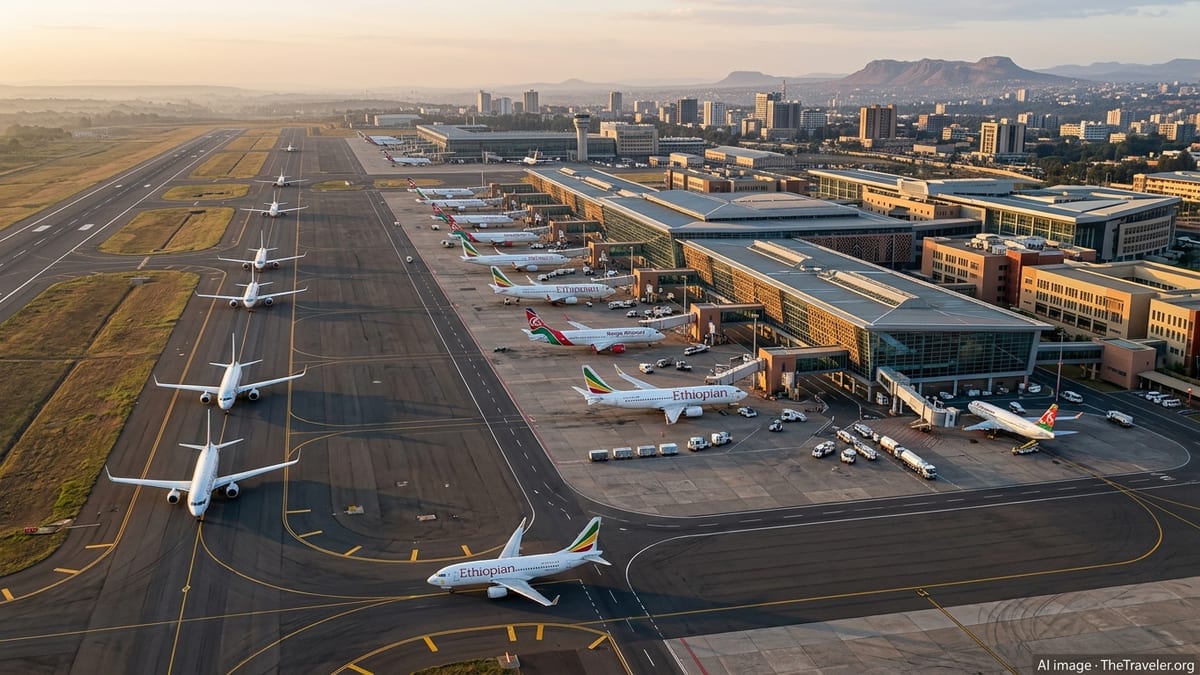
Record Demand, Minimal Returns
Recent economic forecasts from industry bodies point to Africa as one of global aviation’s brightest growth stories, with passenger volumes expected to expand faster than in Europe or North America over the next 20 years. Demographic momentum, rapid urbanization, a rising middle class and growing investment in airports and logistics are all helping to push air travel higher across the continent.
Yet this surge in traffic is not translating into robust earnings for African carriers. Updated profit projections for 2026 indicate that airlines based on the continent are expected to earn around 40 cents of net profit per passenger, sharply down from just over 2 dollars the previous year and far below the global average. In percentage terms, this would leave African carriers with one of the thinnest net margins of any major region, despite flying fuller planes on more routes.
The result is a paradox: Africa is emerging as a core engine of global aviation growth, but its own airlines remain financially vulnerable. Analysts note that such slim returns leave little buffer to reinvest in newer aircraft, digital systems or sustainability initiatives, raising questions about how long the current expansion can be sustained on such fragile economics.
Industry commentary suggests that the immediate drag on profitability reflects a combination of cost pressures and pricing realities. Even as load factors improve and new routes open, many carriers continue to operate in a high-cost, low-yield environment that makes it difficult to convert rising demand into durable profit.
High Structural Costs and Policy Frictions
One of the core reasons behind the low profit per passenger is the high cost of doing business in African aviation. Publicly available analyses by regional and international associations cite elevated fuel prices, expensive airport and air navigation charges, and a patchwork of taxes and fees that can add a substantial premium to every ticket sold. These structural costs often exceed levels seen in other regions participating in the same global market for aircraft, parts and fuel.
Airlines are also contending with legacy infrastructure and older fleets that tend to consume more fuel and require more maintenance. Some markets have limited access to competitive fuel suppliers, while others face logistical bottlenecks that add time and cost to standard operations. In effect, carriers pay more to operate every seat, but cannot always pass those costs on to passengers without suppressing demand.
Policy and regulatory fragmentation further complicate the picture. Different visa regimes, bilateral air service agreements, and inconsistent implementation of regional liberalization initiatives mean that many routes are still governed by restrictive arrangements. Analysts argue that this reduces competition on some corridors while keeping others under-served, making networks less efficient and limiting the economies of scale that could help bring unit costs down.
In addition, currency volatility and the problem of blocked airline funds in several markets increase financial risk. When carriers struggle to repatriate revenues or face sharp swings in exchange rates, their thin margins can be wiped out quickly, reinforcing the pattern of low earnings per passenger even in years of strong demand growth.
Foreign Carriers Capture a Large Share of the Upside
A second major factor behind Africa’s low earnings per passenger is the imbalance between traffic originating or ending on the continent and the share of that traffic actually carried by African airlines. Industry data and route maps show that large foreign carriers from the Gulf, Europe and parts of Asia control a significant portion of long-haul and connecting traffic to and from African cities.
These carriers typically operate newer, larger fleets and benefit from strong home-market hubs that allow them to aggregate demand across multiple regions. Their scale and access to cheaper financing often translate into lower unit costs, making it difficult for smaller African competitors to match fares on key routes while maintaining decent margins. In practice, a considerable part of the value generated by Africa’s travel boom accrues to airlines based outside the continent.
Within Africa, competition is also intensifying as a handful of regional champions expand their networks and partnerships. While this can improve connectivity and consumer choice, it can also pressure yields on trunk routes that smaller or newer carriers rely on to stay afloat. The combination of strong foreign competition and uneven regional consolidation helps explain why aggregate profits remain so modest relative to the size of the opportunity.
For many destinations, particularly in West and Central Africa, international connectivity still hinges on a small number of foreign hubs. Analysts suggest that unless more African airports develop into competitive connecting centers backed by efficient local carriers, much of the incremental traffic growth predicted for the coming decades may continue to be intermediated by non-African airlines, limiting the profit pool available to regional operators.
Connectivity Gaps and the Promise of a Single Market
Despite the demand surge, Africa’s skies remain comparatively under-connected, especially for intra-African travel. Studies drawing on airline schedule data highlight that, relative to its share of the global population, the continent accounts for a far smaller share of worldwide passengers and direct routes. Many city pairs that are geographically close still lack non-stop services, compelling travelers to route through distant hubs and increasing journey times and costs.
Regional initiatives such as the Single African Air Transport Market are intended to address these gaps by liberalizing access, reducing protectionism and making it easier for carriers to open new routes based on commercial logic rather than bilateral restrictions. Advocates argue that a true single market could spur new point-to-point connections, encourage more efficient fleet deployment and ultimately improve profitability per passenger by spreading fixed costs over larger, better-optimized networks.
Progress toward a unified market has been uneven, however, with varying levels of political will and differing assessments of the short-term impact on national airlines. In the meantime, fragmented regulation and inconsistent visa policies continue to act as brakes on what could otherwise be even faster growth in intra-African travel. This fragmentation partly explains why fast-rising passenger numbers have not yet translated into the type of network efficiencies seen in other liberalized regions.
There is growing recognition among policymakers, financiers and tourism bodies that better connectivity within Africa could unlock broader economic benefits in trade, investment and job creation. Whether this recognition translates into more decisive policy alignment will be a key determinant of whether airlines can move beyond the current pattern of high volumes and minimal earnings.
Investment, Fleet Renewal and the Sustainability Challenge
Transforming strong demand into sustainable profitability will likely require sustained investment in newer aircraft, digital systems and airport infrastructure. Forecasts from major manufacturers and development finance institutions suggest that Africa’s commercial fleet will need to more than double over the next 20 years to keep pace with demand, implying significant capital requirements at a time when many airlines operate on razor-thin margins.
Newer-generation aircraft offer substantial fuel savings and lower maintenance costs, which could help improve earnings per passenger, but access to financing remains a hurdle. Some regional initiatives are being set up to pool resources and provide structured funding for fleet renewal and airport upgrades. Analysts see such platforms as critical if African carriers are to avoid falling further behind competitors that already operate more efficient fleets.
At the same time, African aviation is being asked to align with global climate goals, including the sector-wide ambition of net-zero emissions by mid-century. Meeting these objectives will demand investment in sustainable aviation fuel, more efficient air traffic management and, eventually, new propulsion technologies. With airlines currently earning just a few cents of profit per seat, the risk is that environmental commitments outpace the financial and technical capacity of carriers to comply.
The tension between rapid growth, thin margins and rising sustainability expectations underscores the fragility of Africa’s aviation boom. Unless structural costs can be reduced, market access further liberalized and capital mobilized for modern fleets and greener operations, Africa’s status as the fastest-growing big aviation market may coexist for some time with profit figures that hover around 40 cents per passenger.