


Few American beach towns generate as much debate as Atlantic City. For some travelers, it is an easy getaway packed with ocean views, big-name casinos, nonstop entertainment, and value hotel rates compared with larger gambling destinations. For others, it is a symbol of broken promises, uneven redevelopment, and a city that never quite lives up to the marketing. Atlantic City keeps reinventing itself, from the days of Monopoly and Miss America to today’s indoor water parks and cannabis lounges, yet the same question lingers: is it worth your time and money?
Get the latest updates straight to your inbox!
A City Built on Cycles of Boom, Bust, and Comeback
Atlantic City’s divided reputation starts with its history. The city has been through multiple eras of reinvention, each billed as the moment that would finally fix everything. In the early 20th century, it was the glamorous East Coast resort of Boardwalk Empire fame. In 1978, Resorts International opened as New Jersey’s first legal casino, and politicians promised that gambling revenue would revive a struggling seaside town. Later, the rise of mega-resorts like Tropicana with its indoor “Quarter” shopping and dining complex, and Borgata in the Marina District, pushed Atlantic City closer to a full-service resort image, though the surrounding non-tourist neighborhoods often saw far fewer benefits.
Those booms were followed by painful contractions. As casinos opened in neighboring Pennsylvania, New York, and Connecticut, Atlantic City lost its near-monopoly on East Coast gambling. Between 2014 and 2016, high-profile closures including the original Showboat casino hotel and the glitzy but ill-fated Revel left hulking, empty shells along the oceanfront and cemented an image of decline. Yet travelers who return every few years notice that the same properties keep coming back under new owners and new branding. Revel eventually reopened as Ocean Casino Resort, with a bright, minimalist casino floor and a major focus on dining and nightlife, while Showboat reemerged as a non-casino resort aimed squarely at families.
These cycles have created a sense of déjà vu. Every wave of investment produces eye-catching renderings, optimistic projections, and a fresh slogan. For visitors, that can be confusing. Someone who last came to Atlantic City ten years ago might remember shuttered buildings and empty streets, while a traveler arriving in 2026 is more likely to encounter a busy Boardwalk near Hard Rock and Ocean, a functioning convention center, and large-scale attractions that did not exist even a few summers ago. The constant churn means the city can look dramatically different depending on when you last visited, which feeds the split between nostalgic disappointment and genuine surprise at how much has changed.
From “Just Casinos” to Water Parks, Food Halls, and Concerts
Another reason Atlantic City divides travelers is the ongoing shift from purely gambling to a broader resort mix. For decades, most visitors came to play slots and table games, grab a buffet meal, and perhaps see a show. Today, roughly half of Atlantic City casino net revenue comes from non-gaming sources like hotel rooms, food and beverage, and entertainment, reflecting an intentional strategy to diversify what the city offers. In practice, that means you are just as likely to see families with strollers on the Boardwalk as you are to see high-rollers at a blackjack table.
One of the most visible examples of this reinvention is Island Waterpark at the Showboat Resort, which opened in 2023. Built at a cost in the neighborhood of 100 million dollars, the 100,000-square-foot indoor park features multiple water slides, a lazy river, splash zones, a retractable glass roof, and even an “adult” section with bars and cabanas. On a rainy August afternoon, the line for day passes can stretch through the lobby, with families driving in from Philadelphia and North Jersey specifically for the water park and the adjacent Lucky Snake arcade. Yet reviews are sharply mixed: some visitors praise the novelty of a beachfront indoor water park where kids can swim year-round, while others complain about high ticket prices, food costs, and crowding, reinforcing the idea that Atlantic City’s new investments often come with trade-offs.
Casinos themselves are also looking far beyond the gaming floor. Hard Rock has cultivated a strong identity around major concerts, regularly booking established rock, country, and R&B acts that draw fans who barely set foot in the casino. Ocean highlights its sleek hotel tower and pool deck as much as its slot machines, marketing spa weekends and upscale restaurants like steak and seafood houses with ocean views. Even properties that evoke an older era, such as Caesars and Tropicana, have poured money into sports books, new cocktail bars, and revamped restaurants to stay relevant in a world where placing a bet can just as easily happen on a smartphone anywhere in New Jersey.
For some travelers, this variety is exactly what makes Atlantic City appealing in 2026. You can spend a morning walking the Boardwalk with coffee, take the kids to mini-golf and the water park, grab dinner at a celebrity-chef restaurant, then see a national touring comedian or band at night. For others, the evolution feels incomplete. Outside the casino complexes and marquee attractions, there are still vacant lots, closed storefronts, and long-promised projects that never quite got off the ground, which can be jarring if you are expecting a fully polished resort city.
The Boardwalk: Iconic, Entertaining, and Uneven
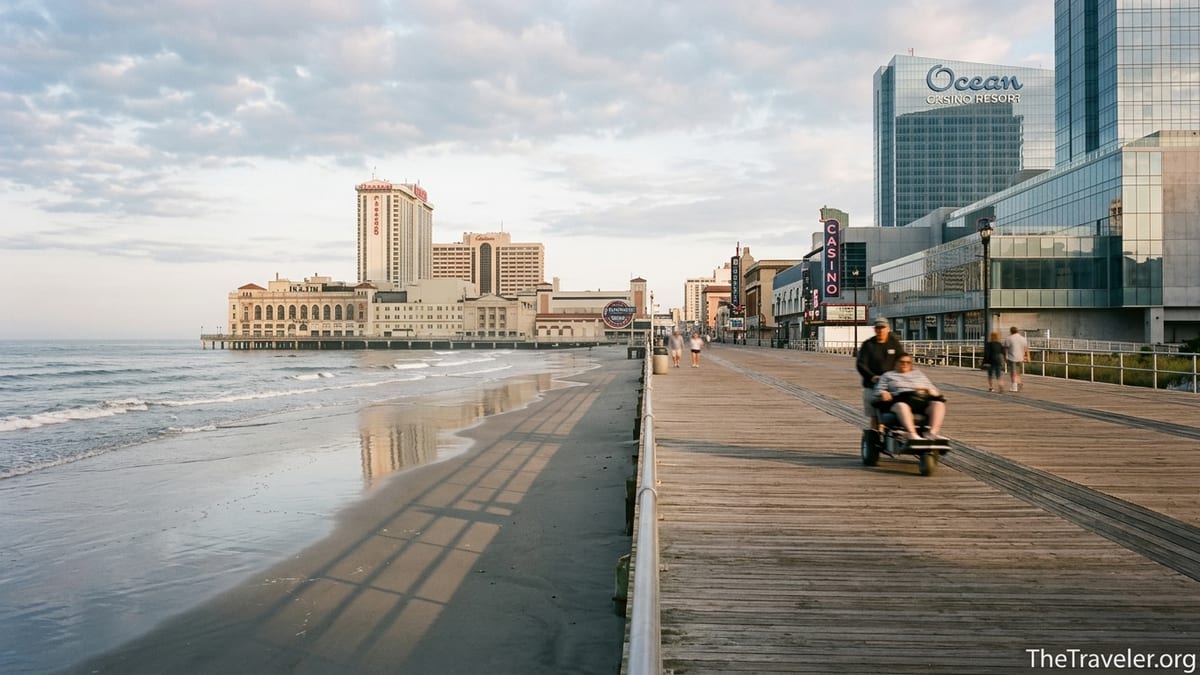
The Atlantic City Boardwalk is both its greatest asset and one of its most divisive spaces. Stretching for miles along the ocean, this wooden promenade is home to a jumble of casinos, souvenir stands, pizza counters, funnel cake windows, massage booths, and beach bars. In peak summer, the section between Hard Rock and Tropicana can feel electric, with live music drifting from open-air decks, families renting surrey bikes, and crowds spilling out of casino entrances. The sheer density of activity offers an energy that many small beach towns cannot match.
At the same time, the Boardwalk’s quality varies block by block. The central casino zone looks bright and maintained, but walking toward the quieter ends you may pass shuttered businesses, aging motels, or large empty parcels where big projects were once promised. Small amusements come and go. The long-running Ripley’s Believe It or Not! museum closed, while newer attractions like escape rooms and virtual reality arcades have tried to fill the gap. This patchwork fuels the sense that Atlantic City is always halfway between eras, with some blocks firmly in the future and others stuck in the past.
For budget-conscious visitors, the Boardwalk can be a plus. Grab-and-go Boardwalk food is often cheaper than casino restaurants, and there are still modest motels within a short walk of the ocean where summer rates remain lower than many Jersey Shore towns to the north. Groups of friends regularly pair a low-cost Boardwalk hotel or off-Boardwalk chain property with free or discounted drinks earned through players’ club promotions inside casinos. Yet for travelers who expect a more curated, upscale seaside promenade, the mix of t-shirt shops, aggressive sales pitches, and occasional signs of poverty can be off-putting.
This contrast is especially noticeable if you arrive by train at the Atlantic City Rail Terminal or drive in via the Expressway. The walk or shuttle ride from those gateways to the Boardwalk takes you past surface parking lots, outlet stores, and sparse streetscapes that look more like a mid-sized industrial town than a world-class resort. Once you reach the oceanfront, the mood improves dramatically, but the first impression often shapes how visitors talk about the city when they go home.
Perception of Safety vs Reality on the Ground
Nothing divides opinion about Atlantic City more quickly than safety. Crime statistics for the city, which has a small permanent population but large numbers of visitors, can look alarming in raw numbers, and many travelers have heard secondhand stories about petty theft or rowdy late-night behavior. Online forums are full of strongly worded warnings about walking off the Boardwalk after dark or venturing too far from casino districts, which reinforces an image of danger even among people who have never visited.
Locals and repeat visitors often provide a more nuanced picture. They point out that the most heavily traveled tourist areas, including the Boardwalk near the bigger casinos, the Marina District around Borgata, Harrah’s, and Golden Nugget, and the outlets near the convention center, are routinely patrolled and feel reasonably safe during typical visitor hours. Many share practical advice: stick to main streets, use common sense late at night, avoid visibly struggling neighborhoods a few blocks away from the tourist zones, and take rideshare or taxis if you are leaving a casino after midnight. Travelers who follow that guidance frequently report that they felt no more unsafe than in other compact cities with nightlife.
Recent efforts by local authorities and state-backed agencies have focused on both crime reduction and perception. Additional lighting, security cameras along the Boardwalk, and targeted policing initiatives have aimed to make popular corridors visibly safer. Some data suggests that certain categories of crime in the city have declined in recent years, even if headline numbers remain higher than suburban communities. For visitors, though, perception often lags behind reality. A single unsettling encounter with an aggressive panhandler or a late-night argument spilling onto the Boardwalk can overshadow an otherwise smooth weekend of dining, gaming, and beach time.
The result is a split narrative. One traveler may describe Atlantic City as “sketchy” based on walking alone from a discount motel to a casino at 2 a.m., while another, who stayed at a Boardwalk resort, used ride-hailing after concerts, and stuck to well-trafficked blocks, may say it felt no different from staying in a downtown hotel in any American city. That gap between expectations and on-the-ground choices is a big reason reviews sound so contradictory.
Value, Costs, and the Question of Who Atlantic City Is For
For many visitors, Atlantic City’s main appeal is value. Midweek, it is often possible to find a standard weekday room at a major casino resort for significantly less than a comparable hotel in New York or Philadelphia, especially for players who use casino loyalty programs. Parking at casino garages is usually modest in cost, and it is realistic for couples or groups of friends to enjoy a weekend of gaming, casual dining, and free or low-cost lounge entertainment without blowing a huge budget. In shoulder seasons like late spring or early fall, you may find warm-enough beach weather combined with reduced room rates, which is a sweet spot for travelers willing to be flexible.
At the same time, the city increasingly courts higher-spending guests. Upscale steakhouses, celebrity-chef restaurants, and craft cocktail lounges at properties like Ocean, Hard Rock, and Borgata routinely charge big-city prices, and show tickets for A-list comedians or musicians can rival those in major metropolitan arenas. Attractions like Island Waterpark have dynamic pricing that can feel steep for families if they are paying full freight for day passes, locker rentals, and food. Spa packages, cabanas at pool clubs, and reserved seating at beach bars further segment the experience, making some spaces feel very exclusive and others relatively bare-bones.
This dual structure creates a perception gap. Budget travelers who limit themselves to Boardwalk slice shops, casino food courts, and free beaches may leave feeling that Atlantic City is still a bargain, especially if they used discount bus packages or comps. Visitors who gravitate toward the newest attractions and dining options, or who visit on busy summer Saturdays, may be surprised at how quickly costs add up. The same city can feel like a value destination or an overpriced one depending on where you eat, what shows you see, and which amenities you prioritize.
The long-term question for Atlantic City is who it wants to be for. Families appreciate kid-focused amenities like arcades, candy shops, and the water park but remain wary of late-night casino culture and the adult marketing that still dominates much of the visual landscape. Younger adults might enjoy party-friendly pool scenes and nightclubs but balk at paying resort fees and premium drink prices in aging properties that show wear once you step away from renovated areas. Older gamblers, once the backbone of the city’s tourism, now have closer alternatives in their home states, which forces Atlantic City to keep rethinking its mix of price, product, and personality.
Neighborhoods, Locals, and the Reality Behind the Casino Lights
Another source of division is the disconnect between the polished casino-front image and the everyday reality of the city behind it. Atlantic City has roughly thirty thousand residents spread across compact neighborhoods that have weathered decades of economic shocks, including casino closures, property speculation, and the seasonal nature of tourism work. Walk a few blocks inland from the Boardwalk and you find row houses, local diners, corner stores, and community centers that exist in a very different economic universe from the high-limit rooms and celebrity residencies a short distance away.
Some visitors find this contrast eye-opening in a positive way. They make a point of eating at longstanding local institutions in Ducktown, grabbing breakfast at a neighborhood diner, or visiting small galleries and community events that highlight local culture. Others see the same streets as evidence that promises to use casino revenue to lift the whole city have not been fully kept. High-profile redevelopment projects sometimes stall for years, leaving vacant lots and half-finished structures that frustrate both residents and returning visitors who remember hearing similar plans decades ago.
Organizations that manage casino reinvestment and tourism promotion have funded improvements to public spaces, infrastructure, and event programming. The results can be seen in upgraded sections of the Boardwalk, improvements around the convention center area, and periodic festivals and beach concerts that draw large crowds. Yet the pace of change is often slower inland, and community advocates frequently argue that reinvention should be measured not just in new attractions but in livable wages, affordable housing, and safer streets for those who call Atlantic City home year-round. Travelers who dig into that side of the story often leave with more complicated feelings than those who stay inside resort compounds for an entire weekend.
This underlying tension shapes how Atlantic City feels compared with a place like Las Vegas, where the Strip is largely separated from most residential neighborhoods. In Atlantic City, the line between tourist zone and local streets is porous. That lends an authenticity that some visitors appreciate but also exposes visitors directly to the city’s challenges, from visible poverty to infrastructure wear. Whether you find that rawness intriguing or uncomfortable goes a long way toward determining how you talk about Atlantic City afterward.
The Takeaway
Atlantic City keeps reinventing itself because it has to. The city no longer enjoys a regional monopoly on gambling, faces competition from online betting and nearby casinos, and must weather the volatility that comes with a tourism-dependent economy. Each new wave of investment, whether a 100,000-square-foot indoor water park, a revamped casino floor, or a new concert residency, is part of a broader attempt to stay relevant and give people fresh reasons to come back. For many travelers, especially those who value a mix of beach, nightlife, and relatively affordable midweek rooms, that reinvention works. They see Atlantic City as a constantly evolving, slightly rough-around-the-edges playground where you can shape your own experience.
At the same time, the very things that make Atlantic City dynamic also make it divisive. Uneven development along the Boardwalk, persistent concerns about safety, visible economic hardship just beyond the casino corridors, and ambitious projects that do not always live up to the hype leave some visitors underwhelmed or uneasy. Expectations play a big role. Travelers arriving with a clear-eyed view of what the city is and is not, prepared to navigate its contrasts, tend to find value and even charm. Those expecting a seamless, fully polished resort may come away focused on the gaps.
If you are considering a trip, the most useful question is not whether Atlantic City is “good” or “bad,” but whether its particular blend of oceanfront setting, gaming culture, big-ticket attractions, and urban grit matches the kind of getaway you enjoy. The same Boardwalk that one visitor calls magical another calls messy. The same indoor water park that delights a family might strike a budget traveler as overpriced. Knowing that ahead of time allows you to plan realistically, choose your hotel and activities thoughtfully, and ultimately decide where you fall in the long-running debate over this endlessly reinvented city by the sea.
FAQ
Q1. Is Atlantic City safe for first-time visitors?
Atlantic City’s main tourist areas, including the Boardwalk near major casinos and the Marina District, are generally well-patrolled, especially during busy hours. As in any compact city with nightlife, it is wise to stay on well-lit main streets, avoid walking alone late at night in quieter neighborhoods, and use rideshare or taxis after midnight if you are leaving casinos or clubs.
Q2. Is Atlantic City a good choice for families with kids?
Atlantic City can work for families who plan carefully. Attractions like Island Waterpark at Showboat, large arcades, mini-golf, and the free public beaches give kids plenty to do. Parents should be aware that casino floors are off-limits to minors, that nightlife advertising can be very visible, and that costs for water parks, food, and parking can add up quickly.
Q3. How does Atlantic City compare with Las Vegas?
Atlantic City is smaller and more compact than Las Vegas, with its casino resorts clustered along the oceanfront Boardwalk and in the Marina District. It offers a real beach, a historic Boardwalk, and easier access from East Coast cities, but has fewer large-scale attractions and show options than Las Vegas. Many visitors find Atlantic City more affordable midweek but less polished overall.
Q4. Do you need a car to enjoy Atlantic City?
It is possible to visit without a car if you stay at a Boardwalk or Marina casino hotel and focus on those areas, using jitneys, shuttles, or rideshare for occasional trips. However, having a car can make it easier to explore nearby outlets, off-Boardwalk restaurants, and surrounding shore towns, and gives you flexibility if weather or crowds make certain areas less appealing.
Q5. When is the best time of year to visit Atlantic City?
Summer brings the warmest beach weather and the most events, but also higher weekend prices and bigger crowds. Late spring and early fall often offer milder temperatures, lower midweek room rates, and a good balance between activity and breathing room. Winter can be a bargain for midweek casino stays and indoor attractions, though beach and Boardwalk life are much quieter.
Q6. Is Atlantic City worth visiting if I am not interested in gambling?
Yes, as long as you pick activities that fit your interests. Non-gamblers often focus on the beach, Boardwalk, indoor water park, spas, concerts, and dining. You can stay in a casino hotel and largely avoid the gaming floor by entering through hotel lobbies and using interior corridors that bypass slot areas.
Q7. Are Atlantic City beaches free?
Atlantic City’s public oceanfront beaches do not require daily beach badge fees, which sets them apart from many other New Jersey shore towns. You may still pay for extras like chair and umbrella rentals, parking, or cabana services operated by individual resorts, but simply using the sand and surf is free.
Q8. Where should first-time visitors stay in Atlantic City?
First-time visitors who want to be in the center of activity often choose a Boardwalk casino hotel such as Hard Rock, Ocean, Caesars, or Tropicana. Travelers who prefer a slightly quieter atmosphere with easy access to dining and spa facilities sometimes opt for Marina District properties like Borgata or Harrah’s and then shuttle or drive to the Boardwalk as needed.
Q9. Is Atlantic City affordable for a weekend getaway?
Atlantic City can be relatively affordable, especially midweek or in the off-season, when casino hotels often discount rooms and run promotions. Costs rise on summer weekends and for premium events, and extras like resort fees, parking, dining at upscale restaurants, and tickets to attractions can significantly increase the final bill if you do not plan a budget in advance.
Q10. Why do opinions about Atlantic City vary so much?
Opinions split because Atlantic City is a place of contrasts: polished casino resorts next to struggling neighborhoods, free beaches alongside pricey attractions, and ongoing redevelopment beside stalled projects. Visitors’ experiences depend heavily on where they stay, how they get around, what time of year they visit, and whether they arrive expecting a gritty seaside city or a fully polished resort destination.