


More news on this day
Heightened regional tensions have pushed many governments to issue their strongest warnings in years for travel to the United Arab Emirates, yet Dubai’s hotels, malls and beaches remain busy, leaving would-be visitors weighing official advisories against on-the-ground reports.
Get the latest news straight to your inbox!
Government advisories paint a cautious picture
As of mid June 2026, several major governments have tightened their official guidance for the United Arab Emirates, citing regional conflict and the risk of missile and drone attacks. The United States lists the UAE at Level 3 on its four tier scale, urging travelers to reconsider non essential trips because of terrorism and other security concerns. Australia’s Smartraveller service currently categorizes the UAE as “Do not travel,” while recent updates from the United Kingdom advise against all but essential travel.
These advisories are not travel bans, but they are strong signals. They indicate that security conditions are considered volatile and that the risk of a serious incident, while still statistically low for any individual visitor, is higher than in many other long haul leisure destinations. Travelers who choose to go despite the warnings should expect that their decision runs against official risk assessments in their home country.
Insurance is another crucial consequence. Many travel insurance policies restrict or void coverage if a traveler goes to a destination under a “Do not travel” or “reconsider travel” designation. Before booking or departing, travelers are being urged by consumer advocates to check policy wording carefully, including provisions on war, terrorism and government advisories, and to seek confirmation in writing from insurers where necessary.
For now, no large scale evacuations of tourists have been reported from Dubai, but some governments have adjusted staffing at their embassies and consulates and are asking citizens already in the UAE to keep registration details up to date in case conditions deteriorate.
What is happening on the ground in Dubai
Despite the elevated warnings, publicly available information and recent traveler accounts describe daily life in Dubai as largely normal. Shopping centers, resorts and attractions continue to operate, and Dubai International Airport remains one of the world’s busiest hubs, though some airlines have adjusted frequencies and routing in response to the regional situation.
Dubai’s underlying crime picture still appears favorable by global standards. Comparative data sets place the city among the safer large urban centers worldwide, with low reported rates of violent crime and strong scores on perception based safety indexes. Visitors typically report feeling secure in tourist areas, on public transport and in major hotel districts, even late at night.
The disconnect between official caution and lived experience reflects the nature of the current risk. Governments are focused on low probability but high impact events tied to regional hostilities and terrorism, rather than day to day criminality. For most visitors, the more immediate challenges are likely to be routine travel issues, such as flight changes, longer security queues and the prospect of sudden airspace or schedule adjustments, rather than street level insecurity in Dubai itself.
Nevertheless, travelers considering Dubai in the coming weeks are being encouraged to monitor news outlets closely, enroll in their government’s traveler alert systems where available and keep flexible plans. Reports indicate that some tour operators and conference organizers have introduced more generous change and cancellation policies for events scheduled in the city during 2026.
Air travel, transit and airport safety
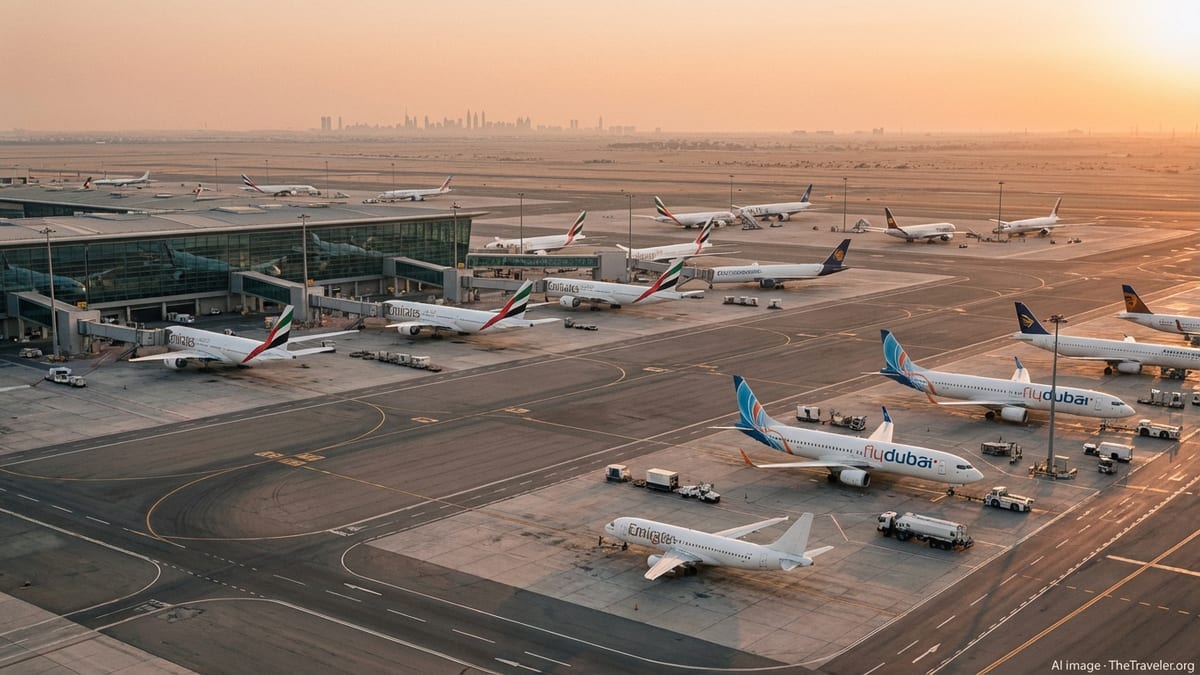
Dubai International Airport continues to function as a major global transit point, with Emirates and other carriers operating extensive networks through the hub. Airline updates show that schedules have been trimmed at times and routings adjusted to avoid sensitive airspace, but the airport remains open and handling high passenger volumes.
For many travelers, a key question is whether it is safer to transit than to stay. Some governments draw a distinction between remaining airside in the international terminal and entering the country, and a number of travelers report that their insurance covers transit through Dubai even when it excludes stays in the UAE. Policy wording varies, so passengers with long layovers are being advised to confirm whether leaving the airport to visit the city would affect their coverage.
Security protocols at the airport remain stringent, with reinforced screening and visible policing. Past incidents in the wider region have led to short term flight suspensions and diversions, but operations have generally resumed once assessments indicated that risk to civil aviation had been contained. Industry analysts note that the UAE has invested heavily in air defense and surveillance systems around key infrastructure, including major airports, in response to the current threat environment.
Travelers should be prepared for short notice changes. Recent months have seen temporary airspace restrictions, altered departure times and occasional clusters of delays when regional tensions spike. Booking longer connection windows, ensuring contact details are updated with airlines and keeping essential items in carry on luggage can help reduce disruption if schedules shift suddenly.
Health, climate and practical safety considerations
Beyond security, Dubai’s main risks for visitors remain environmental and health related. The city’s desert climate delivers extreme summer heat, with daytime temperatures frequently exceeding 40 degrees Celsius between June and September. Public information from local authorities stresses the importance of staying hydrated, limiting midday outdoor activities, using high factor sun protection and paying close attention to heat advisories, particularly for children, older travelers and those with medical conditions.
Recent years have also highlighted the possibility of short lived but intense weather events. In April 2024, exceptionally heavy rainfall caused disruptive flooding across parts of Dubai and neighboring emirates, closing roads and temporarily affecting flights. Infrastructure and drainage upgrades have been underway since, but travelers heading to Dubai during the region’s limited rainy periods may still encounter localized flooding and transport delays during rare storms.
On the health front, the UAE has introduced targeted measures in response to outbreaks elsewhere, including temporary visa suspensions and enhanced screening for travelers arriving from specific countries affected by diseases such as Ebola. Publicly available information indicates that these steps are precautionary and that the domestic health situation in the UAE remains stable, but they can affect eligibility to enter or transit for some nationalities at short notice.
Routine urban precautions still apply. Visitors are advised to respect local laws, which are more conservative than in many Western destinations, particularly around public behavior, alcohol use and online activity. Penalties for drug offenses are severe. Travel experts also highlight the importance of carrying identification, using licensed taxis and official ride hailing services, and following hotel or tour operator guidance during any civil defense drill or alert.
Balancing risk, flexibility and traveler expectations
With Dubai’s tourism numbers reaching record highs in 2025 and hotel occupancy still strong in early 2026, the city remains a major global draw even as the regional backdrop has become more complex. For some travelers, especially those from countries with the strictest advisories, the combination of security warnings and potential insurance gaps is reason enough to postpone leisure trips until conditions stabilize.
Others continue to travel, judging that the personal risk is acceptable given Dubai’s track record on public security and the largely normal feel reported by residents and recent visitors. For this group, the emphasis has shifted to practical risk management: booking flexible airfares and accommodation, monitoring advisories in real time, and ensuring that travel insurance explicitly covers the current environment, including disruption from conflict related events.
Ultimately, the decision to travel to Dubai right now is highly individual. It depends on a traveler’s risk tolerance, purpose of visit, financial flexibility and the specific guidance issued by their own government and insurers. What is clear from the latest information is that Dubai itself continues to function as a busy, comparatively low crime destination, set against a wider regional context that remains unpredictable and subject to rapid change.