


I arrived in Atlantic City expecting ringing slot machines, dim casino corridors, and a boardwalk that functioned mostly as a funnel into gaming floors. What surprised me most was how quickly that stereotype fell apart once I stepped away from the blackjack tables. Between evolving neighborhoods, a lively food and drink scene, and simple everyday rituals on the boardwalk and beach, Atlantic City turned out to be far more compelling than its casino marketing suggests.
Get the latest updates straight to your inbox!
The Moment Atlantic City Broke the Casino Stereotype
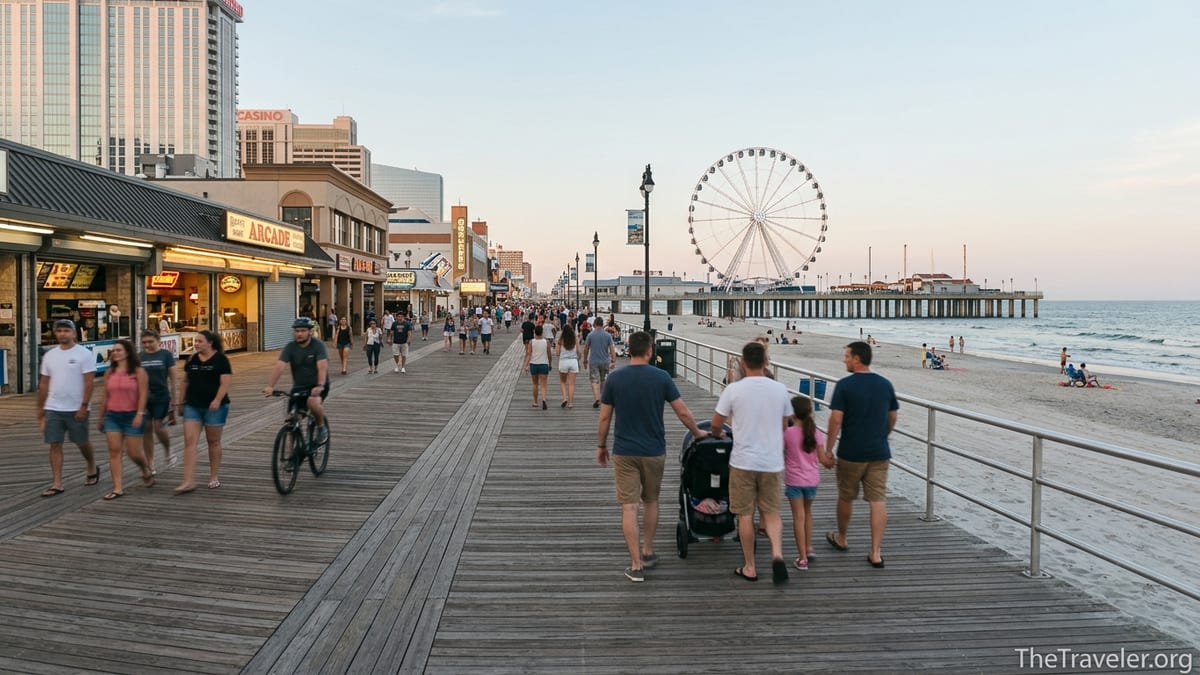
My shift in perspective started on a warm evening walking north along the Atlantic City Boardwalk, past the neon of the big casino hotels and toward the Steel Pier. The boardwalk here runs for roughly four miles, framed by surprisingly wide, free public beaches on one side and a patchwork of storefronts, arcades, and eateries on the other. Families pushed strollers, couples carried pizza boxes, and a group of teenagers were debating which thrill ride to tackle first. It looked and sounded less like a gambling destination and more like a classic seaside town.
At Steel Pier, the focus was not on betting slips but on squeals from kids launching on a looping coaster or leaning over railings to watch the waves. The 220 foot observation wheel has become one of the city’s signature non gaming attractions, offering enclosed gondolas that circle slowly over the water and the Hard Rock complex behind it. On a clear evening, it delivers that rare mix of boardwalk nostalgia and modern skyline views, and it underlines a reality many visitors miss: plenty of people come here to ride, stroll, and eat, not to gamble.
Later that night, when I turned away from the casinos and headed inland a few blocks, the atmosphere shifted again. Side streets led toward neighborhoods with row houses, small churches, and independent bars that host trivia nights and local bands. In those spaces the sound of slot machines fades, replaced by clinking glasses, live music, and kitchen noise from family owned restaurants. That is where I started to understand Atlantic City as a lived in place rather than a themed resort.
The Boardwalk: Daily Life Beyond the Gaming Floors
Walk the boardwalk early on a summer morning and the casino image feels particularly off base. You are more likely to pass joggers and retirees power walking toward Ventnor than bleary eyed gamblers. Coffee in hand, locals sit on benches watching the surf, while workers hose down storefronts and wheel in trays of funnel cake batter and pizza dough for the day ahead. Rental bikes and surreys roll past in little fleets. It is ordinary, practical boardwalk life, and it is the opposite of high stakes glamour.
The boardwalk also doubles as the city’s main stage for casual people watching. You will see everything from families sharing a paper bag of saltwater taffy to fishermen hauling coolers toward the inlets. On summer weekends, buskers stake out patches of deck between Tropicana and Ocean Casino, playing saxophone or guitar for small crowds. At night, clusters of friends drift between arcades, corn dog stands, and small beach bars that set out plastic chairs in the sand. Many visitors never step foot in a casino and still pack their days with ice cream runs, steel pier rides, and long beach hours.
Practical details reinforce that non casino reality. The beaches in Atlantic City are free, unlike some neighboring shore towns that charge for daily tags, which makes a family day in the sun relatively affordable. Budget travelers base themselves in modest motels or short term rentals on the back bay side, spending more on arcade credits and shared platters of seafood than on table games. You can pick up an inexpensive breakfast sandwich from a corner deli, then spend the afternoon on the sand and the evening walking the boards, never once needing to tap a player’s card.
The Orange Loop: A Different Kind of Nightlife
The clearest sign that Atlantic City is reimagining its identity sits a few minutes off the boardwalk in a pocket of streets known as the Orange Loop. Named after the orange properties on the Monopoly board, this compact district stretches along Tennessee Avenue, St. James Place, and New York Avenue. It has become one of the city’s liveliest non casino zones, built around independent restaurants, bars, coffee shops, and live music venues rather than slot machines and sportsbooks.
On a typical weekend night, Tennessee Avenue Beer Hall is a focal point. Tucked just steps from the ocean, it sprawls across a courtyard with picnic tables, string lights, and more than 100 craft beers available in cans, bottles, and on tap. The menu leans playful and hearty, with shareable dishes like loaded flatbreads or a sampler piled with mozzarella sticks, onion rings, and fries. It is the sort of place where a group of friends can split a round of local IPAs and a platter for under what a few cocktails might cost on a casino floor, then linger for live music or a trivia event.
Next door, Rhythm & Spirits shifts the vibe to creative cocktails and Italian influenced small plates, while other Orange Loop spots serve brunch, tacos, or espresso in compact storefronts. The streets are walkable and intimate, and the clientele is a mix of locals and visitors who came specifically for this non casino social scene. It feels more like an emerging restaurant district in a small city than an offshoot of a resort town, and it is one of the best places to feel Atlantic City’s current energy as residents experiment with new ways to use their streets.
What surprised me most about the Orange Loop is how intentionally it nudges visitors into the surrounding city fabric. Instead of moving between casino towers via indoor walkways, you bar hop and restaurant hop on foot, pausing to look at murals, talk to locals, and hear snippets of conversation from apartment windows above. The result is a surprisingly intimate experience in a destination that many outsiders assume is dominated by anonymous mega resorts.
Ducktown: History, Murals, and a Neighborhood in Motion
If the Orange Loop shows Atlantic City’s future, Ducktown tells its layered past. This inland neighborhood, traditionally known as the city’s Little Italy, stretches between Missouri and Texas Avenues behind the boardwalk. For early 20th century immigrants, it was a working class district of duck farms, modest homes, and social clubs. Later, it suffered through disinvestment and the disruption that casino construction brought to the wider city. Today, it is evolving again as a multicultural residential area with a growing public art and food scene.
Walking through Ducktown, you still find vestiges of its Italian heritage in older taverns and long running restaurants that specialize in red sauce comfort food. At the same time, new murals splashed across building walls and underpasses tell different stories, many of them tied to social justice themes and local history. A poetry trail project in partnership with the Noyes Arts Garage and community organizations has embedded verses into public spaces around the neighborhood, turning a simple stroll into a kind of open air gallery.
The Noyes Arts Garage of Stockton University anchors a corner of Ducktown with galleries, artist studios, and rotating exhibitions. Inside, visitors browse local art, jewelry, and crafts, and they can also step into the African American Heritage Museum of Southern New Jersey, which shares the same complex. Outside, community events like neighborhood walks and revitalization days focus on street lighting, public art, and small scale improvements. For travelers, it means you can spend an afternoon moving between art spaces, murals, and family run eateries without encountering a single slot machine.
For me, Ducktown was where Atlantic City’s human scale became clearest. I chatted with a café owner about off season life as locals worked on laptops and kids stopped in for snacks after school. The neighborhood has challenges, as most city districts near a tourist core do, but it also has a sense of ownership and pride that you will never glimpse from a casino lobby. Experiencing that side of Atlantic City makes every return trip feel less like a weekend in “AC” and more like a visit to a place with roots.
Family Fun and Low Key Days Without a Bet
One of the biggest surprises in Atlantic City is how easy it is to fill a family itinerary without touching a gaming floor. Parents with young kids often start at Steel Pier, where classic rides like a carousel and bumper cars sit alongside more intense attractions. The observation wheel has climate controlled gondolas, which makes it a solid choice in shoulder seasons when the wind off the ocean can be sharp. On summer evenings, the lights of the wheel and rides cast reflections on the water while the beach below remains open for sandcastle builders and sunset photographers.
Beyond the pier, the boardwalk is lined with arcades that offer a mix of retro and modern games. At Central Pier Arcade and similar spots, kids compete for tickets to trade in for prizes, while older teens drift toward driving simulators and air hockey. A couple of hours here can cost far less than a shopping spree, and it tends to be one of the trip highlights for children who have little interest in the casino skyline above them.
For a break from the boardwalk itself, many visitors drive or rideshare to the back bay district, where places like Little Water Distillery offer tours and tastings in converted industrial spaces. Nearby breweries and casual waterside restaurants give adults a relaxed way to enjoy local flavors without the formal dress codes or price tags of resort steakhouses. Families seeking something quieter often simply walk south on the boardwalk into neighboring Ventnor, where the crowds thin and the feel is more residential than resort.
These experiences reframe Atlantic City as a shore town where you can do very ordinary, very enjoyable things: eat a slice of pizza on the sand, teach a child to play skee ball, ride a Ferris wheel at dusk, or hunt for street art in an old immigrant neighborhood. None of it requires a rewards card, and none of it depends on luck.
Food, Drink, and the Taste of a Real City
Food is often where a destination reveals its real self, and Atlantic City is no exception. Yes, casino restaurants bring in big name chefs and splashy concepts, but the heart of the city’s culinary scene beats in low key storefronts and family run dining rooms scattered across its neighborhoods. That is where you meet servers who grew up here, and where regulars greet each other by name over plates of pasta, seafood, and regional comfort food.
In Ducktown and the surrounding streets, long established Italian American spots still serve generous platters of linguine with clams or chicken parmigiana in rooms lined with old photographs. Closer to the back bay, crab shacks and seafood houses turn out fried platters piled with local catch, often at prices significantly lower than what you would pay inside a casino tower. North of the main resort corridor, small taquerias and Latin American cafés offer tacos, stews, and pastries that reflect the city’s newer immigrant communities.
The newer Orange Loop venues add another layer. Tennessee Avenue Beer Hall, for example, pairs its long beer list with playful dishes like crab topped flatbreads or regionally inspired pretzels, making it an easy choice for groups with mixed tastes and budgets. Nearby cocktail bars emphasize seasonal ingredients and thoughtful presentations without the velvet rope attitude. Coffee shops in the same blocks cater to digital nomads and locals on their lunch break, underscoring that this is a neighborhood people actually use rather than a manufactured entertainment zone.
For travelers, the takeaway is that meal planning in Atlantic City should extend well beyond the casino comp list. A balanced visit might combine one splurge dinner at a marquee resort restaurant with several more casual meals in Ducktown, the back bay, or the Orange Loop. Not only does that spread your spending into the local economy, it also gives you a far more nuanced sense of what people who live here actually eat and enjoy.
Seeing Atlantic City in a New Light
Exploring Atlantic City beyond the casinos does not mean ignoring the resort towers altogether. They remain a defining part of the skyline and a major employer, and they offer concerts, comedy shows, and indoor entertainment that can be appealing, especially in bad weather. The surprise is not that casinos exist, but rather that they no longer tell the whole story. Increasingly, the most interesting developments are happening at street level, on side avenues and neighborhood corners where residents and small business owners are rewriting the city’s narrative.
The practical implications for travelers are straightforward. If you are flying or driving in for a weekend, consider building your plans from the outside in. Start with a walk through Ducktown’s murals and cafés, an evening in the Orange Loop, and a long morning on the boardwalk and beach. Add a visit to Steel Pier or a back bay distillery. Then, if you are inclined, dip into casino entertainment as an optional extra rather than the main event.
This shift in mindset changes how you remember the trip. Instead of recalling only how much money you won or lost at the tables, you are more likely to think back to a mural that caught your eye, a conversation with a bartender about winter storms, or the view from the observation wheel as the sun set over the bay. In those memories, Atlantic City looks less like a casino brand and more like a complex shore town that is still very much in the process of defining itself.
The Takeaway
What surprised me most about Atlantic City was not the casinos, but how small a role they played once I gave the rest of the city a chance. Between a long, lively boardwalk, revitalizing neighborhoods like the Orange Loop and Ducktown, and a growing web of independent food, drink, and arts spaces, this destination offers far more than gaming. The city is not perfect, and many of its neighborhoods face real challenges, yet there is a sense of movement and experimentation that makes it worth a fresh look.
If your mental image of Atlantic City is frozen somewhere in the era of old fight posters and casino commercials, consider it out of date. The most rewarding experiences here now involve walking, tasting, listening, and looking, often several blocks away from the nearest slot machine. Come ready to be curious, and you may find, as I did, that the true story of Atlantic City lives not under the casino chandeliers but out on the streets, piers, and neighborhoods that surround them.
FAQ
Q1. Can I enjoy Atlantic City without ever entering a casino?
Yes. Many visitors focus entirely on the boardwalk, beach, Steel Pier, neighborhood restaurants, murals, and arts spaces, and leave without setting foot on a gaming floor.
Q2. Is Atlantic City affordable for non gamblers and families?
It can be. Free public beaches, pay as you go arcades, casual eateries, and neighborhood bars make it possible to keep daily costs relatively moderate compared with all inclusive resort stays.
Q3. What is the Orange Loop, and why should I go?
The Orange Loop is a three block district off the boardwalk centered on Tennessee Avenue, St. James Place, and New York Avenue, known for independent bars, restaurants, coffee shops, and live music. It offers walkable nightlife that feels more local than casino centric.
Q4. What makes Ducktown different from the boardwalk area?
Ducktown is a historic inland neighborhood with Italian American roots that now features a mix of cultures, public art, the Noyes Arts Garage, and longtime family run restaurants. It feels more like a traditional city district than a resort strip.
Q5. Are Atlantic City’s beaches really free to use?
Yes, Atlantic City’s oceanfront beaches do not require beach badges or day passes, which is unusual compared with some other New Jersey shore towns that charge for access in summer.
Q6. Is Atlantic City safe to explore away from the casinos?
Like any small city, conditions vary by block and time of day. Staying aware of your surroundings, sticking to well lit routes, and using rideshares at night are sensible precautions that many visitors follow.
Q7. What are some good rainy day options that are not casino related?
On wet or windy days, visitors often head to the Noyes Arts Garage, small museums, arcades along the boardwalk, back bay distillery or brewery tours, or casual restaurants that encourage lingering over a long meal.
Q8. Do I need a car to visit neighborhoods like Ducktown and the Orange Loop?
If you are staying near the central boardwalk, both Ducktown and the Orange Loop are within walking distance for most travelers. Rideshares and taxis are widely available for those who prefer not to walk or are staying farther out.
Q9. When is the best time of year to experience Atlantic City beyond the casinos?
Late spring through early fall offers the fullest experience, with active boardwalk life, open Steel Pier rides, and outdoor seating in districts like the Orange Loop, though off season visits can be quieter and less expensive.
Q10. How long should I plan to stay if I want to see more than the casinos?
A two or three night stay usually gives enough time for beach and boardwalk hours, an evening in the Orange Loop, a walk through Ducktown, and a visit to Steel Pier or the back bay, without feeling rushed.