


In a region where borders, currencies, and airlines have changed faster than most travelers can keep up, Aviasales has quietly become one of Eastern Europe’s most relied‑on tools for finding flights. From students in Kraków hunting a 40 euro weekend escape to Milan, to Armenian tech workers piecing together convoluted routes via Istanbul, the metasearch platform has grown into a default starting point for millions of trip plans. Understanding why Aviasales caught on here reveals as much about the realities of travel in Eastern Europe as it does about the product itself.
Get the latest updates straight to your inbox!
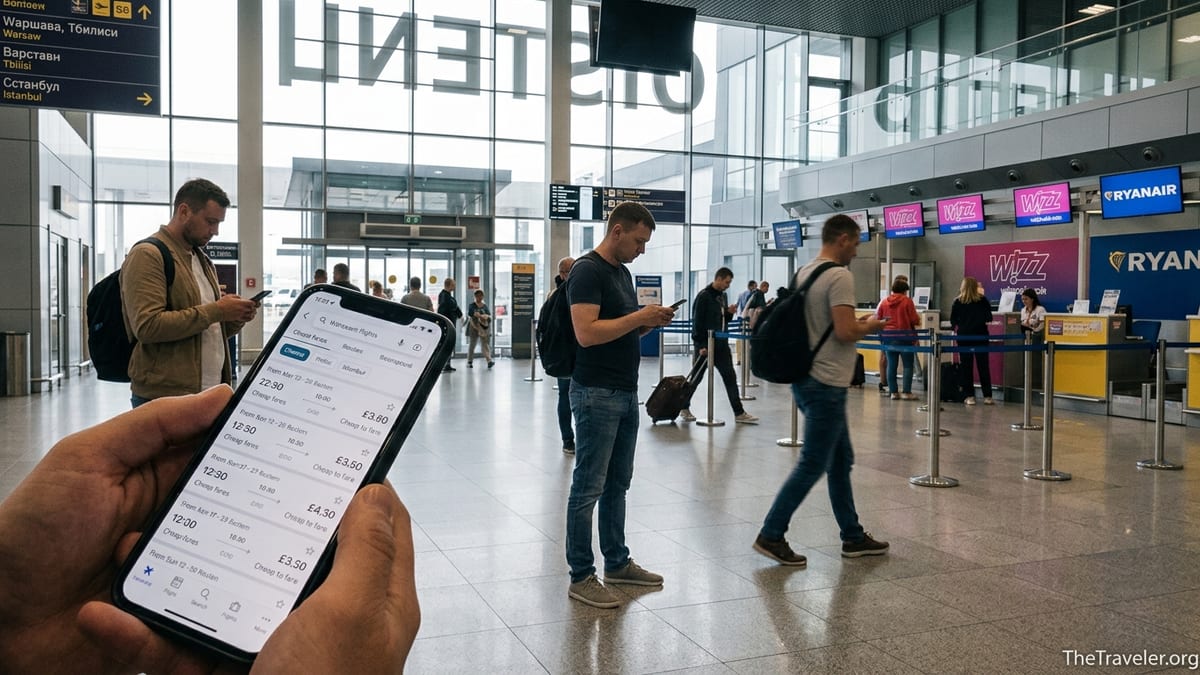
From Russian Blog to Regional Workhorse
Aviasales began life in 2007 as a small personal blog collecting cheap airfare finds for Russian travelers, long before metasearch became mainstream in the region. Over time it evolved into a full flight search engine and, backed by the same holding company that operates JetRadar, focused aggressively on Russian‑speaking and neighboring markets in Eastern Europe and Central Asia. Unlike many global brands that tried to "enter" the region from London or New York, Aviasales grew from inside the market’s realities: fragmented airlines, multiple languages, and travelers used to stitching together their own routes.
Today the company positions itself as one of the world’s major flight metasearch engines and reports activity not only in Russia and the CIS, but across Eastern Europe and as far as Asia and the United States. For travelers in places like Serbia, Georgia, Kazakhstan, or the Baltic states, Aviasales is often just as well known as Skyscanner or Google Flights, and sometimes more trusted because it feels locally attuned. Its Russian‑language core gradually expanded into localized versions and apps that better reflected the expectations of regional users, from currency choices to local payment partners.
The platform’s popularity is measurable in mobile behavior. The Android app alone reports more than ten million downloads and hundreds of thousands of reviews, with ratings hovering around 4.8 out of 5. That adoption rate is striking for a product that began in a niche language market and then pushed outward rather than the other way around. In practice, it means that on any given day, a huge share of flight searches originating in Moscow, Yerevan, or Almaty will pass through Aviasales at some point in the planning process.
This origin story matters because it underpins why Aviasales feels different from global competitors in Eastern Europe. It was built for people booking overnight trains from Moscow before they ever considered flying Berlin to Tbilisi on a low‑cost carrier. The result is a tool that bakes in regional quirks, from visa‑friendly transit hubs to airlines few Western travelers have ever heard of.
Metasearch Suited to a Fragmented Airline Landscape
Eastern Europe is not a simple aviation market. Legacy flag carriers such as LOT Polish Airlines, Air Serbia, and Bulgaria Air fly alongside a fast‑changing cast of low‑cost and charter operators: Wizz Air, Ryanair, Pegasus, airBaltic, Enter Air, and smaller players like Air Montenegro or Albawings. Routes appear and vanish with the season, and many airlines sell primarily through their own websites or local ticket agencies. In this environment, a metasearch engine like Aviasales, which aggregates both big brand and obscure regional carriers, is particularly valuable.
For example, a traveler in Chișinău searching for a cheap summer trip to Barcelona might be shown a straightforward LOT itinerary via Warsaw, but also a cheaper combination on Wizz Air from Iași or Bucharest if they are willing to cross a land border first. Similarly, someone in Tbilisi looking for flights to Paris will often see not only Air France and Georgian Airways options, but also mix‑and‑match journeys via low‑cost hubs like Budapest or Istanbul Sabiha Gökçen on carriers such as Wizz Air and AJet. Aviasales’ algorithm is specifically tuned to include these regional and low‑cost combinations that global tools sometimes bury or miss entirely.
The platform also learned to navigate the area’s complex regulatory and political environment. After multiple sanctions and airspace restrictions affected direct flights between Russia and parts of Europe, many Western search engines restricted or hid these routes entirely. Travelers on regional forums regularly note that Aviasales remains one of the few engines that still shows a reasonably comprehensive set of options to or from Russian and some CIS airports, especially via intermediaries in Turkey, the Gulf, or the Caucasus.
Beyond routing, Aviasales participates in the region’s aviation data ecosystem through its Aviastats project, which tracks passenger flows and airline revenues in Russia and neighboring markets. While most travelers never see that analytical side, its existence hints at a deep, ongoing engagement with local airlines and regulators. The more granular the data on routes and demand, the more confidently the search engine can surface unusual but workable itineraries that match how Eastern Europeans actually move around the continent.
Mobile‑First, Deal‑Driven Culture
Eastern Europe’s travel boom over the past decade has been mobile‑led. Cheap Android smartphones, widespread 4G coverage, and a generation of young travelers accustomed to doing everything through apps created the perfect environment for Aviasales’ mobile push. From the early 2010s the company invested heavily in its app, to the point where industry interviews and app‑award entries highlighted a deliberate strategy to make Aviasales one of the most installed travel apps across Russia and neighboring countries.
The result is visible in daily travel behavior. A university student in Lviv planning a budget escape to Rome may never open a laptop. Instead, they download the Aviasales app, set up a price alert for Lviv or Kraków to Rome, and wait for a push notification. When a Wizz Air promo drops the fare under 40 or 50 euros return, the app flags it and the ticket is often purchased on the spot via the airline or an online agent the app redirects to. The same pattern plays out with young professionals in Belgrade watching prices for Belgrade to Amsterdam, or families in Vilnius tracking summer fares to Greek islands.
The app design leans into this deal‑driven culture. Users can subscribe to notifications about the cheapest, most direct, or "optimal" flights on a given route, guiding them toward a decision that balances price with layovers. The interface makes liberal use of price calendars and visual maps, showing, for instance, that Warsaw to Athens might be cheapest in late October or that Kyiv residents willing to depart from Rzeszów in Poland can save substantial amounts compared to flying from more obvious hubs.
This constant drip of small, concrete savings helps build loyalty. Travelers share wins in Telegram groups and local forums: the Moldovan couple who stitched together a Chișinău to Antalya beach holiday for half the package‑tour price, or the Kazakh digital nomad who found an Almaty to Bangkok route via Sharjah that came in far cheaper than standard connections through major Asian hubs. Over time, Aviasales’ app becomes less a site one visits occasionally and more a background tool that quietly monitors the market.
Crucially, the mobile experience reflects regional constraints. Many Eastern European users still pay with local debit cards, bank transfers, or alternative methods, and some hesitate to store card details directly with airlines. Because Aviasales redirects users to a range of sellers, including local agencies that accept domestic payment methods, the path from search to purchase often feels less intimidating than booking directly on a foreign carrier’s website.
Local Language, Local Currency, Local Mentality
Where some global travel brands treat Eastern Europe as a single block, Aviasales leans into local difference. The core platform is built around Russian, but localized interfaces and content stretch across multiple languages and currencies, from euros in the Baltics to tenge in Kazakhstan. Search results commonly display fares in a user’s chosen local currency by default, a seemingly minor detail that significantly reduces friction for travelers who plan budgets in Romanian leu or Georgian lari, not dollars or euros.
The company’s communications strategy has long emphasized an informal, sometimes humorous tone in Russian and neighboring markets. Its social media posts and marketing campaigns parody local memes, reference specific Russian and Ukrainian holiday periods, and openly compare airlines that matter in this geography, such as Pobeda, S7 Airlines, airBaltic, or Turkish low‑cost carriers serving the region. This voice helps Aviasales feel like a local friend sharing hacks, rather than a distant corporate platform.
Real‑world usage reinforces that perception. In online discussions about how to reach Russia despite sanctions, for instance, travelers from Western Europe report using Aviasales to identify workable routes via Istanbul, Belgrade, or Yerevan, then clicking through to book directly with airlines like Turkish Airlines, Air Serbia, or Middle Eastern carriers. For them, Aviasales effectively serves as a local interpreter of a complicated route network they do not fully understand.
On the ground, the platform reflects how people in Eastern Europe actually travel. It is common, for example, for Ukrainians, Belarusians, or western Russians to cross into Poland or the Baltics by bus or train and then fly onward from Warsaw, Vilnius, or Riga. Aviasales routinely surfaces options that start or end at these secondary airports, where fares can be significantly lower than from major hubs. For a family in Brest or Grodno, seeing that a Ryanair flight from Vilnius to Barcelona is far cheaper than any direct option from Minsk can fundamentally reshape how they imagine a summer vacation.
Price Sensitivity and the Rise of Low‑Cost Carriers
Decades of relatively modest wages and volatile currencies have made travelers in Eastern Europe acutely price sensitive. That sensitivity aligned perfectly with the arrival of European low‑cost airlines in the region and with Aviasales’ model. The platform built its reputation on finding "hidden" cheap routes, especially those involving ultra‑low‑cost carriers like Wizz Air, Ryanair, Pegasus, Pobeda, or FlyArystan that might not appear or be prioritized in more conservative global search engines.
A typical scenario illustrates this dynamic. A young couple in Sofia wants to visit friends in London. A direct legacy‑carrier option might hover around 180 to 220 euros return on Bulgaria Air or British Airways during a busy month. Aviasales, however, might highlight a combination of Wizz Air Sofia to Luton with off‑peak dates, dropping the cost to under 80 euros return if the couple is flexible on airport choice and travel days. By visually contrasting those options, the platform educates users in the logic of low‑cost travel: accept a late‑night departure, fly to a secondary airport, travel with hand luggage only, and the savings can be substantial.
The platform’s strength is particularly apparent in secondary markets where low‑cost carriers have created dense but confusing route maps. Consider a traveler in Skopje searching for a bargain trip to Scandinavia. Aviasales might present a direct Wizz Air link to Malmö or Stockholm Skavsta, plus alternative paths via Budapest or Vienna that combine Wizz Air or Ryanair flights, all clearly priced so the user can see how much a single extra bus ride could save. This kind of visualization matters when disposable income is tight and each leg of a journey carries real financial weight.
Aviasales also plays well with newly emerging low‑cost brands from within the region itself. Airlines like Kazakhstan’s FlyArystan, Turkey’s rebranded AJet, or Russia’s Pobeda target budget‑conscious travelers and fly routes that often bypass the big Western hubs. By aggressively indexing these carriers and pairing them with more established airlines where necessary, Aviasales gives Eastern European travelers confidence to experiment with airlines they may not yet know well, while still comparing them on equal footing with traditional carriers.
In practice, this combination of low‑cost awareness and metasearch breadth means that a family in Bucharest planning a week in Antalya, a group of students in Riga dreaming of a winter escape to the Canary Islands, or a worker in Tbilisi heading to seasonal employment in Germany can all use the same interface to weigh dozens of possible routes and prices without spending hours on separate airline websites.
Navigating Sanctions, Restrictions, and Workarounds
The past decade has brought unprecedented turbulence to Eastern European aviation. Airspace closures, pandemic disruptions, and geopolitical sanctions have all reshaped which routes exist, which airlines can operate them, and which booking systems are allowed to display or sell them. For many Western travelers, these changes simply made certain destinations feel "farther away." For those in or connected to Eastern Europe, they introduced a daily puzzle: how to actually get from A to B.
Aviasales’ popularity grew in part because it did not retreat from this complexity. When some major global search tools stopped displaying or pricing flights involving Russia or specific carriers, regional users increasingly turned to Aviasales as one of the few engines that still surfaced workable routes via third countries. A Lithuanian of Russian origin trying to visit family in Siberia, for instance, might piece together Vilnius to Istanbul, Istanbul to Yerevan, and then a domestic Russian leg, all seed‑planned through Aviasales before booking separate tickets with each airline.
Another, more technical, factor also played a role. With international card payments to some Russian entities restricted, travelers began sharing workarounds online that involved using Aviasales as a search layer while paying through foreign‑registered agencies or airlines that accepted their non‑Russian cards. In some discussions, Aviasales is described as a "bridge" service that still understands the Russian‑language and CIS route landscape but connects users to sellers outside the immediate sanction regime.
These workarounds are not without risk. Booking separate tickets on complex routes exposes travelers to potential missed connections and customer‑service complications. Yet for many in Eastern Europe, the alternative is not a simple one‑click direct flight, but no viable option at all. In that context, a metasearch engine willing to keep showing as many real options as the legal environment allows becomes more than a convenience: it is a lifeline for maintaining family ties, business relationships, and educational opportunities across a fractured region.
This willingness to operate in a gray, constantly shifting environment distinguishes Aviasales from some of its global peers and cements its popularity among those who feel their mobility is otherwise constrained by circumstances beyond their control.
Trust, Limitations, and How Travelers Actually Use It
Part of Aviasales’ appeal in Eastern Europe lies in how travelers have learned to use it pragmatically. Experienced users know that the service is a metasearch engine, not a ticket seller. It displays prices and routes from airlines and online travel agencies, then redirects users to complete purchases elsewhere. In practice, that means savvy travelers in places like Prague, Tbilisi, or Almaty often use Aviasales for discovery and price comparison, then choose to book directly with the airline once they have identified the best itinerary.
For example, a traveler in Belgrade searching for flights to New York might use Aviasales to compare Air Serbia’s direct service with options via Frankfurt or Vienna on Lufthansa or Austrian Airlines, and low‑cost combinations via Istanbul on Turkish Airlines plus a US carrier. Once they have identified a departure date and route that balances price and convenience, many will click through to the airline website rather than use an unknown third‑party agency. This pattern is frequently described in traveler communities and reflects a healthy skepticism toward intermediaries while still trusting Aviasales’ search capabilities.
The platform’s limitations are also widely acknowledged. Prices occasionally jump when the user clicks through, some smaller agencies in the results have mixed reputations, and not every itinerary that appears creative on paper works smoothly in real life. Eastern European travelers who have been burned by long customer‑service battles with obscure online agencies often emphasize that Aviasales is best treated as a research assistant, not the final arbiter of what to buy.
Nevertheless, this nuanced understanding has not dented the platform’s standing. If anything, it has reinforced its role as an essential starting point: the place you go first to see the real breadth of options, then make your own informed choice about how and where to book. Over time, that habit has made Aviasales a kind of shared reference point across the region. Friends text each other screenshots of fare calendars, not airline websites. Bloggers and influencers quote "Aviasales prices" when discussing destination affordability. In a noisy and often confusing market, becoming that default reference is a powerful sign of popularity.
The Takeaway
Aviasales did not become popular in Eastern Europe by accident. It grew out of the region’s own travel culture, shaped its tools around local realities, and doubled down on mobile, low‑cost, and complex routing exactly as those trends reshaped how people moved. By indexing everything from budget Wizz Air runs out of small Balkan airports to intricate multi‑stop journeys via Istanbul and the Caucasus, it made air travel feel accessible to travelers who once saw it as the preserve of the wealthy.
At the same time, the platform’s limits have nudged users toward a healthier booking habit: search broadly, then buy carefully. In a part of the world where politics, economics, and airline strategies can change quickly, that combination of flexibility and caution is invaluable. Whether you are a backpacker in Vilnius chasing a 20 euro fare to Rome, a business traveler in Tbilisi navigating disrupted routes, or a family in Łódź planning a once‑a‑year beach holiday, Aviasales has become part of the unspoken toolkit of Eastern European travel.
For travelers coming from outside the region, understanding why Aviasales matters is a shortcut to traveling here more like a local. Use it to map what is truly possible, compare legacy and low‑cost options side by side, and uncover secondary routes that more generic tools miss. The more complex your itinerary, the more value you are likely to find, which is exactly why Eastern Europe, with its patchwork of airlines, borders, and budgets, has embraced Aviasales so enthusiastically.
FAQ
Q1. Is Aviasales a travel agency or just a search engine?
Aviasales is a metasearch engine. It searches and compares fares from airlines and online travel agencies, then redirects you to another site to complete the booking.
Q2. Why do many Eastern European travelers prefer Aviasales over global brands?
Because it is strongly focused on regional airlines, currencies, and routes, Aviasales often shows more low‑cost combinations and workarounds that reflect how people in Eastern Europe actually travel.
Q3. Can I safely book tickets directly through partners I find on Aviasales?
Safety depends on the specific seller. Many travelers use Aviasales to find routes, then choose to book directly with the airline or a well‑known agency to minimize customer‑service risks.
Q4. Does Aviasales show low‑cost carriers like Wizz Air, Ryanair, and Pobeda?
Yes. One of its main strengths in Eastern Europe is indexing a wide range of low‑cost airlines, including Wizz Air, Ryanair, Pegasus, Pobeda, and other regional budget carriers.
Q5. Why do prices sometimes change when I click through from Aviasales?
Airline and agency prices can fluctuate quickly as seats sell or exchange rates move. The fare shown in search is an offer, not a guarantee, so occasional jumps are normal across all metasearch engines.
Q6. Is Aviasales useful if I am paying with a card issued outside Eastern Europe?
Often yes. Many sellers in Aviasales’ results are international airlines or agencies that accept foreign cards, which can be helpful when local payment options are limited or restricted.
Q7. Can Aviasales help with complex routes affected by sanctions or airspace bans?
In many cases it can. Travelers use it to discover indirect routes via hubs like Istanbul, Belgrade, or Yerevan when direct services are suspended or restricted.
Q8. Does Aviasales charge any extra fees to use its search?
Searching on Aviasales is generally free. Any service fees are added, if at all, by the airline or online travel agency that ultimately sells you the ticket.
Q9. How accurate is Aviasales for finding the absolute cheapest fare?
No tool is perfect, but Aviasales is strong for Eastern Europe because it includes many low‑cost and regional airlines. Most travelers still cross‑check one or two other sites before buying.
Q10. Should I rely only on Aviasales when planning trips in Eastern Europe?
It is an excellent starting point, especially for discovering routes and prices. For important trips, it is wise to verify details with the airline and, where possible, complete the final purchase directly on the carrier’s site.