


More news on this day
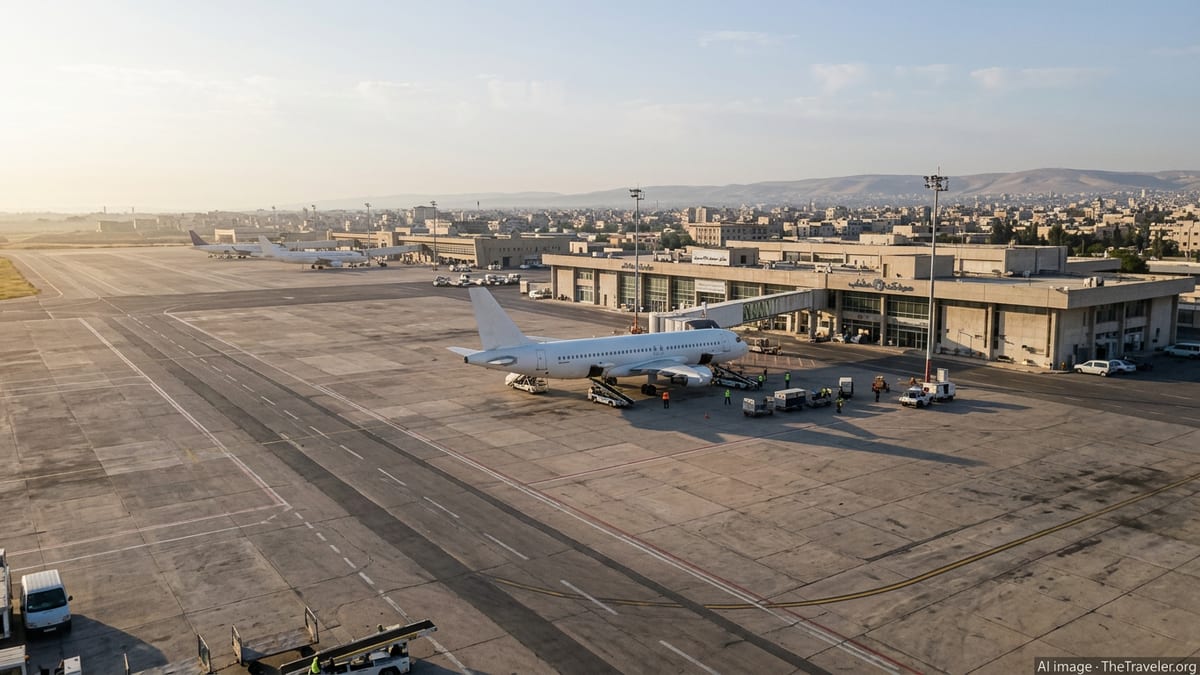
Syrian Airlines has restarted direct passenger flights between Damascus and Moscow after a suspension of around 18 months, restoring one of Syria’s most politically significant long haul routes and offering travelers a renewed direct link between the two capitals.
Get the latest news straight to your inbox!
Route Restoration Marks Latest Step in Syria–Russia Connectivity
According to publicly available flight information and regional aviation coverage, Syrian Airlines has placed Damascus–Moscow back on its network following a roughly one and a half year pause in operations on the route. The resumption returns a direct state-carrier connection between Syria’s main international gateway and the Russian capital, a corridor that has historically been important for political, economic and personal travel.
Earlier services between Damascus and Moscow were operated both by Syrian Airlines and by private Syrian carriers, with operations affected over the years by conflict, sanctions, airspace restrictions and security considerations. The newly resumed schedule indicates that, despite these constraints, demand for travel between the two countries remains resilient enough to support the return of national-flag service.
Public timetables suggest that the Damascus–Moscow flights are operating on a limited frequency model rather than daily service, reflecting a cautious ramp-up while the market and operational environment are assessed. Aviation observers note that capacity on the route is still well below pre-conflict levels, but see the restart as a symbolic and practical step in rebuilding Syria’s long-haul connectivity.
Operational Details and Likely Flight Pattern
Based on airline schedule data and airport arrivals and departures boards, the reinstated service links Damascus International Airport with one of Moscow’s major airports, providing a nonstop option in a market that had increasingly relied on indirect connections via Gulf and regional hubs. Equipment used on the route appears to be narrowbody aircraft suited to medium-haul sectors, consistent with the carrier’s current fleet profile.
The timing of the flights is configured to allow onward connections for passengers traveling beyond Moscow, while also accommodating point-to-point travel for business, education, medical treatment and family visits. Travel specialists monitoring the route point out that, even with modest frequencies, a direct flight can substantially reduce total journey time compared with itineraries involving multiple stops.
Industry reports indicate that fares on the resumed route are being set in line with other international services from Damascus, with constraints linked to currency volatility and payment channels. Given the limited number of alternative nonstop options and ongoing sanctions, tickets are likely to appeal particularly to travelers who prioritize direct travel and are familiar with the local booking environment.
Strategic Significance for Bilateral Ties
Analysts of regional air travel note that direct flights often mirror broader political and economic alignments, and the revival of Syrian Airlines’ Moscow service is widely viewed as aligned with the close relationship between Damascus and Moscow. Russia has been a central political and military ally for the Syrian government, and direct air links help facilitate official delegations, technical cooperation and trade missions.
In the civilian sphere, the route supports movements of students, workers and families who have built ties between the two countries over several decades. Public records show that Damascus once maintained a broader European and Asian network, and Russia has been one of the few long-haul destinations to retain continuity even through periods of intense disruption.
Aviation commentators suggest that the return of the national carrier on this route may also be intended as a signal of normalization and recovery in Syria’s civil aviation sector. While private carriers have operated flights between Syria and Russia in recent years, the presence of the state airline on the corridor underscores official efforts to project stability and to rebuild a level of scheduled connectivity befitting a national hub.
Implications for Travelers and the Wider Network
For prospective passengers, the restart of Damascus–Moscow flights provides a more straightforward option than itineraries that require transiting through third countries. Travelers who previously depended on connections via Gulf states, Iraq or other regional hubs may now be able to shorten travel times and reduce visa and transit complexities, depending on their nationality and route.
Travel advisories issued by various governments continue to highlight security and infrastructure considerations in Syria, and these remain an important factor for trip planning. Public guidance generally encourages travelers to pay close attention to airport operational status, airspace notices and airline schedule changes when booking flights to and from Damascus, especially on longer haul routes.
The resumption of flights to Moscow could also support incremental growth across Syrian Airlines’ broader network. If load factors on the route prove sustainable, industry observers expect that the carrier may look at fine-tuning frequencies or adjusting capacity on other international sectors, including services to Gulf destinations and regional capitals, to better integrate connections with the Russian market.
Part of a Gradual Rebuilding of Syrian Air Links
The restart of the Damascus–Moscow service forms part of a broader, gradual effort to rebuild Syria’s international air links following years of conflict and repeated interruptions caused by security incidents and infrastructure damage. Reports tracking operations at Damascus International Airport describe a pattern of stepwise reopenings, where routes are added or restored as conditions allow.
In recent years, flights to regional destinations in the Gulf, Iraq and parts of North Africa have been brought back on line by Syrian carriers and a small number of foreign airlines. Each resumption has required navigation of complex regulatory, insurance and operational challenges, along with the need to demonstrate commercially viable demand.
Within this context, the return of Syrian Airlines on the Moscow corridor is being interpreted by aviation analysts as another incremental milestone rather than a sudden transformation. The move highlights both the continued constraints facing Syria’s civil aviation sector and its efforts to reconnect with key partners, with travelers now watching closely to see whether the route stabilizes and potentially expands in the months ahead.