


More news on this day
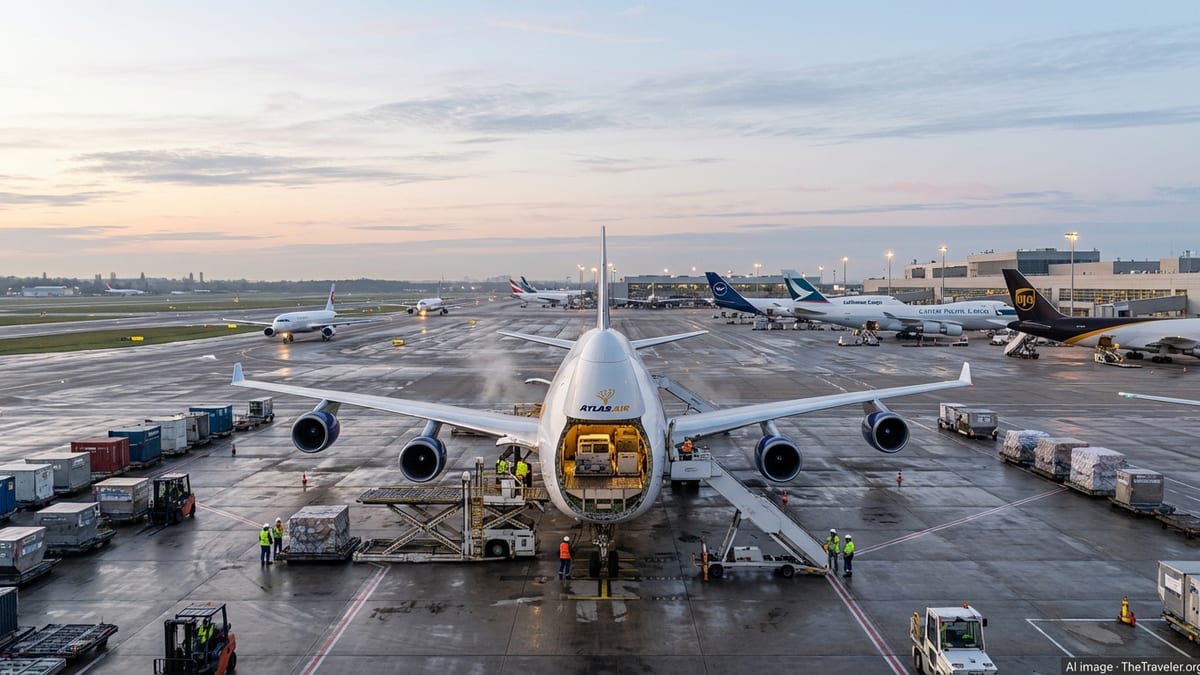
Dedicated freighters from some of India’s biggest and fastest growing airlines are being marshalled for launch at Navi Mumbai International Airport, underscoring the greenfield hub’s ambition to become the Mumbai region’s next major cargo gateway.
Get the latest news straight to your inbox!
Freighters poised to launch at NMIA
Navi Mumbai International Airport, located across the harbour from Mumbai’s long-congested primary hub, is preparing for a significant ramp-up in cargo activity as airlines ready dedicated freighter services at the new field. Publicly available information indicates that international cargo airlines and Indian carriers with freighter fleets are aligning schedules and network plans around the airport’s early cargo phases, effectively lining up their aircraft for regular operations on the new runway.
Reports on the airport’s rollout suggest that freighter services are being treated as a central pillar of the opening phase, operating alongside the first wave of international passenger flights. Industry coverage of the shift describes a gradual migration of all-cargo operations from Mumbai’s Chhatrapati Shivaji Maharaj International Airport toward Navi Mumbai, with belly cargo on passenger jets expected to remain at the existing airport for the time being.
Sector analysts note that the move reflects structural changes in India’s aviation market. The Mumbai metropolitan area already accounts for a large share of the country’s international air freight, and the new facility at Navi Mumbai is being positioned to relieve existing bottlenecks while giving airlines more flexibility to base and schedule dedicated freighter aircraft.
Strategic cargo design and phased capacity
Unlike older urban airports that have had to retrofit freight space, Navi Mumbai International Airport has been designed from the outset with cargo in mind. Planning documents and airport promotional material highlight a multi-phase cargo village layout, on-airport warehousing and direct landside access to industrial corridors that ring the Mumbai region.
The first phase provides substantial handling capability measured in hundreds of thousands of tonnes annually, with room to scale several times over as demand builds. The airport operator presents this as part of a long-term vision to transform Navi Mumbai into a logistics and multimodal hub, supporting India’s wider push to lower logistics costs and improve export competitiveness.
A next-generation digital cargo community system is also part of the blueprint, intended to link airlines, freight forwarders, customs, truckers and ground handlers on a single platform. By digitising documentation and providing real-time shipment visibility, the system is expected to reduce dwell times and make the airport more attractive to express operators and integrators that rely on tight schedules.
Major airlines map their freighter strategies
Indian and foreign airlines that already operate freighter fleets, as well as passenger airlines expanding into cargo, are now assessing how best to use the new capacity at Navi Mumbai. Network planning updates and trade media coverage point to a model in which dedicated freighters serve the new airport, while widebody passenger aircraft continue to use the city’s existing international gateway.
For airline groups with both passenger and cargo operations, the greenfield site offers new flexibility. Carriers can time overnight freighter arrivals to feed early-morning truck departures into the wider Maharashtra and Gujarat industrial belts, while still tapping into passenger belly capacity at the legacy airport for high-yield shipments that need direct connectivity to specific destinations.
Logistics specialists suggest that the separation of freighter and passenger operations, if carefully coordinated, could eventually support more complex routings such as triangular cargo services linking Navi Mumbai with other regional hubs. This may attract additional international freighter operators that have been capacity-constrained in Mumbai’s saturated airspace and at its crowded cargo terminals.
Regulatory and operational hurdles remain
Despite the visible readiness on the airside and the growing interest from airlines, the full launch timeline for freighter operations at Navi Mumbai has faced questions over regulatory sequencing. Reports in the Indian business press describe uncertainty around some approvals that are still in process, even as commercial stakeholders continue planning for a significant shift in cargo flows.
Industry observers caution that any delay in synchronising aviation, customs and security clearances could slow the pace at which scheduled freighter services ramp up. Cargo handlers and forwarders are also watching closely to understand how ground access, road connectivity and on-terminal processes perform once the first wave of aircraft begins operating regularly.
Nevertheless, the direction of travel appears clear. Airframe orders by Indian carriers, the rapid expansion of e-commerce and pharmaceuticals, and infrastructure upgrades in and around Navi Mumbai are together creating powerful momentum behind the push to establish the new airport as a primary freighter base.
Implications for Mumbai’s existing gateway
The build-up of freighters at Navi Mumbai is expected to trigger a rebalancing of roles between the region’s two airports. Publicly available commentary from infrastructure planners has consistently framed the new field as a complement to, rather than a replacement for, the existing Mumbai airport, which will continue to handle the majority of passenger traffic for the foreseeable future.
If the transition of heavy freighter activity proceeds as envisaged, the legacy hub could gain breathing space to focus on passenger experience and terminal redevelopment, while still handling high-value belly cargo. At the same time, the dedicated cargo infrastructure at Navi Mumbai would capture the bulk of larger shipments, time-critical express flows and eventually specialised traffic such as perishables and automotive components.
For shippers and freight forwarders in western India, the sight of multiple freighters queuing on the Navi Mumbai runway in the coming seasons would mark a tangible shift in how global goods move through the country’s financial capital. The emerging two-airport system promises more capacity and routing options, but it will also demand careful coordination across both sides of the harbour to ensure that the promised efficiency gains are fully realised.