


On a coast where destinations shout for attention, Beaulieu-sur-Mer does something radical. It whispers. Wedged neatly between Nice, Villefranche-sur-Mer and the Cap-Ferrat peninsula, this small resort town has long attracted those who prefer Riviera elegance without the fanfare. Ignore it when plotting a French Riviera itinerary, and you risk missing one of the coast’s most refined and rewarding bases.
Get the latest updates straight to your inbox!
A Riviera Classic That Prefers to Stay Discreet
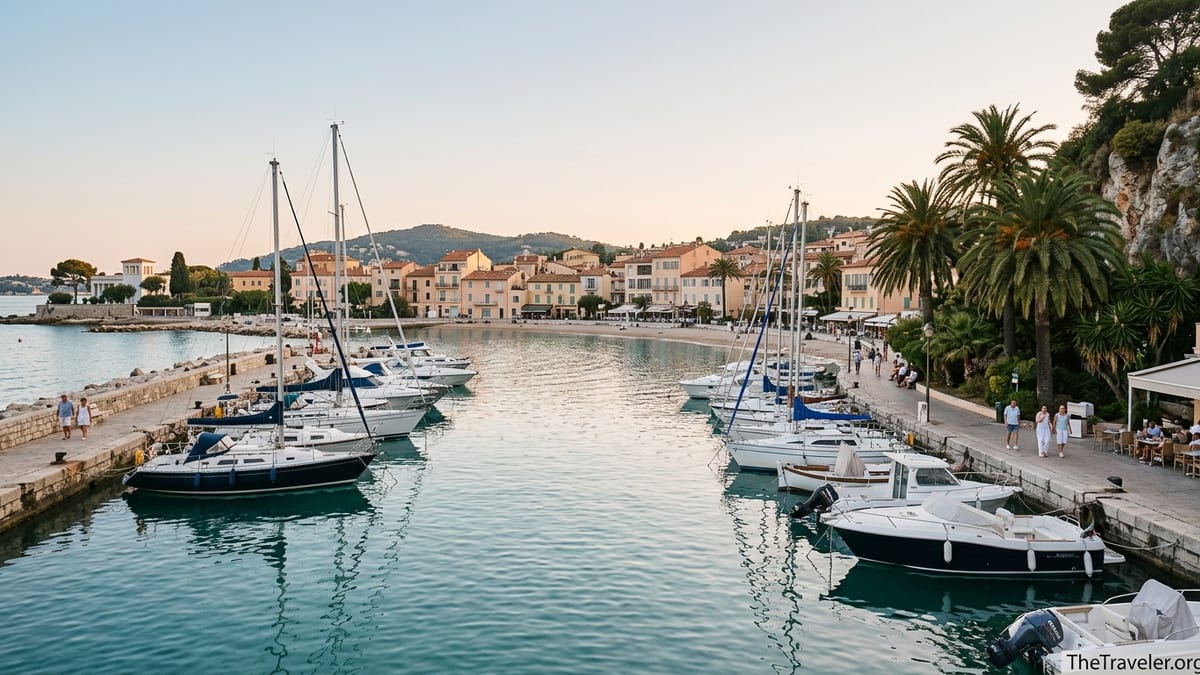
Beaulieu-sur-Mer is the sort of place that seasoned Riviera visitors mention in a lowered voice, as if sharing a secret. Sitting just east of Nice and west of Monaco, with a deep marina and two sheltered bays, it has all the hallmarks of a classic Mediterranean resort: Belle Époque villas, palm-lined promenades, and a sweep of pale stone facades reflecting the light off the water. Yet it lacks the tour-bus crowds of Cannes, the traffic of Monaco, or the late-night noise that increasingly defines central Nice.
The town built its reputation as a winter refuge for aristocracy and artists at the turn of the twentieth century. Today it feels more low-key than lavish, but the legacy lingers in venerable addresses such as La Réserve de Beaulieu & Spa, a five-star hotel that still channels old-school glamour with striped awnings, concierge staff in immaculate uniforms and a terrace over the water. You can stroll past yachts worth more than many houses, then turn inland and be on a tree-shaded square where locals argue amiably over the price of peaches at the morning market.
Unlike some Riviera resorts that sprawl up the hillsides, Beaulieu remains compact. Most visitors stay within a triangle formed by the marina, the beach of Petite Afrique and the main shopping streets north of the train station. You can cross the town on foot in 15 minutes, which gives it a village feel even though the services sit squarely in modern-resort territory: gourmet bakeries, serious wine shops, a covered food market, and small supermarkets open long enough to keep self-caterers happy.
This combination of human scale and high quality is exactly what many travelers seek but struggle to find on the Riviera. If you have ever felt overwhelmed by the crowds on Nice’s Promenade des Anglais in August or underwhelmed by pebble beaches elsewhere, a couple of days in Beaulieu-sur-Mer often recalibrates expectations of what a Riviera holiday can be.
Beaches That Reward Those in the Know
Beaulieu-sur-Mer has just two main beaches, but each is a strong argument for choosing the town as a base. Plage des Fourmis curves around the Baie des Fourmis on the western side, framed by the Greek-style silhouette of Villa Kerylos and views across to Saint-Jean-Cap-Ferrat. Plage de la Petite Afrique lies on the eastern side, tucked beneath a steep cliff studded with palms and subtropical plants. Both are a mix of fine gravel and small stones rather than sand, but the gradual slope into the water makes them more comfortable than many of the larger, rockier city beaches nearby.
Families in particular appreciate the sense of enclosure. Petite Afrique, shaded at the back by pines and palm trees, feels like a natural amphitheater. In summer, facilities typically include a monitored swimming zone, freshwater showers, toilets, and snack kiosks. There are beach volleyball courts and children’s play areas, meaning a full day at the beach does not have to be only about lying on a towel. Plage des Fourmis is smaller but equally inviting, with a waterside promenade and a beach club where you can rent a lounger and parasol for a fee that is usually lower than equivalent setups in central Nice or Cannes.
Budget-conscious travelers will be relieved to know that large sections of both beaches are completely public. You can arrive with nothing more than a foldable mat and a bottle of water and still enjoy the same sea and views as guests paying premium hotel rates. As an example, a day rental of a sun lounger and umbrella at a private section in Beaulieu-sur-Mer in high season may hover in the range of 20 to 30 euros per person, while similar setups in more famous resorts can climb noticeably higher. Arriving before 10 a.m. in July or August greatly increases your chances of finding a good free spot near the waterline.
Access is another quiet advantage. The beaches sit a short, nearly flat walk from the train station, which means you can be off a local TER train from Nice and in the sea in less than half an hour door to door. For visitors using Beaulieu-sur-Mer as a base, it turns the daily decision of “beach or excursion” into a low-stress choice. Many people end up doing both, exploring a nearby village in the morning and returning for an hour of late-afternoon swimming as the sun dips behind the peninsula.
Stylish Stays Without the Scene
Where you sleep shapes how you experience the Riviera, and this is where Beaulieu-sur-Mer quietly excels. The town offers a spectrum of stays that lean towards refined rather than flashy, from grande-dame hotels to self-catering apartments above the market square. At the top end, La Réserve de Beaulieu & Spa overlooks the sea with a pool terrace that feels suspended above the water; it attracts a mix of discreet celebrities, honeymooners and loyal regulars. Nightly rates in high summer typically reach into the mid to upper hundreds of euros, very much in line with five-star pricing in nearby Cap-Ferrat yet aided by the convenience of a town on your doorstep.
More accessible options include mid-range hotels a block back from the seafront and aparthotels near the train station. A well-reviewed three-star within walking distance of both beaches may price a double room somewhere in the ballpark of 150 to 250 euros in July, depending on demand and how early you book. Travelers who value kitchen facilities often gravitate towards modern holiday rentals in residential streets north of Boulevard Marinoni, where balconies catch the evening light and local bakeries are only a few minutes away on foot.
The feeling on the streets confirms who the town is for. Even in peak months you are more likely to share a terrace with retired couples lingering over a bottle of Provence rosé or young families coaxing children through plates of grilled fish than with large party groups. There are cocktail bars, of course, and hotel lounges that serve serious martinis, but nightlife here is measured in conversations, not decibels. That makes Beaulieu-sur-Mer particularly appealing for visitors who want a base quieter than Nice but still within quick striking distance of its restaurants and museums.
For longer stays, the town’s mix of practical services is a real advantage. There are small but well-stocked supermarkets, a pharmacy, banks, hairdressers and laundries, so you are not constantly taking the train into Nice for everyday errands. If you have ever stayed in a picture-perfect hilltop village only to discover that buying basic groceries requires a 30-minute drive, Beaulieu-sur-Mer’s balance of beauty and convenience starts to look especially wise.
Food, Markets and the Pleasure of Everyday Life
Many travelers remember Beaulieu-sur-Mer not for one spectacular restaurant but for the quiet pleasure of eating well every day. The Provençal market on Place du Général de Gaulle runs most mornings and is busiest on Saturdays and Sundays. Stalls sell local fruit and vegetables, olives, cheeses, cured meats, flowers and occasional antiques or household goods. You might pick up ripe peaches and a round of goat cheese for a picnic, then sit down at a café on the square for a café crème while watching residents greet each other by name.
Several times a year, the town supplements the regular market with themed events, such as an Italian market in winter that brings traders across the border with regional products. Down at the port, a nautical flea market dedicated to marine equipment and sea-inspired objects periodically transforms the marina into an open-air bazaar of boat fittings, vintage navigation instruments and maritime knick-knacks. Even if you are not in the market for a brass compass or old regatta poster, wandering the stalls is a window into the area’s boating culture.
Day to day, dining choices skew towards Mediterranean flavors that reflect the sea a few meters away. Along the seafront and around the marina you will find bistros serving grilled dorade, salade niçoise, and bowls of mussels with local white wine. A typical main course at a mid-range brasserie might run between 20 and 30 euros, with a glass of house wine starting around 5 euros. Pizzerias and casual pasta spots help keep costs in check, and bakeries sell fresh baguettes and pastries that make self-catered breakfasts easy. Pairing a still-warm croissant with a takeaway espresso on a bench overlooking the port can feel just as memorable as a formal hotel brunch.
For a more elevated experience, some visitors reserve a table at a fine-dining restaurant in one of the luxury hotels or on nearby Cap-Ferrat, using Beaulieu-sur-Mer as a calm base to return to afterward. The advantage is that you can enjoy a long tasting menu with wine pairings and then take a short taxi ride back to a quiet street, rather than navigating late-night crowds in larger cities. In practice, many people strike a rhythm: market picnic and beach one day, seafood dinner at the port the next, and perhaps a detour to Nice’s Old Town or Eze on alternate evenings.
Architecture, Culture and the Villa That Looks to Greece
Spend an afternoon wandering Beaulieu-sur-Mer away from the water and the town reveals another side of its character. Belle Époque villas sit behind gates edged with bougainvillea. Lime trees shade narrow streets. Grand apartment buildings with wrought-iron balconies stand as reminders of a time when wintering on the Riviera was the preserve of royalty and high society. Among them, one building stands out not only in the town but on the entire coast: Villa Kerylos.
Perched directly above the Baie des Fourmis, Villa Kerylos is an early 20th-century reimagining of a noble house from ancient Greece, complete with colonnades, mosaics and carefully researched decor. Visiting feels like stepping into an architect’s dream of antiquity, transplanted to the French Riviera’s light. Inside, rooms are furnished with replicas of Greek furniture, and the sea shimmers through tall windows. The villa operates as a museum under the French national heritage system, and entry tickets are typically priced in line with other major historic houses in the region, making it a worthwhile half-day excursion directly from the beach.
Cultural life in Beaulieu-sur-Mer is more subtle than in Nice but still present. The town hosts concerts, small exhibitions, and occasional festivals, especially in the warmer months. The marina often serves as a backdrop for events related to sailing and classic boats. Religious and community life centers around churches including the Anglican St Michael’s, which reflects the long history of British visitors using the town as a seasonal home. Even if you are not attending a service, passing by on a Sunday morning when bells ring over the palm trees is a small but evocative moment.
Simply paying attention as you walk can be its own cultural activity. Plaques on buildings commemorate artists and statesmen who once stayed there. Older residents exchange news near the lottery stand by the tobacconist. The architecture shifts subtly from pure Belle Époque near the seafront to more modest mid-century blocks further inland. While neighboring towns may dazzle with headline-grabbing art museums or casinos, Beaulieu-sur-Mer excels at this kind of lived-in elegance.
Perfectly Positioned for Low-Stress Exploring
One of the strongest arguments for not skipping Beaulieu-sur-Mer is its location. The local TER railway line runs along the coast, and the town’s station sits an easy stroll from both beaches and most accommodation. Trains to Nice, Villefranche-sur-Mer, Monaco and Menton are frequent during the day, and journey times are short. For example, the ride into central Nice often takes around 10 to 15 minutes, and advance-purchase fares can start at just a few euros each way, depending on time of day and booking conditions.
This connectivity makes car-free travel very realistic. A typical one-week stay might involve three or four day trips by train: a morning in Nice’s Old Town and afternoon on the Promenade des Anglais, a climb to medieval Eze village, a visit to the oceanographic museum in Monaco, or a day wandering Antibes’ ramparts and Picasso Museum. Each evening, you step off the train in Beaulieu-sur-Mer and feel the pace slow down as you cross the square towards home. For early flights from Nice Côte d’Azur Airport, connections by train and tram are possible with a simple change near the airport, or you can arrange a taxi transfer that still takes a relatively short time compared with more distant resorts.
Local exploration on foot is equally appealing. A popular coastal path leads from Beaulieu-sur-Mer towards Saint-Jean-Cap-Ferrat, allowing walkers to trace the edge of the peninsula with constant sea views. Sections of the path pass just above the water, with small coves and rocky outcrops offering photo opportunities or quiet spots to sit. Starting early in the morning to avoid the midday heat, you might have stretches almost to yourself, returning in time for coffee at a harbor café as the town wakes up.
For those who do drive, Beaulieu-sur-Mer generally proves less stressful than city centers further west. There are paid car parks near the marina and seafront, as well as street parking in residential areas, although competition for spots increases in July and August. Many visitors find that parking the car and relying on trains for the busiest coastal hops keeps holiday stress to a minimum. You can still use the car for inland excursions to hill towns like Eze-sur-Mer’s higher counterpart Eze Village or to the backcountry of the Alpes-Maritimes, then retreat each night to sea-level calm.
When to Go and How to Make It Affordable
Choosing the right moment to experience Beaulieu-sur-Mer can make a significant difference to both budget and atmosphere. High summer from mid-July to late August brings hot, dry weather, warm seas and the highest prices on accommodation. The beaches are buzzing but still feel more manageable than those in larger resorts, in part because the town’s small size naturally limits the numbers. If you are tied to school holidays and crave guaranteed swimming conditions, this period works well, especially for families who value the shallow bays and lifeguarded areas.
Many seasoned travelers, however, favor the shoulder seasons of late April to June and September to early October. During these months, daytime temperatures are often pleasantly warm rather than scorching, the sea gradually warms up, and hotels may offer more competitive rates. Beach services typically begin ramping up in spring, with supervised swimming zones and seasonal restaurants opening around late spring, and continue through the early autumn. You are more likely to find spontaneous deals on sun loungers, and restaurants are less pressured to operate two seatings each night.
For those watching costs, a few strategies help keep Beaulieu-sur-Mer within reach. Traveling by TER train rather than hiring a car cuts expenses on fuel, tolls and parking. Self-catering at least some meals using the town’s markets and supermarkets significantly lowers daily spend; a simple picnic of bread, cheese, fruit and a bottle of mineral water for two can cost under 20 euros, compared with a full restaurant lunch. Booking accommodation several months ahead, especially for June or September, can secure better rates at mid-range hotels and apartments that might be fully booked closer to arrival.
It is also worth considering how long to stay. Because the town is compact and easy to navigate, even a two or three-night stay can deliver a satisfying sense of place. At the same time, its excellent connections make it an ideal base for a week spent exploring the broader French Riviera. Instead of moving hotels every two days between Nice, Monaco and inland villages, you can unpack once in Beaulieu-sur-Mer and explore in day-trip arcs, returning each night to familiar streets and friendly faces at your preferred bakery or café.
The Takeaway
Skipping Beaulieu-sur-Mer when planning a French Riviera trip is understandable. On a map cluttered with big names, a small town tucked between Nice and Monaco is easy to overlook. Yet that understatement is precisely its strength. Here, you wake to church bells rather than nightclub bass, swim in sheltered bays instead of jostling for a spot on an urban beach, and eat market-fresh food on shaded squares rather than queuing outside over-publicized venues.
Beaulieu-sur-Mer offers much of what travelers dream of when they picture the Côte d’Azur: gracious architecture, turquoise water, palm trees, and lazy lunches that stretch into the afternoon. It simply delivers those things at a different volume. For anyone seeking elegance without ostentation, access without chaos, and atmosphere without excess, this modestly sized resort may be the most compelling corner of the Riviera to call home, even if only for a few days.
FAQ
Q1. Where exactly is Beaulieu-sur-Mer on the French Riviera?
Beaulieu-sur-Mer sits on the coast between Nice and Monaco, just east of Villefranche-sur-Mer and at the foot of the Saint-Jean-Cap-Ferrat peninsula.
Q2. How do I get to Beaulieu-sur-Mer from Nice without a car?
The easiest option is the local TER train from Nice, which typically takes around 10 to 15 minutes. Buses also serve the route, but the train is usually faster and more comfortable.
Q3. Is Beaulieu-sur-Mer a good base for exploring the Riviera?
Yes. From Beaulieu-sur-Mer you can reach Nice, Villefranche-sur-Mer, Monaco, Menton and Antibes by frequent regional trains, making it an excellent low-stress base for day trips.
Q4. Are the beaches sandy in Beaulieu-sur-Mer?
The two main beaches, Plage des Fourmis and Plage de la Petite Afrique, are made of fine gravel and small pebbles rather than soft sand, but they slope gently into the sea and are comfortable with water shoes or a beach mat.
Q5. Is Beaulieu-sur-Mer suitable for families with children?
It is a very good choice for families. The beaches are sheltered, there are lifeguarded areas in season, and the town is compact and walkable, with playgrounds and relatively calm streets.
Q6. How expensive is Beaulieu-sur-Mer compared with Nice or Cannes?
Accommodation and restaurant prices are broadly comparable to other quality Riviera resorts, though beach club prices and mid-range dining can be slightly gentler than in the most high-profile hotspots. Using markets and trains can help manage costs.
Q7. Do I need a car if I stay in Beaulieu-sur-Mer?
No, a car is not essential. The town is very walkable and well served by trains and buses. A car is useful only if you plan many inland excursions or prefer the flexibility of driving.
Q8. What is the best time of year to visit Beaulieu-sur-Mer?
Late spring and early autumn are ideal for a balance of pleasant weather, swimming-friendly sea temperatures and fewer crowds, though summer offers the liveliest beach atmosphere.
Q9. Are there cultural sights in Beaulieu-sur-Mer besides the beach?
Yes. Highlights include the historic Villa Kerylos overlooking the Baie des Fourmis, Belle Époque architecture throughout town, local churches and seasonal cultural events around the marina and main square.
Q10. Is Beaulieu-sur-Mer lively at night?
Evenings are relaxed rather than wild, with bars, hotel lounges and waterfront restaurants open late but few loud clubs. It suits travelers who prefer conversation, sea views and quiet streets over a heavy nightlife scene.