


Wedged between Nice and the exclusive peninsula of Saint-Jean-Cap-Ferrat, Beaulieu-sur-Mer is often a name you spot on the coastal train line and then forget. For many travelers, the big question is whether this low-key Belle Époque resort deserves time on an already packed French Riviera itinerary. The answer depends on what you want from the coast. This guide weighs the calm, old-money charm of Beaulieu against the buzz of its neighbors, with practical, up-to-date details to help you decide if it is worth a stop or even a base.
Get the latest updates straight to your inbox!
Where Exactly Is Beaulieu-sur-Mer, and What Is It Like?
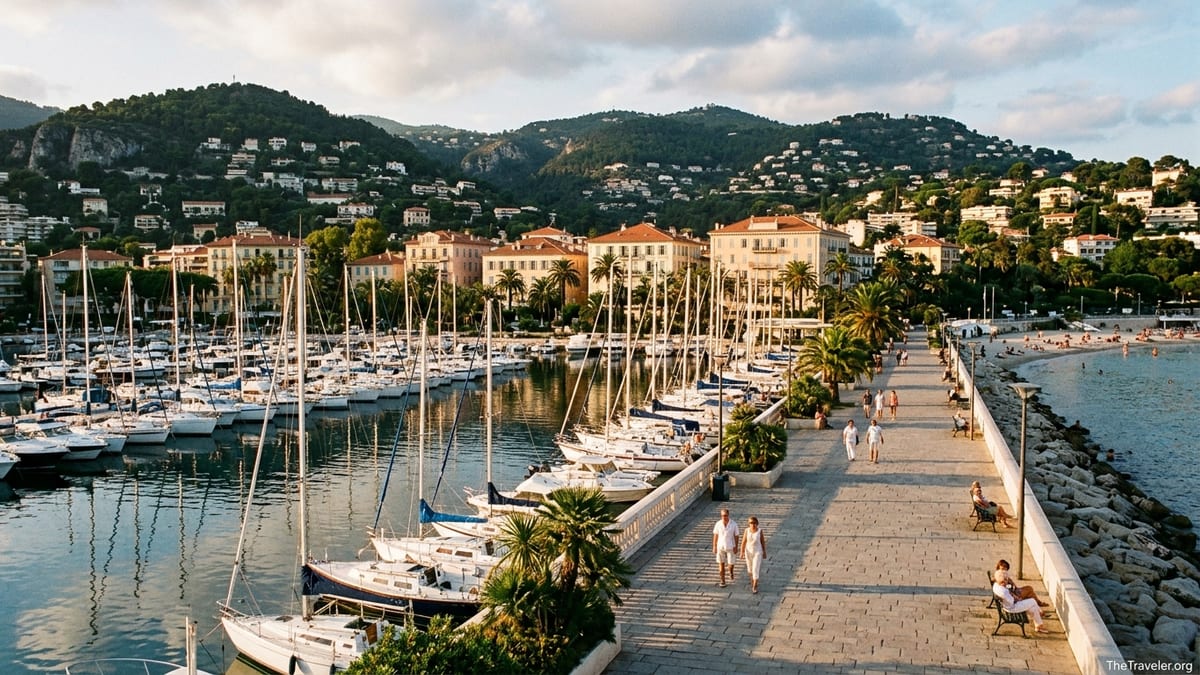
Beaulieu-sur-Mer sits on the main coastal strip between Nice and Monaco, in what local officials describe as the “golden triangle” of Beaulieu, Villefranche-sur-Mer and Saint-Jean-Cap-Ferrat, one of the most expensive stretches of real estate in France. The town itself is compact, framed by steep hills planted with pines and palms and opening onto a wide, sheltered bay. Architecturally, it still reflects its Belle Époque heyday as a winter resort for European royalty and magnates, with pastel villas, ornate façades and grand hotels hinting at that past.
Unlike Nice or Cannes, Beaulieu feels more like a neighborhood than a city. There is a proper town center around Place Marinoni and the market square, with a handful of cafés, bakeries and local shops rather than long shopping streets of international brands. In the evenings, it is common to see residents strolling home with baguettes or gathering for drinks on shaded terraces, and the atmosphere remains subdued even in July and August compared with the nightlife scenes in Nice or Juan-les-Pins.
The seaside defines Beaulieu’s character. The marina, Port de Beaulieu, is packed with yachts but remains approachable, with public quays you can walk along and a promenade lined with palm trees. The waterfront is notably flatter than in nearby villages, which makes it unusually easy to get around on foot and bike. For travelers who like the Riviera’s scenery but not its crowds or hills, this mix of accessibility and elegance is a strong argument in Beaulieu’s favor.
Key Reasons Beaulieu-sur-Mer Might Be Worth Your Time
The main appeal of Beaulieu-sur-Mer is the balance it offers: Riviera scenery and Belle Époque ambiance without the full intensity of the big-name resorts. Many recent visitors choose it as a base because it is far quieter at night than Nice, while still being only around 10 minutes by regional train from Nice-Ville station and roughly 20 minutes from Monaco. Trains usually run at least twice an hour in the daytime, and local buses connect Beaulieu to Saint-Jean-Cap-Ferrat and Èze-sur-Mer, so you can explore widely without a car.
Beaulieu also delivers a more residential version of Riviera luxury. The five-star La Réserve de Beaulieu & Spa, for instance, remains one of the most storied hotels on this coast, with a seafront pool terrace and fine-dining restaurant that attracts a well-heeled but discreet clientele. Even if you are not staying there, visitors sometimes book a drink on the terrace to experience the setting. Yet you can walk a few streets back and find simple family-run pizzerias and neighborhood bars where a glass of house rosé costs only slightly more than in central Nice.
For travelers focused on swimming and relaxation, the bay is a strong selling point. The town’s two main beaches, Plage des Fourmis and Plage Petite Afrique, are known for relatively calm water and a more sheltered microclimate than some neighboring coves. On many summer mornings, paddleboarders and kayakers set out from the marina or from small rental stands near the sand, taking advantage of the smooth surface and wide views across to Cap Ferrat and, on clear days, Italy in the distance.
How Beaulieu-sur-Mer Compares With Nearby Riviera Hotspots
When people consider Beaulieu, they are usually weighing it against Nice, Villefranche-sur-Mer, Menton, or more glamorous names like Cannes and Saint-Tropez. Nice offers a big-city array of museums, shopping, nightlife, and dining, plus frequent airport links, but its long Promenade des Anglais is entirely pebbled and the city can feel crowded in peak season. By comparison, Beaulieu is smaller, quieter, and easier to cross on foot in 15 minutes, with just enough restaurants and shops for a relaxed stay rather than a packed city break.
Villefranche-sur-Mer, only one train stop away, has a famously photogenic old town and deep harbor, attracting cruise ships, tour groups and heavy day-trip traffic. It is beautiful, but the narrow lanes can feel overwhelmed on summer afternoons. Beaulieu, with its slightly wider streets and fewer cruise visitors, tends to feel more lived-in and less like an open-air set. If you want charm with more breathing room, that difference can be significant.
Further along the line, Menton charms visitors with its pastel old town and gardens, and Cannes offers sandy beaches and a film-festival sheen, but both are significantly farther from Nice Airport and from Monaco than Beaulieu. For travelers planning multiple day trips, basing in Beaulieu shortens journey times east and west. For example, a morning train from Beaulieu to Monaco often takes under 20 minutes, while it can easily be double that from Cannes. That means more time on the beach or in cafés and less time standing on platforms.
Beaches, Sea & Easy Coastal Walks
Beaulieu-sur-Mer’s beaches are a strong reason to consider at least a half-day visit. Plage des Fourmis sits directly under the palm-lined promenade, facing the tip of Saint-Jean-Cap-Ferrat. The shore here is made up of fine gravel and small pebbles rather than sand, but the slope is gentle, and families appreciate the shallow entry and normally calm surface. In summer, you will usually find a mix of free public areas where you can spread a towel and sections run by private beach clubs with loungers and restaurant service.
On the eastern side of town, Plage Petite Afrique feels a bit wilder, backed by steep cliffs covered in pines. It generally gets the sun slightly longer in late afternoon and has a mix of public space and seasonal beach concessions. The trees provide natural shade, and there is a playground near the back of the beach, which can be a deciding factor for travelers with young children. Public showers and basic facilities are typically available, though you should expect simple infrastructure rather than spa-level comfort unless you pay for a beach club.
One of Beaulieu’s real highlights is the coastal path that links it with Saint-Jean-Cap-Ferrat. Starting near Plage des Fourmis, a paved walkway hugs the rocky shoreline around the cape, passing villas, hidden coves and viewpoints back toward Beaulieu and Villefranche. It is not especially long, but you can easily turn it into a one to two hour stroll by stopping to swim or to sit on benches along the way. Most of the path is relatively flat, making it accessible for many travelers who might struggle with steeper hiking trails elsewhere on the Riviera.
Cruises, Boat Trips and On-the-Water Experiences
The sheltered bay and marina mean Beaulieu-sur-Mer has become a starting point for a growing number of small boat tours along this section of the coast. Several local operators run private or small-group outings that typically last from one to two hours, focusing on coastline views, swimming stops and sunset cruises. As of mid 2026, a one hour private cruise for two to four people on a small boat with a skipper often starts around the low to mid 150 euro range, with longer two hour itineraries with a swim stop edging toward 300 euros for the boat, not per person, depending on the size and level of comfort.
The town is also home to solar-powered boat experiences, which appeal to travelers who want quieter rides and a lower environmental footprint. These electric boats glide almost silently, and some tours frame themselves as “initiation to solar navigation,” mixing sightseeing with explanations of the technology. Prices for these trips tend to be slightly higher per hour than standard motorboat outings but can feel worthwhile for the added calm and novelty, especially around sunset when the cliffs of Cap Ferrat turn golden.
For those on tighter budgets, you do not have to charter your own boat to get on the water. During the season, sea kayak and stand-up paddleboard rentals are sometimes available near Plage des Fourmis or from small stands around the marina. Expect rough pricing in the region of 15 to 25 euros per person for an hour of rental, enough time to paddle along the coast to a small cove and back. Life jackets are typically included, and staff will usually explain safe areas to explore and where to avoid passing too close to larger boat traffic.
Costs, Accommodation and Dining: Is It Really That Expensive?
Beaulieu-sur-Mer sits in one of the priciest real estate zones in France, and that inevitably affects visitor costs. Top-end hotels such as La Réserve de Beaulieu & Spa or certain sea-view suites in upscale boutique properties can run to several hundred euros per night in high season. These places cater largely to guests seeking privacy, spa facilities and full-service concierges, and they align more with the Riviera’s luxury image than with budget travel.
However, because Beaulieu is primarily residential, there is also a reasonable range of mid-range and self-catering options. You can find small three-star hotels or simple apartments set a few streets back from the seafront at prices that are often a bit lower than comparable rooms directly on Nice’s Promenade des Anglais in July or August. For example, a modest but well-rated hotel within walking distance of the station and beaches might cost in the ballpark of 150 to 220 euros per night in peak months, with lower rates outside school holidays.
Dining follows a similar pattern. You will certainly encounter high-end menus at waterfront restaurants, but you can also eat affordably by choosing pizzerias, crêperies, and cafés just off the main seafront or around Place Marinoni. A sit-down lunch of a salad or plat du jour with a glass of wine may run around 18 to 25 euros per person, while a takeaway slice of focaccia or a sandwich from a bakery can bring costs closer to big-city European norms. As in much of France, it pays to eat at local mealtimes, since many kitchens close from mid-afternoon until dinner service.
Best Time to Visit and How Long to Stay
Beaulieu-sur-Mer is technically a year-round destination, but your experience will vary dramatically by season. From late June through August, beach clubs, boat rental stands and many cafés are in full swing, and the town feels lively without being chaotic. Sea temperatures are warm enough for long swims, and evening promenades along the marina are at their most atmospheric. This is also the most expensive period for accommodation, and parking can be more difficult if you are driving.
May, early June, September and early October can be sweet spots, combining milder temperatures with more manageable visitor numbers and slightly better hotel availability. Sea temperatures may still be pleasant, particularly in September after a summer of warmth, and walking the coastal paths is more comfortable than in the high heat of August. In winter, Beaulieu is calm and life continues at a slower pace. Many beach facilities close, and some restaurants reduce hours, but if your priority is relaxed coastal walks and quiet cafés rather than swimming, prices are typically kinder and the light can be beautiful.
In terms of how long to stay, you can see the town’s main sights and stroll both beaches in half a day, which makes Beaulieu a good candidate for a relaxed day trip from Nice or Monaco. Many travelers, however, choose to base themselves here for three to five nights, using the town as a quiet hub while making day trips to Eze, Villefranche, Cap Ferrat, Monaco and even Menton. With the regional rail and bus network so close at hand, you can easily experience a different corner of the Riviera every day while returning to Beaulieu’s smaller-scale calm each evening.
Who Will Love Beaulieu-sur-Mer, and Who Might Prefer Elsewhere?
Beaulieu-sur-Mer tends to suit travelers who value calm streets, sea views and the feeling of stepping into an older, more understated version of Riviera life. Couples on a slower-paced break, older travelers and families with younger children often appreciate being near the water in a town where nightlife is muted and walking to and from the station or beach feels straightforward. If your ideal holiday involves early morning swims, reading under palm trees and leisurely dinners rather than clubbing, Beaulieu fits that rhythm.
It is also a strong choice if public transport connectivity matters. The main train line that runs along the Riviera stops directly in Beaulieu, and the station is within easy walking distance of most accommodations. Buses link the town to nearby Cap Ferrat and other local destinations, and the relative flatness of the streets makes rolling luggage or pushing strollers less of a challenge than in steeper hill towns like Eze. For travelers without a car, this combination of convenience and quiet can be decisive.
On the other hand, if you want bustling nightlife, a dense concentration of bars, or a strong arts and museum scene at your doorstep, Nice or Cannes remains a better fit. Beaulieu has a cinema, occasional cultural events and summer concerts, but it does not try to compete with the urban energy of larger cities. Similarly, if you prefer wide sandy beaches to pebbles or gravel, you might favor Cannes or certain stretches near Antibes. Beaulieu’s beaches, though beautiful, are typical of this part of the coast in that they are not naturally sandy.
The Takeaway
So is Beaulieu-sur-Mer worth visiting on a French Riviera trip? For many travelers, the answer is yes, provided your expectations match what the town offers. Beaulieu is not a place of grand public spectacles, non-stop nightlife or extensive museum circuits. Instead, it is a compact, quietly affluent community with Belle Époque charm, sheltered beaches, and an easygoing marina, all stitched together by palm-lined streets and backed by steep green hills.
If your vision of the Riviera involves pausing between higher-energy excursions to Nice, Monaco or Cannes in a calm, sunlit harbor town, then Beaulieu makes excellent sense, either as a base or as a day-trip stop. Its direct train links, relatively accessible shoreline and balance of upscale and everyday amenities mean you can enjoy much of what draws people to this coast without always being in the middle of the crowds. For visitors who prefer subtle elegance to showy glamour, Beaulieu-sur-Mer can quietly become the highlight of a French Riviera itinerary.
FAQ
Q1. Is Beaulieu-sur-Mer worth visiting if I only have one day on the French Riviera?
Yes, Beaulieu-sur-Mer works well as a half-day or full-day stop, especially if you want a calmer break from Nice or Monaco. You can walk the town, swim at one of the beaches and enjoy a meal by the marina without feeling rushed.
Q2. Is Beaulieu-sur-Mer a good base without a car?
It is an excellent base for travelers relying on public transport. The regional train line stops in Beaulieu, and buses connect to Cap Ferrat, Villefranche and other nearby spots, so you can reach major sights without needing to drive.
Q3. How expensive is Beaulieu-sur-Mer compared with Nice or Cannes?
Accommodation and some restaurants can be premium priced because of the area, but mid-range hotels and apartments a few streets back from the seafront are often comparable to central Nice. Overall, it is less showy and slightly less expensive than top-end areas of Cannes.
Q4. Are the beaches in Beaulieu-sur-Mer sandy?
No, the beaches are mainly fine gravel and small pebbles, typical of this stretch of the Riviera. Many visitors bring water shoes, and there are both free public areas and paid beach clubs with loungers and umbrellas.
Q5. Is Beaulieu-sur-Mer suitable for families with children?
Yes, families often appreciate the calm streets, relatively flat terrain and sheltered bay. Plage Petite Afrique has a playground nearby, and the gentle water conditions can be suitable for supervised swimming and paddling.
Q6. What is the best time of year to visit Beaulieu-sur-Mer?
Late June to early September is ideal for beach time and boat trips, though it is the busiest and priciest. May, early June, September and early October offer milder weather, fewer crowds and more comfortable conditions for walking and exploring.
Q7. How long should I stay in Beaulieu-sur-Mer?
You can see the essentials in half a day, but many visitors stay three to five nights and use Beaulieu as a quiet base while day-tripping to Nice, Monaco, Eze and other nearby towns.
Q8. Is Beaulieu-sur-Mer lively at night?
Nights are generally quiet. There are a few bars and restaurants open late, especially in summer, but you will not find large clubs or a big nightlife scene. It suits those who prefer relaxed evenings over partying.
Q9. Can I visit Saint-Jean-Cap-Ferrat easily from Beaulieu-sur-Mer?
Yes, Saint-Jean-Cap-Ferrat is very close. You can walk via the coastal path starting near Plage des Fourmis or take a short bus ride, making it an easy half-day excursion.
Q10. Is Beaulieu-sur-Mer a good option for budget travelers?
It is not the cheapest town on the Riviera, but careful choices make it manageable. Staying in simpler hotels or apartments set back from the water, using trains and buses, and eating at local cafés and bakeries can keep costs under control.