


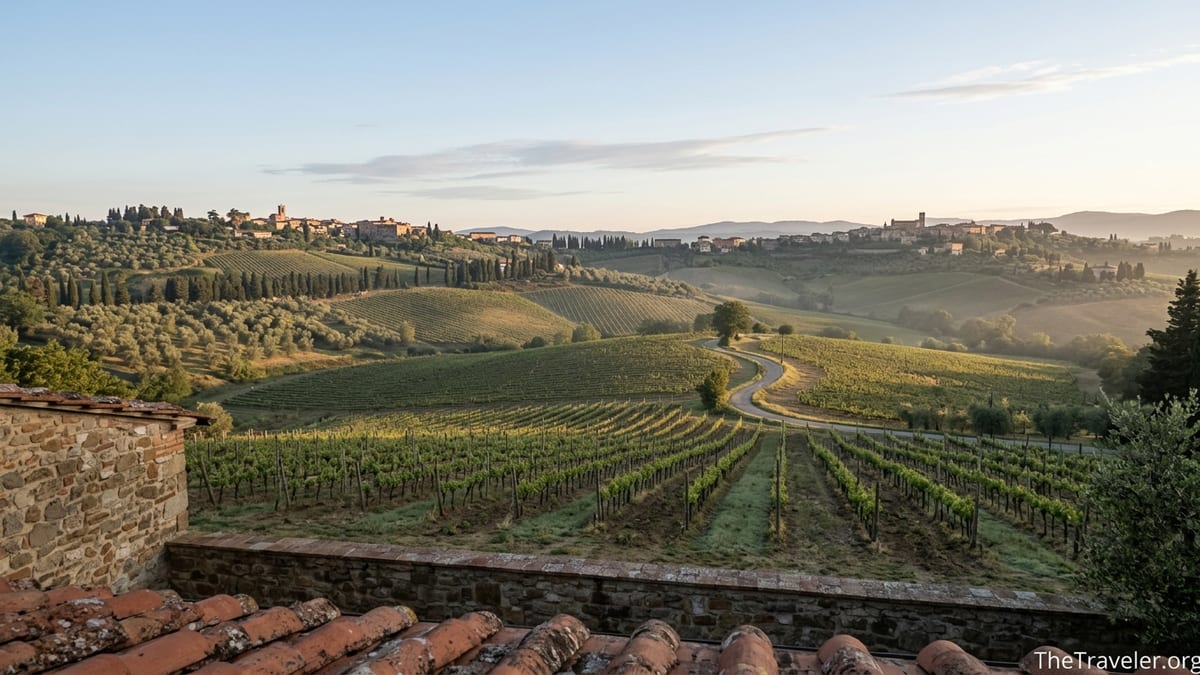
Cypress-lined ridges, sunlit stone villages and endless rows of Sangiovese vines: the Chianti region between Florence and Siena is the landscape many travelers picture when they imagine Tuscany. Beyond its postcard looks, Chianti has quietly become one of Italy’s most rewarding wine destinations, pairing centuries of winemaking tradition with a new generation of focused estates, thoughtful hospitality and surprisingly accessible experiences for visitors.
Get the latest updates straight to your inbox!
Where Exactly Is Chianti, and What Makes It So Special?
The historic Chianti area stretches across central Tuscany, covering a chain of hills between Florence and Siena. Within this broader zone, the heart of the wine country is Chianti Classico, the original production area marked on bottle labels by the black rooster symbol. This is the landscape of tight, winding roads, hilltop borgos like Greve, Castellina, Radda and Gaiole, and vineyards that climb from around 250 to over 600 meters above sea level, giving the wines freshness and perfume.
For travelers, Chianti’s appeal starts with the way wine, history and scenery are layered together. A 20-minute drive from Florence’s urban bustle can put you among terraced vines above Greve in Chianti, looking back toward the Duomo’s dome on a clear day. Continue south and the road dips and rises between forests, olive groves and medieval castles converted into wineries, such as properties dotted around Gaiole in Chianti, where stone ramparts overlook checkerboard vineyards.
Chianti’s flagship grape is Sangiovese, responsible for the region’s best-known reds. Regulations in Chianti Classico require at least 80 percent Sangiovese in the blend, but many top producers bottle it almost pure, letting local soils and elevations show through. Visitors who taste their way through a few estates quickly notice contrasts: a bright, cherry-scented Chianti Classico from the cooler heights near Lamole compared with a deeper, more structured wine from warmer sites around Castellina, just a few kilometers away.
The region’s beauty is also seasonal. In late spring the vines glow neon green against deep brown soils and the air smells of wild herbs. July and August bring hot, hazy afternoons and golden evenings ideal for outdoor tastings. By late September, during harvest, mornings can be crisp with mist lying in the valleys while tractors haul grape crates up gravel tracks. Any of these periods can make an evocative backdrop for a wine-focused trip.
Landscape of Villages, Castles and Vineyard Roads
Chianti’s villages are compact and easily explored, which makes them perfect bases for slow travel. Greve in Chianti, often the first stop when arriving from Florence, centers on a triangular main piazza arcaded with wine bars and specialty shops. On many weekends the square hosts farmers’ markets or small tasting events where local producers pour current vintages in simple stemware at outdoor tables, offering an easy introduction to the area’s wines without needing a car.
South along the winding Chiantigiana road, Panzano in Chianti sits on a ridge with far-reaching views over the Conca d’Oro, a natural amphitheater of vines that many visitors consider one of the most beautiful panoramas in Tuscany. From the upper part of town, you can look down over symmetrical vineyard parcels interspersed with stone farmhouses and cypress trees. Nearby, the Romanesque Pieve di San Leolino church stands amid olive groves and vines, its weathered stone walls glowing warm at sunset and often appearing in travelers’ photographs.
Farther along, Castellina in Chianti perches on a ridge between valleys. Its medieval walls and vaulted walkway, once part of the town’s defenses, now provide shady spots to escape the afternoon sun and peek through arrow-slit windows at vineyards rolling toward Siena. From here, small lanes lead toward backcountry hamlets like Volpaia and Castelvecchi, clusters of stone buildings where wineries operate out of centuries-old cellars and tasting rooms open onto tiny cobbled courtyards.
On the eastern side of the region, Radda and Gaiole in Chianti feel more remote and wooded, with chestnut forests alternating with steeply terraced vineyards. Hilltop castles and fortified farmhouses, some dating to the Middle Ages, now house wineries, boutique hotels or agriturismi. Staying in one of these properties lets guests wake to the sight of morning fog lifting off vineyards below the walls, then walk directly into the vines before breakfast.
Inside the Glass: What Chianti Wines Actually Taste Like
Travelers often arrive in Chianti knowing the name but not the flavor profile of its wines. A typical Chianti Classico is medium-bodied, vibrant rather than heavy, with red cherry and wild strawberry aromas, notes of dried herbs or tobacco, and a savory, slightly earthy finish. The tannins are usually firm but fine-grained, giving the wines grip that works well at the table with food like bistecca alla fiorentina, grilled sausages or tomato-based pastas.
At a winery tasting, visitors might compare three main tiers. A basic Chianti Classico is usually aged about a year in large barrels or neutral oak and emphasizes fruit and drinkability. Riserva bottlings, aged longer and often from older vines, tend to be deeper in color with darker cherry and plum notes and more pronounced tannin. Gran Selezione wines, from the best parcels and aged even longer, can show complex aromas of violet, spice and leather, with a structure that allows them to age gracefully for a decade or more.
Some estates also pour single-vineyard wines that highlight Chianti’s varied terroirs. For example, a tasting flight at a hilltop estate above Panzano might include two Sangiovese wines from parcels just a few hundred meters apart but at different aspects or elevations, illustrating how one plot produces a more floral, high-acid style while another gives a richer, more muscular wine. Travelers without deep wine knowledge often find these side-by-side comparisons one of the most memorable parts of a visit.
Chianti’s producers increasingly focus on sustainable viticulture, which visitors can see firsthand. It is common to encounter estates that practice organic or biodynamic farming, use cover crops between vine rows and limit chemical treatments. Walking a vineyard tour, guests may see wildflowers under the vines, insect hotels on posts at row ends and small woodland corridors left intact for biodiversity. These details may seem subtle, but they contribute to both the health of the landscape and the character of the wines in the glass.
Realistic Costs: What Travelers Actually Spend in Chianti
One reason Chianti stands out among Europe’s famous wine regions is that many experiences remain accessible in price compared to areas like Burgundy or Napa Valley. Straightforward cellar-door tastings at smaller family estates often start around 15 to 25 euros per person for three to five wines, usually waived or discounted if you purchase bottles. At more established wineries with guided tours of the vineyards and cellars, combined with seated tastings, prices more often sit around 25 to 40 euros per person, sometimes including local snacks or light food pairings.
Some estates offer more elaborate experiences. A producer near Greve in Chianti might run a 75-minute tasting and tour that covers four wines, olive oil and small bites of local pecorino cheese and cured meats for roughly 30 euros per person. On the higher end, full lunch tastings with multiple courses prepared by an in-house chef, paired with several wines and olive oil, can range from about 60 to 90 euros per person depending on the estate and the season. Reservations are strongly recommended, particularly between May and October.
Lodging costs vary by proximity to major towns and the level of comfort. A simple agriturismo room or apartment in the countryside, perhaps on a working olive farm with a handful of vines, can start around 100 to 150 euros per night for a couple in shoulder seasons. Properties with pools, estate-produced wines, on-site restaurants and panoramic terraces tend to fall in the 180 to 300 euro range in high season. Fully serviced boutique hotels in restored castles or monasteries generally sit above that, with some suites priced more in line with luxury city hotels.
Day-to-day expenses remain moderate if you follow local habits. A glass of house Chianti at a village enoteca might cost 5 to 7 euros, while a full bottle of a good Chianti Classico from a recent vintage could retail in local shops for 15 to 25 euros. Casual trattoria dinners with a shared antipasto, pasta or grilled meat main, house wine and coffee often land around 30 to 40 euros per person, especially if you dine slightly away from the most touristy piazzas and opt for daily specials.
How to Get Around: From Florence to Vineyard Roads
Reaching Chianti from Florence is straightforward. Many visitors pick up a rental car on the outskirts of the city or at Florence Airport and drive south on the SR222, known as the Chiantigiana. Within 30 to 45 minutes, the urban sprawl falls away and the road begins to snake through forest and vineyard. This is very much a scenic route, with frequent curves and elevation changes, so travel times are measured more in quality of views than strict distance.
For those who prefer not to drive, regional buses link Florence with some key Chianti towns. Services run from near the Santa Maria Novella station area toward villages such as Greve and beyond, used daily by commuters and students as well as tourists. Schedules can change seasonally and may be less frequent on Sundays or holidays, so it is wise to check updated timetables locally and leave a buffer if you have tasting reservations. Once in town, you can visit wine bars on foot or arrange short taxi rides to nearby estates that offer transfers.
Guided small-group or private tours departing from Florence, Siena or even San Gimignano are another popular solution. Many operators run full-day excursions that include two or three winery visits, lunch at an agriturismo and photo stops in villages like Castellina or Radda. Prices for group tours often start around 130 to 180 euros per person, including transportation, tastings and lunch, while private driver-guides cost more but allow you to set the pace and choose specific estates that match your interests.
Within Chianti itself, driving requires patience and a defensive mindset. Roads are generally paved but narrow, with occasional blind corners, cyclists and slow-moving agricultural vehicles. Distances that look short on a map can take 30 minutes or more, particularly on smaller connecting roads between villages. Travelers often find it more relaxing to plan no more than two winery appointments in a day, with a leisurely lunch and a village stroll in between, rather than trying to rush across the region.
Staying in Chianti: Agriturismi, Wine Resorts and Village Life
Where you stay in Chianti shapes your experience as much as the wineries you visit. Agriturismi, or farm stays, are among the most atmospheric options. These are working farms or estates that offer accommodation, often in converted stone barns or farmhouse apartments. A typical agriturismo might have half a dozen rooms, a small pool overlooking vineyards and olive groves, and breakfasts built around homemade jams, local bread and estate olive oil. Evening meals, when offered, tend to be informal set menus using produce from the property or neighboring farms.
Wine resorts function at a more polished level, pairing on-site wineries with spa facilities, landscaped pools and fine-dining restaurants. Guests might book vertical tastings of older vintages in a vaulted cellar in the morning, then relax in a spa that looks out over the same vineyards in the afternoon. These properties particularly suit travelers celebrating honeymoons or anniversaries, or those who want a base they barely need to leave during a short stay.
Staying directly in a village like Greve, Castellina or Radda offers a different kind of charm. Small hotels and guesthouses within the historic centers allow you to step out your door to a morning cappuccino at the local bar, browse butcher shops and alimentari for picnic supplies, and linger in the piazza after dinner without needing to drive. From these bases you can mix days of winery visits with slow local routines, such as evening passeggiate, standing at the counter for an espresso or simply sitting on a bench watching local life unfold.
Many properties in Chianti now blend traditional architecture with thoughtful modern touches: underfloor heating hidden beneath terracotta tiles, solar panels tucked behind old rooflines, car charging points near gravel parking areas. Travelers who value sustainability can look for estates that highlight water conservation, organic certification or partnerships with local artisans, since these efforts help protect the landscapes that make the region so attractive in the first place.
Why Chianti Stands Out Among Italy’s Wine Regions
Italy offers no shortage of great wine destinations, from Piedmont’s Langhe hills to the volcanic slopes of Mount Etna in Sicily. Chianti, however, occupies a special place in many travelers’ imaginations because it combines depth of wine culture with scenery and ease of access. Few other regions allow you to taste serious, age-worthy reds in stone cellars in the morning and be back in Florence or Siena by early evening for art, shopping or a concert.
Compared with Brunello di Montalcino, another prestigious Tuscan appellation, Chianti’s wines often show a more approachable style in youth and a broader range of price points, making it easier for visitors to taste across producers without stretching their budget. At the same time, top Chianti Classico estates now produce bottlings that regularly earn attention from international critics, showcasing how far the region has come from its image of simple trattoria wine.
Chianti also excels as a place for non-wine activities that still feel connected to the landscape. Travelers can join truffle hunts in nearby oak woods in autumn, cycle rolling vineyard roads in spring, or hike between hamlets and castles along waymarked trails that often pass right through the vines. Seasonal events, such as small-town wine festivals or harvest celebrations in piazzas, give visitors a chance to mingle with locals and producers in relaxed settings that feel more village fair than industry trade show.
Ultimately, what sets Chianti apart is the sense of continuity. Many estates have been in the same families for generations, and village streets still follow medieval layouts designed long before tourism existed. Yet the region continues to adapt, with new tasting rooms, contemporary art installations in old estates and a modern emphasis on sustainability. Travelers who return after several years often remark that while individual details have changed, the essential atmosphere of vineyards, stone and evening light has stayed reassuringly the same.
The Takeaway
The Chianti region in Tuscany offers one of Italy’s most complete wine travel experiences, combining beautiful scenery, characterful villages and a deep, evolving winemaking culture. From Florence, a short drive or bus ride is enough to trade city streets for cypress-lined lanes and vineyard vistas, yet the area retains a lived-in feeling that goes far beyond tourism.
Whether you spend your days moving between cellar tours and tasting rooms, or simply linger at an agriturismo terrace watching the light shift across the vines, Chianti rewards a slower pace. Its wines are increasingly refined, its hospitality ranges from rustic to luxurious, and its costs remain relatively accessible compared with other world-famous wine regions.
For travelers seeking an authentic slice of Tuscany where every view seems ready for a postcard and every glass of Sangiovese tells a story of hillside soils and family traditions, Chianti more than lives up to its reputation as one of Italy’s most beautiful wine destinations.
FAQ
Q1. When is the best time of year to visit the Chianti wine region?
The most popular months are May, June, September and early October, when temperatures are pleasant, vineyards are lush or in harvest and many wineries hold outdoor tastings.
Q2. Do I need a car to enjoy Chianti, or can I rely on public transport?
A car gives the most flexibility for visiting wineries and small hamlets, but you can combine regional buses to towns like Greve or Castellina with guided tours and local taxis.
Q3. How many wineries should I plan to visit in one day?
Two wineries per day is usually ideal, allowing time for unhurried tastings, a relaxed lunch and safe driving along the region’s narrow, winding roads.
Q4. Do I need to book winery tastings in advance?
Yes, especially from May to October. Many estates require reservations for tours and seated tastings, and popular time slots can fill several days ahead.
Q5. Can I ship wine home from Chianti?
Most wineries and village wine shops can arrange international shipping, though costs vary by destination. It is wise to ask about minimum quantities, insurance and delivery times.
Q6. Is Chianti suitable for travelers who are not wine experts?
Absolutely. Most estates explain their wines in clear, accessible language, and many offer introductory tastings that focus on basic flavor profiles rather than technical details.
Q7. Are there good food options for vegetarians and vegans in Chianti?
Yes. While Tuscan cuisine is known for meat dishes, many trattorie offer vegetable-based pastas, ribollita soup, salads and seasonal vegetable plates that can suit vegetarian or vegan diets.
Q8. How long should I stay in Chianti to experience the region properly?
A minimum of two nights lets you visit a few wineries and one or two villages, but three to five nights offers a more relaxed pace and time to explore different parts of the region.
Q9. Is Chianti a good base for exploring other parts of Tuscany?
Yes. From many Chianti villages you can reach Florence, Siena or San Gimignano in about an hour by car, making it a convenient base for wider Tuscan day trips.
Q10. What should I wear for winery visits in Chianti?
Smart-casual clothing with comfortable shoes is ideal. Cellars can be cool even in summer, so bringing a light layer and avoiding slippery soles is recommended.