


If there is one waterfall hike almost everyone mentions after a trip to Shenandoah National Park, it is Dark Hollow Falls. Tucked just off Skyline Drive near the Big Meadows area, this short but surprisingly steep trail leads to a 70-foot cascade that has become a rite of passage for first-time visitors and a nostalgic favorite for those who return year after year. Its blend of easy access, classic Blue Ridge scenery, and just enough effort to feel earned explains why Dark Hollow Falls is the waterfall hike everyone talks about in Shenandoah.
Get the latest updates straight to your inbox!
A Classic Shenandoah Waterfall in a Compact Package
Shenandoah is a park of long, rugged gorge hikes and full-day adventures, but Dark Hollow Falls offers many of the same rewards in a compact package. From the parking area at milepost 50.7 on Skyline Drive, the trail descends along Hogcamp Branch to a tall, tiered waterfall that feels far wilder than its trailhead suggests. At roughly 1.4 miles round trip with about 440 feet of elevation gain, this is not a flat stroll, yet it remains manageable for most visitors who are prepared for the climb back out.
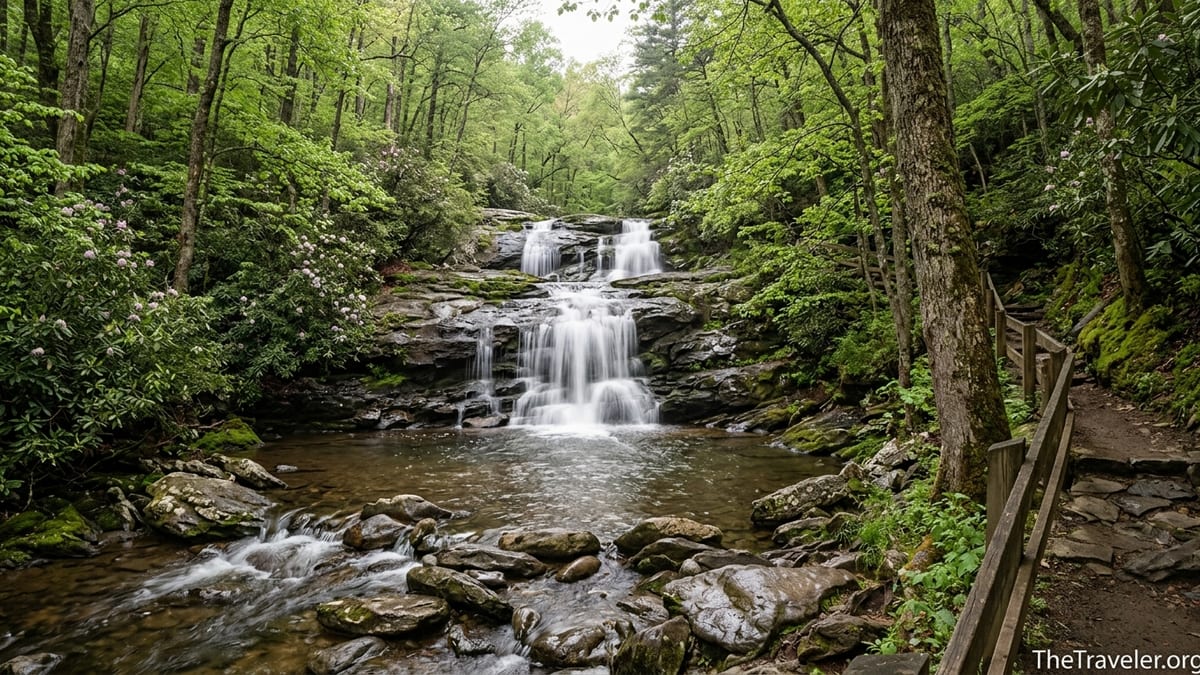
The falls themselves are the kind of scene many travelers imagine when they picture the Blue Ridge Mountains. Water fans down dark rock ledges, framed by rhododendron, moss, and mixed hardwood forest. In April and May, spring runoff and rain often swell the cascade, while in October the waterfall is backed by yellow, orange, and crimson foliage. Even in lower summer flows, the series of ledges and pools offers plenty of visual drama for photographers and sightseers.
Because the payoff is so close to the road, people with limited time in the park can still experience a marquee Shenandoah waterfall. A family driving down Skyline Drive from Thornton Gap, for example, can pull into the trailhead after lunch at Big Meadows, spend an hour and a half hiking and taking photos, and still make it to a lodge check-in or campground before dinner. That balance of effort and reward is a huge part of Dark Hollow’s appeal.
For many, this trail becomes their personal introduction to hiking in the Appalachians. It is common to meet visitors who tackled Dark Hollow Falls on a childhood vacation, then later returned with their own kids or partners. The hike is short enough for a first real trail experience, yet dramatic enough that it lingers in memory long after the trip is over.
Why Dark Hollow Falls Draws More Visitors Than Any Other Waterfall
Shenandoah has more than a dozen notable waterfalls, but park partners and local outfitters consistently point to Dark Hollow Falls as the most visited. The Shenandoah National Park Trust has cited annual use numbers in the hundreds of thousands for this one route, a remarkable figure for a trail that covers less than a mile and a half. For comparison, popular but harder waterfall hikes like Whiteoak Canyon or Overall Run often occupy an entire morning or full day, while Dark Hollow can fit comfortably between other activities.
The trail’s position just north of Big Meadows is a significant factor. Big Meadows serves as one of the park’s main visitor hubs, with a lodge, wayside restaurant, campground, and visitor center. Many Skyline Drive itineraries naturally cluster around this area, and Dark Hollow Falls is often suggested by rangers as a first hike because it is nearby, well signed, and easy to describe for new visitors who may not be confident route-finders.
Word of mouth and social media have amplified its status. Trip planners browsing photo-sharing platforms or hiking apps quickly discover images of people standing beside mossy ledges or posing on the viewpoint rock beside the falls. On popular apps that aggregate reviews, the Dark Hollow Falls Trail routinely shows thousands of logged visits and comments, which encourages even more travelers to add it to their must-do list when comparing options.
Even when parts of the trail have been temporarily closed for repair after heavy rain or storm damage, travelers still discuss it as a top priority and look for workarounds, such as accessing views of the falls via the longer Rose River loop. That persistence speaks to how deeply this single waterfall hike is woven into the standard Shenandoah itinerary.
The Trail Experience: Short, Steep, and Scenic
On paper, the Dark Hollow Falls Trail sounds simple: leave your car at the trailhead, descend along a creek, reach the falls, then climb back to the parking area the same way. In practice, the character of the trail surprises many visitors. The path is wide and well defined, but it is rocky and notably steep in places. Wooden water bars, stone steps, and natural rock tread demand attention, especially after rain when the surface can be slick.
Typical hiking times are listed around 1 hour 15 minutes, but that assumes a steady, moderate pace. In reality, many families and casual hikers take closer to two hours, stopping frequently to catch their breath on the climb out, photograph small cascades, or let children watch salamanders in streamside pools. Travelers who time their hike for the cooler hours of the morning often report a more comfortable experience than those who tackle the climb in mid-afternoon summer heat.
The scenery along the way helps justify the effort. Almost as soon as the path leaves the road, the sounds of traffic fade into the background, replaced by the steady rush of Hogcamp Branch. Even before the main waterfall appears, several smaller drops and chutes resemble miniature falls, and photographers often pause at these spots while the trail is less congested. Birders sometimes linger along the upper reaches listening for ovenbirds, vireos, and scarlet tanagers in the forest canopy.
At the main viewpoint, hikers typically find a rail or rock perch where they can safely admire the cascade. On busy weekends, it is common to see an informal rotation, with groups taking photos, then stepping back so others can move forward. Those willing and allowed to continue a little farther down the trail can sometimes view additional lower tiers, though conditions and current park guidance should always determine how far to proceed.
Comparing Dark Hollow Falls to Other Shenandoah Waterfall Hikes
Part of understanding why Dark Hollow Falls is so talked about is comparing it to other waterfalls in the park. Overall Run Falls, near the northern section of Shenandoah, is often cited as the tallest at about 93 feet. The hike to its best viewpoints, however, is longer and more strenuous, typically consuming several hours and requiring good fitness and planning. Whiteoak Canyon, another visitor favorite, features a series of six falls and numerous pools, but the full circuit is a demanding, rocky route that many first-timers find challenging.
By contrast, Dark Hollow offers a dramatic waterfall for a fraction of the time and energy commitment. Travelers arriving from Washington or Richmond on a short weekend often appreciate being able to combine Dark Hollow with another moderate walk, such as the nearby Story of the Forest Trail or the Rose River loop, in a single day. A typical day might begin with a sunrise drive on Skyline Drive, then a late-morning descent to Dark Hollow Falls, followed by lunch at Big Meadows and an afternoon hike to a summit like Hawksbill or Stony Man.
That said, experienced hikers do not necessarily skip Dark Hollow. Instead, they may weave it into a longer network of trails. Some use the Rose River Fire Road to create a circuit that visits both Rose River Falls and Dark Hollow Falls in one outing, turning a short tourist walk into a half-day adventure that feels more remote and less crowded. Cyclists and horseback riders also use nearby routes that link upper Dark Hollow with other backcountry paths, enjoying rolling terrain and glimpses of the creek system that feeds the waterfall.
In peak foliage season, guides and seasoned visitors often steer travelers who dislike crowds toward lesser-known waterfall hikes like Jones Run or Doyles River, which require more effort but see fewer people. Even then, many of those same guides still name Dark Hollow Falls as the place that best captures what a Shenandoah waterfall feels like, precisely because so many visitors experience it as their first true taste of the park.
Practical Details: Access, Seasons, and Safety
Reaching Dark Hollow Falls is straightforward. The signed parking area sits along Skyline Drive at roughly milepost 50.7, a short drive south from the popular Big Meadows complex. On fair-weather weekends between late spring and fall, the lot fills quickly, often by mid-morning. Travelers who want a quieter experience typically aim to arrive before 9 a.m. or after 4 p.m., building the hike into sunrise or sunset drives along the ridge.
Facilities at the trailhead itself are minimal. Restrooms, food, and water are available nearby at Big Meadows Lodge, the wayside, or the visitor center, but not directly at the Dark Hollow parking area. Many visitors stop at Big Meadows first to use services, refill bottles, and pick up last-minute snacks, then drive a few minutes south to start the hike. Standard Shenandoah entrance fees or passes apply to access Skyline Drive, and there is no separate fee for the trail.
Seasonality plays a major role in shaping the hike. In spring, snowmelt at higher elevations and frequent rain can translate into powerful flows and a roaring cascade, but also muddy, slick trails and occasional temporary closures if storms wash out sections. Summer brings lush greenery, warmer temperatures, and frequent thunderstorms; hikers often plan to be off the exposed roads and trails by late afternoon when storms are most likely. Autumn is peak visitation; the mix of fall color and cooler air makes the steep climb more comfortable, but crowds and busy parking are the norm. In winter, ice can form on both rocks and trail, creating hazardous conditions even when Skyline Drive is open.
Trail safety is a recurring theme in park advisories. The route is short but strenuous, particularly for those not accustomed to hiking or higher elevations. Rangers emphasize starting slowly, turning around before fatigue becomes severe, and respecting posted warnings near wet rock surfaces. It is common in summer for rangers or volunteers to remind visitors that pets are not allowed on this particular trail, and that wading near the crest or base of falls can be dangerous due to slippery rock and unexpected current.
How Recent Repairs and Conservation Efforts Shape the Future of the Trail
High visitation brings both benefits and challenges. In recent years, heavy rain events have damaged portions of the Dark Hollow Falls Trail, forcing temporary closures while crews addressed washouts and erosion. After one such storm season, a section of the route was closed to ascending traffic, and visitors hoping to see the falls were directed to reach viewpoints using the longer Rose River Trail instead. These short-term disruptions highlighted just how central the waterfall is to many itineraries, as travelers and local news outlets tracked repair updates closely.
Recognizing the pressure that hundreds of thousands of feet place on a steep, narrow path, partners have secured dedicated funding to rehabilitate Dark Hollow Falls and nearby trails. Plans include more durable tread work, improved water drainage, and carefully placed stone structures designed to withstand future storm cycles. For hikers, the visible result is likely to be a trail that feels more stable underfoot, with fewer rutted or muddy sections, while still retaining the rustic character people expect from a national park footpath.
These projects are about more than visitor comfort. They also protect the delicate stream ecosystem that makes the waterfall possible. Stabilizing slopes reduces sediment washing into Hogcamp Branch, which helps maintain clearer water and healthier habitat for aquatic insects, salamanders, and fish. Because Dark Hollow Falls is such a high-profile hike, it often serves as a showcase for how thoughtful trail design can support both recreation and conservation.
Visitors can support these efforts by following marked routes instead of creating social trails, staying behind railings at viewpoints, and respecting short-term closures even when they are inconvenient. Contributing to park partner organizations, joining volunteer trail days, or simply choosing to hike in small groups rather than large, off-trail parties all help keep Dark Hollow Falls accessible and beautiful for future travelers.
Tips for Making the Most of Your Dark Hollow Falls Hike
For travelers building an itinerary from cities like Washington or Charlottesville, timing is everything. Many visitors find that entering the park early through Thornton Gap or Swift Run Gap, then driving directly to the Dark Hollow parking area, allows them to hike before the day warms and crowds build. After the hike, they can enjoy lunch at the Big Meadows wayside or spread a picnic in the meadow itself while watching deer graze at the forest edge.
Footwear can make or break the experience. While some hikers manage in sturdy sneakers, the combination of rocks, roots, and steep grades favors low-cut hiking shoes or trail runners with solid traction. Families often outfit children in similar footwear to avoid slips, especially if they know the trail may be damp from recent rain. A small daypack with water, a light layer, and a basic first aid kit is sufficient for most conditions.
Photography-minded travelers should consider light and flow conditions. In mid-summer, the falls can fall partly in shadow and partly in bright sun by midday, making early morning and late afternoon the most flattering times to capture the full cascade. Those who visit during or right after wet weather should balance the lure of dramatic water flow with the reality of slick rocks and fogged camera lenses. Tripods are easier to use at off-peak hours, when space at the viewpoint is less contested.
After the hike, many travelers continue south on Skyline Drive, pulling off at overlooks like Bearfence or Thorofare Mountain to take in broad valley views. Others choose a second, gentler trail such as the Story of the Forest loop, which begins near the Big Meadows visitor center and offers interpretive signs explaining local ecology. Linking Dark Hollow with these experiences turns a single waterfall hike into a full, satisfying Shenandoah day that still leaves time for a sit-down dinner or campfire evening.
The Takeaway
Dark Hollow Falls occupies a rare sweet spot in Shenandoah National Park: it is accessible but still adventurous, crowded yet still capable of feeling wild, and short enough for new hikers while memorable enough for veterans. The combination of a striking 70-foot waterfall, a forested creek-side trail, and a convenient location near Big Meadows has made it a default answer when travelers ask which Shenandoah waterfall they should not miss.
As climate patterns shift and visitation grows, the park and its partners are investing in the infrastructure needed to keep this beloved route open and sustainable. Thoughtful trail work, temporary repairs after storms, and visitor cooperation all contribute to an experience that will remain available to future generations. For now, stepping away from your car and following the sound of rushing water downhill is still one of the most rewarding things you can do with a couple of hours in Shenandoah.
Whether you are planning your first visit or returning to relive a childhood memory, Dark Hollow Falls offers a compact, powerful introduction to the landscapes that define this slice of the Blue Ridge. It is no surprise that when travelers swap stories about Shenandoah, this is the waterfall hike that almost always comes up first.
FAQ
Q1. How long does it take to hike Dark Hollow Falls?
The typical round trip takes about 1 to 1.5 hours for most visitors, though families with small children or frequent photo stops often spend closer to 2 hours.
Q2. How difficult is the Dark Hollow Falls Trail?
The hike is short but considered moderate because of its steep, rocky sections. The descent feels easy, but the climb back to the parking area is a sustained uphill that can be challenging if you are not used to hiking.
Q3. Where is the trailhead for Dark Hollow Falls?
The trailhead is at the Dark Hollow Falls parking area along Skyline Drive near milepost 50.7, just a few minutes’ drive south of the Big Meadows area and its visitor services.
Q4. Are pets allowed on the Dark Hollow Falls Trail?
No, pets are not allowed on this particular trail. Travelers with dogs should choose one of the many pet-friendly hikes elsewhere in Shenandoah instead and confirm current rules with the park before visiting.
Q5. What is the best time of year to visit Dark Hollow Falls?
Spring and fall are often considered the best seasons, with stronger water flow in spring and brilliant foliage in autumn. Summer can be beautiful but busier and hotter, while winter conditions depend heavily on snow and ice.
Q6. Is the trail suitable for young children or older adults?
Many families and active older adults hike Dark Hollow Falls successfully, but everyone should be comfortable with steep, uneven terrain. Trekking poles, frequent breaks, and an early start when temperatures are cooler can make the outing more manageable.
Q7. Can I access Dark Hollow Falls if part of the trail is closed?
During some repair periods, visitors have been able to see the falls using the longer Rose River Trail rather than ascending or descending the steepest damaged sections. Conditions change, so it is important to check the latest park alerts and follow posted signs.
Q8. What should I bring for the hike?
Sturdy footwear with good grip, at least one bottle of water per person, and a light layer for changing mountain weather are recommended. A small daypack, basic first aid supplies, and a map or downloaded trail information are also useful.
Q9. How crowded does Dark Hollow Falls get?
On fair-weather weekends and during peak fall foliage, the trail can be very busy, with the parking lot filling by mid-morning. Visiting early in the day, later in the afternoon, or on weekdays usually results in fewer people on the trail.
Q10. Is swimming or wading allowed at Dark Hollow Falls?
While people may be tempted to wade in the creek or near the base of the falls, wet rocks are extremely slippery and conditions can be hazardous. Visitors are strongly encouraged to stay on the trail and behind railings to protect both themselves and the fragile stream environment.