


More news on this day
As cruise lines race to add more three to five night “sampler” itineraries for time-pressed vacationers, emerging data and traveler feedback indicate that many first-time cruisers may actually be better served by booking longer voyages than they initially expect.
Get the latest news straight to your inbox!
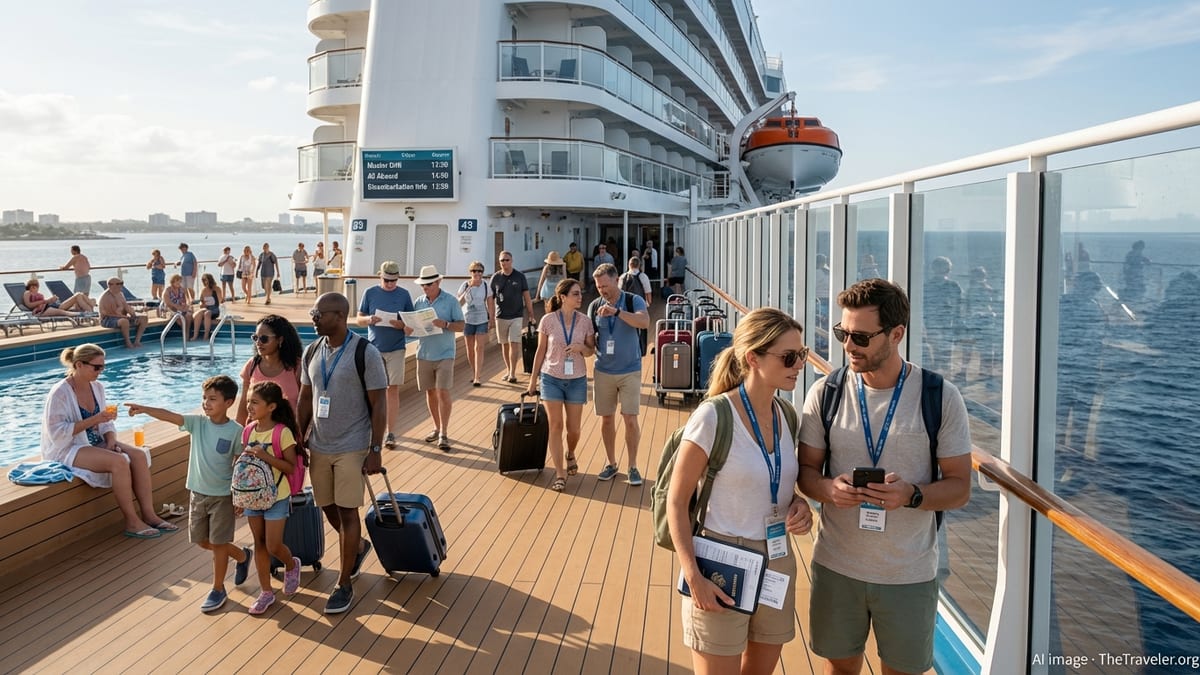
Short Cruises Are Booming, but the Average Trip Is Still a Week
Across the industry, short sailings of three to five nights have become a central part of major brands’ strategies. Deployment announcements from multiple lines for the 2025 and 2026 seasons highlight an expanded focus on quick Caribbean and Bahamas getaways, as well as compact European routes designed for travelers who want a cruise to fit neatly into a long weekend or a short stretch of paid time off. Reports on fleet planning show that these brief itineraries are now being operated by some of the newest and largest ships at sea, underscoring the commercial importance of the market.
At the same time, global figures suggest that the typical cruise vacation is still considerably longer than a long weekend. Industry outlooks compiled by trade groups put the average ocean cruise at about 7.1 days worldwide, with seven-night itineraries remaining the most common format. Longer voyages of 15 days or more are also gaining ground, with survey data from 2025 indicating a rise in interest for extended trips and a corresponding softening in demand for ultra-short, three-day breaks.
Travel trend reports for 2026 describe a split picture. On one side, there is strong growth in short “micro-break” travel across segments, including cruises that match this pattern. On the other, those who have already discovered cruising often say they prefer itineraries of a week or more. This divergence sets the stage for a growing gap between what new travelers think is the safe, sensible introduction to cruising and what more experienced guests consider a satisfying length of time at sea.
Newcomers Gravitate to Samplers, Veterans Recommend a Week
Publicly available booking tools and promotional materials frequently position three- and four-night sailings as ideal for first-time cruisers. Search filters on prominent cruise marketplaces show thousands of departures in the three- to five-night range, often tagged as “great for first timers” or “test the waters” trips. Marketing copy emphasizes that these itineraries require fewer vacation days, carry a lower upfront price and provide a straightforward introduction to life on board.
However, advice circulating in traveler forums and cruise-focused communities often points a different direction. Many seasoned cruisers describe three-night voyages as feeling rushed, with embarkation and disembarkation consuming much of the available time. Contributors who recount their first experiences frequently report that they only began to relax and understand the rhythm of ship life around the third day, just as shorter trips were winding down.
For that reason, informal consensus in many of these discussions tends to cluster around five to seven nights as a better first-cruise target. Commenters note that this length generally includes at least one full day at sea, more time to explore the ship’s amenities and additional evenings to adjust to dining schedules, entertainment and port logistics. While these observations are anecdotal rather than statistical, they align with broader industry data that identifies week-long itineraries as the enduring core of the market.
Value, Pace and Sea Days Improve With Extra Nights
Beyond the question of how long it takes to adapt to life on board, fare patterns suggest that many travelers may receive better value per day when they book longer sailings. Pricing breakdowns for upcoming seasons indicate that per-night costs on three- and four-night departures often run higher than those on comparable seven-night routes, particularly on newer ships. Analysts attribute this to strong demand for short getaways and the ability for cruise lines to turn ships more frequently through high-volume homeports.
From the traveler’s perspective, the practical experience also tends to change with each added night. Short cruises can involve early mornings for port calls, crowded afternoons by the pool and tightly packed schedules for shows and dining. Reports from both mainstream and niche operators highlight that itineraries of a week or more are more likely to feature multiple sea days, which many guests describe as the most relaxing part of a voyage. On these days, there is time to enjoy the ship without the pressure of getting on and off in port.
Longer trips also make it more feasible to reach further-flung destinations. Guides from large cruise brands note that itineraries to Alaska, transits of the Panama Canal and routes that combine several regions typically require seven nights or more. Travelers who begin with a very short sailing may come away with a narrow view of what cruising can offer, centered on close-to-home islands and high-intensity port days, rather than the slower, more immersive experiences that draw many repeat guests back to sea.
Industry Trends Reflect Both Short-Haul Growth and Long-Haul Demand
Deployment and trend reports for 2026 show that cruise companies are trying to accommodate both the surge in interest for short escapes and the enduring appeal of extended voyages. Some lines are reshaping parts of their fleets so that larger, amenity-rich ships operate dense programs of three- and four-night itineraries in the Caribbean, while others preserve a mix that includes traditional seven-night circuits and ten-day or longer journeys to regions such as the Mediterranean and Northern Europe.
Trade and travel surveys suggest that travelers are not abandoning longer cruises. Research published in late 2025 records a measurable increase in the share of respondents interested in itineraries of 15 days or more, even as the number of short options in the marketplace multiplies. Advisors contributing to these studies describe a pattern in which guests who start with a shorter sailing, particularly those who enjoy their first experience, often book longer trips the next time.
At the same time, industry analysis points out that ultra-short itineraries of three days or fewer may be losing some ground. One frequently cited member survey found that stated demand for these brief trips declined year over year, while appetite grew for both moderate-length and longer cruises. That shift supports the idea that as travelers become more familiar with cruising, they are more willing to commit a larger portion of their vacation time to it, and may feel that only a week or more delivers the full value they are seeking.
How First-Time Cruisers Can Rethink Their “Ideal” Length
The tension between marketing of short samplers and traveler satisfaction with longer voyages leaves prospective first-time cruisers with a decision that is less straightforward than it appears. Public information from cruise lines and agencies makes it clear that shorter itineraries are designed to minimize risk for new guests and fit around modern work schedules. Yet the same pool of information, combined with abundant traveler feedback, indicates that many people walk away from three-night trips wishing they had stayed longer.
For travelers planning a first cruise today, that pattern suggests it may be worth considering a modest stretch beyond the instinctive minimum. Industry guides frequently present five to seven nights as a kind of “sweet spot” that balances cost, time and experience, offering at least one true day at sea, more varied ports and a chance to get comfortable on board. While personal circumstances, budgets and destination goals will always shape the final choice, the available evidence points toward a simple conclusion: in many cases, the ideal first cruise is longer than newcomers initially think it needs to be.