


More news on this day
After years of packed cabins, shifting rules and creeping fees, a growing slice of high-value travelers is quietly moving away from commercial airlines, gravitating instead toward private jet memberships, charters and alternative air services that promise fewer disruptions and more control.
Get the latest news straight to your inbox!
From Disruption Fatigue to Traveler Defection
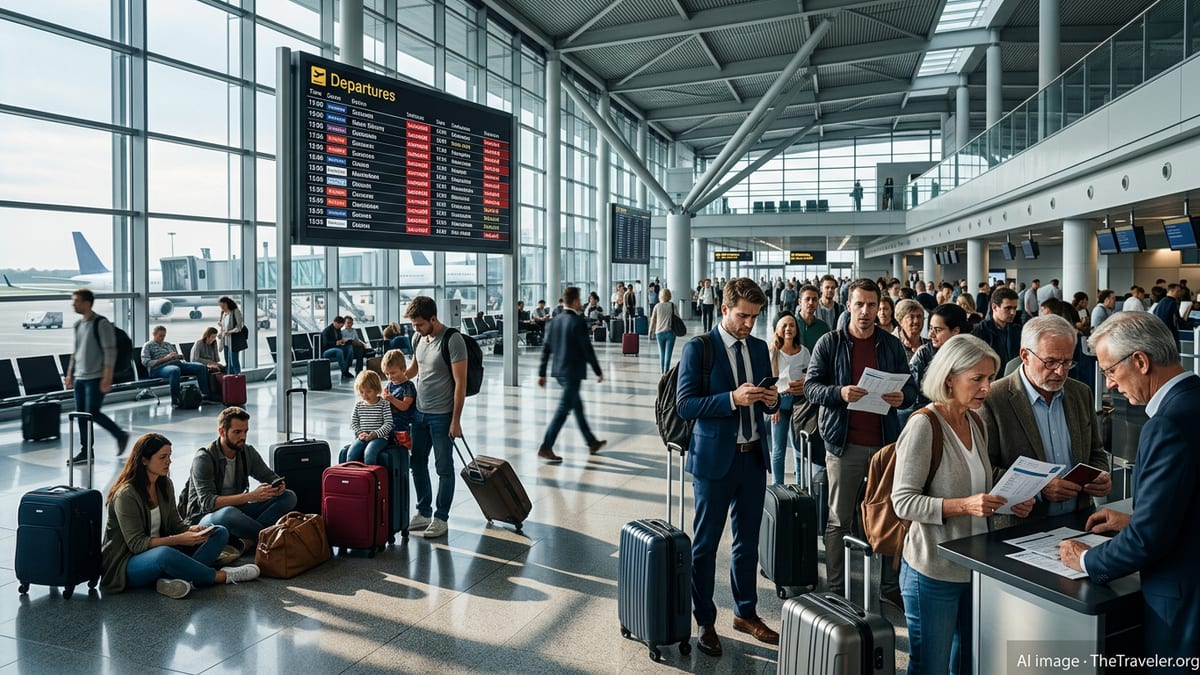
Persistent disruption has become a defining feature of modern airline travel, and frequent flyers appear to be reaching a breaking point. Publicly available U.S. Department of Transportation data for late 2024 show that while headline on-time performance has improved from the peaks of the pandemic recovery, millions of passengers still face delays, missed connections and schedule changes each year. Consumer sentiment research in 2025 indicates that overall satisfaction with U.S. airlines has slipped, even as travel volumes reached record highs.
Business travelers and premium leisure passengers are particularly sensitive to this instability. For travelers who plan tight same-day turnarounds or rely on evening flights to return home, even modest delays can mean lost revenue, extra hotel nights or missed events. Survey work published in recent months shows frequent flyers ranking reliability and schedule integrity above in-flight amenities, suggesting that the tolerance for disruption has narrowed considerably since pre-pandemic years.
As irregular operations have become more routine, many high-frequency travelers have begun to treat commercial flying as a last resort for time-critical trips. Industry coverage describes executives who now default to private charters or memberships for key client meetings, using commercial airlines only when schedules are flexible enough to absorb delays.
Loyalty Programs Lose Their Grip
For decades, airline loyalty programs were designed to keep frequent flyers firmly in the fold. That grip is loosening. Policy changes over the past several years have tied elite status and rewards more closely to spending than to miles flown, a shift that has frustrated many road warriors who built their travel habits around distance and frequency rather than ticket price.
Regulatory scrutiny has added to concerns. In 2024, U.S. consumer regulators publicly raised questions about the transparency and fairness of airline-linked credit card rewards, pointing to the risk that points and miles can be devalued with little notice. Subsequent reports noted that some carriers have reduced the relative value of their loyalty currencies over time, cutting the purchasing power of balances that frequent flyers spent years accumulating.
At the same time, third-party loyalty analyses highlight how central these programs have become to airline valuations, a dynamic that can encourage cost-cutting measures such as tighter upgrade availability or higher redemption rates. For frequent flyers, the result is a sense that the traditional perks of loyalty, from lounge access to complimentary upgrades, are harder to attain and less generous once secured.
This erosion has weakened one of the main incentives to tolerate crowded cabins and tight connections. Travel forums and industry commentary increasingly reference high-value customers who no longer feel locked into a single carrier, choosing instead to spread their spend across airlines or divert it entirely into alternative modes such as private aviation.
Private Aviation and Membership Models Move Mainstream
Against this backdrop, private aviation has expanded from a niche, ownership-driven market into a diversified ecosystem of charter services, jet cards and subscription platforms. Market analyses estimate the global private aviation sector at tens of billions of dollars in 2025, fueled in part by travelers who began flying privately during the pandemic and have continued to do so.
Recent survey work cited by business aviation publications shows that the vast majority of travelers who discovered private flying since 2020 are still using it. Among those now considering private options for the first time, more than half reportedly point to airline and airport delays and negative experiences as a primary motivation. This links commercial disruption directly to the growth of the private side of the market.
Newer business models are also lowering the barriers to entry. Jet membership programs and dynamic pricing platforms aggregate unsold or repositioning flights, offering access to private cabins at prices aimed at affluent frequent flyers rather than only ultra-high-net-worth individuals. Industry profiles describe travelers who combine discounted one-way private segments with commercial flights on the other leg, effectively creating hybrid itineraries that prioritize punctuality on the most critical segments.
Fractional ownership and jet cards further smooth the transition. Corporate travel managers and entrepreneurs can purchase fixed hourly rates and guaranteed availability, turning what was once an occasional splurge into a predictable line item that competes directly with premium commercial tickets, especially on routes with poor nonstop coverage.
High-Value Travelers Recalculate Time and Cost
For many frequent flyers, the tipping point is less emotional than mathematical. Analyses of private aviation usage show that charter and membership customers tend to be time-poor rather than simply status-conscious. With the ability to use thousands of smaller airports instead of a few hundred commercial hubs, private flights can dramatically reduce total journey time by bringing travelers closer to their final destinations.
When the full cost of a commercial trip is tallied, including airport transfers, overnight stays caused by limited schedules, and the productivity lost to delays and crowded terminals, the premium for a private flight narrows. Travel industry coverage highlights case studies in which a private charter that appears expensive on a per-seat basis becomes competitive once a team of executives is traveling together and billing their time at corporate rates.
This recalculation is occurring as many companies re-examine their travel policies following the pandemic. Some organizations that once maintained strict rules around cabin class are now more flexible on private options for key routes, particularly when the alternative is multiple connections or a high risk of disruption. For individual frequent flyers with growing disposable incomes, subscription-based private services offer a tangible way to buy back time that commercial aviation can no longer reliably protect.
Airlines Respond, but Trust Is Hard to Rebuild
Commercial airlines are not standing still. Trade group surveys released in 2025 report that a majority of U.S. passengers remain broadly satisfied with their air travel experience, and official performance data show that many carriers have improved on-time metrics compared with the immediate post-pandemic period. Airlines have also invested in premium cabins, upgraded lounges and new digital tools intended to smooth disruption when it occurs.
Yet there is a widening gap between the average traveler and the highest-frequency segment. Customer satisfaction indices suggest that even small declines in the perceived quality of service can have an outsized effect on those who fly often, because they encounter operational issues repeatedly. For these travelers, each schedule change or loyalty devaluation reinforces the perception that the commercial system no longer prioritizes their time and loyalty.
Industry analysts note that the shift away from commercial carriers is still relatively concentrated among wealthier individuals and corporate travelers with flexible budgets. Commercial airlines continue to move record numbers of passengers overall. But the loss of even a modest share of top-spending customers can weigh heavily on premium revenue, pressuring airlines to reconsider how they treat their most frequent guests.
As private aviation becomes more accessible and loyalty economics continue to evolve, the competition for high-value flyers is intensifying. Whether commercial airlines can reverse the quiet exodus of their most frequent customers may depend less on the flash of new cabins and more on a return to fundamentals: reliability, transparent rewards and a sense that those who fly the most are once again at the center of the system.