


More news on this day
A Flydubai rescue aircraft has landed at Saudi Arabia’s Tabuk Airport to pick up Israeli passengers stranded after their Dubai to Tel Aviv flight diverted there following a dramatic in-flight incident involving the cockpit crew.
Get the latest news straight to your inbox!
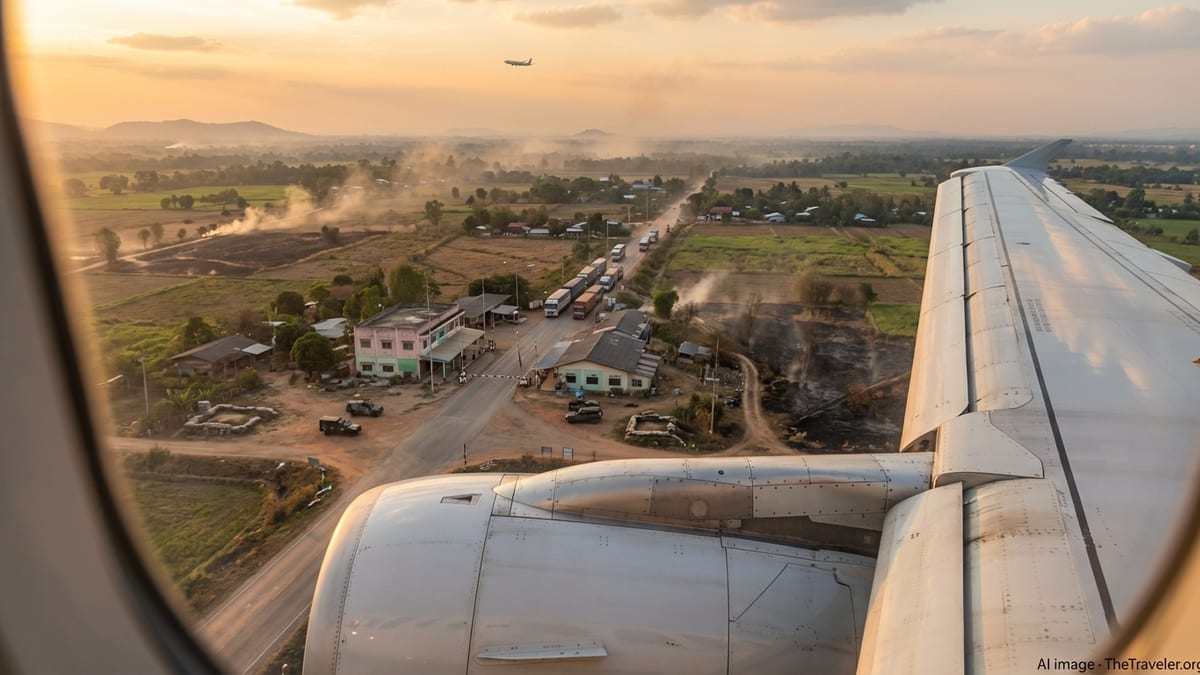
Emergency diversion leaves Israel-bound travelers stranded in Tabuk
Flight FZ1073 operated by Flydubai was en route from Dubai to Tel Aviv on Wednesday, September 30, 2026, when it issued a hijacking distress signal and diverted to Prince Sultan bin Abdulaziz Airport in Tabuk, northwestern Saudi Arabia. Publicly available flight tracking and media coverage indicate that the Boeing 737 MAX 8 was carrying around 170 to 180 passengers, many of them Israeli nationals, when the incident unfolded.
Reports from multiple international outlets describe a serious altercation inside the cockpit, during which both pilots were injured. The aircraft briefly transmitted the emergency transponder code 7500, which signals possible unlawful interference, before descending rapidly and turning away from Israeli airspace. According to published coverage, Israeli Air Force jets were scrambled to follow the aircraft until it landed safely on Saudi territory.
Airport management in Tabuk has stated through official communications that a distress call was received shortly before 9 a.m. local time, and that emergency procedures were activated ahead of the landing. The aircraft touched down safely, and subsequent statements from Flydubai and Saudi airport operators indicate that all passengers were accounted for and received medical and welfare support on the ground.
Flydubai dispatches replacement aircraft to complete journey
With the original flight grounded in Tabuk while investigators and airline teams began examining the cockpit incident, Flydubai arranged for a second aircraft to be sent to Saudi Arabia to collect the stranded travelers. According to real-time aviation coverage and Israeli media reports, the replacement plane departed Dubai and flew directly to Tabuk to operate a continuation sector from Saudi Arabia to Tel Aviv’s Ben Gurion Airport.
Saudi aviation officials, quoted in regional business and aviation outlets, later stated that all passengers from the diverted flight left Tabuk on board the Flydubai replacement aircraft. Airport management in Tabuk reported that the relief flight departed in the early evening, carrying the Israel-bound customers onward to their original destination.
Israeli news coverage notes that authorities in Jerusalem had examined options for sending an Israeli-operated aircraft to pick up the passengers, but that this option did not materialize. Instead, the arrangement relied on the same Emirati low-cost carrier that had operated the original Dubai to Tel Aviv service, using a second aircraft and crew to complete the journey.
Sensitive routing highlights complex Saudi–Israeli aviation ties
The diversion and subsequent rescue operation unfolded against the backdrop of complex aviation and political ties between Saudi Arabia and Israel. The two countries do not maintain full diplomatic relations, yet Saudi authorities allow certain overflights to and from Israel by carriers such as Flydubai under specific permissions that have expanded in recent years.
In this case, published reports in regional and international media indicate that Saudi Arabia declined an Israeli request to send its own aircraft to collect the passengers from Tabuk, while still authorizing the Flydubai rescue flight to land, disembark crew and complete the journey to Tel Aviv. Analysts in open-source commentary have described this as a calibrated approach, balancing domestic and regional sensitivities with aviation safety and humanitarian considerations.
For passengers, the result was an unusual sequence of travel: an emergency landing in a country without formal ties to Israel, followed several hours later by boarding another aircraft of the same foreign airline in order to continue to Ben Gurion Airport. According to liveblog updates from Israeli outlets, families gathered at the arrivals hall in Tel Aviv for much of the day, awaiting word on when their relatives would depart Saudi Arabia and resume their journey.
Safety procedures and investigations after cockpit incident
Flydubai has described the midair event as an on-board “incident,” confirming that the aircraft landed safely in Tabuk and that passengers were unharmed. Publicly available statements from Saudi airport authorities and regional aviation coverage indicate that the two pilots were taken to hospital for treatment. Details about the exact cause and circumstances of the cockpit altercation remain the subject of ongoing investigations by relevant authorities.
Israeli leaders have publicly framed the incident in security terms, with some statements characterizing it as a possible attempted attack, while other reports, citing security officials, refer to a dispute or altercation between the pilots. As of the latest published coverage, investigators had not released a definitive account reconciling these differing descriptions, and the incident had not been officially classified as a hijacking attempt.
The crew response and the subsequent diversion to the nearest suitable airport in Saudi Arabia aligned with standard international aviation safety principles, according to commentary from aviation specialists quoted in global media. The safe landing, rapid activation of emergency services and the later deployment of a relief aircraft allowed the airline to remove passengers from the scene and restore connectivity on a politically sensitive route.
Travel implications for the Dubai–Tel Aviv corridor
The Dubai to Tel Aviv route has become a significant leisure and business corridor since the launch of direct flights following normalization agreements in 2020. Flydubai, which operates as a sister carrier to Emirates, serves Ben Gurion Airport with multiple weekly frequencies, using narrowbody aircraft to complement widebody services by other Gulf and Israeli airlines.
In the immediate aftermath of the Tabuk diversion, Israeli officials announced plans to review security protocols for both Israeli and foreign carriers operating into the country. Public statements from government spokespeople referenced a desire to strengthen procedures surrounding crew vetting and inflight security, particularly on routes passing through sensitive regional airspace.
For travelers, the incident has drawn attention to the operational realities of flying across a patchwork of airspace agreements in the Middle East. While there was no indication that scheduled services on the Dubai–Tel Aviv route were being suspended, aviation analysts quoted in international outlets suggested that passengers could see increased security screening and additional operational safeguards in the near term on flights linking Israel with Gulf hubs.