


More news on this day
Thousands of Muslim pilgrims found themselves unexpectedly stranded in Saudi Arabia in early 2024 after regional airspace closures and widespread flight disruptions cut off their routes home from the holy cities of Makkah and Madinah.
Get the latest news straight to your inbox!
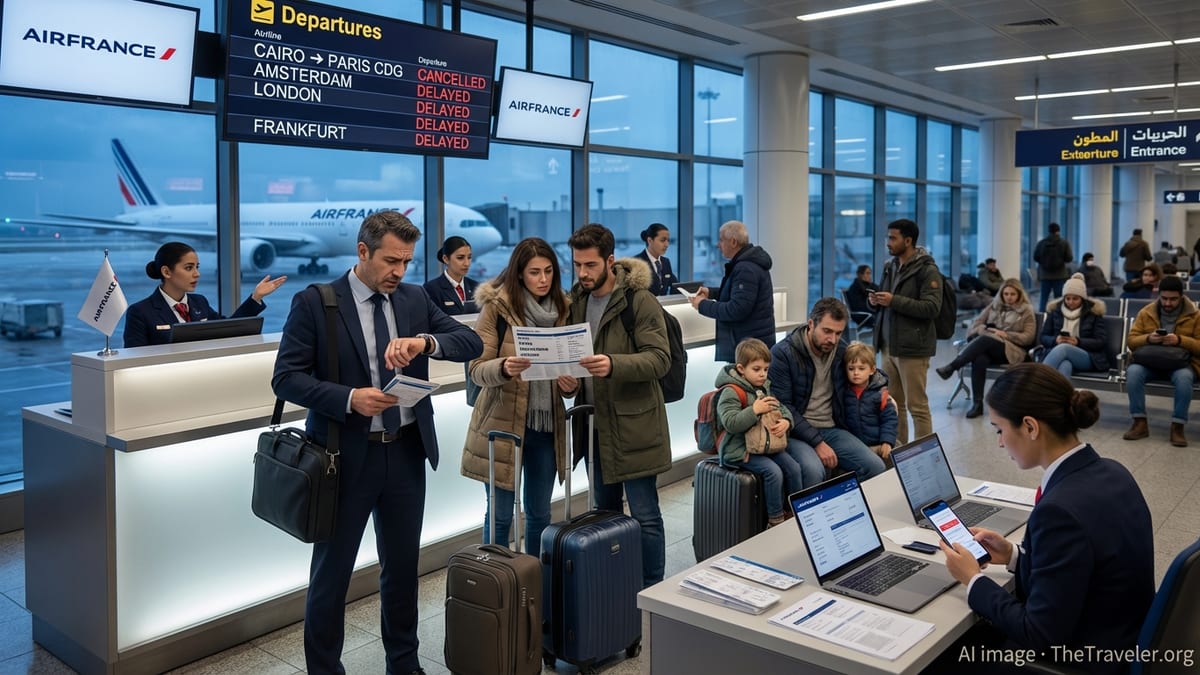
Regional Turmoil Leaves Pilgrims Stuck in the Kingdom
Travelers heading to Saudi Arabia for the Umrah pilgrimage in the first half of 2024 were caught in the middle of fast-changing regional security developments. Reports from international news agencies describe how a wave of strikes and counterstrikes involving Iran, Israel and several Gulf states led to temporary no-fly zones and severe restrictions on commercial flights across parts of the Middle East.
Publicly available flight-tracking data and news coverage show that Saudi Arabia, along with neighboring Qatar, Bahrain, Kuwait and others, imposed partial or temporary airspace closures. Airlines reduced or halted services on key routes, particularly those passing near conflict areas, which in turn left religious pilgrims in Saudi Arabia unable to depart as scheduled.
Among the hardest hit were Indonesian pilgrims, who form one of the largest Umrah contingents each year. According to published coverage citing Indonesia’s Ministry of Hajj and Umrah, more than 58,000 Indonesian citizens were stranded in Saudi Arabia at one point, most of them having completed their religious rites and simply waiting for flights home.
Pilgrims from Malaysia, the Kurdistan Region of Iraq and several Gulf and Asian countries also faced delays, missed connections and sudden cancellations. In some cases, groups that had expected to spend two or three weeks in Saudi Arabia found their stays extended by many days or longer while tour operators and airlines tried to reorganize transport.
How Governments and Airlines Responded
Once it became clear that normal commercial schedules would not resume quickly, several governments began organizing special arrangements for stranded pilgrims. Indonesian officials publicly described the situation as an urgent humanitarian and logistical problem and said they were coordinating with Saudi authorities and multiple airlines to manage hotel costs, food and new tickets for citizens who were unable to leave on time.
In Malaysia, national news coverage reported that licensed Umrah operators began rearranging itineraries and securing alternative seats on airlines that continued to fly into and out of Saudi Arabia. Some companies agreed to absorb additional costs in order to avoid leaving pilgrims without confirmed return journeys, shifting passengers from disrupted services to flights routed through alternative hubs that remained open.
Elsewhere, government-linked Hajj and Umrah directorates temporarily suspended new outbound flights to Saudi Arabia to prevent more people being stranded. In the Kurdistan Region, for example, flight organizers paused Umrah departures after hundreds of pilgrims were reported to be stuck in Saudi Arabia due to irregular schedules on key routes, with some travelers returning overland by bus.
Major carriers based in the Gulf region gradually introduced limited repatriation flights as airspace restrictions eased. According to publicly available airline statements and regional business press, carriers prioritized returning citizens and long-waiting pilgrims from Jeddah and Madinah to their home countries or to intermediate hubs where onward connections were possible.
Long Waits, Overland Journeys and Patchwork Routes
For many individual pilgrims, getting home required patience and flexibility. International and regional media as well as local outlets in the Gulf highlighted how some groups turned to lengthy overland journeys once it became apparent that their original flights would not operate.
In the United Arab Emirates, coverage in local newspapers described how certain Umrah groups who had flown into Saudi Arabia by air eventually traveled back to the Emirates by bus. One such group of pilgrims used a long-distance coach from Madinah to reach Sharjah after their return flights were suspended. Similar accounts from other nationalities show travelers accepting detours through neighboring countries simply to secure a seat on any available flight.
Reports from Indonesian and Malaysian outlets indicated that many pilgrims spent additional nights in hotels around Makkah, Madinah and Jeddah. In some cases, costs were covered or subsidized by tour operators and national Hajj and Umrah authorities; in others, families had to shoulder extra expenses while waiting for confirmation of new departures.
Despite the disruption, publicly available information suggests that Saudi airport operations in cities such as Jeddah and Madinah continued handling both departing and arriving flights, albeit at reduced levels during periods of tighter airspace control. This allowed airlines running special or rerouted services to ferry stranded passengers out in phases as restrictions were gradually rolled back.
Who Remained Stranded the Longest
The extent of disruption and the length of time people were stranded varied sharply by nationality and travel arrangement. Pilgrims traveling with larger, well-capitalized tour operators often saw their itineraries rebooked relatively quickly, as those companies had established relationships with multiple airlines and could negotiate bulk changes. In contrast, individuals traveling on fragmented tickets or with smaller agents appeared more likely to face uncertainty.
According to Indonesian media reports, the bulk of that country’s stranded pilgrims were eventually repatriated through a combination of regular commercial flights and additional services negotiated by the government with Saudi-based and international airlines. Officials in Jakarta publicly stated that they were working to reduce the financial burden by coordinating hotel and transport costs, though some travelers still reported paying more than planned.
Coverage from Malaysian and Kurdish outlets shows that smaller contingents from those regions also endured waits ranging from several days to a few weeks. Some were rebooked on alternative carriers flying via Cairo, Istanbul or other hubs, while others used buses to reach airports in neighboring countries where flight options were more plentiful.
There were also scattered accounts involving other nationalities, such as Pakistani and Gulf-region pilgrims, who missed specific flights from Jeddah or Madinah because aircraft operated with fewer seats than originally scheduled or because sudden timetable changes were poorly communicated. In those cases, later flights or different routings generally resolved the backlog, but not without overnight stays and added stress for travelers.
Lessons for Future Umrah Travel
While most of the stranded passengers have now made it home, the episode has prompted wider discussion about how Umrah travel is organized and how resilient it is to external shocks. Travel industry commentary across the region highlights the challenges of relying heavily on a small number of air corridors through politically sensitive airspace, particularly during peak pilgrimage periods such as Ramadan.
Public information from Saudi Arabia’s Ministry of Hajj and Umrah underlines that foreign pilgrims on Umrah visas generally receive stays of up to 90 days, starting from the date of entry. That window provided some flexibility for those stuck in the Kingdom, but did not prevent financial strain for people who had budgeted for shorter visits or needed to return quickly for work and family commitments.
Regional tour operators and airline analysts have suggested, through media interviews and commentary, that future seasons may see more diversified routing and contingency planning. This could include pre-arranged agreements with multiple carriers, clearer communication protocols for large tour groups, and dedicated repatriation plans in case of sudden airspace closures.
For travelers, the events of 2024 serve as a reminder that even highly organized religious journeys can be vulnerable to wider geopolitical tensions. The experience of those stranded in Saudi Arabia shows that while governments and airlines can mobilize large-scale repatriation efforts, these solutions often unfold gradually, leaving individuals to navigate days or weeks of uncertainty before they finally step back onto home soil.