


More news on this day
Hours after a flydubai jet from Dubai to Tel Aviv made an emergency landing in the Saudi city of Tabuk following a violent cockpit incident, Hebrew-language outlets report that several Israeli passengers declined to board the carrier’s rescue aircraft, highlighting deep anxiety around the episode and fresh questions over crisis handling on regional routes.
Get the latest news straight to your inbox!
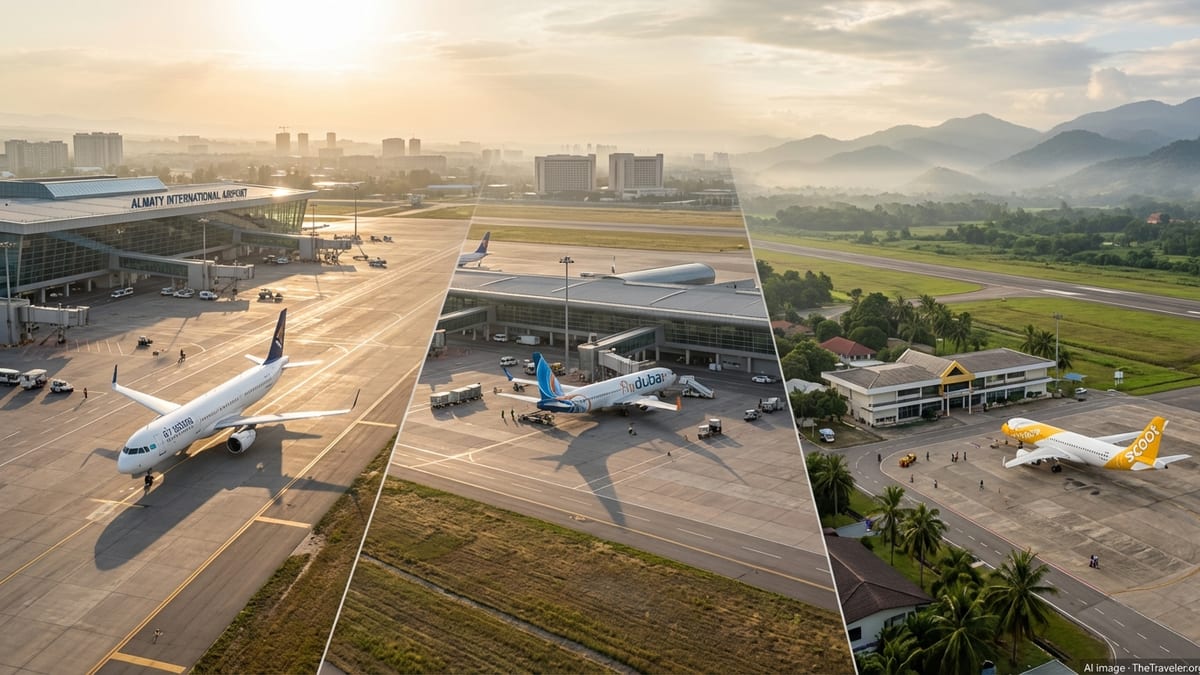
Emergency diversion to Tabuk after cockpit violence
According to publicly available flight-tracking data and airline statements, flydubai flight FZ1073 departed Dubai International Airport on the morning of 30 September 2026 bound for Tel Aviv’s Ben Gurion Airport with around 170 to 180 passengers on board. Roughly an hour before entering Israeli airspace, the Boeing 737 Max 8 transmitted emergency transponder codes and turned west toward northern Saudi Arabia, eventually landing at Prince Sultan bin Abdulaziz Airport in Tabuk.
Published coverage from Gulf-based and Hebrew-language outlets indicates that the emergency was triggered by a violent altercation involving at least one member of the cockpit crew. Passengers have described hearing screams from the front of the cabin, followed by a sudden, steep descent as the pilots attempted to stabilise the aircraft before landing in Tabuk. The airline later confirmed that an “incident” occurred in flight but stated that the aircraft landed safely and that all passengers were accounted for.
Reports compiled by regional media, citing passenger testimonies broadcast on Israeli television, describe blood in the cockpit area and suggest that an individual attempted to harm the operating pilot before being restrained. Some accounts refer to off-duty aviation professionals and other travellers moving toward the front of the aircraft and helping to subdue an assailant as the jet descended toward Tabuk. The exact sequence of events and motive remain under investigation by aviation and security bodies in multiple jurisdictions.
Israeli and international newsrooms note that, as the aircraft squawked an emergency code associated with possible unlawful interference, Israeli air defence assets were scrambled to shadow the flight, underscoring how seriously regional authorities treated the situation. Within hours, images and videos from inside the cabin, showing shaken passengers and visible injuries, had spread across Hebrew and international media channels.
Hebrew media: some passengers refuse rescue flight
Once the aircraft was secured on the ground in Tabuk, focus shifted to getting passengers onward to Israel. Flydubai announced that it would dispatch a replacement aircraft to collect travellers and continue to Tel Aviv, a standard industry response after a serious in-flight incident. However, live blogs and Hebrew-language television reports from Israel later in the day suggested that not all passengers were prepared to re-board a flydubai jet so soon after the ordeal.
According to these reports, some Israelis stranded in Tabuk expressed reluctance or outright refusal to board the carrier’s rescue flight, citing fear and distrust after the violent events on FZ1073. Individuals quoted in Hebrew media described being traumatised by the sudden dive, bloodied cockpit and the struggle to restrain an alleged attacker, and indicated that they preferred to wait for an alternative option rather than immediately fly out with the same airline.
Coverage from Israeli outlets indicates that officials in Jerusalem examined the possibility of sending an Israeli civilian or military aircraft to retrieve those who did not wish to continue with flydubai. While discussions over such an operation were still characterised as preliminary by the evening of 30 September, the very fact that they were considered reflects the heightened sensitivity surrounding Israeli travellers in Saudi territory and the unusual nature of the diversion.
For some passengers, the decision appears to be driven less by assessments of technical safety and more by the emotional weight of the incident. Mental health specialists who work with fear-of-flying communities often note that travellers involved in dramatic diversions can take days, weeks or longer before they feel ready to board any aircraft again, regardless of an airline’s objective safety record. In the Tabuk case, those feelings were compounded by the political backdrop and the perception among some Israeli passengers that they had narrowly avoided a far worse outcome.
Tabuk’s unexpected role in a high-stakes regional drama
Tabuk, a city in northwestern Saudi Arabia near the borders with Jordan and Israel, is better known among regional travellers as a gateway to developing Red Sea tourism projects and domestic connections than as a transit point for emergency diversions from international flights. The arrival of an Israel-bound jet carrying a majority of Israeli passengers placed the local airport at the centre of a sensitive diplomatic and security episode.
Saudi media and regional outlets report that Tabuk Airport, which hosts both civilian and military facilities, received a distress call and declared a state of emergency ahead of the flydubai jet’s arrival. Emergency vehicles and medical staff were positioned along the runway area as the Boeing descended sharply from cruising altitude. After landing, passengers were kept on the tarmac and in terminal areas while security checks, medical assessments and initial questioning took place.
The diversion unfolded against a complex backdrop of evolving but still limited contacts between Israel and Saudi Arabia. While there have been gradual steps toward more open overflight rights and behind-the-scenes dialogue in recent years, formal diplomatic relations have not been established. In that context, the presence of dozens of Israeli nationals at a Saudi regional airport required careful coordination between Riyadh, Dubai and Jerusalem over immigration, security and onward travel arrangements.
For travellers, Tabuk’s unexpected prominence in this story highlights how emergency procedures can pull aircraft into locations that would never otherwise appear on an Israel itinerary. It also illustrates how quickly an airport primarily serving domestic or Gulf region tourism can become a temporary holding point for international passengers caught in a crisis far from their intended destination.
Airline response and questions over crew screening
Flydubai, a low-cost carrier based in the United Arab Emirates and closely integrated with Dubai’s wider aviation ecosystem, has emphasised in its statements that all passengers and crew from FZ1073 were safe following the landing in Tabuk. The airline confirmed that it was cooperating with relevant authorities and that a technical and operational review had begun, including analysis of flight data and cockpit voice recordings.
However, the gravity of the reported cockpit violence has prompted intense scrutiny of crew vetting and in-flight security on regional carriers. Hebrew and international coverage has circulated unconfirmed details about the nationality and background of the pilots involved, while officials in Israel and the Gulf have been cautious in their public comments, noting that investigations are ongoing. Analysts stress that drawing firm conclusions before the release of official findings can be misleading, yet acknowledge that the incident raises urgent questions for airlines carrying large numbers of passengers across politically sensitive routes.
Industry observers point out that standard operating procedures across global aviation already include psychological screening, recurrent training and strict cockpit access rules designed after past hijackings and pilot-suicide cases. The reported transmission of a hijack-related distress code on FZ1073 indicates that these protocols were at least partially followed, allowing ground controllers and air forces to respond rapidly. At the same time, if investigations confirm that an insider posed the primary threat, carriers may face pressure to add further layers of behavioral monitoring and support for pilots under stress.
For flydubai, the episode in Tabuk comes at a time when the airline has been expanding its network of flights to Israel and other politically complex destinations, capitalising on growing demand for business and leisure travel between the Gulf and the eastern Mediterranean. How the carrier communicates with affected passengers, cooperates with inquiries and implements any recommended changes will likely shape its reputation among Israeli travellers and the broader international market in the months ahead.
Travel implications for Israel–Gulf routes
The events surrounding FZ1073 and the reported refusal of some passengers to board the rescue flight could reverberate beyond a single incident, particularly for the still-young network of direct services between Israel and Gulf hubs such as Dubai. These routes, launched and expanded after normalisation agreements and evolving unofficial ties, have been marketed as convenient bridges between tech, finance and tourism centres.
Publicly available booking data and airline schedules show multiple daily services between Tel Aviv and Dubai, operated by a mix of Israeli and Emirati carriers. Until now, most disruptions on these routes have been related to regional security flare-ups or airspace restrictions rather than in-flight security scares. The diversion to Tabuk, with its explosive mix of cockpit violence, emergency codes and viral passenger videos, may change how some travellers assess risk when choosing flights.
Travel agents and online forums focused on Israel–Gulf itineraries are already fielding questions from nervous customers about airline choice, crew screening and contingency plans if an aircraft needs to divert to a third country. Some Israeli passengers may temporarily favour national carriers for perceived security advantages, while others may continue to prioritise schedule, price and aircraft type. For all operators in this corridor, clear communication about safety measures and support for shaken passengers will be crucial.
In the immediate term, the priority for authorities in Israel, Saudi Arabia and the United Arab Emirates remains getting all affected travellers home and clarifying the facts of what unfolded at cruising altitude. Longer term, the Tabuk incident and the decisions by some passengers to stay off the flydubai rescue plane may become a case study in how a single dramatic flight can reshape perceptions of an entire emerging travel corridor.