


I landed at Hong Kong International Airport fully prepared to roll my eyes. The airport had a reputation for being one of Asia’s great hubs, but after years of reading about “world’s best” terminals, Skytrax rankings, and architectural superlatives, it all sounded like marketing. I pictured another glossy, overbuilt megastructure where you walk forever, overpay for coffee, and struggle to find a seat. Then I stepped into the arrivals hall at Chek Lap Kok and realized I had seriously underestimated this place.
Get the latest updates straight to your inbox!
First Impressions in a Supposedly Overhyped Hub
My skepticism started fading before I even cleared immigration. Hong Kong International Airport (HKG), sitting on its man-made island at Chek Lap Kok, is vast, but it does not feel chaotic. The arrival process moves in clear stages: passport control, baggage claim, customs, then an easy funnel toward trains, buses, and taxis. Signage is in Chinese and English, with consistent icons that match what you see at major hubs like Singapore or Heathrow, so there is no decoding required after a long flight.
What surprised me most was how quickly I went from aircraft door to the Airport Express train platform. On a recent afternoon arrival from Europe, I was rolling my suitcase onto the train about 35 minutes after touchdown, including a brief wait at immigration and a luggage pickup that took less than 10 minutes. For a global hub that handled tens of millions of passengers annually before the pandemic, that speed feels like a quiet luxury.
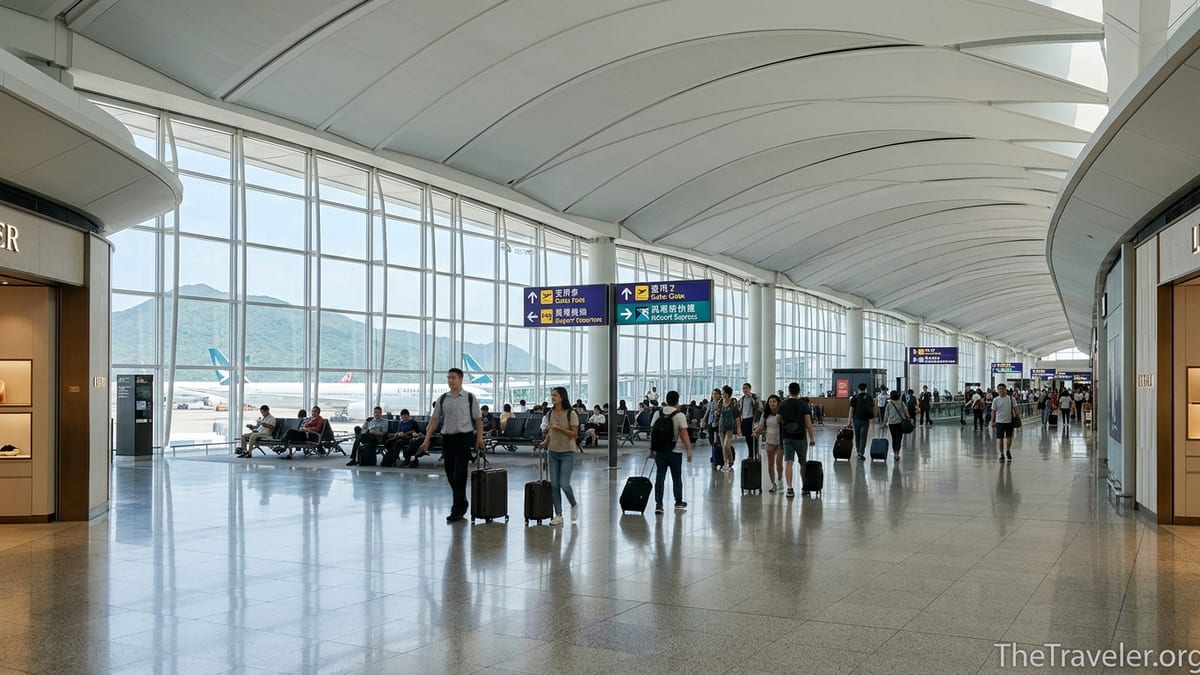
The terminal itself looks minimal at first glance: long sightlines, natural light pouring through big glass walls, and a cool palette of white and grey. If you are used to airports that shout for attention with theme-park features, Hong Kong can actually feel understated. It is only after you start walking that its logic becomes clear. Gates are clearly numbered in sequence, transfer desks sit exactly where you expect them to, and you rarely hit the dead ends and bottlenecks that plague many older airports.
That understated design hides a serious reputation. In the World Airport Awards for 2025, Hong Kong jumped back into the global top ten and was ranked sixth in the world, a big rise from outside the top ten only a year earlier. That is not a marketing slogan. It is a sign that, as Asia’s skies have reopened, travelers are noticing that Hong Kong has quietly regained its stride.
Movement That Actually Makes Sense: Trains, People Movers, and the Third Runway
Airports are where bad wayfinding and poor connections punish tired travelers. Hong Kong’s designers seem to have started from that pain point. From the moment you arrive, the logic of movement is obvious. Landside, the Airport Express train connects the terminals to Kowloon and Hong Kong Island in about 24 minutes, with trains typically running every 10 to 15 minutes. For a visitor, the simplicity matters more than the speed: you follow the green Airport Express signs, tap a card or buy a ticket at clearly marked machines, and are on your way without having to negotiate with taxi drivers or decipher bus routes.
Airside, a fleet of automated people movers links different parts of the airport. If you are transferring between distant gates or moving toward the Midfield Concourse, you hop on a train rather than trudging along endless corridors. I used the system during a tight connection from an inbound Cathay Pacific long-haul flight to a regional departure and made it from one far-end gate to another in under 20 minutes, including a quick security recheck.
The hardware behind all this has been expanding. The airport’s third runway, officially designated as the new north runway, entered service in 2022 as part of a large three-runway system project that also includes an extended baggage system, an expanded Terminal 2, and a new concourse. While passengers may only notice an extra strip of concrete out the window, the real impact is on resilience. With three runways, the airport can space arrivals and departures more efficiently, cutting down on holding patterns and giving the schedule some breathing room when weather hits.
In practical terms, that means better odds your wide-body arrival from North America does not spend half an hour circling Lantau Island or waiting in a queue for takeoff. For travelers trying to make a 90-minute connection to Bangkok or Taipei, that margin can be the difference between a relaxed stroll and a mad dash.
Dining That Feels Like Hong Kong, Not a Food Court Anywhere
Many glossy airports fall flat when it comes to food. You get the same anonymous chains, reheated pizzas, and limp sandwiches whether you are in London, Dubai, or Los Angeles. Hong Kong was the first airport in a long time where I actively looked forward to eating during a layover. The airport authority lists more than a hundred dining outlets spread across departures, arrivals, and SkyPlaza, ranging from local noodle shops to international cafés.
At one end of the scale, you can grab a quick bowl of wonton noodles or fish ball soup at casual Hong Kong-style eateries for the equivalent of roughly 8 to 12 US dollars, which is in line with what you might pay in the city’s more polished food courts. At the other, you have outposts of respected names from downtown, including a branch of a Michelin-referenced Cantonese restaurant where you can sit down to dim sum, barbecued pork, and stir-fried greens instead of settling for airport fast food. During one morning layover, I ordered shrimp dumplings, siu mai, and a pot of jasmine tea and left feeling like I had already sampled the city before even reaching immigration.
International choices are also well covered. There are Japanese ramen counters, Korean barbecue-inspired spots, Western cafés serving flat whites and avocado toast, and recognizable global brands for travelers who just want something familiar. A traveler with a two-hour transit can realistically sit for a proper meal, pay with a contactless card or mobile wallet, and be back at the gate with time to spare. Menus tend to be bilingual, and staff are used to handling rushed passengers, so the pace is brisk without feeling pressured.
Importantly, the airport has been nudging food offerings away from pure convenience and toward a more curated mix. Some newer venues are tucked beside large windows with views over the apron and Lantau’s hills, turning a quick meal into a low-key sightseeing stop. It is an antidote to the windowless food courts that make so many airports feel like basements with boarding passes.
Lounges That Live Up to the Hype, From Flagship to Flexible
Before my trip, frequent flyers kept mentioning Hong Kong’s lounges with a kind of reverence that made me roll my eyes. Lounges are lounges, I thought. How different can they be? Then I walked into one of Cathay Pacific’s flagship spaces and understood the fuss. The airline operates multiple lounges across Terminal 1, including premium facilities near both the main departure hall and the high-numbered gates. These spaces are designed more like upscale Hong Kong apartments than generic waiting rooms, with warm wood, soft lighting, and a mix of communal tables, quiet corners, and chaise-style daybeds.
The details are what make these lounges stand out. In the noodle bar, you can order freshly prepared dan dan noodles or wonton soup, then carry your bowl to a counter overlooking the runway, watching wide-body aircraft from across Asia roll in beneath the hills of Lantau. Shower suites tend to be stocked with full-size amenities and proper rain showers, which is a game changer after a 12-hour flight from Europe or North America. It is easy to forget you are technically still “in transit.”
It is not just Cathay Pacific regulars who benefit. Hong Kong has gradually built a substantial ecosystem of independent and partner lounges. Priority Pass cardholders, for instance, can access contract lounges that have been recognized in regional awards, while premium credit card holders from the United States can use facilities such as a Chase-branded lounge operated in partnership with an international lounge company. These spaces typically offer hot food buffets, self-serve drinks, business corners with fast Wi-Fi, and quiet zones where you can nap between flights.
For travelers who do not qualify for airline or card-based access, pay-per-use options at the terminal and the nearby airport hotel bridge the gap. For a fee that is often in the range of 50 to 80 US dollars, you can access showers, hot meals, and quieter seating for several hours. That is not cheap, but if you are staring down a 10-hour layover or arriving early after a red-eye, it can be a worthwhile splurge that turns a grueling wait into something approaching rest.
Shopping, Services, and Thoughtful Small Touches
It is easy to be cynical about airport shopping areas, especially in hubs that feel like luxury malls attached to runways. Hong Kong unquestionably leans into retail, with long stretches of duty-free and brand-name boutiques running along the main departures level. You can browse everything from global fashion labels to watchmakers and cosmetics giants, as well as electronics stores selling headphones, power banks, and travel adapters at prices that are often comparable to downtown Hong Kong, especially when promotions are running.
What rescued it from feeling like pure commercialism, in my experience, were the smaller, more functional touches. The airport has dotted the terminal with free water dispensers that clearly indicate whether they serve hot or cold water, which is invaluable if you travel with a reusable bottle or want to make instant noodles. Seating areas often include integrated charging points, not just in premium zones but along public gate seating, and many of these chargers are placed at actual armrest level rather than under chairs where you have to crawl around with your backpack.
Families will notice dedicated play zones near certain gates, with soft flooring and climbing structures that let children burn off energy before long flights. Meanwhile, work-focused travelers can find semi-enclosed benches where laptop users can plug in and concentrate without feeling on display. There are also practical services like left-luggage counters, a medical center, and even an automated shop format branded as a self-service convenience store, where you can walk in, scan, and pay quickly without lining up at a cashier.
One discreet but important asset is the attached airport hotel connected by a short walk from the terminal. For transit passengers, it turns Hong Kong from a “tough it out in the terminal” stop into a place where booking a daytime rest or overnight stay is genuinely convenient. If you land early in the morning after a transpacific flight and your onward connection leaves late at night, a proper bed and blackout curtains are no small thing.
Stepping Beyond the Terminal on a Long Layover
Many travelers treat transit as a kind of purgatory, but Hong Kong’s geography and transport links make it tempting to turn a long connection into a mini stopover. If you have six or more hours between flights and meet entry requirements, you can clear immigration, store your bigger bags at a luggage counter, and head out into Lantau Island or even into the city for a few hours.
Right near the airport, the Ngong Ping cable car offers a scenic ride up to the Big Buddha and Po Lin Monastery on Lantau’s hills, a popular choice for travelers with half a day to spare. For a lower-key outing, nearby outlet malls provide shopping and casual dining with direct bus or taxi links back to the terminal, allowing you to stretch your legs outdoors and reset your body clock.
If you are feeling more ambitious and your layover is eight hours or longer, the Airport Express train can whisk you into the heart of Hong Kong Island. You can wander through Central’s streets, grab dim sum at a downtown restaurant, or simply walk along the waterfront to feel the city’s energy before returning to the airport. The journey time into town is short enough that you can realistically spend two or three hours in the city itself and still return with a safety buffer for security and boarding.
Of course, for travelers who prefer to stay airside, the terminal is still a comfortable place to hunker down. With ample natural light, scattered art pieces, and long views out to sea and mountains, it avoids the trapped, subterranean feeling of many big hubs. More than once, I found myself sitting at a quiet gate with a coffee, watching ground crews choreograph turnarounds around a line of wide-body aircraft, and realizing the layover was passing more quickly than expected.
The Takeaway
So was Hong Kong International Airport overrated? Walking in, I expected an airport riding on a reputation built in the 2000s, struggling to keep up with newer hubs. Instead I found a place that matched its accolades in understated, practical ways. It is not a theme park terminal full of Instagram gimmicks. It is a working hub that makes connections smoother, long flights more bearable, and layovers surprisingly pleasant.
From the clarity of its wayfinding and the speed of its rail links to the city, to lounges that genuinely feel restorative and food that reflects local flavors, Hong Kong does the unglamorous things exceptionally well. That might be less visible than a waterfall in a shopping mall, but when you are jet-lagged and facing another nine hours in the air, those details matter more than any photo opportunity.
I left Hong Kong with my expectations not just met but adjusted. The next time I am planning a multi-stop itinerary across Asia, I will not hesitate to choose a connection that routes through Chek Lap Kok, even if it is a little less direct on paper. When an airport turns transit from a chore into something close to a pleasure, it stops being overrated and starts being a destination in its own right.
FAQ
Q1. Is Hong Kong International Airport a good place for a layover?
Yes. With efficient transfers, strong dining options, quality lounges, and easy access to the city and nearby attractions, Hong Kong works very well for layovers of two hours to overnight.
Q2. How long do I need to comfortably connect at Hong Kong International Airport?
For most same-ticket connections, 90 minutes is generally sufficient, as long as your incoming flight is on time. If you prefer a relaxed pace or need to change terminals, two hours or more provides a comfortable buffer.
Q3. Can I leave the airport during a long transit in Hong Kong?
Often yes, provided you meet Hong Kong entry requirements and have enough time. With layovers of six hours or longer, many travelers visit nearby sights on Lantau Island or take the Airport Express into the city for a short visit.
Q4. Are there good food options for vegetarians and special diets at Hong Kong International Airport?
Yes. Many restaurants clearly label vegetarian dishes, and international outlets offer plant-based options. You can also find gluten-conscious and lighter choices at cafés and some Asian eateries.
Q5. Is Hong Kong International Airport expensive compared with other major hubs?
Prices are in line with other big Asian airports. Everyday meals and coffee cost more than in local neighborhood spots in the city but are comparable to large hubs in Singapore, Seoul, or Tokyo.
Q6. What lounges can economy passengers use at Hong Kong International Airport?
Economy passengers can access several independent or partner lounges using lounge memberships like Priority Pass, certain premium credit cards, or by paying a one-time entry fee at participating lounges.
Q7. How easy is it to get from Hong Kong International Airport into the city?
It is very straightforward. The Airport Express train links the airport with Kowloon and Hong Kong Island in under 30 minutes, and there are also buses and taxis for direct point-to-point journeys.
Q8. Is Wi-Fi free at Hong Kong International Airport?
Yes. The airport provides complimentary Wi-Fi throughout the terminals. Speeds are usually sufficient for browsing, messaging, and basic work tasks.
Q9. Are there places to rest or shower if I have an overnight layover?
Yes. Showers are available in many airline and independent lounges, and there is an airport hotel within walking distance that offers day-use and overnight rooms for transit passengers.
Q10. Is Hong Kong International Airport suitable for families traveling with children?
Yes. Families will find stroller-friendly layouts, baby-care rooms, play areas near some gates, and restaurants that cater to children, making it a manageable hub for long journeys with kids.