


ReadySet markets its travel insurance as a simple way to protect your next adventure, with quick online quotes and tiered plans that sound reassuring. But after digging through the Product Disclosure Statement and real-world experiences, I would never buy ReadySet or any similar policy blindly. The coverage can be useful, yet there are enough caveats, exclusions and traps in the detail that a rushed purchase at checkout could leave you badly exposed when something actually goes wrong.
Get the latest updates straight to your inbox!
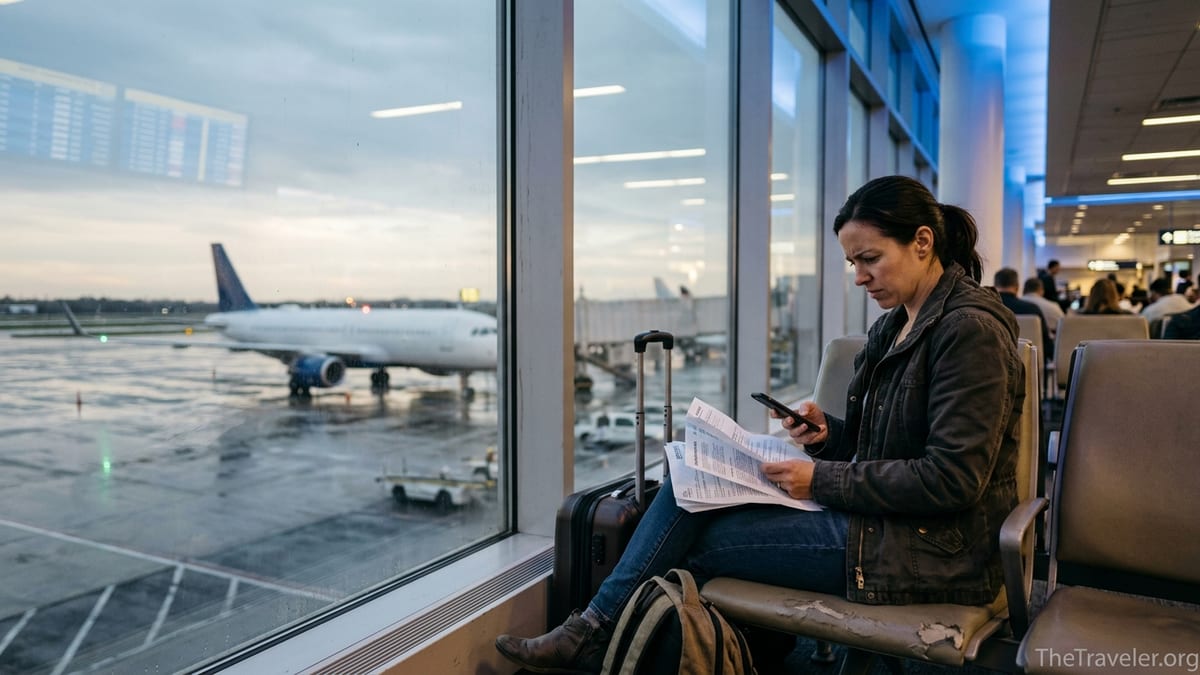
What ReadySet Travel Insurance Actually Is (And Isn’t)
ReadySet is a branded travel insurance product sold primarily to Australian residents, with policies underwritten and administered through specialist insurance partners. You can buy it online by plugging in your destination, dates and traveller details, then choosing a level of cover that ranges from basic to more comprehensive options. On the surface, it looks similar to many other retail travel insurers.
Once you read through the ReadySet Insurance Policy and Product Disclosure Statement, however, you realise that this is a tightly structured product with clearly defined limits and exclusions rather than an all-purpose safety net. The marketing highlights things like overseas medical, cancellation, luggage and rental car excess, but each of those benefits comes with maximum payouts and specific conditions. For example, the policy schedule shows caps per item for baggage and sub-limits for valuables such as laptops, cameras and jewellery, meaning a single stolen mirrorless camera kit worth several thousand dollars may only be partially reimbursed.
Another important nuance is that ReadySet is trip-based cover, not a flexible annual blanket that follows you anywhere. If you are a frequent traveller between Australia and destinations like Bali, New Zealand or Japan, you would need to insure each trip separately and disclose its full prepaid, non-refundable cost if you want cancellation benefits to respond. That structure can still be fine, but it is very different from the “set and forget” coverage some travellers assume they are getting.
The takeaway is that ReadySet is a conventional, rules-driven travel policy with branding layered on top, not a magic “cover everything that might happen” product. Understanding that framing makes it easier to see why buying it without reading the fine print is risky.
Key Gaps and Exclusions You Might Miss at Checkout
The biggest reason I would not buy ReadySet travel insurance blindly is the volume of exclusions that are only obvious if you scroll well beyond the quote screen. The Product Disclosure Statement lists general exclusions that apply to all sections of the policy. These include claims arising from travelling against official “Do Not Travel” warnings from the Australian government, certain high-risk activities, and some pre-existing medical conditions that are not automatically covered.
Consider a common scenario. An Australian couple books a discounted non-refundable package to Phuket for November. At the time they purchase ReadySet cover, the destination has only a “Exercise normal safety precautions” advisory. Months later, political unrest escalates and the government upgrades the advice to “Reconsider your need to travel” or even “Do Not Travel.” If they cancel because they reasonably feel unsafe, they may discover that their policy excludes claims where they were already under a “Do Not Travel” warning at departure or where their reason for cancelling is not on the defined list of covered events. The couple thought they had broad “peace of mind,” but in practice the policy might not reimburse most of their prepaid costs.
There are also common lifestyle-related exclusions. For example, injuries from being intoxicated beyond legal driving limits, from using non-prescribed drugs, or from deliberately putting yourself in danger can all be grounds for declining a claim. Picture a traveller in Queenstown who crashes an e-scooter after a night of drinking. Hospital bills and trip interruption costs might easily run into thousands of dollars, yet an insurer could reasonably argue that intoxication was a contributing factor and rely on exclusion wording to deny the claim.
Another gap many people overlook is coverage during unpaid side trips. Some ReadySet-style policies restrict cover if you work overseas in certain occupations, volunteer in high-risk environments or take part in manual labour outside a short list of acceptable activities. A traveller who spends three weeks in Europe on holiday then “volunteers” for a week building hiking trails in a remote part of the Alps might find that injuries during that final week are excluded because the work was considered hazardous.
Trip Cancellation: Why “Covered Reasons” Matter More Than the Label
Trip cancellation is often the benefit that convinces people to click “Add insurance” during an online booking. ReadySet, like most mainstream policies, offers cancellation coverage if you have to call off your trip for a list of specific, covered reasons. These usually include serious illness or injury, a close family member’s death, major damage to your home, certain natural disasters, or being called for jury duty.
The problem is that every reason outside that defined list is generally excluded. Industry guides from outlets such as MoneyGeek and SmartAsset explain that standard trip cancellation only responds to explicitly named events and that broader “Cancel For Any Reason” coverage, when available, usually reimburses only 50 to 75 percent of your costs and must be purchased within a narrow window after your first deposit. In other words, if your reason to cancel is “I no longer feel comfortable travelling given the news cycle” or “my partner and I separated,” a standard cancellation benefit like ReadySet’s may offer nothing at all.
Imagine booking a $6,000 family cruise and flights from Sydney to Honolulu, then adding ReadySet at checkout because it looks like the simplest option. Three months later, your employer announces a reshuffle and strongly hints that you should be available for interviews during the week you were meant to be at sea. Work pressure is intense, and you reluctantly cancel. Because “fear of losing my job” or “career concerns” are not on the list of covered reasons, your insurer may decline the cancellation claim. You would have been better off with a policy that included a true Cancel For Any Reason upgrade, even if reimbursement was partial.
This is why I pay more attention to the cancellation wording and time limits than to the marketing label on the box. A carefully chosen plan from a comparison site that offers CFAR, or a comprehensive policy from a global provider like Berkshire Hathaway Travel Protection, IMG or another big underwriter can be far more forgiving if your life circumstances change, even if the purchase process is slightly less convenient than tacking ReadySet onto your booking.
Limits, Sub-Limits and Deductibles That Shrink Your Payout
Another trap with buying ReadySet or similar products on autopilot is underestimating how limits, sub-limits and excesses affect what you actually receive when you claim. The headline might say something like “Up to $10,000 luggage cover,” but the policy then caps individual items at a far lower figure and imposes overall limits for categories such as electronics or valuables. If you travel with a modern mirrorless camera body and two quality lenses, it is easy to carry more than $5,000 of gear in one small bag.
Suppose your checked suitcase with camera, laptop and a couple of designer outfits goes missing on the way from Melbourne to Paris. You have declared your trip cost accurately and believe ReadySet will refund you in full. When the claim is assessed, you find the camera reimbursement capped per item, the laptop subject to a separate electronics limit, clothing constrained by a general baggage cap, and a policy excess deducted on top. Instead of the $7,000 you mentally earmarked, your payout might only be a few thousand dollars.
The same logic applies to medical and evacuation cover. ReadySet and comparable products often emphasise a headline figure that looks comforting, but the detail may restrict what is considered “reasonable” in a given country. A serious accident on a US ski trip to Colorado can easily produce hospital bills far exceeding what Australians are used to paying privately at home. Even if the nominal limit looks high, it is important to check whether things like physiotherapy, private ambulance, repatriation to Australia and follow-up treatment are fully covered or sliced into small sub-limits.
Deductibles, or policy excesses, are another quiet way your benefits are trimmed. A seemingly modest excess per claim can become painful when your trip goes wrong in several ways at once. For example, losing your luggage in Rome, then later needing medical care in Athens and filing a trip delay claim after a storm in Dubai could mean three separate excesses eating into payouts that were already limited by sub-limits.
When ReadySet Might Still Be Fine (If You Go In With Eyes Open)
Despite these concerns, I am not arguing that ReadySet is always a bad choice. For some trips and traveller profiles, it can be a reasonable, straightforward option as long as you understand where it shines and where it does not. A simple, low-cost beach holiday from Sydney to Fiji or Vanuatu, with mostly refundable accommodation and limited expensive gear, could be adequately protected by a mid-tier ReadySet plan.
If you are in good health, do not have complicated pre-existing conditions, and are not planning any high-risk activities beyond snorkelling or standard resort excursions, the medical and emergency cover limits may be perfectly acceptable. Likewise, if your flights are booked with an airline that already offers generous rebooking options, and your accommodation is cancellable up to a week before arrival, the financial risk that relies solely on insurance is significantly lower.
ReadySet can also be a defensible choice for travellers who value simplicity over squeezing every last drop of value from a policy. The quote interface is designed to be quick and the branding familiar. If you are setting up coverage for a relative who would never compare multiple insurers or read an 80-page policy, a basic ReadySet plan is still better than travelling completely uninsured.
The catch is that these scenarios all involve relatively low trip costs or low complexity. The more expensive, complex or fragile your plans are, and the more your travel overlaps with work commitments or health questions, the less comfortable I am relying on a one-size-fits-most product like ReadySet without deeper research.
Better Ways to Choose Travel Insurance for Real Trips
Instead of reflexively buying ReadySet, I now approach travel insurance as a separate, deliberate purchase in the same way I would research a long-haul flight or a safari lodge. First, I map out the true financial risk of the trip: non-refundable flights, cruise deposits, prepaid villas, and expensive tours. A trekking permit in Uganda, a non-refundable Antarctic cruise deposit, or a peak-season safari lodge in Botswana can each be worth several thousand dollars on their own.
Then I check what protection I already have. Many premium credit cards in markets like the United States and Australia include built-in travel insurance if you pay for your trip with the card. Products similar to the Chase Sapphire Reserve in the US, or certain platinum-level cards in Australia, can include trip delay, baggage and sometimes even primary medical coverage. If those benefits are already strong, paying extra for a ReadySet-style package that duplicates much of the same ground may not be good value.
Finally, I compare specialist insurers and look specifically for plans that offer Cancel For Any Reason when I am booking far in advance or for a once-in-a-decade trip. Comparison sites and direct providers such as IMG, Berkshire Hathaway Travel Protection and others routinely sell CFAR add-ons that refund 50 to 75 percent of your costs if you cancel within a specified time window, regardless of whether your reason fits a standard list. Industry explainers from NerdWallet and Forbes Advisor highlight that CFAR usually has to be purchased within 10 to 21 days of your first deposit, which is precisely the kind of small print you never see when you buy a generic add-on at checkout.
This structured approach takes an extra half hour, but it means that when I do purchase a plan, I know broadly what I am covered for, which exclusions matter to my specific trip, and where the gaps are that I am willingly accepting. That is very different from trusting a brand name and hoping everything works out.
The Takeaway
ReadySet travel insurance is not uniquely terrible or uniquely wonderful. It is a branded, rules-based product that may suit some travellers and trips but is far from the universal safety net its marketing tone can imply. The core problems with buying it blindly are the same problems that come with any travel insurance you do not fully understand: long lists of exclusions, strict cancellation criteria, sub-limits that quietly shrink your payout, and fine print around pre-existing conditions or government travel warnings.
If you are planning a modest, mostly refundable holiday and you have read the Product Disclosure Statement carefully, a ReadySet policy could offer acceptable peace of mind. If, on the other hand, you are booking an expensive bucket-list journey, juggling uncertain work or health situations, or simply want the flexibility to change your mind for reasons that are hard to predict, you will probably be better served by a more tailored policy with options like Cancel For Any Reason, higher limits and clearer wording.
Travel is full of uncertainty. Insurance will never remove that uncertainty, but it can soften the financial blow when the unexpected happens. The key is to treat travel insurance as a serious purchase, not a checkbox next to your flight or hotel booking. With ReadySet, as with any policy, the question is not “Is this brand good?” but “Does this specific coverage match the real risks of the trip I am actually taking?” If you cannot confidently answer yes, do not buy it on autopilot.
FAQ
Q1. Is ReadySet travel insurance a scam? ReadySet is a legitimate branded travel insurance product, but like any policy it has detailed exclusions and limits, so it is not a scam, just something you must understand before buying.
Q2. Does ReadySet cover cancellation if I simply change my mind about travelling? In most cases, standard ReadySet-style cancellation only covers defined reasons such as illness or serious family emergencies, not a simple change of mind or general nervousness about travelling.
Q3. Will ReadySet cover me if the Australian government issues a “Do Not Travel” warning after I book? Policies often exclude travel when a “Do Not Travel” warning is in place at the time you depart, and cancellation cover may not apply unless the advisory falls within the policy’s listed covered reasons, so you need to check the wording carefully.
Q4. How does ReadySet compare with Cancel For Any Reason (CFAR) insurance? ReadySet generally works on a “named reasons” basis, while true CFAR coverage is an upgrade sold by certain insurers that lets you cancel for almost any reason but usually only reimburses part of your costs and must be bought soon after your first deposit.
Q5. Are my camera and laptop fully covered under ReadySet baggage benefits? Baggage cover typically includes per-item and category sub-limits for valuables and electronics, so expensive cameras and laptops may only be partially reimbursed if lost, stolen or damaged.
Q6. Does ReadySet automatically cover pre-existing medical conditions? Many travel policies either exclude pre-existing conditions or require you to meet strict criteria or pay extra for cover, so you should not assume your existing conditions are protected without confirming in the policy schedule.
Q7. Is ReadySet good enough for an expensive cruise or safari? It might be, but for high-cost, non-refundable itineraries I would usually look for higher limits and optional CFAR coverage rather than relying solely on a basic ReadySet-style plan.
Q8. Can I rely on ReadySet if I work or volunteer overseas during my trip? Coverage can be restricted for certain kinds of work or volunteering, especially anything manual or high risk, so you need to confirm that your planned activities are not excluded.
Q9. Is the travel insurance on my credit card better than ReadySet? It depends on the card; some premium cards offer strong built-in coverage, while others are quite limited, so you should compare their benefits and exclusions with ReadySet before deciding which is more suitable.
Q10. When is ReadySet travel insurance a reasonable choice? ReadySet can be reasonable for relatively simple, lower-cost trips when you are healthy, your plans are not overly complex or time-sensitive, and you have taken the time to read and accept the policy’s fine print.