


Set deep in Alberta’s Banff National Park and framed by the jagged peaks of the Canadian Rockies, Lake Louise Ski Resort has a reputation that reaches far beyond Canada. Skiers fly in from Europe, Australia, and across the United States not only for its snow and terrain, but for the rare combination of scenery, convenience, and reliable winter conditions. For many, a first trip to Lake Louise quickly turns into a destination they plan to revisit again and again.
Get the latest updates straight to your inbox!
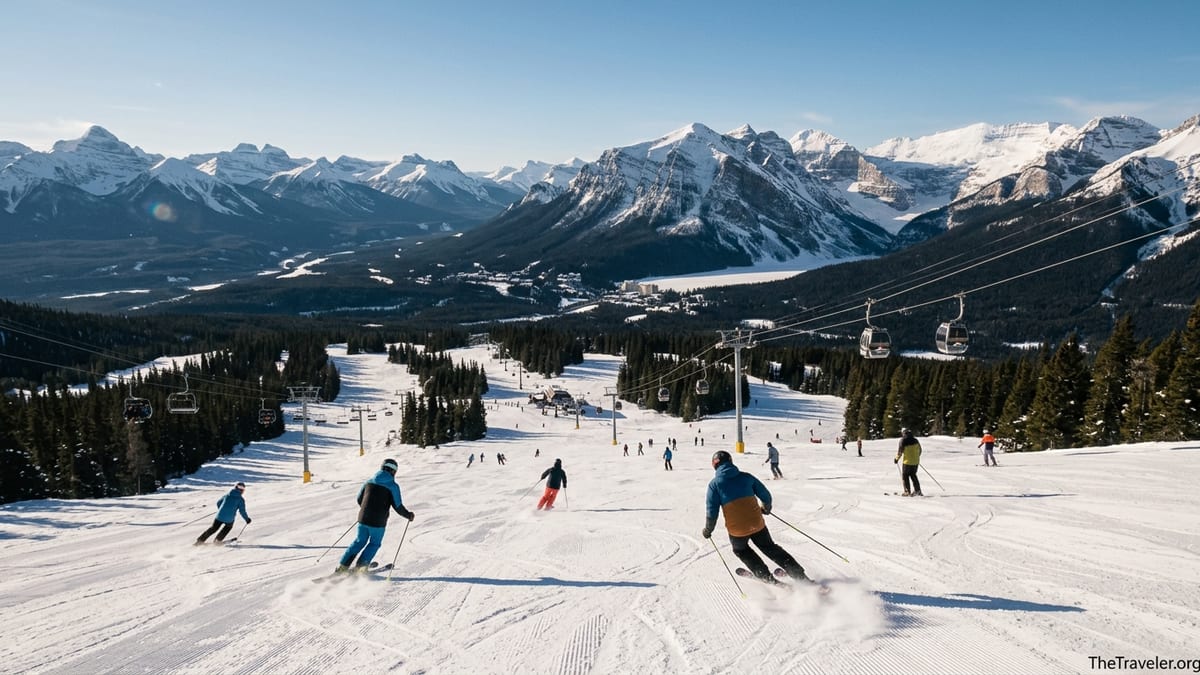
Spectacular Rocky Mountain Setting in a National Park
Lake Louise Ski Resort sits inside Banff National Park, a UNESCO World Heritage Site, which immediately sets it apart from many North American ski areas. As you ride the Grizzly Express gondola from the base, the view opens to a panorama of snow-covered peaks, including Mount Temple and the surrounding Bow Valley. On clear midwinter days, you see layer upon layer of ridgelines marching off toward the British Columbia border, an outlook you simply do not get at smaller hill-side ski areas.
What guests notice first is how wild the landscape feels. Unlike resorts surrounded by dense condo developments, the base at Lake Louise is compact and low-rise. When you step off the gondola at the summit in January, it feels like you are standing on an alpine ridge rather than at the top of a heavily built-up resort. Tree-lined runs drop away on all sides, and the back bowls fall into vast natural amphitheaters. Even on busy holiday weeks, it is still possible to stand on a ridgeline for a moment and hear nothing but wind and the distant scrape of skis.
The setting also shapes the experience off the snow. After skiing, many visitors detour to the actual lakeshore at Lake Louise village to watch alpenglow on the glacier and, in deep winter, see the ice castle and skating rink that are usually maintained in front of the famous chateau hotel. Packages that combine a ski day with an evening sleigh ride along the frozen lake or snowshoeing in the nearby forest trails are common, and they underline why the area feels like far more than just a ski hill.
Because the resort is inside a national park, there is a clear emphasis on preserving the environment. Guests must purchase a Parks Canada pass, and parking areas and access roads are carefully managed to limit congestion. Travelers often remark that this stewardship lends the resort a more relaxed, natural character compared with highly commercialized mountain towns.
Big-Mountain Terrain: 4,200 Acres Across Four Faces
Lake Louise ranks among Canada’s largest ski areas, with about 4,200 acres of skiable terrain spread over multiple mountain faces. Official mountain statistics list a vertical rise of roughly 991 meters, or 3,250 feet, from the upper lifts down to the base area, and a longest continuous run of about 8 kilometers from top to bottom. For a visiting skier, that translates into thigh-burning descents and enough variety to keep an advanced rider busy for several days without repeating the same line.
The terrain is roughly divided into several distinct zones. The front side, immediately above the base, offers wide groomers, gentle learning slopes, and tree-lined blue runs. Behind the summit ridge lie the back bowls, a series of open powder basins and steeper faces that are favored on storm days. Off to one side, the Larch area adds another pod of chairlift-served runs with its own mix of glades and rolling pistes. This layout means you can chase the best snow and light throughout the day, moving from the sunny south-facing slopes in the morning to the shaded, colder aspects when the snow softens in the afternoon.
In practice, skiers often follow a pattern: warm up with a top-to-bottom cruiser like the long green run from the summit chair, then move toward more challenging lines off the Top of the World or Summit chairs once their legs are ready. On big powder days, riders will lap the bowls off the summit, using short traverses to reach untracked pockets. Because there are multiple ways off each ridge, the area does a good job of absorbing crowds and keeping lift lines manageable outside major holidays.
The extensive terrain also makes Lake Louise a natural base for longer Rockies itineraries. Many international guests book a week in the area, skiing three or four days at Lake Louise and then using the SkiBig3 shuttle system to spend a couple of days at nearby Sunshine Village or Mount Norquay. That broader network of mountains, all within roughly 45 minutes of each other, is a major reason Lake Louise appears regularly in “top resort” rankings.
Thoughtful Layout for All Levels, From First Timers to Experts
One feature that experienced ski travelers consistently praise is Lake Louise’s inclusive mountain design. Resort statistics show that around 25 percent of marked runs are rated beginner, 45 percent intermediate, and 30 percent advanced or expert. More important than the percentages, however, is how the runs are arranged. From almost every major lift, there is at least one green, blue, and black route back down. This is not just a marketing phrase; it has real benefits for mixed-ability groups.
Imagine a family visiting during spring break: one parent is an expert skier who seeks glades and steeps, while the other is a cautious cruiser, and the kids are on the edge between green and blue terrain. At Lake Louise, all of them can ride the same chair together, then choose different runs off the top. The advanced skier might peel off to a mogul field or a short hike-to chute, while the rest of the family descends a wide groomed run to the same meeting point at the bottom. Over the course of a week, this common starting point keeps the group connected instead of split between different areas of the mountain.
Beginner facilities at the base include a gentle learning area served by a magic carpet and a short chairlift, allowing first-timers to progress without being intimidated by steep slopes or fast traffic. In a concrete example, a visitor taking a two-hour starter lesson with the ski school in early December will usually begin on the magic carpet, then move to the adjacent green run once they can make basic turns. By the second or third day, many are comfortable riding the main gondola and skiing an easy green route from mid-mountain, an experience that feels much more like “real” skiing than staying on a fenced-off nursery slope.
For advanced and expert skiers, the resort’s bowls and tree runs provide the challenge they expect from a premier destination. On the backside, areas under the Summit chair often develop deep powder stashes after storms, and the West Bowl offers natural terrain features such as gullies and rollovers. On cold January days with fresh snow, local skiers are known to line up for first chair to reach these zones, and it is not uncommon to find knee-deep turns while intermediate groomers on the front side remain corduroy.
Snow Quality, Long Season, and Reliable Winter Conditions
At first glance, Lake Louise’s annual snowfall totals can appear more modest than some coastal resorts, but the quality of the snow often compensates. The resort sits at a relatively high elevation, with a top station over 2,600 meters, and inland from the Pacific coast. That geography usually results in lighter, drier powder compared with the heavier, wetter snow, sometimes called coastal cement, that skiers encounter in maritime climates. On many midwinter days, especially in January and February, snow underfoot has the cold, squeaky texture that experienced skiers prize.
Another strength is season length. Lake Louise typically aims to open in early November and run into early May, depending on weather and conditions. In practice, that can give travelers a window of roughly six months to plan a visit. Early-season skiers based in Calgary sometimes drive up for weekend laps in November when only a few front-side runs are open, taking advantage of discounted pre-Christmas lift ticket deals. Spring visitors in late April, by contrast, might ski soft corn snow in T-shirts at midday and then return to Banff townsite for a patio drink in the afternoon sun.
Snowmaking covers key lower-mountain routes, helping to maintain continuous top-to-bottom skiing even in drier periods. Grooming teams focus on maintaining several dependable green and blue routes each day, so less experienced guests are not as affected by variable conditions. On a practical level, this means that if a warm spell hits in March, beginners can still find forgiving corduroy on the main pistes each morning, while experts search higher elevations and shadier aspects for preserved powder.
Because temperatures can drop significantly, especially in December and January, the resort encourages guests to dress in multiple layers, use face protection, and carry spare mittens for children. Many visitors plan their ski days around the cold by taking an early lunch in the main lodge, then skiing the sunniest aspects during the short afternoon window when temperatures are more comfortable. These small strategies help turn potentially harsh midwinter conditions into memorable bluebird days.
Access, Transport, and Pass Options
Lake Louise’s location, around two hours by road from Calgary International Airport and roughly 60 kilometers from Banff town, is a key reason it works so well as a destination for overseas visitors. After landing in Calgary, travelers can board scheduled shuttle buses that run directly to accommodations in Banff or to hotels near Lake Louise village. Many winter packages sold through North American and European tour operators include airport transfers, lodging, and lift tickets, making the logistics straightforward even for first-time visitors who are nervous about driving in snow.
Once in Banff or Lake Louise, guests can use the SkiBig3 or resort-operated ski shuttles to reach the slopes. For example, a guest staying in downtown Banff in January might board a morning bus around 8:00 a.m., ride for about 45 minutes up the Trans-Canada Highway, and be unloading their skis at the Lake Louise base area in time for first gondola. The cost of these shuttles is often included with multi-day lift tickets or season passes, so there is no need to handle separate bus fares each day.
For drivers, the resort provides large surface parking lots at the base. During peak holiday periods, these lots can fill by mid-morning, and local advice is to arrive before 9:00 a.m. or plan to park slightly farther away and walk. Because the approach road and parking areas are inside the national park, winter tires are strongly recommended, and visitors must factor in the cost of a park pass on top of fuel and parking.
Lake Louise is also featured on several major multi-resort ski passes, such as Ikon Pass and Mountain Collective, in addition to the regional SkiBig3 pass. This arrangement appeals to experienced skiers who may combine a week in the Canadian Rockies with shorter trips to other resorts in North America or overseas. A traveler from Colorado, for instance, might already own an Ikon Pass, which covers their lift access at Lake Louise and Sunshine Village, allowing them to spend more of their budget on lodging upgrades or guided experiences.
On-Mountain Services, Ski School, and Family Amenities
For a resort to be considered truly premier, it must offer more than just impressive terrain, and Lake Louise delivers a solid suite of on-mountain services. The main base lodge houses ticketing, equipment rental, gear shops, and multiple dining options ranging from quick-service cafeterias to sit-down venues. This is where many families start and end their day, renting skis for the kids, grabbing breakfast sandwiches before first chair, and later regrouping for hot chocolate in the mid-afternoon.
The ski and snowboard school at Lake Louise caters to all ages and levels, with group lessons, private coaching, and specialty programs. A practical example is a three-day children’s camp over a February long weekend: youngsters are dropped off at the base each morning, spend the day with certified instructors who focus on turning, stopping, and safe slope behavior, and then rejoin their parents mid-afternoon having gained the confidence to ski green and easy blue runs. Adult visitors often book a half-day private lesson on their first full day to learn the layout and pick up tips on where to find the best snow that week.
Lake Louise also offers complimentary mountain orientation tours led by local hosts, sometimes known as Ski Friends. These tours, typically scheduled once or twice daily, group guests by ability and show them a selection of suitable runs, shortcuts, and viewpoints over a couple of hours. For newcomers, joining one of these tours on arrival day is an efficient way to learn how the front side, back bowls, and Larch areas connect without spending half the morning studying a trail map.
For non-skiers or those seeking a change of pace, the resort provides additional activities such as tubing, snowshoeing, and scenic gondola rides. A couple visiting in early March might spend one day skiing, another day riding the gondola purely for sightseeing and photography at the summit, and a third day renting snowshoes for a guided walk through the surrounding forest. These alternatives make it easier for multi-generational groups to travel together, since grandparents or non-skiing partners can still enjoy the mountain environment without strapping on skis.
Value, Lodging Choices, and Multi-Resort Itineraries
Lake Louise is not the least expensive place to ski in Canada, but many visitors find that it delivers strong value when judged against its terrain, scenery, and services. Lift ticket prices vary by season and whether guests book in advance, but significant discounts are often available for multi-day passes purchased through SkiBig3 or as part of package deals. Families who plan early and avoid peak holiday periods can often secure four or five days of skiing at a reasonable per-day cost compared with big-name resorts in the United States.
Accommodation options range from high-end lakeside hotels near the frozen lake itself to more moderately priced lodges and motels in Lake Louise village and nearby Banff. A common strategy for budget-conscious travelers is to stay in Banff, where there is a wider selection of mid-range hotels and vacation rentals, then ride the shuttle to Lake Louise for skiing. Others choose to split their trip, spending a few nights in Banff for nightlife and dining, followed by a quieter stay near Lake Louise to enjoy early starts at the resort and evenings in a more tranquil setting.
Because Lake Louise forms part of the SkiBig3 grouping with Sunshine Village and Mount Norquay, it fits naturally into multi-resort itineraries. A typical one-week trip for intermediate skiers might include two days at Lake Louise to explore the bowls and long groomers, two days at Sunshine Village for high-alpine terrain, and a day at Mount Norquay for a smaller, local-hill atmosphere and night skiing. Travel between these areas is made simpler by included shuttle buses, which allow guests to leave their rental car parked or skip car hire altogether.
Off-slope, both Banff and Lake Louise offer classic Canadian Rockies experiences that round out the value proposition. Visitors can soak in the Banff Upper Hot Springs after a long ski day, join guided ice walks in Johnston Canyon, or simply stroll through Banff Avenue’s shops and restaurants. The combination of big-mountain skiing and a wide range of winter activities contributes strongly to Lake Louise’s reputation as a complete destination rather than just a day-trip hill.
FAQ
Q1. How difficult is the terrain at Lake Louise Ski Resort for beginners?
Lake Louise has a substantial amount of beginner terrain, including a dedicated learning area at the base and gentle green runs from several lifts. Many first-timers start on the magic carpet and short chairlift before progressing to longer green runs from mid-mountain over the course of a few days.
Q2. When is the best time of year to ski at Lake Louise?
The core ski season typically runs from late November to early April, with the resort often opening earlier and closing later depending on conditions. January and February usually offer the coldest temperatures and driest snow, while March and early April often bring longer days, milder weather, and good spring skiing.
Q3. Do I need a car to reach Lake Louise from Banff or Calgary?
A car is convenient but not essential. Many visitors use airport shuttles from Calgary to Banff or Lake Louise, then rely on daily ski buses to reach the resort. These shuttles are frequently included with multi-day lift tickets or passes, allowing guests to avoid winter driving and parking hassles.
Q4. Is Lake Louise suitable for families with children?
Yes, Lake Louise is very family-friendly. The resort offers ski school programs for kids, gentle beginner slopes near the base, and a layout where different levels can ride the same lifts but choose runs that suit their abilities. On-mountain dining and warm indoor spaces make it easier to manage breaks with younger children.
Q5. How crowded does Lake Louise get during peak periods?
Holiday weeks and sunny weekends can be busy, especially in parking areas and at the main gondola first thing in the morning. However, the large skiable area and multiple lift pods help spread people across the mountain. Arriving early, using shuttle buses, and exploring beyond the front side can reduce the feeling of crowding.
Q6. What kind of snow conditions should I expect?
Snow at Lake Louise is typically cold and relatively dry because of its elevation and inland location. Midwinter often brings light powder, while late season can feature a mix of packed powder and soft spring snow. Snowmaking on key lower runs helps maintain good coverage even during lean periods.
Q7. Are there activities for non-skiers at Lake Louise Ski Resort?
Non-skiers can ride the gondola for sightseeing, try tubing, join guided snowshoe excursions, or simply relax in the base lodge and enjoy the mountain scenery. Many visitors also combine a ski day with visits to the nearby lake, sleigh rides, or ice skating in Lake Louise village.
Q8. What passes or tickets offer the best value?
Value depends on how long you are staying and whether you plan to visit other resorts. Multi-day SkiBig3 passes can be economical for trips of several days, while Ikon Pass and Mountain Collective holders may already have Lake Louise days included and only need to budget for lodging and food.
Q9. How high is the resort, and will altitude be an issue?
The top lifts at Lake Louise reach over 2,600 meters, with a vertical drop of about 3,250 feet to the base. Most guests coming from low altitude notice little more than slightly quicker fatigue on their first day. Staying hydrated, pacing yourself, and taking breaks can help ease any mild altitude effects.
Q10. Can I combine a visit to Lake Louise with other nearby ski areas?
Yes, many travelers plan multi-resort trips. Lake Louise is part of the SkiBig3 group with Sunshine Village and Mount Norquay, all within roughly a 45-minute drive of each other. Shuttle buses, shared passes, and package deals make it straightforward to ski all three areas in a single vacation.