


More news on this day
From newly launched Italian icons to reinvented British sleepers, high-end rail journeys are enjoying a striking global revival as affluent travelers rediscover the romance and slowness of the rails.
Get the latest news straight to your inbox!
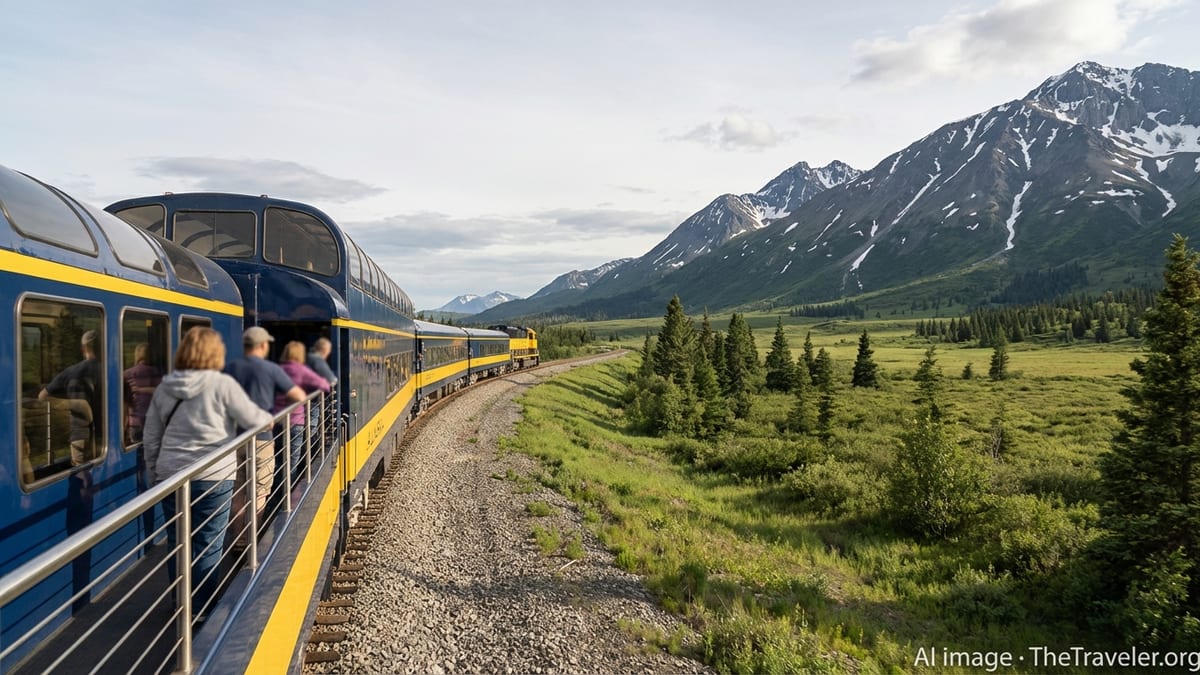
A New Golden Age on the Rails
Industry reports and recent launches indicate that luxury train travel is entering a new golden age, driven by a mix of nostalgia, sustainability concerns and post-pandemic lifestyle shifts. Consultancy analyses of global travel spending show a sharp rebound in premium leisure travel in 2024, with rail capturing a growing slice of high-end itineraries as travelers search for alternatives to crowded airports and short-haul flights.
Operators describe record-breaking interest. Rail-focused tour companies report that multi-week, round-the-world itineraries by luxury train have sold out well ahead of departure, with long waiting lists already building for 2026 departures. This level of demand signals that rail is no longer a niche curiosity but a central pillar of the modern luxury travel portfolio.
At the same time, regulators and rail manufacturers in Europe refer to a broader night train “renaissance”, pointing to a new generation of sleeper rolling stock that departs from decades of stagnation. While not all of these services are ultra-luxury, they create a halo effect that normalizes overnight rail as a desirable, even glamorous, way to cross a continent.
Within this wider revival, a handful of flagship trains are setting the pace with couture interiors, fine dining partnerships and cinematic itineraries, reshaping rail from simple transport into a moving, multi-day travel experience.
Italy’s La Dolce Vita and the Rise of Rail Cruising
Few launches capture the current moment as vividly as La Dolce Vita Orient Express, which began welcoming guests in Italy in 2025 after years of anticipation. Publicly available information from the operator describes the train as a kind of “rail cruise,” offering one to three night itineraries that loop through Italy rather than simply shuttling between two cities.
The design, by Milan-based Dimorestudio, leans unapologetically into the glamour of 1960s Italy, with lacquered finishes, warm woods and midcentury silhouettes that evoke vintage Cinecittà sets. The train carries a maximum of around 62 guests in cabins and suites, creating a low-density environment that stands in stark contrast to mass-market tourism. Onboard dining programs, developed in collaboration with Michelin-starred chefs, turn each meal into a tasting tour of regional Italian ingredients.
Travel and lifestyle coverage notes that La Dolce Vita operates multiple themed itineraries from Rome, tracing more than 16,000 kilometers across Italy’s regions and coastal stretches. Journeys might link the capital with Sicily, alpine landscapes or lesser-known wine regions, with off-train excursions curated to showcase local culture and gastronomy. The focus is less on speed and more on immersion, often with panoramic lounge cars designed for lingering over aperitivi as the countryside slides past.
This “rail cruise” model, in which the train itself is both hotel and destination, is quickly becoming a blueprint for new high-end services from Europe to Asia, reinforcing the idea that romance and indulgence are now central to rail’s comeback story.
Britain’s Britannic Explorer and the Cinematic Carriage Boom
In the United Kingdom, Belmond’s Britannic Explorer, which launched its first journeys in July 2025, has opened a new chapter in luxury sleeper travel across England and Wales. Company statements describe it as the first dedicated luxury sleeper to weave round-trip routes from London through Cornwall, the Lake District and the Welsh coast, positioning the train as a roving country-house hotel for the rail set.
Beyond the routes themselves, a striking trend is emerging inside the carriages: collaborations with internationally known creatives that turn single rail cars into design objects. Belmond’s Venice Simplon-Orient-Express has introduced L’Observatoire, a spacious private carriage designed by French artist JR and set to operate as the most expansive accommodation type on that legendary train. Media materials highlight marquetry, a dedicated tea room and even an oculus for stargazing as part of the suite’s appeal.
In early 2026, British Pullman, another Belmond train, unveiled news of Celia, a new “cinematic” carriage conceived with a BAFTA-winning filmmaker, adding to earlier collaborations that saw director Wes Anderson reimagine an existing carriage in pastel hues. Design and lifestyle coverage frames these projects as part of a broader movement to transform train interiors into immersive, narrative spaces that feel closer to film sets or galleries than traditional rolling stock.
These artistic interventions tap directly into the emotional pull of rail travel. By fusing storytelling, heritage and high design, they heighten the sense that guests are stepping into a curated scene rather than simply embarking on a journey, a key reason many travelers describe modern luxury trains as “moving theaters” or “time machines.”
Asia’s Icons and the Global Spread of Slow Luxury
The resurgence is not confined to Europe. In Southeast Asia, the Eastern and Oriental Express returned to service in 2024 after a multiyear pause, reemerging with refreshed cabins and updated itineraries through Malaysia and Singapore. Public information on the train’s 2024 fare structure shows four day, three night journeys priced in the several thousand dollar range, positioning it firmly in the luxury bracket.
Travel coverage emphasizes how these itineraries pair jungle-fringed landscapes and historic cities with white-linen dining cars and classic observation lounges. The experience recalls the early twentieth century era of rail glamour while incorporating contemporary expectations, from climate-controlled suites to refined regional cuisine. The result is a kind of curated nostalgia that resonates strongly with travelers seeking both comfort and connection to place.
In India, long-running luxury trains such as Maharajas’ Express continue to market palace-style interiors and royal heritage routes, while new or relaunched services across Japan and the Middle East similarly highlight slow, scenic itineraries. Each of these trains positions itself not simply as a way to move between cities but as a high-touch, multi-night journey where the changing landscape is central to the appeal.
Industry analysts observing these developments note a broader shift in global luxury, with affluent consumers prioritizing experiences, wellness and cultural immersion over material goods. Train journeys that combine unhurried pacing, social dining and generous private space are well placed to capture this demand, particularly among travelers who view flying as stressful or environmentally problematic.
The Heart-Stopping Reason: Romance, Space and the Search for Quiet
Behind the flurry of new launches and redesigned carriages lies a more emotional driver for luxury rail’s resurgence: a renewed desire for romance and quiet in how people move through the world. After years of travel disruptions and crowded terminal experiences, many high-end travelers appear to be revaluing slowness, privacy and narrative-rich journeys over speed.
Surveys of affluent consumers by major consulting groups, cited in recent lifestyle and business features, show a clear turn toward “authentic” and “immersive” travel, as well as a preference for modes that feel less transactional than short flights or mega-ship cruises. Luxury trains answer that call by stretching the journey itself into the main event, complete with cabins that function as personal sanctuaries and public spaces designed for lingering rather than rushing.
The romance is not only aesthetic. Night trains in particular offer the emotional punch of falling asleep as one landscape fades and waking to another, with little of the physical or psychological strain associated with long-haul flights. Shared dining tables, observation lounges and bar cars encourage chance encounters, giving solo travelers and couples alike a sense of community that still feels exclusive and curated.
Crucially, many of these services frame their itineraries through the lens of storytelling, whether that means retracing historic trade routes, following literary journeys or spotlighting regional culinary narratives. For travelers saturated with digital experiences, the combination of tactile craftsmanship, window-framed scenery and clear narrative arcs appears to deliver exactly what they crave: a heart-stopping reminder that travel can still feel magical, not merely efficient.