


For a growing number of frequent flyers, expats, and digital nomads, the default recommendation is no longer a big, global bank. Instead, many are quietly switching to bunq, a Dutch-born mobile bank that has built a loyal following among people who spend much of their lives crossing borders. While giants like Revolut, Wise, and traditional banks still dominate headlines, bunq has carved out a niche with features that feel designed for travelers in the real world, not just on marketing pages.
Get the latest updates straight to your inbox!
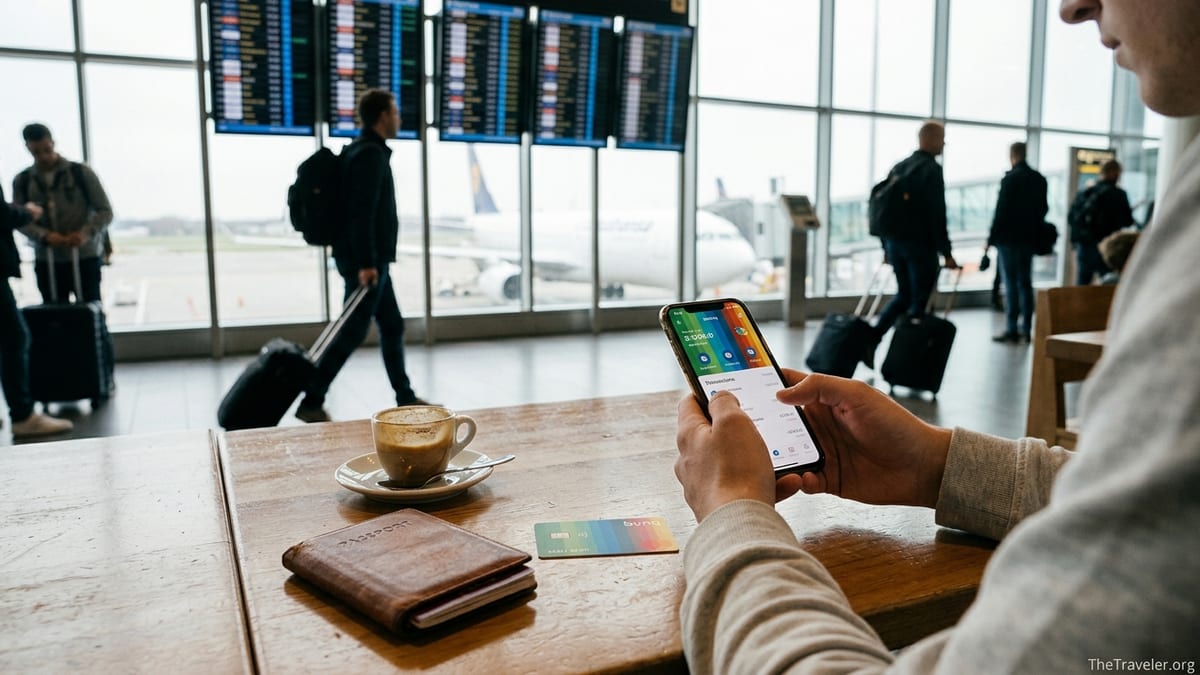
From Niche Dutch Neobank to Traveler’s Companion
Bunq started in the Netherlands as a challenger bank positioning itself as the “bank of the free,” and it now operates under a full European banking license with deposit protection up to 100,000 euros via the Dutch guarantee scheme. That already makes it different from some big-name fintech apps that still operate as e-money institutions in many markets, where balances are safeguarded but not protected in the same way as a bank deposit. For long-term travelers who may hold several thousand euros in their main account while hopping between countries, that extra layer of security is a practical comfort.
Over the last few years, bunq has gradually evolved from a quirky local player into a serious alternative for people who move around Europe and beyond. Independent comparisons of neobanks now routinely mention bunq alongside Revolut, N26, and Wise, often highlighting that all four compete hard on foreign exchange, ATM fees, and multi-currency tools. At the same time, reviewers frequently point out that bunq’s plans focus more on everyday banking plus travel rather than trying to be an all-in-one super app with crypto, stock trading, and other extras.
For a traveler based in, say, Berlin or Barcelona, the story often begins with a simple question: which card will save me the most money and hassle on a two-month trip through Southeast Asia or Latin America? As they start comparing hidden foreign transaction fees and ATM charges, bunq’s ZeroFX feature, virtual sub-accounts, and real-time card controls stand out. The decision to move their travel money away from a large traditional bank or a feature-stuffed fintech can come down to specific details like how fees are displayed in the app, how fast support responds when a card is blocked, and how easy it is to open local-style accounts such as an IBAN for salary or rent.
Real-World Savings on Foreign Transactions
One of the main reasons travelers turn to bunq is that it can significantly cut the cost of paying in foreign currencies. Most traditional banks still add a foreign transaction fee of around 2 to 3 percent on every purchase abroad, sometimes hidden inside a poor exchange rate. A traveler using a standard debit card from a major European bank in New York might find that a 100 dollar restaurant bill ends up costing a few euros more than expected once the bank’s markup is applied and posted a few days later.
Bunq’s ZeroFX system is designed to address that pain point. Instead of the kind of 2 to 3 percent markups common at legacy banks, bunq uses the real Mastercard exchange rate and then adds a small 0.5 percent adjustment for currency fluctuations when you spend in a non-euro currency. Official help documentation explains that this 0.5 percent network fee replaces the larger foreign transaction charges usually baked into bank card rates. In practice, that means that if a traveler from Amsterdam spends the equivalent of 1,000 euros across a week in Japan, they might pay roughly 5 euros in FX costs with bunq compared with 20 to 30 euros at many big banks.
Consider a couple spending three weeks in Mexico, paying hotels, restaurants, and car rentals mostly by card. On a trip where they spend 2,500 euros in foreign currency, a typical 2.5 percent markup would quietly absorb about 62.50 euros. Using a bunq card with ZeroFX, the same 2,500 euros in card payments would roughly incur around 12.50 euros in FX fees. Over multiple trips each year, those differences add up to the price of several nights in a mid-range hotel or multiple long-distance train tickets in Europe.
Travelers also appreciate that bunq shows conversion details transparently inside the app, usually within seconds of a transaction being approved. When a traveler taps their phone at a coffee shop terminal in Bangkok or Cape Town, the bunq app quickly displays the local-currency amount, the euro equivalent, and the rate used. This near-real-time feedback makes it easier to spot when a merchant or ATM tries to apply dynamic currency conversion, something seasoned travelers learn to avoid because it often adds another layer of hidden fees on top of the bank’s own charges.
Multi-Account Flexibility vs One-Size-Fits-All Banking
A key feature that sets bunq apart from many bigger apps is how easy it makes it to create and manage multiple sub-accounts within a single plan. Users on mid- to higher-tier plans can open numerous IBAN-based accounts inside the same app and link physical or virtual cards to each one. For travelers, this becomes a powerful budgeting and safety tool. You might have one account dedicated to rent and bills back home, another for day-to-day spending, and a separate “Travel Japan 2026” account loaded with a specific budget before your flight.
Imagine a digital nomad who splits the year between Lisbon, Chiang Mai, and Tbilisi. Instead of juggling separate accounts at different banks, they can keep most of their savings in a main bunq account and then spin up trip-specific sub-accounts in seconds. One card could be linked to a “Co-living & Rent” account used to pay monthly rent in Portugal, while a separate virtual card is tied to a “Flights & Hotels” account that only holds the amount they are willing to risk on online bookings. If a website is compromised or a merchant double-charges, the damage is contained to that sub-account rather than spilling across all their funds.
Larger banking apps often provide basic savings spaces or vaults, but bunq’s system is deeply integrated with card routing and real-time rules. Users can automatically round up card payments into a savings account for the next trip or set fixed budgets that show exactly how much is left for transport, food, or activities in a particular country. Compared to more rigid banking structures at traditional institutions, where opening an extra account can involve paperwork, branch visits, and ID checks, bunq’s tap-to-create approach makes it easier to adapt your financial setup to how you actually travel.
Fees are the trade-off. Independent reviews in 2026 note that unlike some competitors that retain a free tier, bunq’s main packages all charge a monthly fee, with core plans starting at a few euros per month and rising to higher prices for premium and “Elite” tiers with extras like travel insurance. For some travelers who only leave the euro area once a year, paying a recurring fee might not make sense. For those living on the road or flying regularly, the cost is often justified by both the fee savings on foreign payments and the added control over how their money is partitioned between different trips and responsibilities.
ATM Access and Practicalities on the Road
Cash is still unavoidable in many destinations, even in places where mobile payments and cards are widely accepted. Compared with household-name banks or fintech giants, bunq’s approach to ATM withdrawals sits in the middle in terms of cost and flexibility. Research into 2026 fee comparison charts for neobanks shows that bunq offers a number of free or low-cost ATM withdrawals on its mid and top-tier plans, while lighter plans often involve a small fee per withdrawal after a limited allowance. By contrast, some traditional banks in Europe apply a standard fee on every non-euro withdrawal plus their own FX markup, which quickly becomes painful if you need cash several times a week.
In real terms, a traveler with bunq in Thailand might withdraw the equivalent of 200 euros three times during a month-long stay. They will still face the local ATM operator’s fee, which in countries like Thailand or Mexico can be in the range of a few euros per withdrawal, but bunq itself will usually charge less than a typical big-bank card for the same series of cash advances. On higher plans that include free or discounted foreign withdrawals, users can draw cash at foreign ATMs within their monthly allowance and pay only the tiny FX fee bundled into ZeroFX, rather than a separate foreign cash handling charge from their home bank.
Where bunq’s ATM offering sometimes feels weaker than bigger apps is in the absence of a huge proprietary ATM network or extensive promotional partnerships. Traditional players such as major US banks can piggyback on global networks that waive or reimburse foreign ATM fees at thousands of partner machines. Some digital banks like N26 offer a clear quota of fee-free withdrawals worldwide on premium plans, while Wise tends to focus on low-cost currency conversion but has tighter limits on free cash withdrawals. For a traveler who relies heavily on cash or spends long stretches in countries where card acceptance is patchy, it can still be worth keeping a backup card alongside bunq.
That said, many modern travelers find they need less cash than ever before, particularly in card-friendly cities across Europe and East Asia. In these environments, bunq’s strength lies more in its low-friction, tap-to-pay functionality and Apple Pay or Google Pay integration than in deep ATM integration. The app notifies you instantly of every card or wallet transaction, whether you are paying a metro fare in Paris or a small street food bill in Seoul, giving a running, algorithm-free view of how your travel budget is holding up.
Security, Control, and Peace of Mind Abroad
Security is another area where bunq’s design choices appeal directly to people on the move. Since bunq is built as a mobile-first bank, almost everything can be controlled from the app: freezing and unfreezing cards, changing PINs, enabling or disabling contactless payments, and even disabling magnetic stripe transactions in regions where they are prone to fraud. For a traveler who loses a wallet on a night bus in Vietnam or suspects skimming at a petrol station in Italy, the ability to tap a button and instantly block a card is more than a convenience. It can make the difference between a minor annoyance and a week-long banking crisis.
A typical scenario involves a solo traveler staying in a hostel in Buenos Aires who notices a small unfamiliar charge in their bunq app. Within seconds, they can freeze the specific card that was used, move the remaining balance into another sub-account, and create a new virtual card for ongoing purchases. Some bigger banks technically offer similar features but often hide them inside complex menus or require a call to a service line that may or may not be reachable from abroad without extra fees. Bunq’s tight focus on mobile control reduces that friction.
Travelers also appreciate bunq’s real-time notifications and geographic insight features. The app automatically keeps a log of countries where you have used your card, helping you retrace your spending across multiple trips. Sizeable or unusual transactions trigger alerts that feel more proactive than the periodic email summaries many large banks rely on. Combined with strong identity checks when logging in or adding a new device, this gives many users the confidence to use bunq as their main travel account rather than relegating it to backup-card status.
Of course, bunq is not immune to the typical downsides of app-based banks. Some users report in forums that card acceptance can be inconsistent in places with older payment infrastructure, such as offline petrol pumps or older ticket vending machines, where a big bank’s traditional credit card may still work more reliably. Customer support, while generally responsive via chat, can feel less personal than walking into a physical branch in your home country. For this reason, many travelers pair bunq with a credit card or debit card from a major bank brand to cover edge cases like large hotel deposits or car rentals that sometimes favor legacy institutions.
Travel Insurance, Perks, and Sustainability
Bunq’s higher-end plans target frequent travelers with add-ons that go beyond basic banking. On some premium tiers, bunq includes worldwide travel insurance provided by a specialist insurer, bundling coverage for common issues such as trip delays, lost luggage, or medical emergencies abroad. For a full-time digital nomad or a family who travels several times a year, including cover within a monthly account fee can be a practical alternative to buying separate single-trip policies each time they fly.
Consider a remote worker based in Prague who takes monthly trips across the Schengen Zone and occasional longer stays in Asia. Instead of buying a fresh travel insurance policy for every journey, they can pay a higher bunq plan fee that absorbs both their day-to-day banking needs and their baseline travel coverage. When a connection is missed on a multi-leg journey and they end up overnight in an airport hotel, the included insurance may help reimburse additional costs, while the app keeps their financial life running regardless of which time zone they are in.
Bunq has also leaned heavily into sustainability, positioning itself as a greener alternative to both old banks and some newer fintechs. Marketing materials emphasize that every card payment helps fund tree planting and that account holders can view the growth of their personal “forest” within the app. Environmental reports released in recent years detail how bunq invests customer deposits in ways that avoid fossil fuel-heavy industries and prioritize lower-carbon assets. While it can be hard to measure the exact personal impact of a single traveler’s spending, this sustainability angle resonates with people trying to reduce the footprint of their constant flying.
Compared with bigger multiproduct apps that have added trading, crypto, and high-yield accounts, bunq’s lifestyle perks remain relatively focused: travel, savings, and sustainability. Travelers who want perks like airport lounge access, cashback at partner merchants, or bundled hotel discounts may still gravitate to premium cards from major banks or rival fintechs. But for those whose main concerns revolve around clean FX pricing, basic insurance, and a sense that their deposits support greener projects, bunq’s package can feel more aligned with their values.
How Bunq Stacks Up Against Bigger Travel Banking Apps
When travelers compare bunq with heavyweight names like Revolut, Wise, and N26, the trade-offs become clearer. Revolut typically offers one of the most feature-rich apps, packing in multi-currency balances, weekday FX with no markup up to a monthly cap, stock and crypto trading, virtual cards, and junior accounts. Wise, on the other hand, is renowned for using the real mid-market exchange rate on transfers and card payments, charging a small transparent conversion fee instead of hiding costs in the rate. N26 positions itself as a mobile-first bank with strong European coverage and a clear schedule of fee-free foreign card payments on its higher-tier accounts.
Bunq’s advantage is its balance between being a fully licensed European bank and a traveler-friendly fintech. Unlike Wise, which in many regions is not a bank, bunq offers deposit protection on euro balances under the Dutch scheme. Unlike Revolut, which can feel overwhelming to users who primarily want straightforward travel banking rather than speculation tools, bunq’s interface stays focused on day-to-day accounts, budgets, and payments. Compared with N26, bunq’s system of multiple IBAN-based sub-accounts and card routing generates more flexibility for complex travel-based budgets, though N26 may come out ahead for some users on free tiers or ATM allowances.
Real-world testimonies from digital nomads often reflect these nuances. A freelancer living between Amsterdam and Bali might use Wise for large cross-border transfers from US clients to euro, Revolut for speculative features or occasional crypto purchases, and bunq as the core everyday account for card spending, ATM withdrawals within Europe, and saving for flights. Others, especially those who value an EU bank license and a Dutch IBAN for bureaucratic tasks like registering with tax authorities, choose bunq as their primary bank and use other apps only as supporting tools.
One practical difference is how each app charges for holding and moving money. Wise usually wins on pure international transfer costs, particularly for sending money between currencies less commonly supported by European banks. Revolut can be attractive for fee-free FX within monthly limits, but it may add a markup on weekends or for certain currencies. Bunq, by comparison, keeps its FX pricing relatively simple with the small ZeroFX surcharge baked in, though the recurring monthly account fee means that very occasional travelers might spend more overall than if they stuck with a basic card from a big bank for one-off trips.
The Takeaway
Travelers who fall in love with bunq usually do so for concrete reasons rather than branding. They notice that a week in New York or Tokyo costs them less in bank fees than it used to. They enjoy the peace of mind of freezing and unfreezing cards from a beach in Thailand without calling a branch. They appreciate being able to set up a “Summer in Spain” sub-account within seconds, link a dedicated card, and keep that budget entirely separate from rent, taxes, or business expenses back home.
Bunq is not the right choice for everyone. Its monthly fees can feel steep for infrequent travelers. Acceptance can be imperfect in a few edge cases, such as offline terminals or certain local networks that still favor traditional cards. And it lacks some of the bells and whistles that bigger fintech apps offer, from advanced investment features to expansive loyalty programs. Yet for people who spend a serious portion of their lives in transit, those compromises may be minor compared with the practical benefits.
Ultimately, choosing bunq over a bigger banking app is less about chasing the latest fintech trend and more about aligning your finances with the reality of constant movement. If your calendar for the next year includes a rent contract in one country, a coworking pass in another, and a string of flights across several continents, bunq’s blend of transparent FX, multi-account flexibility, strong mobile controls, and sustainability ethos can make it an appealing financial home base. Whether it becomes your only bank or one part of a broader toolkit, it is easy to see why so many modern travelers prefer it to the bigger names.
FAQ
Q1. Is bunq available to travelers who are not based in Europe?
Bunq primarily serves customers with a legal residence in European Economic Area countries and a few additional markets. Non-European travelers can usually still use a bunq card worldwide once they have opened an account, but opening the account typically requires an eligible European address and identification.
Q2. How does bunq’s ZeroFX compare to using Wise or Revolut for foreign payments?
Bunq’s ZeroFX adds a small percentage on top of the real Mastercard rate, while Wise uses the mid-market rate plus a conversion fee and Revolut often offers fee-free FX up to a monthly allowance on weekdays. In practice, all three are much cheaper for everyday spending abroad than the 2 to 3 percent markups typical at many large traditional banks.
Q3. Does bunq protect my deposits like a traditional bank?
Yes. Bunq is a fully licensed bank supervised in the Netherlands, and eligible account balances in euros are covered by the Dutch deposit guarantee scheme up to 100,000 euros per person. That gives frequent travelers a similar level of protection on their core funds as they would receive at a typical European high street bank.
Q4. Are there fees for ATM withdrawals when using bunq abroad?
Yes, there can be. Bunq’s fee schedule typically includes a limited number of free or discounted ATM withdrawals on higher-tier plans and per-withdrawal fees on lighter plans or after allowances are used. Travelers also continue to pay any surcharge imposed by local ATM operators, which can be substantial in some countries.
Q5. Can I use bunq as my only bank while living abroad long term?
Many digital nomads and expats do use bunq as their main bank, relying on it for salary payments, rent, and travel expenses. However, some still keep at least one additional account or credit card from another bank or fintech as a backup in case of acceptance issues, app outages, or situations where a traditional credit card is preferred, such as some hotel deposits and car rentals.
Q6. Does bunq offer travel insurance with its accounts?
On certain higher-tier plans, bunq includes worldwide travel insurance provided through a partner insurer. Coverage usually applies as long as users maintain the relevant plan and pay their trips with their bunq account. Terms, limits, and exclusions vary, so travelers should review the current policy details inside the app before relying on it for major trips.
Q7. How difficult is it to open a bunq account compared with a big bank?
For eligible residents, opening a bunq account is usually faster and fully digital, often completed within minutes using a smartphone and ID verification. Traditional banks in many countries may still require in-person branch visits, paper forms, or multiple days of processing, which is impractical for people who move frequently or have not yet settled permanently in one country.
Q8. Will bunq work for payments in countries with older card infrastructure?
In most destinations, bunq cards work anywhere Mastercard is accepted. However, some travelers report occasional issues with older terminals, offline petrol pumps, or legacy ticket machines that do not play well with modern app-based cards. Keeping a backup card from a major traditional bank or another fintech is a sensible precaution for long trips.
Q9. Does bunq charge monthly fees, and are they worth it for casual travelers?
Yes. Unlike some bigger apps that offer free entry-level accounts, bunq’s main plans typically involve a recurring monthly fee. For casual travelers who leave their home country only once a year, the savings on FX and ATM fees might not fully offset the subscription cost. Frequent travelers and nomads, on the other hand, often find that the combination of savings and convenience justifies the expense.
Q10. How does bunq help environmentally conscious travelers?
Bunq promotes a sustainability strategy that includes planting trees based on card usage and steering customer deposits toward lower-carbon investments. While the precise environmental impact of one user’s spending is hard to quantify, many travelers appreciate having a banking partner that explicitly reports on its climate footprint and integrates eco-focused features into the app.