


Many international travelers arriving in Buenos Aires land at Ezeiza International Airport (EZE) and then need to connect from the city’s domestic hub, Aeroparque Jorge Newbery (AEP). Although the two airports are only about 35 kilometers apart, traffic, protests, and limited public transport can turn this hop into a stressful race against the clock. This guide explains the real-world options, costs, travel times, and how much connection time you should allow between flights.
Get the latest updates straight to your inbox!
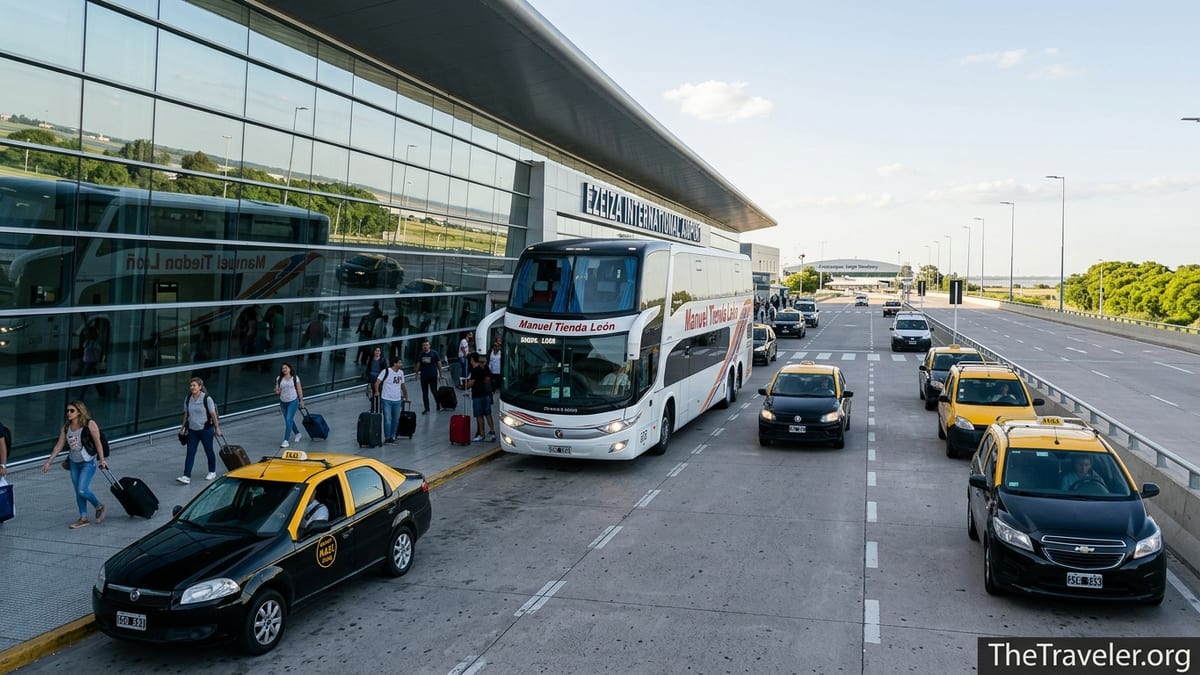
Understanding the EZE to AEP Airport Transfer
Ezeiza International Airport sits well outside the city, surrounded by highways and low-rise suburbs, while Aeroparque hugs the river in central Buenos Aires. The road distance between them is roughly 34 to 40 kilometers depending on route. In light traffic the transfer can be as quick as 35 to 40 minutes by car, but in heavy traffic it can easily stretch to 70 minutes or more. Occasional road closures or protests on main arteries like Avenida 9 de Julio or the Riccheri highway can add even more time.
Most travelers choose between three main options: an official taxi or remis (car service), a rideshare app such as Uber or Cabify, or the dedicated airport shuttle service run by Manuel Tienda León. Public buses also link the airports, but they are slow, require local transit cards, and involve far more uncertainty than most connecting passengers are comfortable with.
Because Aeroparque handles the bulk of domestic and regional flights, many long-haul arrivals at Ezeiza are timed to feed mid-morning or late-afternoon departures from AEP. That often means you are sharing the road with hundreds of other connecting passengers in the same direction. Understanding how each transport option behaves at different times of day is key to planning a safe connection, especially if your onward flight is not flexible or is on a separate ticket.
It is also important to distinguish between a protected connection sold on a single ticket and a self-planned transfer. When airlines sell an EZE–AEP connection on one itinerary, they build in minimum connection times and offer some protection if things go wrong. If you booked flights separately, you carry the full risk, so choosing reliable ground transport and a generous buffer becomes even more important.
Typical Travel Times and How Much Connection Time to Allow
In normal conditions, the drive from Ezeiza to Aeroparque takes around 45 to 60 minutes. In the very early morning, such as between 1:00 and 5:00, you might see closer to 35 minutes door to door. During weekday rush hours, especially 7:30 to 10:00 and 17:00 to 20:00, the trip can swell to 70 minutes or more. Transfers that involve detours through downtown or the riverside Avenida Costanera, or that hit congestion on the Autopista Riccheri or 25 de Mayo, are particularly vulnerable to delays.
As a rule of thumb, most experienced local travelers suggest allowing at least 4 to 5 hours between a scheduled landing at EZE and a domestic departure from AEP if the flights are on separate tickets. That window needs to cover immigration, baggage claim, customs, possible queues at transport counters, the drive itself, and check-in plus security at Aeroparque. For example, if you land from Europe at 7:00, a domestic flight from AEP at 11:30 is usually workable, while a departure at 9:30 would leave little margin if your inbound flight is delayed or the highway is slow.
For protected connections sold on one ticket, airlines may occasionally schedule shorter gaps, around 3 hours or slightly less, because they can adjust your onward flight if disruptions occur. Still, many travelers prefer to build in more time, particularly in Argentina where sudden demonstrations or roadblocks can appear with little warning. If your plans are inflexible, prioritizing a longer layover is often cheaper and less stressful than rebooking a missed domestic leg to Patagonia or the northwest at the last minute.
Overnight connections add another layer of choice. Some passengers arriving late at night at Ezeiza prefer to sleep at a nearby airport hotel and make the transfer to Aeroparque early the next morning, when traffic is lighter and transport options are clearer. Others connect directly even on arrival after midnight, taking advantage of relatively fast roads and 24-hour availability of taxis and rideshares, then staying in a hotel or nearby neighborhood in the city ahead of a midday domestic flight.
Official Taxis and Remis: Convenience at the Terminal Door
Official taxis and remises are the most straightforward option, especially for travelers arriving tired from a long-haul flight or those with bulky luggage and children. At Ezeiza, you will find licensed taxi and remis counters in the arrivals hall before you exit to the street. At these desks you prepay or receive a voucher for your ride to Aeroparque, which lets you avoid negotiating on the curb or worrying about the route taken by the driver.
Fares change regularly due to inflation and fuel prices, but in mid 2026 a typical pre-booked car service or official taxi between Ezeiza and Aeroparque often falls in a broad range that can feel modest for visitors paying in foreign currency but significant for locals. The key advantage of booking at the counters is transparency: you know the price in advance, payment by card is usually accepted, and the vehicles are accustomed to handling airport-to-airport runs with larger suitcases.
Journey times for official taxis and remises mirror general traffic patterns. In a real-world example, a family arriving on an early morning flight at 6:30 might clear immigration and baggage by 7:30, purchase a taxi voucher inside the terminal, and be pulling into Aeroparque around 8:20 if the roads are clear. The same route in late-afternoon rush hour could easily stretch to 9:10 or 9:20, which becomes critical if their onward flight departs at 10:00.
The main drawback of using taxis from the curb without a voucher is the risk of unlicensed drivers approaching passengers in the arrivals hall or outside the terminal, sometimes quoting inflated prices or insisting on cash in local currency. Sticking to official counters inside the terminal or clearly signed stands helps reduce that risk. Solo travelers reaching Buenos Aires after midnight often report feeling more comfortable dealing with a staffed desk just steps from customs, then walking directly to a marked vehicle rather than standing on the curb using their phone.
Uber and Cabify: Flexible App-Based Options
Ride-hailing apps such as Uber and Cabify operate widely in Buenos Aires and are a popular choice among younger travelers and those familiar with using apps in other cities. Cabify in particular has an established presence at Ezeiza, with official guidance describing designated meeting points at the airport so arriving passengers know where to meet their driver. Uber also functions, although regulations and enforcement have shifted over the years, and drivers sometimes prefer to avoid picking up in highly visible spots right outside the terminal.
One advantage of using an app-based service is price transparency in your own currency, since both Uber and Cabify typically show an estimated fare before you confirm the ride. For many visitors, especially from North America or Europe, the quoted prices for a 45 to 60 minute ride between Ezeiza and Aeroparque often compare favorably with official taxi vouchers, even after accounting for surge pricing at busy times. Another plus is that payment is handled through the app, so you do not need local cash immediately upon landing.
In practice, connecting passengers use rideshares in several ways. A solo traveler arriving in mid-afternoon might walk out to the designated pickup area with carry-on only and accept the first available Uber or Cabify to Aeroparque, aiming for a mid-evening domestic departure. A small group of four with heavy luggage might compare app prices and decide to order two mid-sized cars rather than squeeze into a single sedan, especially if they have ski bags heading to Bariloche or multiple checked bags after a long international trip.
The main uncertainties with rideshares are vehicle availability and pickup logistics. At very busy times or late at night, wait times for a driver can stretch beyond 10 or 15 minutes, and cancellations occasionally occur if drivers do not want to deal with airport traffic. In addition, some drivers prefer pickup points slightly away from the most heavily policed curbs, which may mean following instructions via chat and walking a few extra minutes with luggage. For tight connections this extra friction can be frustrating, so many travelers fall back on official taxis if every minute counts.
Manuel Tienda León: Dedicated Airport Shuttle Between EZE and AEP
For decades, Manuel Tienda León has been a familiar brand in Buenos Aires airport transfers, offering shuttle buses and private cars connecting Ezeiza, Aeroparque, and central city terminals. Today, it is effectively the main dedicated shuttle option between the two airports after other services have disappeared. Tickets can be bought online in advance, through the company’s channels, or at counters located inside both Ezeiza and Aeroparque terminals.
The company runs buses specifically labeled for the Ezeiza to Aeroparque route, typically following highway corridors designed to minimize intermediate stops. Current timetables and prices vary, but recent examples show several daily departures in each direction, with a one-way fare that is often competitive with or lower than a private taxi for solo travelers. Some sources list reference prices in the tens of thousands of Argentine pesos for a seat on the shared bus, with promotional discounts for online purchases and higher rates for private car options within the same brand.
Travel time for the airport-to-airport shuttle is commonly quoted at around 60 to 80 minutes, depending on traffic and time of day. Some schedules and external travel planners show sample runs as quick as about 35 minutes when the highway is flowing freely. In a typical scenario, a couple arriving on a mid-morning flight could exit customs, find the Tienda León counter in the arrivals area, purchase two tickets, and board a coach within 30 minutes. If the bus departs at 10:30 and reaches Aeroparque shortly after 11:30, they would still have ample time for a 13:30 domestic departure.
The major advantage of Tienda León is predictability: fixed departure times, professional drivers used to the route, luggage stored under the bus or in dedicated racks, and boarding from clear stops at each airport. The trade-offs include less flexibility than a door-to-door taxi, potential waiting time until the next scheduled departure, and the need to walk from the bus stop into the terminal at Aeroparque with your bags. For families with several large suitcases or travelers with mobility issues, a private transfer from the same company can be a better fit even at a higher cost.
Traffic Patterns, Protests, and Luggage Considerations
Buenos Aires traffic can be unpredictable, especially around the central grid, Puerto Madero, and key bridges over the Riachuelo. On normal weekday mornings, motorists funnel into the city for work, slowing the approach from Ezeiza toward downtown. In the late afternoon and early evening, outbound traffic and city-center congestion can stack up in the opposite direction, affecting transfers from Aeroparque back to Ezeiza for evening long-haul departures.
Periodic demonstrations and roadblocks, known locally as “cortes” or “piquetes,” sometimes target central avenues or highway access points, which can turn a routine 50 minute drive into a 90 minute ordeal. These events are often reported on local news and social media but may not be visible when you first land. Drivers of taxis, remises, and rideshares usually adapt routes on the fly, taking alternative arteries or ring roads, but detours increase both travel time and cost. This is one of the main reasons seasoned travelers recommend a conservative connection window, especially during weekdays and political or sporting events.
Luggage plays a crucial role in choosing your transfer. A single backpack and carry-on suitcase are easy to manage on a shuttle bus or when walking to a ride-hailing pickup zone. Two checked bags per person, ski equipment, or large musical instruments tip the balance toward private taxis or remises that load directly at the curb. Tienda León buses have underfloor luggage compartments, which work well for standard suitcases, but you still need to handle bags on and off the vehicle yourself and keep an eye on them at intermediate stops or busy bus bays.
Families with young children often prefer private cars, as they can keep strollers, diaper bags, and snacks within reach, and the driver can adjust air conditioning or music volume. In Argentina, child seat usage in taxis is less strict than in some other countries, and dedicated seats are not always provided by default, so parents may choose to travel with compact travel boosters or inflatable cushions. Those with mobility issues or who tire easily should factor in the walking distance from any shuttle stop to the check-in counters, particularly during hot and humid summer months.
How Much Connection Time Is Safe in Real Life?
When translating all these variables into a practical schedule, it helps to walk through concrete examples. Suppose you arrive from North America at Ezeiza at 8:00 on a Monday with checked luggage and a separate domestic ticket to Mendoza departing from Aeroparque at 12:30. In a reasonably smooth scenario, you might clear immigration and collect bags by 9:00, book an official taxi, and arrive at Aeroparque by 10:00. That leaves roughly 2.5 hours before departure, more than enough to check in again, drop bags, and clear security. This four-and-a-half hour window from scheduled arrival to scheduled departure is generally considered comfortable.
By contrast, imagine a Saturday arrival at 7:30 with a domestic flight from AEP at 10:00. If your aircraft parks on time and lines at immigration are short, you might reach the curb at 8:15, order an Uber or Cabify, and be on the road by 8:25. In light weekend traffic, you could reach Aeroparque by 9:10, giving you 50 minutes to check in and reach your gate. This is workable if everything goes right, but there is no margin if your inbound flight is delayed, if the driver takes longer to arrive, or if check-in lines for your domestic carrier are longer than usual.
For these reasons, many long-distance travelers to Patagonia, Tierra del Fuego, or the northwest prefer to schedule at least 5 hours between an international arrival at Ezeiza and a separate domestic departure at Aeroparque, leaving breathing room for delays and time to adjust to the new time zone. If the connection is overnight, a very early morning transfer can avoid rush hour and ease anxiety about same-day disruptions. When booking, it is worth comparing options that depart a bit later in the day, even if they reach your final destination a few hours later, because the extra buffer often translates into a much lower risk of missed flights and unexpected hotel nights.
Lastly, airlines and tour operators sometimes change the operating airport of a domestic leg from Ezeiza to Aeroparque or vice versa, even a few weeks before departure. Keeping an eye on your booking and reconfirming the departure airport shortly before travel is essential. If you discover an airport change late in the process, consider proactively adjusting your transfer plan, perhaps switching from a shuttle to a private car, or moving to an earlier domestic departure if seats are available, to maintain a comfortable margin.
The Takeaway
Transferring between Ezeiza International Airport and Aeroparque Jorge Newbery is a manageable but nontrivial step in many trips through Argentina. The two airports sit in very different locations, and the drive between them is subject to urban traffic, fluctuating demand, and occasional disruptions. Choosing the right ground transport and allowing sufficient time can turn a potentially stressful dash into a predictable part of your journey.
Official taxis and remises offer the simplest door-to-door solution, particularly for tired travelers and families with luggage, while Uber and Cabify provide app-based pricing and payment that many visitors find familiar and cost effective. Manuel Tienda León’s shuttle service remains the main dedicated airport-to-airport bus, appealing to solo travelers and couples who value fixed schedules and predictable fares. All three options are widely used in practice and can work well if matched to your budget, comfort level, and connection time.
The most critical decision is not just which vehicle you choose, but how much margin you build into your itinerary. For separate tickets, 4 to 5 hours between a scheduled arrival at Ezeiza and departure from Aeroparque is a realistic minimum, with longer recommended during weekday peaks or in the rainy season. Those on through-tickets still benefit from conservative planning, especially when continuing to remote regions where seats are limited.
By thinking through time of day, traffic patterns, your luggage profile, and your tolerance for risk, you can select a transfer option that feels calm rather than rushed. A bit of preparation up front means you can focus on enjoying Buenos Aires’ skyline sliding by your window instead of watching the clock and worrying about whether you will make your next flight.
FAQ
Q1. How long does it usually take to go from Ezeiza (EZE) to Aeroparque (AEP)?
In light traffic the drive can take around 35 to 45 minutes, while in typical conditions most travelers should plan for 45 to 60 minutes and allow extra time during weekday rush hours.
Q2. What is the safest amount of connection time between an EZE arrival and an AEP departure on separate tickets?
For separate tickets, a window of at least 4 to 5 hours between scheduled arrival at Ezeiza and scheduled departure from Aeroparque is generally considered a prudent minimum.
Q3. Is Uber or Cabify reliable for transfers between Ezeiza and Aeroparque?
Uber and Cabify are widely used and can be reliable, offering transparent pricing and cashless payment, but you should factor in possible wait times and occasional driver cancellations, especially at peak hours or late at night.
Q4. How does the Tienda León shuttle work between the two airports?
Manuel Tienda León operates scheduled buses and private cars linking Ezeiza and Aeroparque; you buy a ticket, board at clearly marked stops at each airport, store your luggage on the vehicle, and travel on a fixed route that usually takes about an hour in normal traffic.
Q5. Are official taxis at Ezeiza safe to use for the transfer to Aeroparque?
Yes, if you use the official taxi or remis counters inside the terminal or clearly marked stands, taxis are widely considered safe and are accustomed to handling airport-to-airport transfers with luggage.
Q6. Can I make the transfer using public buses instead of a taxi or shuttle?
There are bus routes that link the airports indirectly, but they are slow, require a local transit card, and involve more uncertainty and walking than most connecting passengers are comfortable with, so they are generally not recommended for tight connections.
Q7. What happens if there are protests or roadblocks on the way between airports?
Demonstrations or roadblocks can significantly slow or divert traffic, potentially turning a 50 minute drive into 90 minutes or more, which is why many experienced travelers build generous buffers and try to avoid very tight same-day connections.
Q8. Is it better to transfer immediately after arrival or stay overnight near one of the airports?
If your onward flight is early the next day or traffic is likely to be heavy, staying overnight at an airport or city hotel and transferring at a quieter time can reduce stress, while immediate same-day transfers are practical when schedules align comfortably.
Q9. How should families with children and a lot of luggage plan the EZE to AEP transfer?
Families with strollers and multiple checked bags usually find a private taxi, remis, or private service from Tienda León more comfortable, as these offer door-to-door loading at the curb and avoid the need to maneuver heavy luggage on and off a bus.
Q10. What if my airline changes my domestic flight from Ezeiza to Aeroparque at the last minute?
If your flight is moved to a different airport, you should immediately recalculate your ground transfer time, consider switching to a faster private car or taxi, and, if possible, rebook to a later domestic departure to keep a safe connection window.