


For years, visitors treated North Jersey as a practical place to crash after a long day in Manhattan: cheaper hotel rooms, quick PATH or NJ Transit rides, and parking lots where New York dreams went to rest. That reputation still holds some truth, but it now misses the bigger story. From Hudson County’s waterfront skylines to Montclair’s creative energy and Newark’s Ironbound food scene, North Jersey has quietly become a destination on its own, not just a convenient base near Manhattan.
Get the latest updates straight to your inbox!
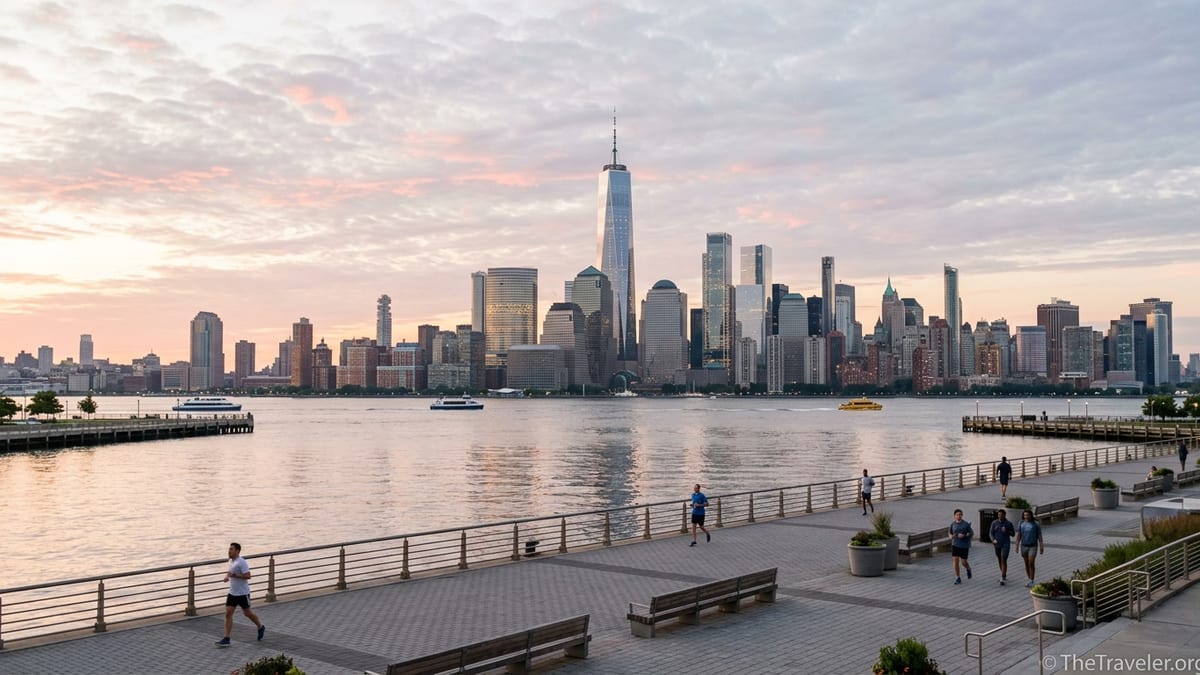
North Jersey’s Own Skyline: Waterfront Cities With Manhattan Views
If your first instinct is to stay in Jersey City or Hoboken purely for the fast commute into lower Manhattan, you might be surprised by how much you can do without ever crossing the Hudson. The Hudson River waterfront in Jersey City offers a continuous promenade with direct views of One World Trade Center and the downtown skyline, but it is also a lively neighborhood in its own right, packed with cafes, playgrounds and public art. A visitor could easily spend a day walking from Exchange Place up toward Newport, stopping for coffee near the Grove Street pedestrian plaza, browsing local boutiques, and ending with sunset drinks overlooking the river.
Hoboken offers a slightly different rhythm. With brownstone side streets, a compact main drag along Washington Street, and stylish bars and restaurants clustered near the PATH station, it feels like a small city where you can walk almost everywhere. Many travelers now choose a Hoboken hotel or short-term rental specifically so they can spend evenings strolling along the waterfront parks, then duck into a relaxed neighborhood spot for dinner instead of bracing for the late-night crowds and prices across the river. The views are still unmistakably New York, but the energy on the ground is very much North Jersey.
North Hudson communities set on the Palisades, such as Weehawken and West New York, add another vantage point. Much of this area sits high above the Hudson, so even everyday residential streets can open onto dramatic overlooks of Midtown and the Upper West Side. A visitor might take a morning walk along Boulevard East, watching the sun hit the glass towers of Manhattan from a quiet park bench. From here, Manhattan looks close enough to touch, yet the vibe remains entirely local: joggers on their daily route, dog walkers chatting in Spanish and English, and families pushing strollers past modest delis and bakeries.
Jersey City & Hoboken: Food, Nightlife, and Arts Without the Manhattan Markup
Travelers who pick Jersey City or Hoboken for their hotel often discover, on the first night, that they do not actually need to head back into Manhattan for dinner. Jersey City’s dining scene has grown rapidly, with everything from refined Italian and modern American spots near the pedestrian-friendly Newark Avenue plaza to Indian, Filipino and Latin American kitchens spread through Journal Square and the Heights. A couple staying near Grove Street might have wood-fired pizza for about the same price as a takeout slice in Midtown, then wander past local bars and dessert shops where the crowd is a mix of residents and visitors rather than day-trippers racing for the last train.
Hoboken, long known for its bar scene, has matured into a well-rounded dining destination. Along Washington Street and nearby side streets, you can find everything from classic red-sauce Italian joints and burger bars to contemporary Mediterranean restaurants. For a traveler coming back from a full day at the Metropolitan Museum of Art, it can be a relief to step off the PATH into a compact, walkable grid where dinner reservations, cocktail spots and late-night bakeries all sit within a few blocks of each other. Prices tend to be lower than in comparable Manhattan neighborhoods, so sharing a bottle of wine and a full meal feels less like a splurge and more like a standard evening out.
The arts scene is part of the draw too. Jersey City hosts gallery events, seasonal outdoor festivals and cultural programming backed by local institutions, and its street art is visible under highway overpasses and along former industrial blocks in the Heights. Music venues and small theaters in both Hoboken and Jersey City often feature regional bands and stand-up comedy nights, which gives visitors an easy way to sample local culture without the ticketing scramble that big-name Manhattan shows can involve. A few days based on the Jersey side can include a mix of Broadway evenings across the river and more low-key nights listening to live jazz in an intimate neighborhood bar.
Montclair and the Suburban Creative Belt
Move a bit inland and you reach a different side of North Jersey, typified by suburbs like Montclair. For New Yorkers, Montclair has long been shorthand for leafy streets and Victorian homes, but in recent years it has also become synonymous with restaurants, galleries and an active cultural calendar. The Montclair Art Museum anchors one end of town, with American and Native American art in a compact, approachable setting that is easy to explore in an afternoon. Just a short walk away, Bloomfield Avenue and Church Street form a downtown core lined with independent shops, cafes and restaurants, from upscale Italian dining rooms to casual brunch spots.
Dining alone makes Montclair worth more than a quick commuter stop. Recent arrivals include a high-profile Japanese restaurant headed by a celebrity chef, while long-established places like Italian trattorias and modern American bistros draw weekend reservations from across the region. On any given night, you might see a couple from Brooklyn at a candlelit table, a family from the Jersey Shore making a day trip inland, and locals celebrating birthdays at neighboring tables. Price-wise, dinner for two at a fashionable Montclair restaurant often comes in below what a similar meal would cost in SoHo or the West Village, especially if you factor in lower drink prices and minimal service fees.
Montclair functions as a cultural hub for the surrounding towns as well. The local film festival brings premieres and panel discussions to several venues each year, and smaller theaters and music clubs regularly host comedy, jazz and indie rock shows. For a traveler, this means you can structure a North Jersey stay around a specific event, like a film screening or gallery opening, and treat Manhattan as the occasional side trip rather than the main act. Commuter rail from Montclair into Penn Station still makes a day at a Manhattan museum straightforward, but the return in the evening delivers you back to tree-lined streets and late-opening dessert bars.
Newark’s Ironbound and Downtown: Food, Culture and Riverfront Green Space
Newark often registers in travel plans primarily as an airport code, but the city itself, especially the Ironbound and downtown areas, has become one of North Jersey’s most distinctive destinations. The Ironbound, just east of Newark Penn Station, is famous for its dense concentration of Portuguese, Spanish and Brazilian restaurants. Locals sometimes talk about more than a hundred Iberian-influenced eateries in the neighborhood, and a weekend night on Ferry Street or Wilson Avenue proves the reputation: grills loaded with skewers, pastry cases filled with custard tarts, and families arriving for late dinners that stretch past midnight.
Visitors can start with a traditional Portuguese or Spanish restaurant offering grilled seafood platters, steak served on sizzling dishes, and pitchers of sangria, then wander to a bakery for espresso and sweets. In recent years, the scene has diversified, with places such as sleek new bistros and specialty coffee shops opening in and around the Ironbound. One newer restaurant group, for instance, now operates a polished Italian spot in the neighborhood alongside a bright, art-filled cafe on Ferry Street and an additional bistro closer to downtown Newark. Together they illustrate how the city’s food culture is expanding beyond its old-school staples while still rooted in the same community.
Downtown Newark adds another layer, with the New Jersey Performing Arts Center drawing big-name concerts and touring productions, and the Prudential Center arena hosting everything from hockey and basketball to major music acts. Recent city efforts have focused on making the Passaic riverfront more accessible, and a growing park and walkway network now lets visitors stroll along the water near the Ironbound and downtown. On a mild evening, it is increasingly possible to attend a show at NJPAC, have a late dinner in the Ironbound, and walk portions of the riverfront without relying heavily on taxis or rideshares.
The practical side is also appealing: Newark Penn Station is a major rail hub, so travelers can base themselves in a downtown hotel, enjoy local dining and entertainment, and still reach Manhattan’s Penn Station in roughly twenty minutes by train. Instead of treating Newark as a transit point, many visitors are starting to see it as an urban stay with its own distinct energy and a cost structure that often feels gentler than Midtown’s.
Outdoors, Trails and Unexpected Green Space
One of North Jersey’s biggest surprises for first-time visitors is the amount of accessible green space within a relatively short distance of urban centers. West of Montclair and Newark, the ridgeline of the Watchung Mountains is lined with county reservations and parks. South Mountain Reservation offers miles of wooded trails, waterfalls and viewpoints within a quick drive of Maplewood, Millburn and South Orange, along with family attractions like a zoo and lakefront recreation area. A traveler staying in Jersey City or Newark can rent a car for the day, drive less than forty minutes inland, and be standing on a forest overlook by mid-morning.
Closer to Montclair itself, smaller preserves like Eagle Rock Reservation and Mills Reservation sit along the same ridge. Eagle Rock provides a broad terrace with powerful views of the Manhattan skyline, especially striking around sunset or on clear fall days. Mills Reservation features quieter woodland paths that open occasionally to basalt ledges facing Newark and New York. Locals walk dogs here before work, teenagers come up for prom photos, and hikers from the city use weekend mornings to escape the grid without taking a long-distance train.
Even in denser urban areas, green spaces stand out. Jersey City’s Liberty State Park stretches along the Upper New York Bay with walking and biking paths, lawns, and waterfront views of the Statue of Liberty and Ellis Island. In Newark and the Ironbound, the ongoing development of riverfront parks is gradually transforming formerly industrial edges of the Passaic into places where residents jog, cycle and picnic. For travelers, this network of parks means a North Jersey itinerary can easily include both gallery visits and hikes, skyline views and shaded woodland streams, without the long travel times typically associated with outdoor day trips from New York.
Practical Advantages: Value, Space and Ease of Movement
For many travelers, the decision to base in North Jersey starts with cost. Hotel rates in Jersey City, Hoboken, Newark or Montclair are often meaningfully lower than in Manhattan neighborhoods with similar access to transit. Midweek rates fluctuate, especially around events, but it is common to find modern chain or boutique hotel rooms in downtown Jersey City or Newark at prices closer to what you would pay for a compact and less centrally located room in Manhattan. Families or groups can sometimes stretch their budget further by choosing an apartment-style rental in North Jersey, where living rooms and kitchenettes are more common than in Midtown hotels.
Transportation works in North Jersey’s favor as well. The PATH system connects Jersey City and Hoboken directly to lower and midtown Manhattan, while NJ Transit rail lines funnel through Newark Penn Station and Secaucus Junction toward Penn Station in Manhattan. Light rail and bus networks make it easier to move between neighborhoods without driving, and rideshares tend to be slightly cheaper when you are not crossing state lines in heavy Manhattan traffic. For visitors renting a car, North Jersey also offers more straightforward access to major highways, so day trips to the Jersey Shore, the Meadowlands, or the hiking areas around Morristown are simpler than if you were trying to exit the island of Manhattan.
Space is another subtle but important advantage. Cafes and restaurants in North Jersey, even in busy downtowns, often have more generous seating than their Manhattan counterparts, and parks and waterfront promenades feel less congested. This can be especially appealing for families with strollers or older travelers who appreciate quieter sidewalks at night. Instead of ending each day in a cramped hotel room, guests might relax on a residential street in Montclair, sit by the Hudson in Weehawken, or linger over coffee in a Newark cafe that is filled with locals finishing their workdays.
The Takeaway
Seeing North Jersey purely as a bedroom community for Manhattan now understates what the region has become. Waterfront cities like Jersey City, Hoboken and the North Hudson towns offer front-row skyline views paired with lively dining and nightlife scenes of their own. Suburban hubs such as Montclair layer small-town charm with big-city culture, while Newark’s Ironbound and downtown districts give travelers a chance to experience one of the country’s most distinctive Portuguese and Brazilian food neighborhoods, plus major performance venues and emerging riverfront parks.
For travelers, using North Jersey as a base does not mean sacrificing the New York experience; it means gaining an additional set of experiences on the Jersey side of the river. A single trip might include a Broadway show one night, grilled seafood in the Ironbound the next, a hike above Montclair on Saturday morning, and riverside drinks in Hoboken at sunset. Instead of treating the Hudson as a boundary between destination and suburb, consider it a narrow strip between two interconnected urban worlds, both worth your time. In that sense, North Jersey is no longer just where you sleep when visiting Manhattan. It is a place where your trip can truly unfold.
FAQ
Q1. Is it realistic to stay in North Jersey and visit Manhattan every day?
Yes. Many visitors base themselves in Jersey City, Hoboken or Newark and ride PATH or NJ Transit trains into Manhattan daily, often in under 30 minutes each way depending on the specific route and time of day.
Q2. Which North Jersey city is best if I want both nightlife and easy access to New York?
Jersey City and Hoboken are strong choices, with walkable downtowns full of bars and restaurants and frequent PATH service to lower and midtown Manhattan.
Q3. How does the cost of staying in North Jersey compare with Manhattan?
Room rates vary by season and events, but hotels in places like Jersey City, Newark and Montclair are often noticeably cheaper than similarly located options in Manhattan, especially for larger rooms.
Q4. Is Newark safe for tourists, especially around the Ironbound and downtown?
Like any city, Newark has areas that feel busier and more comfortable than others, but the Ironbound and central downtown near Newark Penn Station are well-traveled, especially around dining hours and event times, and are commonly used by visitors.
Q5. Can I enjoy good food in North Jersey without going into New York?
Absolutely. Neighborhoods like the Ironbound in Newark, downtown Jersey City, Hoboken and Montclair have diverse dining scenes, from casual bakeries to high-end restaurants, so you can easily plan entire evenings around local meals.
Q6. Are there outdoor activities near North Jersey cities?
Yes. Liberty State Park in Jersey City offers waterfront paths and views of the Statue of Liberty, while reservations such as South Mountain and Eagle Rock, within a short drive, provide hiking trails and skyline overlooks.
Q7. Is it necessary to rent a car when staying in North Jersey?
Not always. If you stay near PATH or NJ Transit stations in places like Jersey City, Hoboken, Newark or central Montclair, you can rely largely on trains, light rail, buses and rideshares, reserving a rental car only for specific day trips.
Q8. Which North Jersey towns are best for a quieter, residential feel?
Montclair and neighboring suburbs such as Maplewood, South Orange and Glen Ridge offer tree-lined streets, small downtowns and a slower pace while still providing realistic rail access to Manhattan.
Q9. Are North Jersey waterfront views really as good as people say?
They are. Walks along the Jersey City and Hoboken waterfronts or the clifftop parks in North Hudson offer sweeping perspectives of the Manhattan skyline that many visitors consider among the best views in the region.
Q10. How many days should I plan if I want to experience both Manhattan and North Jersey?
Five to seven days works well for many travelers, allowing time for several Manhattan-focused outings plus at least two full or partial days devoted to exploring specific North Jersey neighborhoods and parks.