


North Jersey sits just across the Hudson River from Manhattan, close enough that you can see the Midtown skyline from many apartment windows, waterfront parks and hotel rooms. For travelers and would-be New Yorkers watching their budgets, it is a natural question: is North Jersey a good place to visit, live or stay if you want easy access to New York City without being in the middle of it all? The answer is often yes, but with important nuances that depend on what kind of experience, budget and lifestyle you are looking for.
Get the latest updates straight to your inbox!
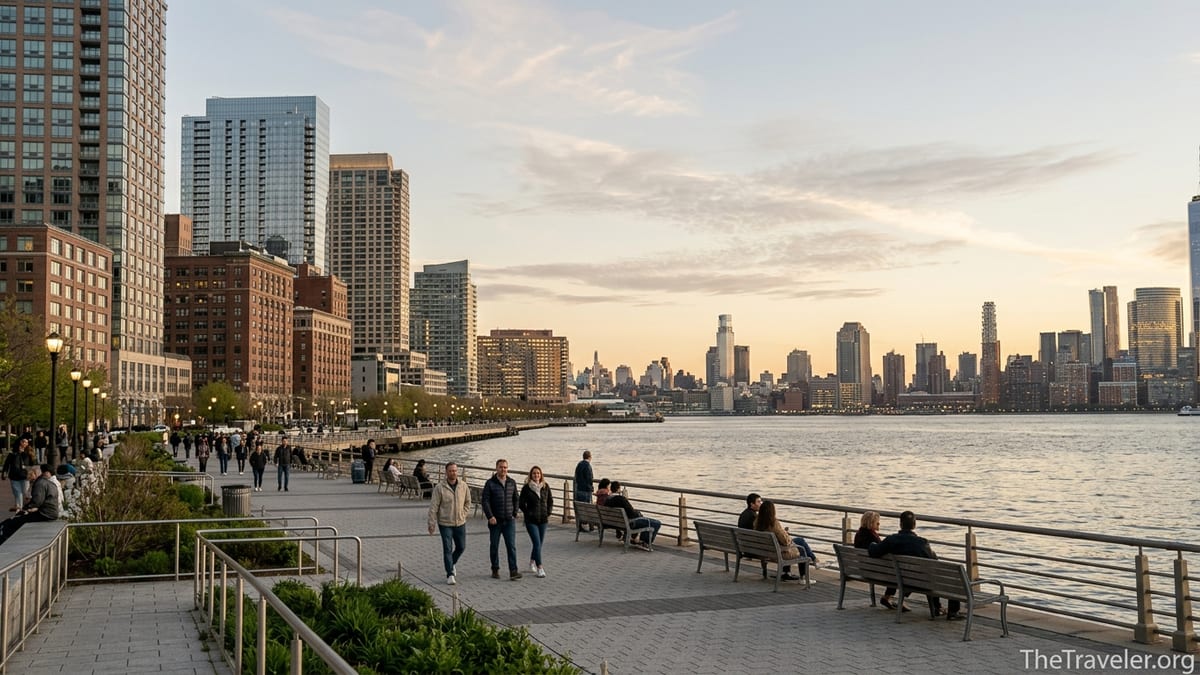
Understanding What “North Jersey” Really Means
When people talk about North Jersey as a base for New York City, they are usually referring to a band of communities in Hudson, Bergen, Essex and sometimes Passaic counties. On a practical level, that means places like Jersey City, Hoboken, Weehawken, Union City and North Bergen right along the Hudson River, plus larger hubs such as Newark, Montclair and Hackensack slightly farther inland. These areas form the dense inner ring around Manhattan, all linked by trains, buses, ferries and highways that funnel commuters in and out of the city every day.
For a short visit, most travelers gravitate to the so-called Gold Coast along the Hudson in Jersey City, Hoboken and Weehawken. These waterfront neighborhoods have the clearest New York skyline views, plenty of hotels and rentals, and the most direct transit into Manhattan. If you are thinking about living in North Jersey long term, the picture gets broader. You might compare brownstone blocks in downtown Jersey City or Hoboken with quieter suburbs like Maplewood, Montclair or Ridgewood, where tree-lined streets, single-family homes and downtown main streets cater more to families and long-term residents than tourists.
North Jersey’s character can shift over just a few miles. One weekend you might stroll past glassy high-rises at Newport in Jersey City, then the next you are in Montclair’s Upper Montclair section, walking by century-old houses and independent bookshops. This diversity is part of the appeal. You can choose something that feels almost like outer-borough New York, or something that feels more like a classic American suburb, and still be within 30 to 60 minutes of Midtown.
Access to Manhattan: Trains, PATH and Ferries
For anyone staying or living in North Jersey with New York City as the main draw, transportation is the decisive factor. The most important links are the PATH subway, NJ Transit commuter rail and a network of buses and ferries. PATH trains connect Jersey City, Hoboken and Newark directly with Midtown around 33rd Street and Lower Manhattan around the World Trade Center, with travel times usually between 10 and 25 minutes once you are on board. At busy stations like Exchange Place, Grove Street or Hoboken Terminal, trains typically come every few minutes at rush hour and less frequently late at night.
NJ Transit’s commuter rail lines, including the Northeast Corridor and North Jersey Coast Line, bring riders from Newark, Secaucus, Montclair, Maplewood and dozens of other towns to New York Penn Station in Midtown. A rider staying in downtown Newark, for example, can walk or take the light rail to Newark Penn Station, then board an NJ Transit train that takes roughly 20 minutes to reach Manhattan’s Penn Station, not counting any waiting time. From many inner-ring suburbs, the total door-to-door commute into Midtown can be around 40 to 60 minutes, which is comparable to cross-city commutes within New York itself.
On the Hudson waterfront, ferries add a scenic but usually pricier option. NY Waterway boats link terminals in Weehawken, Hoboken and Jersey City with piers on the West Side of Manhattan. On weekday mornings, a commuter might board at Port Imperial in Weehawken, sip coffee while crossing the river in about 8 minutes, then step onto Manhattan’s West 39th Street ferry terminal. Fares can be several times the cost of PATH or NJ Transit, so many travelers treat ferries as an occasional splurge or a way to avoid crowded trains during peak times rather than an everyday solution.
Costs: How Much Do You Really Save vs New York City?
One of the main reasons travelers and new residents look across the river is cost. While North Jersey is hardly cheap by national standards, housing and day-to-day expenses are often meaningfully lower than in Manhattan and prime Brooklyn. Recent comparisons of one-bedroom apartments suggest that monthly costs in Jersey City, including rent, utilities and basic groceries, can be roughly a thousand dollars less than in New York City for a similar lifestyle in 2026. The difference gets larger if you are willing to live a few miles inland, in towns like Kearny, Bloomfield or Clifton, where older apartment buildings and two-family houses offer more space at lower prices than luxury high-rises on the waterfront.
For short-term stays, hotel and rental prices tell a similar story. A business traveler might find a chain hotel near Journal Square or Newark Airport for substantially less than a mid-range hotel around Times Square on the same night, sometimes saving enough to cover daily transit costs into Manhattan several times over. Families traveling during school holidays often discover that a two-bedroom rental in Hoboken or Jersey City’s Hamilton Park area costs noticeably less than a similar property in Midtown West or the Upper West Side, and often comes with easier parking or access to larger supermarkets.
Day-to-day expenses like groceries, parking and childcare can also tilt in North Jersey’s favor, especially outside the most gentrified neighborhoods. Parking garages on the Jersey side of the river, for example, typically charge less per month than comparable options in Manhattan, and some smaller towns still offer free street parking overnight. That said, areas closest to the PATH stations and waterfront have seen sharp price increases in recent years. A new luxury high-rise near Newport might cost as much as many Manhattan rentals, so true savings often come from looking just beyond the hottest blocks.
Safety, Schools and Quality of Life
Safety in North Jersey is mixed and very neighborhood-specific, much like New York City itself. Overall, New Jersey’s statewide crime rate remains below the national average, but large cities such as Newark and Jersey City carry more urban challenges than small suburbs. In downtown Jersey City and Hoboken, streets around PATH stations and main commercial corridors are busy at most hours, with a visible police presence and a constant flow of residents, commuters and visitors. These areas tend to feel similar in safety to busy parts of Brooklyn or Queens, with plenty of people around but the usual need for big-city awareness, especially late at night.
Newark, the largest city in North Jersey, has seen significant reductions in homicides over the past decade, reaching historically low levels in recent years, even while some other categories of violent crime have fluctuated. Neighborhoods near Newark Penn Station and the Prudential Center now attract visitors for concerts, sports and new restaurants, while the Ironbound district draws crowds for its Portuguese, Brazilian and Spanish dining scene late into the evening. At the same time, some residential sections of Newark still struggle with higher crime, aging infrastructure and under-resourced services, so many potential residents choose to rent in more stable neighborhoods first and get to know the city block by block before committing long term.
For families thinking about a permanent move, school quality weighs heavily. Many North Jersey suburbs are nationally known for strong public schools, including communities in Bergen, Essex and Morris counties that regularly appear in regional rankings. Towns like Montclair, Glen Ridge, Ridgewood and Tenafly often attract families leaving New York in search of larger homes, backyards and well-funded school districts, accepting longer commute times as the trade-off. Inside the big cities, the picture is mixed: there are standout magnet and charter schools in Jersey City and Newark, but overall performance varies widely from one campus to another, so parents usually do careful research and speak with local families before choosing a neighborhood.
What It Feels Like to Stay or Live in Key North Jersey Hubs
Each major pocket of North Jersey around New York City offers a distinct feel. Jersey City’s waterfront neighborhoods, like Paulus Hook and Newport, are dense, vertical and polished, with luxury towers, riverfront promenades and chain restaurants that would not look out of place in a new Brooklyn development. A visitor staying at a hotel along Washington Boulevard can step outside to jog along the Hudson with unobstructed views of Lower Manhattan, then hop on the PATH at Exchange Place or Newport and be in the Financial District in minutes. Just inland, around Grove Street and Hamilton Park, the vibe softens into tree-lined streets, brownstones, independent cafés and small parks where local families gather on weekends.
Hoboken, often called “The Mile Square City,” feels like a compact college town bolted onto the side of Manhattan. Washington Street, its main commercial strip, is lined with bars, pizzerias, coffee shops and boutiques, and the city’s waterfront park system offers long promenades, playgrounds and piers that look straight at the Empire State Building. Young professionals often choose Hoboken for its quick PATH trips to Midtown and Lower Manhattan, as well as its walkability: many residents do not own cars, relying on trains, buses and rideshares to get around. Travelers staying here typically enjoy a lively nightlife, dense restaurant scene and a slightly more relaxed pace than across the river.
Newark and nearby suburbs provide a different experience. Around Newark Penn Station and the Ironbound district, visitors can stay in business hotels, walk to soccer matches or concerts, and eat at long-established Portuguese bakeries and churrascarias that cater as much to local families as to out-of-towners. Farther out, Montclair offers leafy residential streets, multiple train stations into Manhattan, a small university, an art museum and a restaurant scene that has drawn chefs from across the region. For someone working in Midtown but wanting a more traditional suburban feel, Montclair or neighboring towns like Bloomfield or Glen Ridge can be appealing compromises.
Tourism Appeal: Beyond Just a Cheaper Bed Near NYC
While many visitors use North Jersey simply as a place to sleep while spending their days in Manhattan, the region has grown into a destination in its own right, especially for repeat New York travelers who have already checked off the major sights. Along the Hudson waterfront, parks in Jersey City, Hoboken and Weehawken provide some of the best skyline vistas anywhere, particularly at sunset. Liberty State Park in Jersey City offers open green space, walking and cycling paths, picnic areas and direct views of the Statue of Liberty and Ellis Island, along with ferry departures to visit both sites. For families, it can feel less hectic than starting the trip from Battery Park in Manhattan.
Food is another major draw. Hoboken is famed for its old-school Italian bakeries and pizzerias, while Jersey City’s neighborhoods host a wide mix of cuisines, from Filipino and Indian to Latin American and Middle Eastern. Newark’s Ironbound district is one of the best places in the metro area for Portuguese and Brazilian food, with rows of restaurants serving grilled seafood, roasted meats and pastries late into the night. In Montclair, a compact downtown area showcases farm-to-table bistros, coffee roasters and ice cream shops that make a pleasant evening out even if you spent the day in Manhattan museums.
For travelers interested in sports and entertainment, North Jersey also hosts its own major venues. The Prudential Center in Newark stages NHL hockey games, big-name concerts and college basketball tournaments, often with easier ticket availability and lower prices than Madison Square Garden. Just over the border in East Rutherford, the Meadowlands Sports Complex, including MetLife Stadium, draws fans for NFL games and international soccer matches. Staying in North Jersey can make it simpler to attend evening events at these venues without long late-night trips back into the city.
The Takeaway
North Jersey is not a single answer to the question of where to stay or live near New York City, but rather a spectrum of options. For short visits focused on Manhattan sightseeing, staying in Jersey City or Hoboken can deliver fast transit, skyline views and real cost savings compared with many New York hotels, as long as you are comfortable navigating PATH schedules and occasional service changes. Travelers with cars, families needing more space, or frequent visits to Newark Airport often find that hotels in Newark or along the Hudson waterfront offer the best balance of convenience and price.
For long-term living, the region offers everything from urban high-rise neighborhoods that feel like an extension of Brooklyn to quiet suburbs with strong schools and tree-lined streets. Many residents happily trade a 45-minute NJ Transit commute for a backyard, a local park and a bit more breathing room than central Manhattan allows. Others prefer the vibrant, walkable cores of Jersey City and Hoboken, where restaurants, shops and waterfront paths are all within a short stroll.
In deciding whether North Jersey is right for you, the key questions are practical ones: how often you need to be in Manhattan, what kind of neighborhood atmosphere you prefer, how much space you want and what budget you are working with. Visit at least two or three different communities, ride the trains at the times you would actually use them, and pay attention to what the streets feel like after dark. For many people, that on-the-ground experience confirms what the skyline views suggest: North Jersey can be a very good place to visit, live or stay if you want New York City within reach, without being in the middle of it all.
FAQ
Q1. Is it realistic to commute from North Jersey to Manhattan every day? It is realistic for many people, especially from places along the PATH and main NJ Transit rail lines, but travel times and reliability vary, so you should test your exact route during rush hour before committing to a daily commute.
Q2. Which North Jersey towns are best if I want a car-free lifestyle near New York City? Jersey City and Hoboken are the strongest options for a car-free lifestyle, followed by parts of Newark and Montclair that sit close to train stations, dense downtowns and regular bus routes.
Q3. Is staying in North Jersey for a New York City vacation really cheaper once you add transit costs? In many cases it is still cheaper, especially for families or longer stays, but you should compare specific hotel or rental prices and factor in daily PATH or NJ Transit fares to see the true difference for your dates.
Q4. How safe is it to walk around Jersey City and Hoboken at night? Main commercial and waterfront areas in Jersey City and Hoboken are usually busy and feel reasonably safe, though visitors should use the same basic precautions they would in any large urban environment and pay attention to local advice about less-traveled blocks.
Q5. Are North Jersey schools better than New York City schools? Many North Jersey suburbs are known for strong public schools, while large cities like Jersey City and Newark have a mix of excellent magnet or charter schools and others that perform less well, so parents should compare individual districts and campuses rather than assume one side of the river is always better.
Q6. What are the downsides of using North Jersey as a base for visiting New York City? The main downsides are dependence on transit schedules, the need to plan around late-night or weekend service changes, and the fact that you cannot simply walk back to your hotel from a Manhattan neighborhood when you are tired or if the weather turns bad.
Q7. Is Newark a good place to stay if I am mainly visiting Manhattan? Newark can work well if you value lower prices and easy access to the airport, but you should be comfortable with its more urban feel and the need to take a brief NJ Transit or PATH ride into Manhattan for most sightseeing.
Q8. Where should I stay in North Jersey for the best views of the New York skyline? Waterfront areas in Jersey City, Hoboken and Weehawken, especially near parks and promenades directly facing the Hudson River, offer some of the clearest and most dramatic skyline vistas.
Q9. Are there enough things to do in North Jersey itself if I do not want to go into Manhattan every day? Yes, between waterfront parks, Liberty State Park, neighborhood restaurant scenes in Jersey City, Hoboken, Newark and Montclair, and major venues like the Prudential Center and Meadowlands, you can easily fill several days without crossing the river.
Q10. Is North Jersey a good long-term alternative to living in New York City? For many people it is, particularly those looking for more space, relatively lower housing costs or stronger suburban school districts while still keeping Manhattan within a reasonable commute by train or bus.