


Planning a New York City trip often leads to one surprisingly tough question: should you sleep in Manhattan itself, or base in North Jersey and ride in each day? With hotel prices shifting quickly and new transit projects reshaping commutes, the answer in 2026 is more nuanced than ever. Here is a clear, practical look at what you actually gain and give up with each option, using real routes, current fares, and concrete trip scenarios so you can pick the base that makes the most sense for your itinerary and budget.
Get the latest updates straight to your inbox!
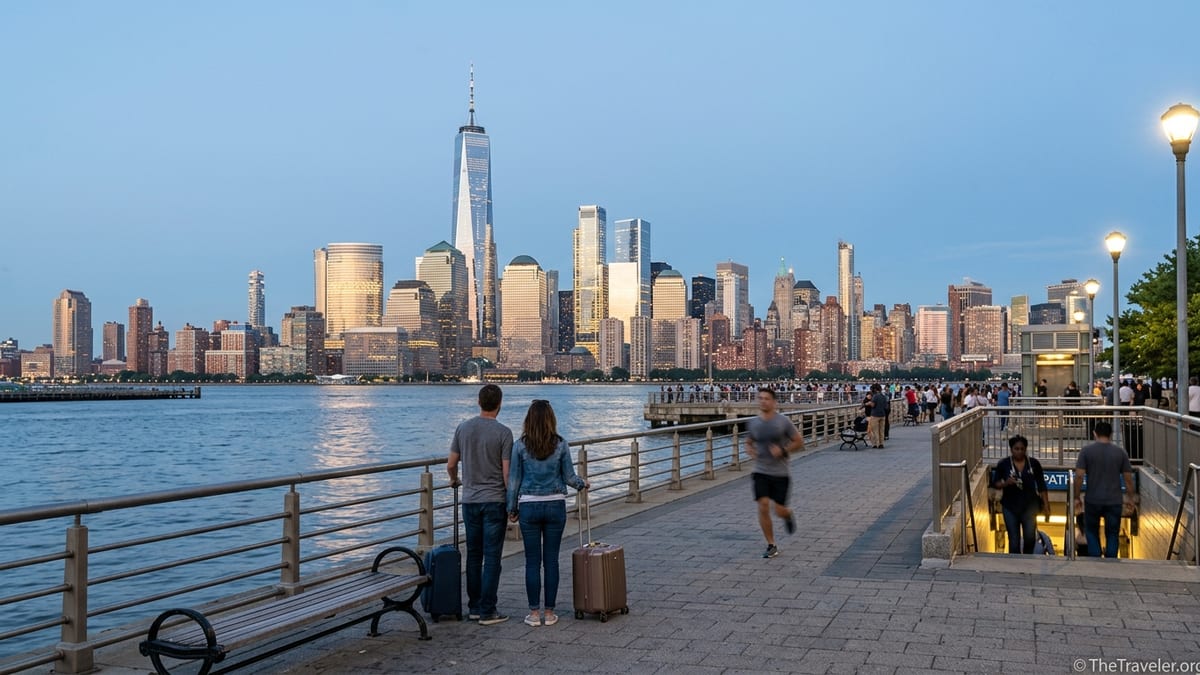
What “Staying in Manhattan” vs “Staying in North Jersey” Really Means
When people picture “staying in Manhattan,” they often imagine waking up steps from Times Square, Central Park, or the Theater District. In practice, Manhattan covers a long, narrow island with wildly different vibes and price points from the Financial District at the southern tip to Harlem and Washington Heights uptown. A business traveler might gravitate to Midtown near Penn Station or Grand Central, while a theater fan may focus on the West 40s and 50s, and a museum lover could aim for the Upper West or Upper East Side.
“North Jersey” is just as broad a label. For most visitors, the realistic bases are Jersey City and Hoboken along the Hudson River, plus a handful of inland communities like Newark or Secaucus that have direct rail or bus connections to Manhattan. Jersey City and Hoboken are linked to Lower and Midtown Manhattan by the PATH rail system, while places like Newark and Secaucus use NJ Transit commuter trains and buses. Travelers sometimes also see cheaper hotels deeper in New Jersey, but once you get far from rail and PATH you lose the main advantage of being near New York: quick, predictable access.
So the real choice is not “New York vs New Jersey” in the abstract. It is usually something like “a small but central room in Midtown” versus “a larger room or apartment-style stay in Jersey City or Hoboken and a 20 to 35 minute rail ride into the city,” or “a budget hotel by Newark Airport plus a train ride” versus “splurging on walk-to-everything convenience in Lower Manhattan. Framing it this way makes it easier to match neighborhoods to your priorities rather than debating state lines.
Price Reality: Hotels, Transit, and Everyday Costs
Hotel rates are the biggest driver of this decision. Industry reports show that Manhattan hotel revenue and room rates have continued to climb through 2025, particularly in luxury and branded properties, keeping typical nightly prices high by U.S. standards even outside peak holidays. In practical terms, it is still common to see standard Midtown chain hotels starting around the low to mid 300s per night for flexible rates in spring or fall, with popular weekends and event dates pushing rates well beyond that in central neighborhoods.
Across the river in Jersey City and Hoboken, headline nightly prices often come in noticeably lower for comparable quality, especially for apartment-style stays or larger rooms. A family of four might find a one-bedroom suite with a kitchenette near Exchange Place or Newport in the mid 200s to low 300s on many dates when a basic double room in Midtown costs similar or more. In addition, you may save on incidentals: many North Jersey hotels charge lower nightly taxes and sometimes reduced or no “destination” fees compared with Manhattan properties, though parking often remains costly on both sides of the river.
Transit costs also matter, especially on longer stays. As of 2026, a one-way PATH ride between New Jersey stations such as Jersey City or Hoboken and Manhattan is in the low 3 dollar range per person, while a combined AirTrain Newark plus NJ Transit ticket from Newark Airport to Penn Station in Manhattan totals in the mid-teens one way. For a couple commuting round-trip daily by PATH, you might add roughly 12 to 15 dollars per day to your budget; for a family of four this can reach 25 to 30 dollars daily. Compare that with Manhattan: you pay more for your room but most of your city travel is on the New York City subway and buses at a flat, relatively modest fare once you are already on the island.
Everyday prices once you are on the street are surprisingly similar. Coffee, quick lunches, and casual dinners in Jersey City, Hoboken, and Manhattan no longer differ dramatically, though you may find slightly lower price points and more neighborhood-focused spots off the main waterfront strips in New Jersey. The key savings are usually in room cost and sometimes in space, not in your daily cappuccino or pizza slice.
Transit and Commute Time: How Long Will You Spend Getting In and Out?
The most common concern about basing in North Jersey is commute time. In daily life, thousands of workers ride PATH and NJ Transit into Manhattan, so schedules are frequent at peak hours. On typical days, PATH trains run every few minutes at rush hour on core routes such as Journal Square to 33rd Street and Newark to World Trade Center, and every 10 to 15 minutes during many off-peak periods. The Hoboken to World Trade Center and Hoboken to 33rd Street services offer direct rail from that compact, walkable city straight into Lower Manhattan or Midtown.
In real-world terms, if you stay near Exchange Place or Grove Street in Jersey City, your door to door trip to the World Trade Center can be 15 to 20 minutes, including a short walk and a ride of just a few minutes under the Hudson. Reaching Midtown from the same base might be 25 to 30 minutes via the PATH to 33rd Street. From Hoboken, you can be on 33rd Street in Midtown in around 15 minutes of train time once you are on the platform, plus your walk. These times are competitive with many subway journeys entirely inside Manhattan, especially if you are coming from uptown to Lower Manhattan or vice versa.
Inland North Jersey options add both time and complexity. From Newark Penn Station, NJ Transit trains can reach New York Penn Station in roughly 20 minutes of in-train time on many services, but you must also account for walking or light rail to Newark Penn, waiting for the train, then navigating busy Penn Station in Manhattan. Secaucus Junction offers quick rail hops into Midtown, but most hotels in Secaucus rely on shuttles, parking lots, or buses to reach the station, stretching door to door times into the 35 to 60 minute range depending on traffic and wait times.
When you stay in Manhattan, your “commute” to sights is typically just a subway or bus ride within the city grid, or even a walk. For example, a hotel in the Theater District puts you within a 10 to 15 minute walk of Broadway stages, while a stay near Columbus Circle gives you easy walking access to Central Park and short subway hops to the Museum of Modern Art or the American Museum of Natural History. The trade-off is clear: Manhattan buys you spontaneity and short intra-city moves, while North Jersey, especially the riverfront, buys you more space and value in exchange for a predictable but real cross-river commute.
Neighborhood Feel: Atmosphere on Each Side of the Hudson
Manhattan’s draw is not just proximity but atmosphere. Even in quieter neighborhoods, you are surrounded by New York’s dense mix of landmarks, corner delis, historic brownstones, and subway entrances. Staying in the East Village, Lower East Side, or Greenwich Village immerses you in nightlife, small music venues, and late-opening restaurants steps from your door. A Financial District hotel places you near the New York Stock Exchange, the 9/11 Memorial, and ferries to the Statue of Liberty, though the area can feel quieter at night compared with Midtown.
By contrast, Jersey City and Hoboken have more of a neighborhood and residential feel, with a strong local community presence. In Jersey City’s Downtown area near Grove Street, you will find tree-lined side streets, independent coffee shops, and a growing restaurant scene that has attracted both locals and visitors who want a less tourist-heavy environment. The waterfront promenade at Exchange Place and Newport offers sweeping Manhattan skyline views that you rarely see if you only stay in Manhattan itself.
Hoboken is compact and lively, filled with bars, brunch spots, and shops on and around Washington Street. It is popular with young professionals who work in Manhattan but prefer a small-city feel at home. For a traveler, Hoboken can feel like a blend of a European-style riverside town and an American college neighborhood, with the advantage of quick train links to both Lower and Midtown Manhattan via PATH.
Inland North Jersey areas like Newark and Secaucus feel less like extensions of New York and more like distinct small cities or suburbs. Newark’s Ironbound district, for example, is known for Portuguese and Brazilian restaurants that draw diners from across the region. A traveler basing in Newark might combine day trips into Manhattan with local evenings in the Ironbound. Secaucus, by contrast, leans heavily on strip-mall retail, chain restaurants, and highway-side hotels. It can work for drivers looking mainly for a cheap bed and free parking while doing occasional Manhattan excursions, but it lacks the walkable, city-street feel of both Manhattan and the Hudson riverfront towns.
Trip Scenarios: Which Base Fits Your Travel Style?
For a first-time visitor focused on classic sights and only visiting for three or four nights, staying in Manhattan usually makes the most sense. Imagine a couple coming for a long weekend, planning to see a Broadway show, visit the Empire State Building, and spend a full day around Central Park and nearby museums. If their hotel is a block off Times Square, they can walk to their evening show, stroll home afterward, and carve their days into flexible chunks without watching train timetables. In this scenario, the extra 50 to 100 dollars per night they might pay to be in Manhattan can buy hours of reclaimed time and spur-of-the-moment changes.
For a family of four on a week-long stay, North Jersey often wins. Consider parents traveling with two school-age children who want space for the kids, access to a kitchenette, and a quieter street at bedtime. They might find a one-bedroom suite with a sleeper sofa near Grove Street in Jersey City for less than two standard double rooms in Midtown. A 20 minute PATH ride into Lower Manhattan each morning becomes part of the adventure, and if they plan their days by neighborhood, they only need one cross-river round-trip per day. Over a week, the savings on accommodation can easily outweigh transit costs.
Group trips and budget travelers also frequently lean toward North Jersey. A group of friends attending a concert at Madison Square Garden might base in Hoboken, sharing a two-bedroom short-term rental and taking the Hoboken to 33rd Street PATH directly to the venue area. Even with rail fares, their per-person nightly cost can drop sharply compared with individual hotel rooms in Manhattan. On the other hand, a solo traveler here for work near Rockefeller Center may benefit from eliminating the cross-river commute and booking a compact Midtown room or business hotel, especially if their employer is footing the bill.
Special interests can flip the equation. Food-focused travelers who want to explore both Manhattan and local favorites in the Ironbound might choose Newark for convenient access to its restaurants and a quick NJ Transit ride into the city. Conversely, art lovers planning multiple evenings at Lincoln Center and afternoons at the Met may value being on the Upper West or Upper East Side enough that even a modestly larger price tag feels worth it. Matching your base not just to “New York” but to your specific, mapped-out days is the surest way to avoid regret.
Airport Access, Late Nights, and Safety Considerations
Airport choice can subtly favor one base over another. Newark Liberty International Airport, located in New Jersey, connects by AirTrain to a rail station served by NJ Transit trains into both Newark Penn Station and New York Penn Station. The combined cost for AirTrain plus NJ Transit into Manhattan runs in the mid-teens per person one way, with total travel time around 35 to 50 minutes depending on connection and time of day. If you are staying in Jersey City, you can also reach your hotel by combining AirTrain and NJ Transit with a transfer to PATH or by using car services or taxis for the last leg.
Travelers using John F. Kennedy Airport or LaGuardia typically funnel into Manhattan via the subway, AirTrain, or buses and car services. If your flight lands late at night and you are staying in North Jersey, plan carefully: late-night PATH service remains frequent enough to be usable, but NJ Transit train frequencies drop outside peak hours. In contrast, a hotel in Midtown or Lower Manhattan lets you take a taxi, ride-share, or late subway directly to your door without crossing the Hudson.
Late-night returns after shows or dinners factor into many decisions. If you stay in Manhattan, walking a few blocks back to your hotel at 11:30 p.m. after a Broadway performance is straightforward and aligns with what most visitors expect from a city trip. If you base in Jersey City or Hoboken, you will add a trip to the PATH station and a cross-river ride, which is entirely doable but demands a bit of energy and planning at the end of the night. Some travelers are comfortable with this; others strongly prefer being within a short walk of their bed.
On safety, both Manhattan and the main North Jersey bases see typical big-city issues rather than dramatic differences. Busy parts of Manhattan, Jersey City’s downtown, and Hoboken’s core are well-trafficked at most hours. As always, choosing accommodations near major transit stops, arriving late at night by official taxis or reputable car services, and following routine urban safety habits make more difference than the side of the river you choose.
The Takeaway
Deciding between North Jersey and Manhattan is less about right and wrong and more about what you value most on this particular trip. Manhattan gives you immediacy: you step out of your hotel and you are in New York’s layered streets, with short walks or subway hops linking most major sights. For short first-time visits, theater-heavy weekends, or business trips with tight schedules, that immediacy often justifies paying more for a smaller room.
North Jersey, especially the waterfront neighborhoods of Jersey City and Hoboken, delivers a convincing answer for travelers prioritizing space, value, and a more local neighborhood feel. You trade a predictable 20 to 35 minute cross-river commute for larger rooms or apartments, city-skyline views, and often quieter streets at night. Inland North Jersey areas like Newark and Secaucus can work for certain budgets or drivers but demand more careful planning around train schedules and traffic.
The most practical approach is to sketch your actual days first. Mark your must-see sights, shows, meetings, and favorite restaurants on a map, then test how many times you would cross the river from each potential base and at what hours. Factor in current PATH and NJ Transit fares and typical hotel rates on your travel dates, rather than relying on assumptions. When you choose with your real itinerary in mind, the answer to “North Jersey or Manhattan?” usually becomes clear very quickly.
FAQ
Q1. Is it really cheaper to stay in North Jersey than in Manhattan?
In many cases yes, especially for families or longer stays, because Jersey City and Hoboken often offer larger rooms or apartment-style options at nightly rates that can undercut comparable Manhattan hotels, though prices vary by season and demand.
Q2. How long does it take to get from Jersey City or Hoboken into Manhattan?
From riverfront areas like Exchange Place, Grove Street, or Hoboken Terminal, the PATH ride into Lower Manhattan can be under 10 minutes in-train, and door to door times to Midtown or downtown sights typically run about 20 to 30 minutes.
Q3. Does staying in North Jersey make sense for a first-time three-day visit?
It can, but many first-time visitors on short trips prefer Manhattan so they can walk to major sights and not think about cross-river commutes, even if that means paying more for a smaller room.
Q4. Which North Jersey areas are best for tourists visiting New York?
For most visitors, the most practical choices are Jersey City’s downtown and waterfront neighborhoods and Hoboken’s core, because both offer walkable streets, restaurants, and direct PATH connections to both Lower and Midtown Manhattan.
Q5. Is Newark a good base for visiting Manhattan?
Newark can work for budget-conscious travelers or those interested in its own neighborhoods, such as the Ironbound, but you should be comfortable using NJ Transit trains or buses and planning around their schedules, particularly at night.
Q6. Will I spend a lot of time on trains if I stay in North Jersey?
If you plan your days by neighborhood and limit yourself to one or two cross-river round-trips daily, the extra time is usually manageable, but hopping back and forth multiple times per day can quickly become tiring.
Q7. Is it safe to ride PATH or NJ Transit at night?
PATH and NJ Transit are widely used systems and many riders use them at night, but as in any big city, it is wise to travel in groups when possible, stay aware of your surroundings, and choose routes and times that feel comfortable to you.
Q8. Do I need a car if I stay in North Jersey while visiting New York?
You generally do not need a car if you stay near PATH or a major NJ Transit station, and parking can be expensive; most visitors rely on trains, PATH, and occasional taxis or ride-share for local movements.
Q9. Which option is better for travelers with mobility concerns?
Many Manhattan and PATH stations are accessible, as are key NJ Transit hubs, but if step-free access is essential you should verify specific stations and hotel entrances in advance, since elevator coverage and sidewalk conditions vary by location.
Q10. How should I decide between North Jersey and Manhattan in the end?
List your must-do activities, locate them on a map, compare typical hotel prices in the areas closest to those activities, then factor in cross-river transit time and cost; the choice that minimizes daily hassle for your specific plan is usually the better base.