


North Jersey can be hard to pin down. It is close to New York City yet fiercely its own place, a patchwork of immigrant enclaves, small-town main streets, industrial riverfronts, leafy suburbs and late-night diners. Travelers often pass through on their way to Manhattan or the Jersey Shore, but those who stop discover a region where Portuguese bakeries sit beside halal butchers, Korean barbecue smoke drifts over the Hudson, and old factory districts are now home to galleries and third-wave coffee. Understanding what makes North Jersey unique means following your nose and wandering its neighborhoods block by block.
Get the latest updates straight to your inbox!
A Gateway Region With Its Own Identity
Ask locals where "North Jersey" begins and you will hear different lines drawn on the map. In practice, travelers experience it as the dense, diverse stretch of New Jersey counties that frame the Hudson and Passaic rivers: Hudson, Essex, Bergen, Passaic and their neighbors. This is the part of the state tied tightly to New York City by commuter rail and highway, yet it has its own accent, food rituals and neighborhood loyalties.
Newark, Jersey City, Hoboken and Paterson serve as urban anchors, each with a distinct character. Around them sit towns like Montclair, Ridgewood and Maplewood with walkable downtowns, plus bedroom communities such as Secaucus or Clifton where you can stay in a chain hotel near the turnpike and still be a short drive from standout local restaurants. For travelers, that density means you can eat Portuguese seafood at lunch in Newark’s Ironbound and be in a Korean café in Fort Lee by mid-afternoon without ever getting on a plane or long-distance train.
What ties North Jersey together is movement: of people, goods and ideas. Newark Liberty International Airport brings international travelers straight into the region. NJ Transit and PATH trains funnel commuters and visitors under the Hudson. Truck routes and old rail lines still crisscross places like Kearny and Secaucus. Yet step off those transport arteries and you find pocket parks, church steeples and corner delis that feel unexpectedly intimate.
Unlike some regions defined by a single skyline or national park, North Jersey’s identity is cumulative. It is the combination of a Peruvian parade in Paterson, a Filipino grocery in Jersey City, a Friday-night football game in a Bergen County suburb and a late plate of disco fries at a diner off Route 17 that makes the area feel like nowhere else.
Ironbound, Newark: Portuguese & Brazilian Heartbeat
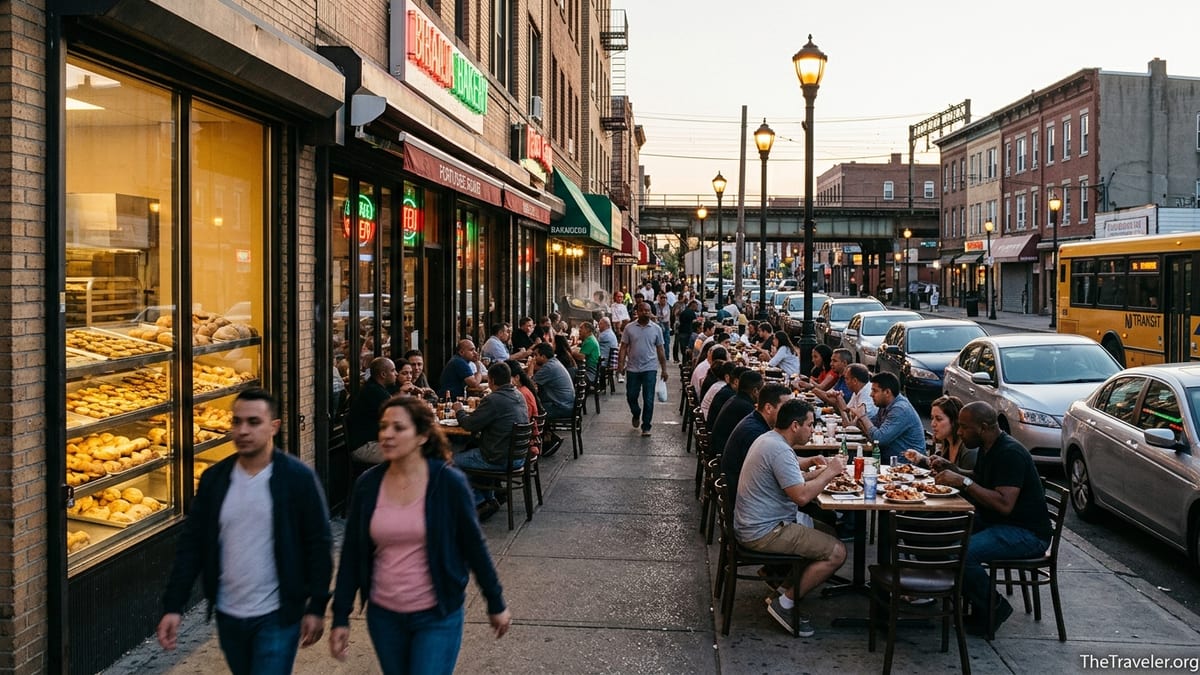
If there is a single neighborhood that captures North Jersey’s global flavor, it is Ironbound in Newark. Just a short walk from Newark Penn Station, this district has been shaped for decades by Portuguese, Spanish and Brazilian immigration. Ferry Street, the main commercial strip, is lined with churrascarias, seafood restaurants, pastelarias and bars that feel far closer to Lisbon or Rio than to midtown Manhattan.
On a typical evening, you might sit down at a traditional Portuguese dining room where waiters in white shirts ferry platters of grilled sardines, garlicky shrimp and steak topped with fried egg. A hearty meal of piri-piri chicken with rice, a shared seafood stew and a bottle of house vinho verde at a mid-range spot often comes to a moderate per-person total compared with Manhattan, especially if you avoid premium wine lists. Family-run restaurants that have been operating since the late 1990s or early 2000s still draw multi-generational crowds on weekends, and newer Brazilian-focused spots serve feijoada and rodizio to a younger late-night set.
Stopping by a pastelaria for an espresso and a pastel de nata is part of the local rhythm. Bakeries display cases of custard tarts, crusty rolls, croquettes and savory pies, with many items sold for just a few dollars. During major events such as Portugal Day festivities in June, Ironbound’s streets fill with music, flags and temporary grills, turning the neighborhood into one long open-air dining room. For travelers with a layover at Newark Liberty or an evening free after a show at the New Jersey Performing Arts Center, Ironbound offers a dense, walkable sample of the region’s immigrant food culture within minutes of the airport and downtown.
What sets Ironbound apart from generic “ethnic food districts” is that it remains a living neighborhood, not just a restaurant row. Kids play soccer in side streets, corner bars show European football, and you will hear Portuguese and Brazilian Portuguese on the sidewalks alongside English and Spanish. Even as some long-established families move to nearby suburbs, many of the restaurants, butchers and social clubs continue to anchor the community, giving visitors an authentic sense of daily life.
Paterson & Beyond: Little Istanbul, Little Lima and More
Paterson, about 20 miles northwest of Newark, is another key to understanding North Jersey’s uniqueness. Historically an industrial city built around the Great Falls of the Passaic River, it is now home to some of the largest Arab, Turkish and Peruvian communities in the United States. That diversity is written into the city’s neighborhoods: South Paterson is widely known as Little Istanbul or Little Palestine, while downtown Market Street is the hub of Little Lima, a dense Peruvian enclave.
In South Paterson, whole blocks are lined with halal butchers, Middle Eastern bakeries and Turkish restaurants where window displays show trays of baklava and kunefe. Menus commonly feature grilled lamb skewers, mixed mezze platters and traditional stews, and you will find families gathering over strong tea and Turkish coffee well into the night. Many storefronts have signage in Arabic and Turkish alongside English, and visitors who keep halal appreciate how easy it is to find appropriate meals at reasonable prices.
Just a few minutes away, Little Lima feels entirely different. Peruvian bakeries serve tall glasses of maracuyá juice and slices of tres leches cake, while small restaurants specialize in ceviche, lomo saltado and rotisserie chicken. On weekends, especially around Peruvian Independence Day in July or the Señor de los Milagros observances in October, processions and parades fill the streets with purple banners, dance troupes and vendors selling skewers, sweets and imported snacks. Travelers who plan their visit around these dates get a vivid glimpse of how diaspora communities keep traditions alive in New Jersey.
Paterson is not the only North Jersey city where immigrant food defines the streetscape. In nearby Passaic and Clifton, you will find clusters of Mexican and Central American taquerias, bakeries and small groceries. In Bergenfield and neighboring towns, Filipino groceries stock longanisa sausage, pandesal bread and ube desserts alongside American staples. For visitors with a car, tracing these communities across North Jersey can turn into a spontaneous food road trip where each stop reveals another piece of the region’s mosaic.
Hudson Waterfront: From Industrial Fringe to Creative Corridor
On the Hudson River side of North Jersey, cities like Jersey City, Hoboken and Weehawken have transformed over the past two decades from working waterfronts and rail yards to highly sought-after places to live, work and visit. They share postcard views of the Manhattan skyline, but their street-level culture is distinctly local, mixing long-established communities with new creative energy.
Jersey City in particular has emerged as one of the region’s most diverse and fast-changing cities. In neighborhoods like Journal Square and India Square, visitors can find dosa counters, chaat shops and South Asian sweet stores lining the sidewalks. Downtown and the Powerhouse Arts District mix lofts, galleries, coffee roasteries and cocktail bars in converted industrial buildings. A traveler might start the day with a Guatemalan-style breakfast in the Bergen-Lafayette area, grab a bánh mì from a Vietnamese bakery in the afternoon, then end the evening with craft beer and live music near the waterfront, all within a few minutes’ ride on the local light rail.
Hoboken, once a gritty port town, has long since reinvented itself as a compact, walkable city popular with young professionals and families. Washington Street, the main thoroughfare, combines old-school Italian delis and bakeries with contemporary brunch spots, yoga studios and pubs. The city’s piers have been turned into parks with playgrounds, lawns and bike paths, where joggers and dog walkers share space with visitors snapping photos of the Empire State Building across the river. Compared with Manhattan, prices at casual eateries and bars can still feel slightly gentler, especially for happy hour specials and weekday lunches.
What differentiates the Hudson waterfront from other "across-the-river" urban areas is its layered history. Many of the new residential towers and office buildings stand beside 19th-century row houses, former factories and old rail infrastructure, and street grids twist around the remnants of warehouses and piers. Travelers who venture beyond the promenade and into side streets will find small parks dedicated to local labor history, murals reflecting neighborhood identities and pocket-sized cafés run by long-time residents rather than national chains.
Suburban Main Streets & Classic North Jersey Diners
Beyond its big cities, North Jersey is a region of small downtowns stitched together by highways. Towns like Montclair, Maplewood, Ridgewood, Westfield, Englewood and Morristown each offer lively main streets worth a detour, especially for travelers who prefer a slower pace than the Hudson waterfront or Newark.
Montclair, for example, has become known for its restaurant scene, with blocks of Bloomfield Avenue and Church Street lined with everything from upscale seasonal American kitchens to Ethiopian injera platters and ramen shops. Maplewood’s village center houses neighborhood bistros, an independent movie theater and a beloved ice cream shop where families line up on summer nights. In Ridgewood, tree-shaded streets lead to a downtown dotted with cafés, pastry shops, boutiques and a mix of Japanese, Italian and Middle Eastern eateries. Prices in these suburban centers vary, but many casual meals fall in the mid-range for the New York metro area, with lunch at a sandwich shop or noodle bar often costing less than comparable options just across the Hudson.
Threaded through all of these towns is another North Jersey institution: the diner. Stainless-steel exteriors, long counters with swivel stools, thick laminated menus and all-day breakfast define the experience. In Bergen and Passaic counties in particular, residents have fierce loyalties to their local spots, whether it is a roadside diner off Route 4 known for its pancakes or a place along Route 3 famous for late-night disco fries and milkshakes.
For travelers, diners are both practical and cultural waypoints. They are typically open from early morning until late at night, with some operating 24 hours. You can order a plate of eggs, toast and coffee for a modest sum at 6 a.m., then return at midnight for a burger and a slice of cheesecake. Portions tend to be generous, and menus accommodate everything from Greek salads to turkey clubs and spanakopita, reflecting the Greek-American roots of many owners. Locals use diners as de facto community centers, meeting after high school games, catching up over weekend brunch, or simply nursing a coffee while reading the paper.
Everyday Affordability, Transit & Practical Travel Details
Compared with New York City proper, much of North Jersey still feels relatively accessible in terms of day-to-day costs, although prices vary widely between neighborhoods. A quick lunch in a Paterson kebab shop or a Peruvian rotisserie might be under twenty dollars per person, while a full dinner with drinks at a popular Ironbound seafood restaurant can run higher, especially if you order fresh shellfish or premium cuts of meat. Coffee at an independent café in Jersey City or Montclair is typically comparable to New York prices, but parking and some retail goods may be slightly less expensive than across the river.
One of North Jersey’s greatest strengths for visitors is its public transit. Newark Penn Station connects to Amtrak, NJ Transit, PATH trains to Manhattan and light rail to neighborhoods along the river. Hoboken Terminal is another major hub, feeding commuter rail lines, ferries and light rail. Jersey City’s Grove Street and Journal Square PATH stations link quickly to lower and midtown Manhattan, while buses fan out to Bergen and Passaic County suburbs. This network allows travelers to base themselves outside New York City, perhaps in a Jersey City or Newark hotel, while exploring both the region and Manhattan without needing a car.
That said, a car makes exploring smaller enclaves like South Paterson, Little Lima, Bergenfield or certain parts of the Ironbound easier, especially in the evenings or on weekends when bus frequencies drop. Drivers should budget for tolls on bridges, tunnels and some highways, as well as parking fees in busier downtowns. Many suburban main streets now use app-based metered parking, and some residential areas near transit hubs enforce permit rules, so checking signage before you lock the car is essential.
Safety perceptions in North Jersey often lag behind reality. While cities like Newark and Paterson have their challenges, main restaurant districts, waterfronts and downtowns commonly see a visible police and community presence, especially on weekends and during events. As in any urban area, staying aware of your surroundings, avoiding poorly lit side streets late at night and using well-traveled transit routes go a long way. Talking with hotel staff, local shopkeepers or restaurant servers about which areas feel comfortable to walk can give on-the-ground context that complements any guide.
Local Rituals, Sports & Cultural Life
Beyond its food, North Jersey’s sense of place emerges in its everyday rituals and seasonal traditions. High school football games, little league tournaments, and youth soccer occupy fields from September through spring, drawing crowds bundled in school colors. In smaller towns, these gatherings double as informal reunions, where residents who left for New York or other states reconnect over hot chocolate and concession-stand snacks.
On summer weekends, public pools and county parks fill with families grilling, flying kites and setting up picnic blankets. Places like Branch Brook Park in Newark attract visitors for cherry blossoms in April, while the Hudson River waterfront parks in Jersey City, Hoboken and Weehawken become evening promenades as temperatures rise. Food trucks serving everything from arepas to Korean fried chicken often cluster near these green spaces during peak seasons, creating ad hoc outdoor food courts.
North Jersey’s calendar is also dense with cultural festivals that reflect its communities. Newark’s Portugal Day celebrations transform Ironbound streets with music, parades and food stalls. Paterson’s Peruvian Day parade and Dominican and Palestinian events turn downtown blocks into oceans of flags and traditional dress. In Jersey City, street fairs highlight Indian, Filipino, Latin American and Caribbean cultures across different neighborhoods. Many of these events are free to attend, with costs coming mainly from what you choose to eat and drink or whether you buy crafts and souvenirs.
For travelers looking for arts beyond street life, venues such as the New Jersey Performing Arts Center in Newark, local theaters in Montclair and Morristown, and small galleries in Jersey City and Hoboken offer concerts, plays, comedy and exhibitions throughout the year. Pairing a matinee or evening show with a pre- or post-performance meal in a nearby neighborhood is one of the most satisfying ways to experience how food and culture intertwine here.
The Takeaway
North Jersey is not a single destination but a collection of overlapping worlds. Its uniqueness lies in how closely those worlds sit together and how fully they retain their character. Within an hour’s travel, you can walk from an Ironbound bakery serving custard tarts to a Turkish café pouring strong tea in South Paterson, then end the day watching the Manhattan skyline from a Jersey City pier.
For travelers, the region rewards curiosity more than checklists. The best days here tend to be the ones where you follow a local’s recommendation to an out-of-the-way Peruvian rotisserie, step off the main drag in Hoboken to find a tiny Italian bakery, or linger over coffee in a Montclair café watching people drift past with tote bags from the farmer’s market. Understanding North Jersey means letting yourself move between city and suburb, waterfront and inland, old-school diner and new-wave bistro, and recognizing that together they form a region with a character as rich and layered as any major city.
FAQ
Q1. Is North Jersey a good base for visiting New York City?
Yes. Many travelers stay in places like Jersey City, Hoboken or Newark for better hotel value while using PATH trains and NJ Transit to reach Manhattan in 15 to 30 minutes.
Q2. Do I need a car to explore North Jersey’s food neighborhoods?
Not strictly, but it helps. You can reach Ironbound, downtown Jersey City and Hoboken easily by train, while areas like South Paterson, Little Lima and many suburban downtowns are more convenient by car.
Q3. What is special about Newark’s Ironbound district?
Ironbound is known for its dense concentration of Portuguese, Brazilian and Spanish restaurants, bakeries and bars, all clustered within walking distance of Newark Penn Station, making it a top spot for seafood, grilled meats and pastries.
Q4. Is Paterson safe to visit for food and cultural events?
Visitors commonly explore Paterson’s main food and festival areas during the day and early evening without issue, especially in South Paterson and Little Lima. As in any city, it is best to stay on well-trafficked streets and remain aware of your surroundings.
Q5. How expensive is eating out in North Jersey compared with Manhattan?
Casual meals in North Jersey, especially in immigrant neighborhoods and suburban downtowns, are often moderately cheaper than similar meals in Manhattan, though high-end restaurants and waterfront venues can approach New York prices.
Q6. What are North Jersey diners known for?
They are famous for long menus, generous portions and flexible hours, often serving breakfast, burgers, salads and classic comfort dishes late into the night or around the clock.
Q7. Are there vegetarian or vegan options in North Jersey’s traditional food areas?
Yes. While many classic dishes are meat-focused, most neighborhoods include vegetarian-friendly items such as grilled vegetables, salads, pastries, South Asian vegetarian curries and plant-based options at newer cafés and restaurants.
Q8. When is the best time of year to experience local festivals?
Late spring through early fall is busiest, with events like Portugal Day in Newark, Peruvian and Dominican parades in Paterson and various street fairs across Jersey City and other towns.
Q9. Can I visit multiple North Jersey cities in one day?
Absolutely. With careful planning, you could have breakfast in Hoboken, lunch in Newark’s Ironbound, an afternoon coffee in Montclair and dinner in Paterson or Jersey City, especially if you combine transit and driving.
Q10. What is one mistake first-time visitors to North Jersey often make?
Many underestimate travel times and focus only on the Hudson waterfront. Building in extra time for traffic or transit delays and venturing inland to places like Paterson, Montclair or suburban downtowns gives a much fuller sense of the region.