


Just outside the Vatican walls, Piazza del Risorgimento is one of those Roman squares most visitors walk through without realizing how useful it can be. For travelers, however, this large, workaday piazza in the Prati district is a strategic base, a transport hub, a shopping gateway, and a practical buffer between the crowds of St. Peter’s and the quieter, everyday life of modern Rome. Understanding what happens here can make visiting the Vatican and the surrounding neighborhoods far smoother and more rewarding.
Get the latest updates straight to your inbox!
Where Piazza del Risorgimento Sits in the Rome Puzzle
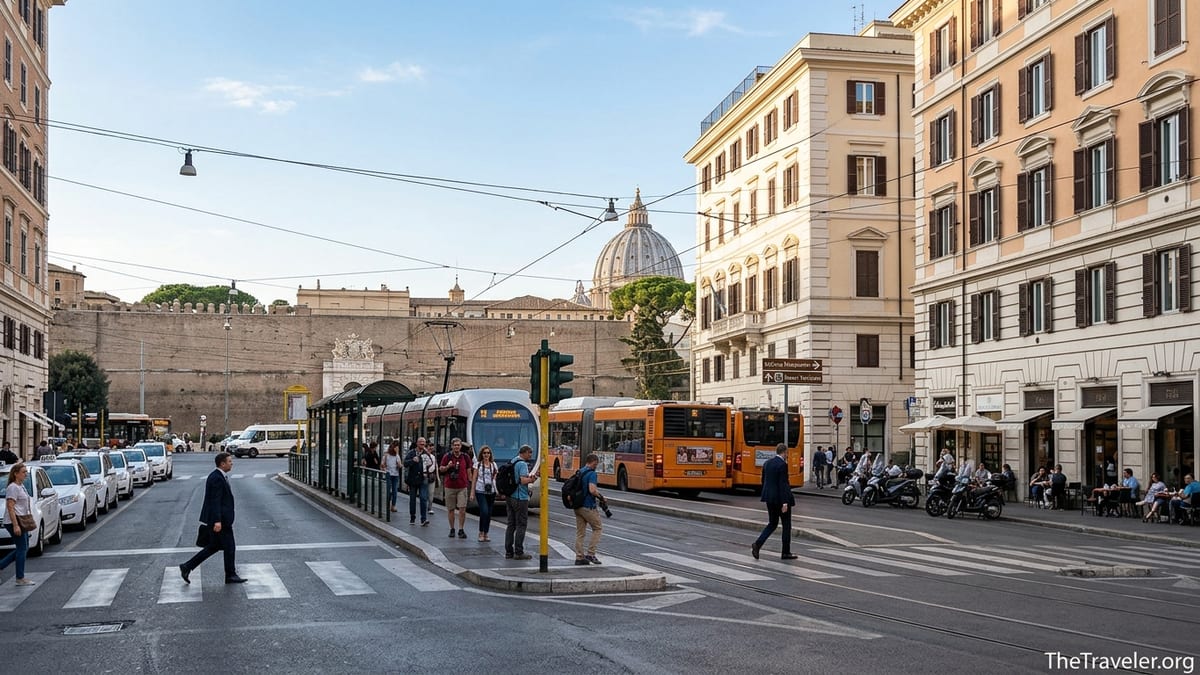
Piazza del Risorgimento lies in the Prati district, directly across from the Vatican walls and just a few minutes’ walk from St. Peter’s Square. Stand on the north side of the piazza and you can see the stone ramparts of Vatican City; walk five to ten minutes and you are under Bernini’s colonnade in front of St. Peter’s Basilica. For many visitors arriving from central Rome, this square effectively marks the transition from the residential streets of Prati to the religious and monumental heart of Catholicism.
The square is large and traffic heavy, with buses looping around a central island and trams passing along one side. Architecturally, it is framed by early 20th century buildings typical of Prati: sandstone facades, regular cornices, and wide sidewalks rather than ancient ruins. That makes it feel less like postcard Rome and more like a functioning European city, which is exactly why so many Romans use it in daily life and why travelers can treat it as a practical starting point.
Because Prati was laid out on a grid after Italian unification, streets meet the piazza at clear angles instead of the winding lanes you find near the Pantheon or Piazza Navona. This means that even first-time visitors who feel disoriented in Rome’s medieval tangle often find it easier to navigate from Piazza del Risorgimento. You can literally look down the long straight line of Via Cola di Rienzo and aim yourself toward the Tiber River or toward the Vatican walls with little risk of getting lost.
A Practical Gateway to the Vatican Museums and St. Peter’s
For most travelers, Piazza del Risorgimento’s main appeal is its location a short walk from the Vatican Museums entrance and St. Peter’s Basilica. On a busy summer morning, when queues snake around the Vatican walls, being based near the piazza means you can leave a hotel or apartment in Prati and reach the museum entrance on Viale Vaticano in about ten to fifteen minutes on foot, even with crowds. Many guided tours will direct you to meet at landmarks bordering the piazza before walking together to the museums.
The approach is straightforward in practice. From the tram and bus stops on the Vatican side of Piazza del Risorgimento, you follow the outside of the walls uphill along Viale Vaticano until you reach the modern entrance to the Vatican Museums complex. Early in the day, when ticket holders with timed entries line up, the sidewalks here can feel congested, but they are broad and paved. Travelers with mobility issues often find it easier to arrive at Piazza del Risorgimento by public transport or taxi, then manage the gentle incline, rather than tackling longer walks from metro stations farther away.
St. Peter’s Square is even closer. Take Via di Porta Angelica or the short streets leading from the piazza through the rows of souvenir shops and small cafes, and you emerge under the colonnade in a matter of minutes. In the late afternoon, when many group tours are finishing, the route between the basilica and Piazza del Risorgimento can be crowded with vendors selling rosaries, umbrellas, and bottled water, but the distance remains short enough that travelers can comfortably go back and forth several times during a day of sightseeing.
Transport Hub: Buses, Trams and Taxis That Work for Visitors
Piazza del Risorgimento is one of the more useful surface transport nodes on the Vatican side of Rome. Several city bus routes loop around the square, connecting it with Termini station, Piazza Venezia, Trastevere and other key areas. Travelers staying in Prati often use these buses to reach the historic center in around fifteen to twenty minutes, avoiding multiple metro changes. Services can be crowded at peak times but they are frequent, and tickets for the city network remain relatively affordable compared with many other European capitals.
The square is also the terminus for tram line 19, which runs across the city toward the eastern neighborhoods. For visitors who prefer to see Rome above ground rather than in metro tunnels, this slow but scenic route can double as a budget sightseeing ride. Board the tram at Piazza del Risorgimento and you roll past residential quarters, local markets, and stretches of tree-lined boulevards that rarely appear in guidebooks, offering a window onto everyday Roman life beyond the monuments.
Another practical feature for travelers is the presence of a taxi stand on the piazza. On days when early Vatican Museum entries or Scavi tours under St. Peter’s Necropolis require dawn arrivals, visitors can often find taxis queuing here even in the early morning. For families or older travelers, this can be more comfortable than relying on early buses. The ride from the piazza to central spots like Piazza Navona or Campo de’ Fiori is relatively short, so fares stay in the moderate range by big-city standards, especially if shared among two or three people.
Staying Near Piazza del Risorgimento: Who It Suits
Accommodation options radiate out from Piazza del Risorgimento into the streets of Prati, ranging from small guesthouses in early 20th century apartment blocks to mid-range hotels designed for Vatican visitors. Travelers who choose this area typically value being within walking distance of St. Peter’s while also staying in a neighborhood that feels lived-in and comparatively quiet at night. Compared with streets directly around Termini or in the bar-lined lanes of Trastevere, the immediate surroundings of the piazza can feel calmer once daytime Vatican crowds disperse.
For families, this can be a particular advantage. Prati’s wide pavements and grid layout make pushing strollers easier, and there are plenty of supermarkets, bakeries, and pharmacies within a ten-minute walk of the square. It is common to see parents stop at a local grocery near Via Cola di Rienzo to pick up fruit and snacks, then cut through Piazza del Risorgimento on the way to an afternoon visit to the Vatican Museums or Castel Sant’Angelo. Apartment rentals nearby often appeal to these travelers, who appreciate having a kitchen while still being able to reach central Rome’s piazzas by bus or a twenty- to thirty-minute walk.
On the other hand, visitors who prioritize nightlife may find the area a little subdued. While there are wine bars and modern bistros scattered through Prati, they are more spaced out than in Trastevere or Monti, and many close earlier. Couples wanting to end the evening with a late drink along the Tiber or near Campo de’ Fiori can certainly base themselves near Piazza del Risorgimento, but they should factor in taxi or bus rides home after midnight when metro services are reduced and walking routes feel long after a full day on foot.
Gateway to Via Cola di Rienzo and Prati Shopping
From Piazza del Risorgimento, Via Cola di Rienzo runs straight toward the Tiber River as one of Rome’s main shopping arteries. This street is popular with locals who prefer it to the more tourist-oriented Via del Corso. Walking from the piazza down Via Cola di Rienzo, travelers find a mix of Italian fashion chains, international brands, and independent boutiques selling shoes, leather bags, and homeware. Prices vary, but many stores sit in the mid-range bracket, making the area useful for stocking up on everyday clothing and gifts without the high-end luxury prices of Via dei Condotti.
Interspersed between fashion stores are gourmet food shops and delicatessens selling coffee beans, regional wines, dried pasta, and jars of artichokes or sun-dried tomatoes. These are popular with visitors looking for edible souvenirs that are easier to pack than bottles of olive oil. A traveler might, for example, buy vacuum-packed pecorino, packets of specialty biscotti, or small tins of truffle-flavored salt after a Vatican visit, then return to their accommodation in Prati without having to carry heavy bags across the entire city.
The side streets leading off Via Cola di Rienzo toward Piazza del Risorgimento contain everyday businesses too: dry cleaners, hairdressers, stationery shops, and small neighborhood cafes. For visitors who enjoy observing daily life rather than only ticking off monuments, an hour or two spent here before or after Vatican sightseeing provides a welcome contrast. Sitting at a cafe terrace on a weekday morning, you are more likely to be surrounded by office workers and residents from Prati than by tour groups, even though St. Peter’s dome is only a short walk away.
Cafes, Quick Bites and Everyday Convenience
Although Piazza del Risorgimento itself is busy with traffic, the blocks surrounding it host a dense concentration of cafes, snack bars, and casual restaurants that are particularly useful to travelers managing tight Vatican schedules. Many places open early to catch workers commuting through the square, offering espresso and a cornetto at the counter for a few euros. Visitors with morning Vatican tickets can grab a standing breakfast here in ten minutes, then walk to the museums without needing a full sit-down meal.
At lunchtime, simple trattorias and pizzerias in the nearby streets serve set menus and pizza by the slice that appeal to both locals and tourists. Prices are typically lower than around Piazza Navona or the Pantheon, though they rise closer to the Vatican walls where souvenir kiosks cluster. A practical strategy for budget-conscious travelers is to walk two or three blocks away from the piazza and the main pilgrimage routes before choosing a restaurant; even a short detour can mean more local customers and slightly more reasonable bills.
There is also a strong concentration of gelato shops in the broader Prati area, many of which are an easy walk from Piazza del Risorgimento and popular with Romans as well as visitors. After an intense visit to the Sistine Chapel, travelers often walk down toward the square to find a gelato or granita and a shaded bench before continuing their day. Because Prati serves a mixed residential and office population, opening hours here tend to be reliable during the working week, which is convenient for travelers who like to return to the same cafe or bakery each morning.
Connecting Vatican Sightseeing With the Rest of Rome
For travelers planning multi-day stays, Piazza del Risorgimento functions as a hinge between the Vatican and other neighborhoods. From the square it is realistic to walk to Castel Sant’Angelo in around fifteen minutes, then continue across the river to Piazza Navona, Campo de’ Fiori and the Pantheon, creating a full day’s itinerary that begins and ends in Prati. Many visitors staying near the piazza choose this route on their first afternoon: a slow walk post check-in that introduces them to the river, bridges, and some of Rome’s most famous baroque spaces without needing public transport immediately.
Buses from the square link up with more distant sites. A traveler might, for example, spend the morning in the Vatican Museums, return via Piazza del Risorgimento for a quick lunch along Via Cola di Rienzo, then catch a bus straight to the Colosseum or Piazza Venezia for afternoon explorations. On the return, another bus or tram ride back to the piazza deposits them within easy reach of their accommodation. Because these routes are also heavily used by commuters, service remains relatively frequent throughout the day, which is reassuring when you are not yet familiar with Rome’s network.
Evening walks work well from here too. As the heat drops, travelers can stroll from Piazza del Risorgimento down to the Tiber in fifteen minutes, cross one of the bridges toward the historic center, have dinner near Campo de’ Fiori or in the narrow streets behind Piazza Navona, and then return by taxi or on foot via Castel Sant’Angelo. Using the piazza as a reference point simplifies navigation: when in doubt, following signs back to the Vatican and then to Piazza del Risorgimento tends to lead you home.
The Takeaway
Piazza del Risorgimento rarely appears on glossy lists of Rome’s most beautiful squares, but for travelers it quietly does a great deal of work. It stands at the edge of Vatican City as a hinge between pilgrimage sites and a modern residential neighborhood, offering straightforward access to St. Peter’s and the Vatican Museums while anchoring useful transport routes and manageable walking distances to much of central Rome.
Staying or spending time near this piazza rewards visitors who value practicality: reliable buses and trams, a taxi stand for early tours, easy connections to Via Cola di Rienzo’s shops and Prati’s everyday services, and a calmer atmosphere once day-trippers have left the Vatican area. For families, older travelers, and anyone who prefers authentic neighborhoods over all-night nightlife, this can be an ideal base. Even for those staying elsewhere, understanding how Piazza del Risorgimento fits into the city’s layout can help structure more efficient, less stressful days of sightseeing.
FAQ
Q1. How close is Piazza del Risorgimento to St. Peter’s Basilica?
The piazza is only a few minutes’ walk from St. Peter’s Square. From the Vatican side of the square, you simply follow the short streets lined with shops toward the basilica, making it one of the closest practical transport and meeting points outside the Vatican walls.
Q2. Is Piazza del Risorgimento a good area to stay in for first-time visitors?
It suits travelers who want to be near the Vatican and appreciate quieter, residential surroundings. You can walk to St. Peter’s and the Vatican Museums, reach central Rome by bus or tram, and still find supermarkets, cafes, and everyday services within a few blocks.
Q3. How do I get to Piazza del Risorgimento by public transport?
Several city bus routes stop directly on the piazza, linking it with major hubs like Termini station and Piazza Venezia. Tram line 19 also terminates here, and metro line A stations in Prati are within walking distance, so many travelers combine a short metro ride with a walk or bus connection to reach the square.
Q4. Is it easy to reach the Vatican Museums from Piazza del Risorgimento?
Yes. From the piazza you follow the outside of the Vatican walls up Viale Vaticano and reach the museum entrance in about ten to fifteen minutes on foot. Many guided tours use meeting points near the square because the route is simple and the sidewalks are broad.
Q5. What kind of restaurants and cafes are near the piazza?
The streets around Piazza del Risorgimento and along nearby Via Cola di Rienzo offer a mix of neighborhood cafes, pizzerias, and simple trattorias. You can find quick stand-up breakfasts, set-menu lunches, and casual dinners at generally moderate prices compared with the most touristy areas of the historic center.
Q6. Is the area around Piazza del Risorgimento safe at night?
Prati is largely residential and considered one of Rome’s calmer districts, especially compared with nightlife-heavy zones. Normal big-city precautions still apply, but many travelers appreciate that streets remain active with local residents returning from work and restaurants, rather than concentrated tourist crowds.
Q7. Are there good shopping options close to the piazza?
Yes. Via Cola di Rienzo begins at Piazza del Risorgimento and is one of Rome’s main shopping streets, with clothing chains, smaller boutiques, and gourmet food stores. It is popular with locals, so prices and selection often feel more everyday and practical than in purely tourist-focused areas.
Q8. How long does it take to walk from Piazza del Risorgimento to central sights like Piazza Navona?
At a relaxed pace, you can walk from the piazza to Castel Sant’Angelo in about fifteen minutes, then continue across the river to Piazza Navona or Campo de’ Fiori in another fifteen to twenty minutes. Many visitors plan circular walks that start and end near the square and cover several major sights in a single loop.
Q9. Is Piazza del Risorgimento mainly a tourist spot?
While many tourists pass through on the way to the Vatican, the piazza primarily functions as a transport hub for locals in the Prati district. That mix gives the area a more everyday feel than the city’s most photographed squares, which some travelers find refreshing after time in heavily touristed zones.
Q10. Who might prefer staying elsewhere instead of near Piazza del Risorgimento?
Travelers who prioritize nightlife, late bar scenes, or being directly in the medieval lanes of the historic center may prefer neighborhoods like Trastevere, Monti, or the streets around Campo de’ Fiori. Piazza del Risorgimento and Prati are better suited to those who value calm evenings, proximity to the Vatican, and practical transport over a dense concentration of bars.