


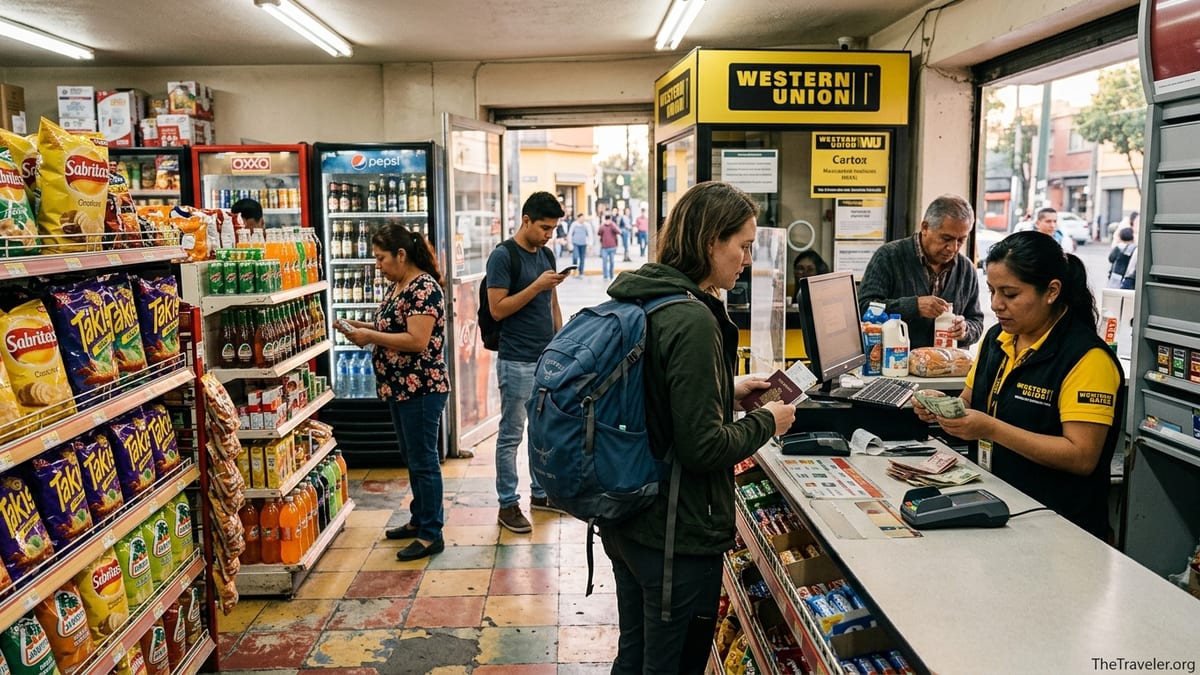
In an era of beautifully designed money transfer apps, it might seem odd to watch a backpacker in Bangkok or a nurse on layover in Dubai step into a fluorescent-lit corner shop to pick up cash at a Western Union counter. Yet for millions of travelers and migrant workers, Western Union remains the fallback, the safety valve, and often the first choice when money absolutely has to arrive. From dense networks of cash pickup points to the way it straddles both analogue and digital worlds, there are practical reasons why Western Union can beat newer apps when you are on the move.
Get the latest updates straight to your inbox!
A Legacy Brand That Still Shows Up Where Travelers Need It
Western Union has been wiring money longer than most modern banks have existed, and that history matters when you are far from home. The company now supports transfers to more than 200 countries and territories and works with hundreds of thousands of agent locations worldwide, often quoted at over 550,000 locations and in recent reviews at more than 600,000. In practice, this means you can arrive in a small town in the Philippines, rural Mexico, or a provincial city in Morocco and still find a yellow Western Union sign in a pharmacy, post office, supermarket, or mobile phone shop.
For travelers, the key strength is breadth rather than elegance. A digital-first platform like Wise or Revolut might offer better exchange rates for bank-to-bank transfers, but they still rely on the person on the other end having a bank account or compatible app. Western Union’s global footprint is built around cash, which is why many comparison guides position it as the choice when your recipient has no bank account or lives somewhere that digital rails are patchy. A traveler helping a trekking guide in Nepal get paid, or sending emergency money to a friend stuck in rural Kenya, often finds Western Union to be the only brand everyone recognizes.
Even in the United States, the network is surprisingly dense. Data compiled in late 2025 shows that Florida alone hosts more than 3,000 Western Union agent locations, roughly one for every few thousand residents, with grocery chains, drugstores, and check-cashing outlets acting as agents. That density mirrors what many travelers experience abroad: it may not be glamorous, but the service is usually nearby when you need it.
This physical presence also gives Western Union a psychological edge. A traveler who feels uneasy trusting a new app with a large transfer can walk into a staffed location, ask questions face to face, and walk out with a printed receipt. For many people used to handling money in cash, that sense of solidity is worth more than a slick interface.
Cash Pickup: Solving Problems That Apps Cannot
The biggest single reason some travelers prefer Western Union is simple: cash pickup. Western Union’s value proposition has always been that a sender can pay in one country and a recipient can collect cash, often within minutes, somewhere else. That could be at a supermarket counter in Mexico City, a minimart in Chiang Mai, or a bank branch in Accra. Recent reviews of Western Union still emphasize that it “earns its place” primarily by reaching recipients without bank accounts and enabling local cash collection.
Consider a common travel scenario. An American traveler in Vietnam compromises their debit card in an ATM skimmer and their bank blocks the card. Their backup credit card is declined for suspected fraud. Hotel bills are coming due and the traveler needs local currency. A family member in the United States can walk into a Western Union agent in a strip mall, pay with cash or card, and send a transfer for in-store pickup. Within minutes, the traveler can present a passport and the tracking number at a participating bank or currency exchange in Hanoi and walk out with Vietnamese dong. No local bank account, no local app, no waiting for an international wire to clear.
Western Union’s speed and flexibility also matter in countries where digital infrastructure is uneven. A digital transfer to a local bank in West Africa or parts of Latin America might get held up by local clearing systems or compliance checks. A Western Union cash pickup, by contrast, usually sits within Western Union’s own network and is often available almost immediately, staying available for weeks or months until collected. If the traveler’s plans change and they move from the capital to a smaller city, they can often find another agent nearby and pick up the same transfer there.
Travelers sometimes even use Western Union to pay themselves. Threads from nomads in Vietnam, for example, describe sending money to their own name and picking it up in-country as a way to avoid multiple expensive ATM withdrawals on a foreign card. By paying the Western Union fee once and collecting a larger amount of local cash, they sidestep per-withdrawal ATM fees and sometimes unfavorable foreign exchange margins at the machine.
When Digital Banking Fails Abroad
Digital banks and fintech apps are convenient until they are not. Many travelers discover the limits of app-only solutions the hard way: a frozen Wise account during extra verification checks, a Revolut transaction blocked for compliance reasons, or a PayPal hold on suspected “unusual activity.” For a remote worker in Bali or a backpacker in Colombia, those delays can mean not being able to pay a landlord or buy a bus ticket at the exact moment they need to move.
Traditional banks can be just as problematic. Despite improvements in fraud detection, bank and card issuers in 2025 and 2026 continue to flag foreign transactions as suspicious. Online discussions are full of stories about cards suddenly declining abroad, even when the traveler had previously notified the bank. In many destinations, resolving the issue requires making an international phone call or navigating a secure chat that demands text message codes sent to a home-country phone number. During that gap, Western Union often becomes the emergency lifeline.
The appeal for travelers in trouble is that Western Union usually talks to your passport, not to your phone’s SIM card or your home bank’s mobile app. If your phone is stolen in Barcelona, your banking apps are locked out due to two-factor authentication, and your hotel insists on cash, a friend who knows only your name, country, and a rough location can create a Western Union transfer. All you need is access to email or a scrap of paper with the tracking number and a valid identification document to collect it.
Even when Western Union operates via an app, it straddles both worlds. The company’s mobile app in 2026 allows users in many countries to store a digital balance, send to bank accounts, mobile wallets, or for cash pickup, and then have the recipient decide how to receive the funds. This hybrid model means that a traveler might initiate a transfer from a smartphone using a stored debit card, but still rely on the old-fashioned cash counter on the other end.
Coverage Where Modern Apps Still Struggle
Digital transfer apps shine in popular travel and migration corridors such as United States to Mexico or Europe to India. For those routes, services like Wise, Remitly, and Revolut often beat Western Union on price when sending directly to a bank account. But there are still entire regions, currencies, and use-cases where Western Union appears when others do not. That is one reason many comparison articles frame Western Union as a last-resort or specialist option rather than a relic.
A traveler sending money to a family-run guesthouse in rural Tanzania, for instance, might find that the owners do not use international bank transfers. They may rely on a local mobile money provider or simply prefer cash. Western Union can deposit funds into local mobile wallets in some countries, but where that is not possible, it still offers in-person cash collection in towns where global fintech apps have no direct presence. For the traveler, the choice is not between Western Union and a digital app, but between Western Union and no transfer at all.
Another real-world scenario involves mixed digital and physical routes. A nurse from the Philippines working in Dubai might get paid into a local bank account, use a digital app like Remitly for routine remittances to a bank back home, but still rely on Western Union for urgent transfers to relatives in rural provinces who collect cash at a pawn shop or convenience store. For a traveler helping that family in an emergency, using the same Western Union route the family already trusts can be less confusing than asking them to install a new app and open an online account.
Western Union’s partnership strategy also extends its reach. In many countries, Western Union services are embedded inside other institutions: bank branches, national post offices, supermarket chains, and independent remittance shops. For a traveler in Italy, Western Union might appear inside a tobacconist; in Thailand, inside a 24-hour convenience store; in the United States, at a pharmacy counter. That patchwork of local partnerships translates into practical coverage, especially outside major cities.
Why Some Travelers Accept Higher Costs
Western Union is rarely the cheapest way to move money, and most comparison tests in 2025 and 2026 show that its fees and exchange rate margins are usually higher than digital-first competitors for standard bank transfers. Yet many travelers and expatriates still use it willingly. The reason is that cost is only one variable, and often not the most urgent one when you are stuck without funds abroad.
Imagine you are a traveler in Buenos Aires faced with a landlord who demands rent in cash. Your home bank card has been blocked, and your attempts to open an app-based account from abroad keep failing due to identity checks. A relative in New York runs a quick search and discovers that sending 1,000 US dollars through a low-cost app to a bank account would save perhaps 10 or 20 dollars compared with Western Union, but the landlord has no bank account and no intention of opening one for a one-off payment. In that situation, the small savings are irrelevant. Western Union’s cash pickup option is the only realistic path, even if the exchange rate is slightly worse.
Travelers also weigh cost against predictability. Western Union lets senders see fees and estimated exchange rates before confirming a transfer. While the rates may not be the most competitive, they are generally stable during the booking window, and the sender receives a tracking number that both parties can monitor. With some app-based services, fees and rates can vary significantly by time of day, corridor, and payment method, or change between simulation and confirmation. For a nervous relative sending an emergency transfer to a traveler, the transparency of a single quoted total can feel more reassuring than squeezing out the last fraction of a percentage point in savings.
There is also the question of failed transfers. Some travelers report that when a low-cost app declines a transaction or triggers extra checks, it can take days for funds to be released back to their card or account. Western Union is not immune to delays, but many users observe that cash pickup transfers either go through quickly or fail before payment is completed, avoiding the limbo of “pending” funds that no one can access. When time and certainty matter more than price, that trade-off can favor Western Union.
None of this means travelers should ignore prices. For planned rent payments or tuition transfers where both parties have bank accounts, comparison tools consistently show that Western Union is often the most expensive option. The point is that the same traveler who uses low-cost apps and multi-currency cards for routine spending may still keep Western Union in their toolbox for specific, high-stakes situations.
The Hybrid Traveler: Using Apps and Western Union Together
Today’s travelers rarely choose between Western Union and digital apps in a strict either-or way. Instead, many adopt a hybrid approach, leaning on modern fintech for everyday transfers and keeping Western Union as a backup for edge cases. This reflects Western Union’s own evolution, as the company has expanded its app, digital wallet, and bank-integration capabilities while still emphasizing its core strength in cash payout.
Consider a long-term digital nomad bouncing between Portugal, Thailand, and Mexico. For regular payments such as rent, coworking memberships, and splitting bills with other nomads, they might use Wise or Revolut to move money cheaply and fast between bank accounts and cards. However, they might also have an elderly parent in a village in the Philippines who prefers collecting money in cash at a pawnshop that doubles as a Western Union agent. The nomad could keep the Western Union app installed, pre-verify their identity, and store recipient details. When a typhoon damages the family home and money is needed immediately, they can send a transfer from their phone while on a train in Europe, knowing that cash will be ready for pickup in the village in minutes.
The hybrid traveler may also use Western Union to bridge gaps created by local banking rules. In some countries, foreigners cannot easily open bank accounts without long-term visas. Digital apps tied to local banking systems may be off-limits, or they may require address documentation that short-term visitors do not have. By contrast, Western Union is generally open to anyone who can satisfy identity requirements, regardless of their residency status. A seasonal worker in the Gulf or a language student in Spain might find it easier to rely on Western Union to receive support payments than to navigate local account-opening bureaucracy.
Western Union has also begun offering digital banking products in parts of Europe, blending a traditional bank account with integrated transfers to bank accounts, mobile wallets, or cash pickup. For a traveler based in one of these markets, this can mean holding a local account with a debit card while still having a direct pathway to send money as cash to relatives or to themselves when traveling. Even where such products are not available, the standard app acts as a bridge between the traveler’s bank or card and Western Union’s cash network.
The result is that Western Union is no longer just the fluorescent-lit counter in a corner store. For some travelers it is a quiet piece of financial infrastructure sitting behind the glossy layer of modern apps, ready to take over when those apps reach their limits.
The Takeaway
Western Union is unlikely to win any design awards from the digital nomad crowd, and for many common routes it is more expensive than modern fintech rivals. Yet it continues to feature prominently in the travel stories of people who find themselves up against the edges of the global financial system: unbanked recipients, blocked cards, missing phones, and destinations where sleek apps simply do not reach.
Some travelers prefer Western Union not because they reject technology, but because they understand its limits. Cash pickup and dense agent networks solve practical problems that app-only services still struggle with, especially in emergencies. A traveler who normally lives inside their smartphone may be deeply grateful for a printed Western Union receipt when that phone disappears in a hostel dorm or when a local landlord shrugs at the mention of digital transfers.
In practice, the smartest approach is not to choose sides. For planned, account-to-account transfers in well-served corridors, low-cost digital apps usually make more sense. For edge cases, emergencies, or payments to recipients who live in a cash-first world, Western Union remains a powerful tool. Travelers who build their financial plans around both worlds are better prepared for the unpredictable realities of life on the road.
FAQ
Q1. Is Western Union cheaper or more expensive than apps like Wise or Revolut?
For most bank-to-bank transfers on popular routes, Western Union is usually more expensive once you factor in fees and exchange rates. However, some travelers still choose it when cash pickup or specific locations matter more than getting the absolute lowest cost.
Q2. Why would I use Western Union if I already have a multi-currency travel card?
A multi-currency card works best where card payments and ATMs are reliable. Western Union becomes useful when your card is blocked, an ATM eats it, or your recipient can only accept cash in a place without strong banking infrastructure.
Q3. Can I send money to myself via Western Union while traveling?
Yes. Many travelers send transfers in their own name and pick them up abroad with a passport. This can be a way to access larger amounts of local cash without repeated ATM withdrawals, though you should compare total costs.
Q4. How fast are Western Union transfers compared with digital apps?
Cash pickup transfers are often available within minutes, which is similar to or faster than many app-based transfers to bank accounts. Bank deposits via Western Union can take longer and depend on the destination country and bank.
Q5. What identification do I need to pick up a Western Union transfer?
Typically you need a valid government-issued photo ID, the exact name used by the sender, and the tracking number. Some countries may ask for additional information, so it is wise to confirm local requirements in advance.
Q6. Are Western Union agent locations really easy to find when traveling?
In many countries, yes. Agent locations are commonly found in supermarkets, pharmacies, remittance shops, and post offices. That said, some travelers report that not every listed agent offers full services, so it is sensible to check opening hours and capabilities locally.
Q7. Is Western Union safe for travelers to use?
Western Union is a regulated money transfer company and widely used, but you should still take precautions. Only send money to people you trust, guard your tracking number, and collect cash in secure, well-lit locations during business hours.
Q8. Can I use the Western Union app instead of visiting an agent?
In many countries you can set up transfers in the app and pay with a bank account, debit card, or sometimes cash at an agent. The recipient can then receive money by bank deposit, mobile wallet, or cash pickup depending on local options.
Q9. When does it make more sense to use a digital transfer app instead?
If both you and your recipient have bank accounts or supported wallets in well-served corridors, low-cost apps usually offer better rates and lower fees than Western Union. They are ideal for routine, non-urgent payments.
Q10. Should I rely only on Western Union for money while traveling?
Relying solely on Western Union is not advisable. A better strategy is to combine multiple tools: at least two bank cards, some emergency cash, one or two digital transfer apps, and Western Union as a backup for cash-only or emergency situations.