


More news on this day
Gulf passengers are facing fresh delays and last-minute changes as renewed Houthi attacks on shipping and Saudi infrastructure in the Red Sea push airlines to reroute aircraft, trim schedules and navigate a tightening web of international airspace warnings.
Get the latest news straight to your inbox!
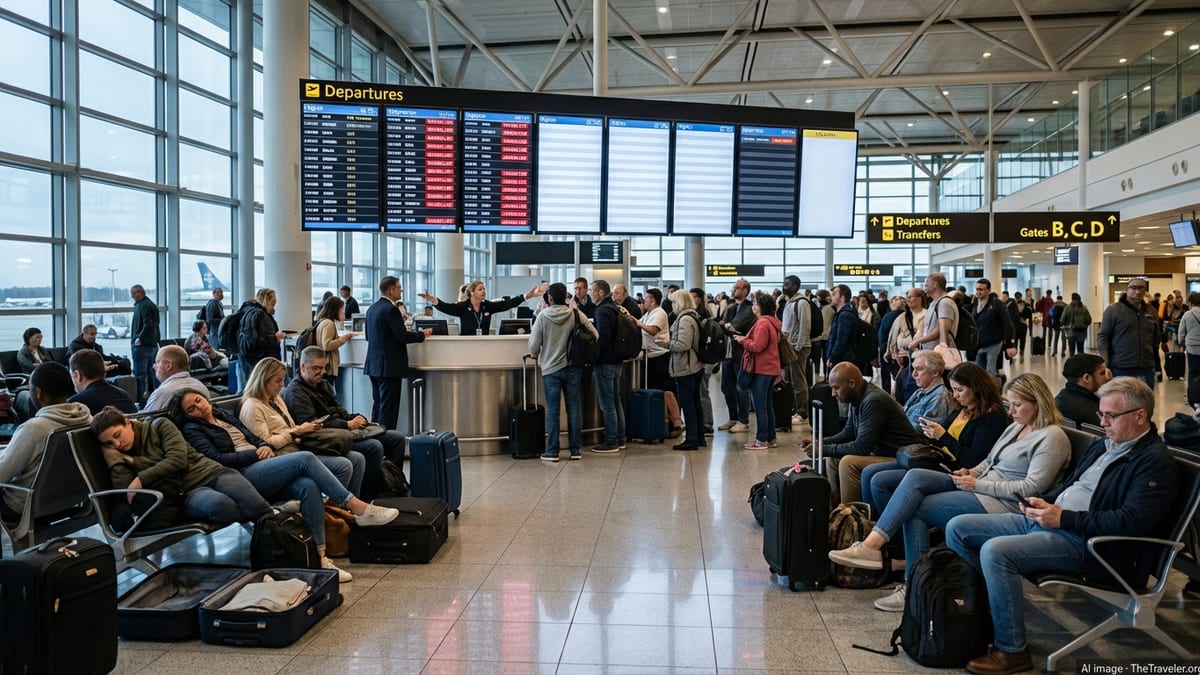
Red Sea escalation reverberates through Gulf hubs
Recent Houthi strikes on Saudi facilities along the Red Sea coast and threats to block Saudi-linked shipping through the Bab el Mandeb strait have reignited security concerns on one of the world’s most important trade corridors. Shipping data cited in multiple media reports on July 27 indicates a noticeable slowdown in vessel traffic through the southern Red Sea, underscoring how quickly the latest escalation is reshaping regional flows of cargo and energy.
While the immediate targets are tankers and commercial ships, aviation across the wider Gulf is once again feeling the knock-on effects. Flight paths between Europe, the Middle East and Asia frequently cross or skirt affected waters, and airlines are responding by shifting routings, adding buffer time and, in some cases, cancelling services to airports closest to the new flashpoints.
The renewed tensions come only months after carriers had begun restoring more direct routings through the region following an earlier wave of Red Sea and Strait of Hormuz disruptions. For passengers, that has translated into a return of elongated flight times, tight connections and an uptick in last-minute gate and schedule changes at already busy hubs.
Airlines cancel and reroute as risk assessments harden
Regional media coverage indicates that Saudi and UAE carriers were among the first to adjust operations following a mid-July missile and drone strike on Abha International Airport in southern Saudi Arabia, which prompted a temporary closure of the facility. Low-cost and full-service airlines alike diverted flights to alternative Saudi airports and cancelled some rotations, triggering disruption for connecting traffic across the Gulf.
In the days since, published aviation advisories describe a more cautious stance from carriers serving points along the Red Sea and in Yemen-adjacent airspace. Some airlines are opting for wider detours over central Saudi Arabia, the Arabian Sea or the eastern Mediterranean to avoid areas where military activity or debris could pose a safety-of-flight hazard.
Operational updates compiled by travel and security consultancies suggest that, for now, the impact is strongest on secondary routes and regional links rather than flagship long-haul services. However, even modest changes can ripple through dense hub banks, leaving inbound aircraft slightly behind schedule and compressing turnaround times for onward connections.
Regulators extend safety warnings over Gulf airspace
The European Union Aviation Safety Agency has extended a standing advisory covering the airspace of the United Arab Emirates, Bahrain, Qatar, Kuwait and parts of the Gulf of Oman until at least the end of August, citing ongoing military activity and the potential for missile or drone incidents. According to published guidance, the notice urges operators to conduct robust risk assessments when planning flights through the region and to remain prepared for sudden changes in routing requirements.
The advisory does not prohibit flights but reinforces a cautious posture that many carriers had already adopted during earlier phases of the Red Sea and Iran-related crises. For Gulf-based airlines that rely on overflying neighboring states to connect global markets, the extended warning adds another layer of operational complexity at the height of the summer travel peak.
Other national aviation authorities and foreign ministries, including those in major long-haul markets such as the United Kingdom and Canada, continue to warn travelers that the security situation in parts of the Middle East remains volatile and that flight cancellations or airspace restrictions could be imposed at short notice. Publicly available travel advice encourages passengers to monitor airline communications closely and build in extra time for airport formalities.
Travelers feel the strain of delays and diversions
For passengers flying through Dubai, Abu Dhabi, Doha and Riyadh, the effects of the latest tensions are most visible in the form of extended flight times and last-minute updates to itineraries. Travel advisories published by regional news outlets highlight cases where travellers to southern Saudi Arabia and nearby destinations have been rebooked via alternative airports or held on the ground while airspace clearances were confirmed.
Industry analysts note that even when hubs maintain largely intact schedules, minor disruptions accumulate quickly. Extra fuel loads for longer routings, congested alternative air corridors and weather-related constraints can compound security-driven changes, leaving airlines with fewer options to recover from delays. This is particularly challenging for Gulf carriers that bank arrivals and departures into tight waves designed to maximize global connectivity.
At the same time, passenger demand into and through the Gulf remains robust, keeping load factors high despite the uncertainty. Some corporate travel managers are advising clients to leave larger buffers between connecting flights and to avoid tight same-day meetings when itineraries involve transit near the Red Sea or in airspace subject to evolving advisories.
Outlook: heightened vigilance as peak summer continues
With the Red Sea corridor again at the centre of regional tensions and a declared Houthi intent to target Saudi-linked shipping, aviation planners are bracing for a prolonged period of heightened vigilance. Shipping and air-traffic data referenced in recent coverage show that while traffic has not halted, both sea and air operators are adjusting their risk calculus in real time.
Aviation safety specialists point out that Gulf carriers and international airlines now have extensive experience managing around conflict zones after several years of intermittent restrictions across the Middle East. Established contingency routings, layered security assessments and close tracking of military activity enable them to keep most services running, albeit with more frequent delays.
For travelers, the practical message remains consistent: routes are open, but conditions are fluid. As the northern-hemisphere summer peak continues and the Red Sea crisis unfolds, those flying through the Gulf are likely to encounter a more cautious, occasionally slower, but still highly connected aviation system.