


For years, third party visa providers were dominated by big, old-guard names that felt more like corporate back offices than travel tools. Yet when you search your airline app today or play with visa filters on Google Flights, there is a good chance the visa information and eVisa flows you see are quietly powered by a comparatively small Canadian company: Sherpa. As airlines, online agencies, and everyday travelers recalibrate how they handle increasingly complex entry rules, many are starting to prefer Sherpa over larger, more traditional visa platforms. Here is why that shift is happening, and what it means for how you plan your next trip.
Get the latest updates straight to your inbox!
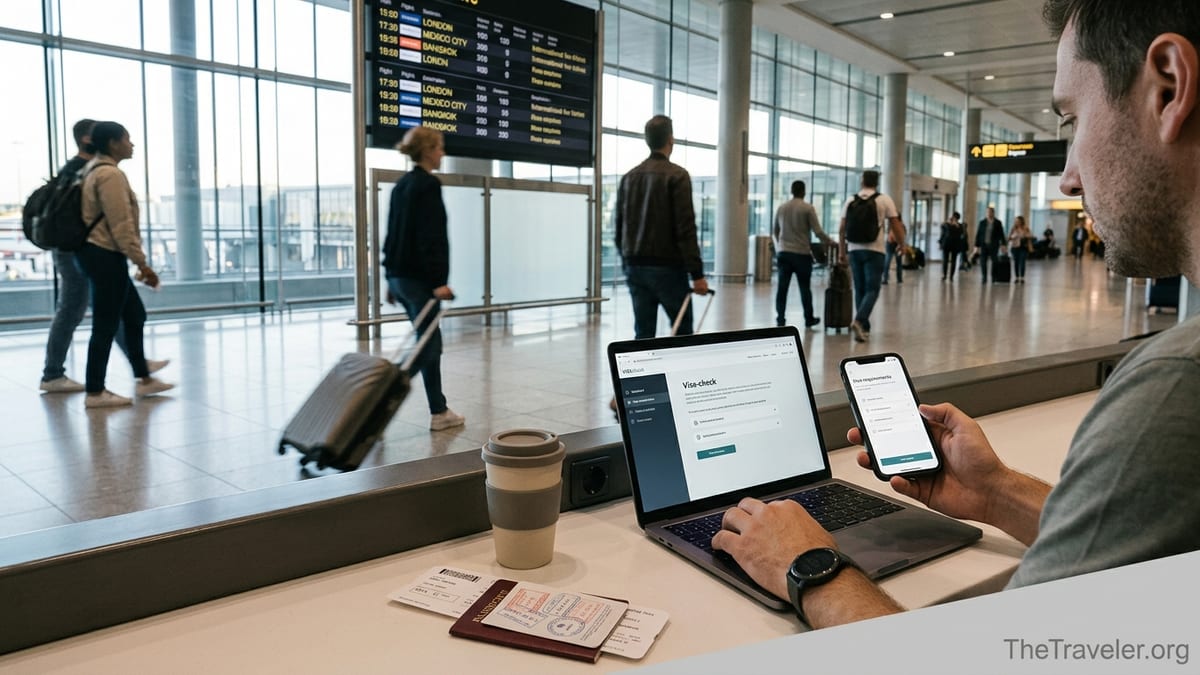
A Visa Tool Built for the Way People Actually Book Travel
Many legacy visa platforms such as CIBT’s brands, VisaCentral and Travisa, were originally built around corporate travel departments and high-touch concierge services. They excel at handling complex, document-heavy cases but often feel detached from how most leisure travelers search and book trips today. Their typical flow expects a traveler to visit a separate website, fill out long forms and sometimes even mail physical documents before anything moves forward.
Sherpa started from the opposite end of the journey. The company positions itself as an embedded layer that sits inside the places travelers already use, offering “move freely” travel requirements and eVisas directly within airline sites, online travel agencies and other booking tools. Its public materials describe a focus on sharing personalized entry rules and eVisa options via widgets and APIs that partners can drop into their existing flows instead of forcing travelers to switch platforms mid-booking.
In practice, this means that when someone searches a Toronto to Mexico City ticket on an airline site that uses Sherpa, they can often see whether a visa, eTA or health form is needed before they even choose their flight. If they are eligible for an eVisa through Sherpa, the system can launch an application widget right from the same page. That design mirrors how travelers now expect to plan: check flights, verify entry rules, and purchase tickets in one continuous session, rather than juggling multiple tabs and unrelated portals.
For many travelers, that alone makes Sherpa feel more modern and convenient than bigger visa brands whose tools often sit in separate “travel documents” sections or in links buried in fine print. Instead of being an afterthought, visa and entry requirements become an integrated part of the booking experience.
Deep Airline and OTA Integrations, Not Just a Standalone Website
One of the most striking differences between Sherpa and traditional visa platforms is who its primary customers are. While services such as CIBT and VisaHQ still market heavily to individual travelers and corporations, Sherpa has invested in being the behind-the-scenes provider for airlines, online travel agencies and travel management platforms. Its site highlights how partners can embed Sherpa’s requirement checkers, visa application flows and destination-specific content using APIs and prebuilt widgets.
That approach is visible in the real world. Several major airlines and booking platforms now surface Sherpa-powered visa information directly inside their booking paths, sometimes even white-labeled so the traveler does not immediately see Sherpa’s brand. On routes where governments offer streamlined eVisas or eTAs, the same widget can let customers apply inside the airline app without ever jumping to a third party domain. This level of integration is far less common with older providers, which often rely on outbound links or PDF-style requirement sheets that live outside the booking environment.
For frequent flyers who book through airline apps, this partnership model quietly shifts loyalty toward Sherpa, even if they never type “joinsherpa” into a browser. If a traveler flying from New York to São Paulo opens their airline app and instantly sees that their US passport allows visa-free entry for tourism plus a note on vaccination or onward ticket rules, they are experiencing Sherpa’s data work in the background. The friction of dealing with visas moves from a separate administrative task to an informative message attached to a flight they are already considering.
Online agencies and corporate tools are following similar patterns. A travel manager using a modern booking tool may rely on Sherpa data to pre-screen routes for compliance and alert staff when a certain passport will require an advance visa, while still using a different provider or internal team for the actual filing of complex visas. Over time, it subtly normalizes Sherpa as the first point of reference for “Do I need a visa?” even when heavier platforms sit behind the scenes for niche cases.
Cleaner Interfaces and Simpler Flows for Everyday Trips
User experience is another area where Sherpa often earns favor compared with more established visa brands. On many big platforms, travelers still encounter dense requirement pages modeled on consulate checklists, with long bullet lists, intimidating warnings and references to obscure forms. These can be indispensable for a consultant handling a work permit, but they overwhelm someone simply trying to confirm whether they can spend a weekend in Lisbon.
Sherpa’s own requirements explorer feels more like a travel search tool than a legal document. Travelers plug in their citizenship, vaccination status where relevant and destination, then see a plain-language summary of what is required: for example, visa-free for 90 days within any 180 day period, or an electronic travel authorization that can be requested online before departure. Rather than replicating consular jargon, Sherpa focuses on short explanations and clear next steps, sometimes accompanied by FAQ-style clarifications.
This design becomes especially valuable in common scenarios like a Canadian traveler connecting in Istanbul on the way to Kenya, or a Brazilian traveler transiting through London on a US trip. Traditional government or legacy visa sites can require twenty or more minutes of digging to decode whether a transit visa is needed. Sherpa compresses that into a simple decision tree and, when applicable, offers an application flow with progress indicators and document upload screens that match modern travel apps rather than enterprise portals.
There are of course limitations and occasional frustrations. Some travelers on forums have complained when they realized they could apply for something like a UK electronic travel authorization more cheaply through the official government app than via a Sherpa-powered airline integration that adds a service fee. But even in those threads, many users still praise Sherpa for presenting requirements clearly and helping them avoid being turned away at the gate, which for risk-averse travelers is often worth paying for.
Accuracy Backed by AI and Constant Data Maintenance
No visa tool can succeed for long if its information is out of date. What differentiates Sherpa in many travelers’ eyes is the way it markets and structures its operations around data accuracy and automation. The company describes itself as relying heavily on artificial intelligence to ingest, cross-check and update entry rules from hundreds of government and airline sources. It also emphasizes human validation on top of that AI layer so that rules are not blindly applied where edge cases could cause problems.
For travelers, this matters most when rules are in flux. During and after the pandemic, entry policies and required health documents could shift within days. While large incumbents also invested heavily in tracking changes, their tools were often exposed primarily to corporate clients rather than the average person browsing for a holiday. Sherpa, by contrast, built consumer-facing maps and requirement checkers that airlines were able to plug into their sites, giving individual passengers a near real-time view of what was needed for French Polynesia, Japan or the United Arab Emirates at any given moment.
Today, that same infrastructure is being refocused on more traditional concerns like biometric passport requirements, new electronic travel authorizations and evolving transit visa rules at major hubs. A traveler planning a Europe rail-and-flight loop can use a Sherpa-powered tool to confirm how the Schengen 90/180 day rule interacts with a side trip to Croatia or a non-Schengen Balkan country. They do not see the AI or databases behind the scenes, but they benefit from the constant maintenance that keeps those calculations in line with official guidance.
By comparison, some smaller visa sites that mimic government portals often provide only static pages that can lag behind recent policy shifts. Big brands like VisaHQ and eVisas.com do maintain databases, but their public-facing information is usually presented in a more generic, less interactive format. For a traveler choosing where to quickly confirm whether they can go visa-free to Thailand for 45 days on a French passport, the dynamic, airline-backed Sherpa view often feels more reassuring.
Transparent Service Scope and Clear Add-on Fees
Another reason some travelers lean toward Sherpa is a growing awareness of pricing structures in the visa industry. Large platforms frequently bundle government fees, courier charges and their own service fees into single line items. While some emphasize that they provide audit-logged handling and insured shipping, a leisure traveler doing a straightforward eVisa for Vietnam or an eTA for Canada may balk at paying a high flat amount when the underlying government fee is relatively low.
Sherpa typically positions its paid services around digital applications that do not require mailing a passport. The company is upfront that it charges a service fee on top of government costs for handling the application, simplifying forms and providing status updates. That is not unique, but travelers booking through airline sites at least see a direct comparison: the government fee is explicitly labeled, and the Sherpa processing fee sits beside it. A traveler can make an informed decision on whether the convenience and handholding are worth the extra amount.
This transparency stands in contrast with some long-running visa brands that still rely on opaque combined pricing or upsells such as “priority processing” or “document review” that may be hard to evaluate as a first-time applicant. While corporate travel managers may be comfortable negotiating those bundles, an individual traveler trying to budget for a family trip to Turkey prefers to know exactly how much of a 70 or 80 dollar total is going to the government and how much to the service provider.
Online traveler discussions also reveal a pattern: those who feel “tricked” by third party visa services are often those who did not realize they were dealing with a private intermediary rather than a government website. Sherpa’s branding, especially when surfaced within airline platforms, makes it clearer that it is a separate company helping travelers navigate requirements, with a defined fee structure and no claim to be an official consulate. That clarity builds trust, even among those who decide to skip the service and apply directly with a government portal after reading the requirements.
Balancing Convenience With the Option to DIY
Perhaps the strongest argument in favor of Sherpa among frequent travelers is not that it replaces official government websites or heavyweight providers, but that it occupies a pragmatic middle ground between full-service outsourcing and do-it-yourself research. The platform’s requirement checkers and route-specific guidance are available to travelers who never pay Sherpa a cent. Someone browsing Google Flights can check a Sherpa-powered map or widget, confirm that their US passport allows them to visit Costa Rica visa-free for up to 90 days, and then go directly to a government site if they prefer to handle any additional paperwork themselves.
For those who are time-poor, anxious about mistakes or dealing with clunky government portals, Sherpa’s paid services act as a kind of convenience layer. A traveler struggling with an error-prone New Zealand eVisa portal or a confusing Indonesian eVOA site may decide that paying an extra processing fee is cheaper than losing time or risking a rejected application. Because the application flow lives where they are already planning their trip, the decision feels more like adding luggage or seat selection rather than starting a whole new process.
This dual role contrasts with some traditional visa firms that assume every customer wants cradle-to-grave handling. A traveler researching a simple tourist trip might feel pushed toward services they do not need, such as courier collection of their passport or notarized translations arranged through the provider. With Sherpa, the baseline is information and eligibility checking, with optional paid application handling if and when the traveler wants it.
In real-world terms, imagine two friends planning a multi-stop journey from Chicago through London, Doha and onward to Southeast Asia. One loves paperwork and insists on applying for every necessary authorization directly with each government, using Sherpa only to confirm requirements and transit rules. The other hates forms and opts to let Sherpa handle a couple of the more finicky eVisas directly through their airline app. Both use the same underlying engine, but each pays only for the level of help they actually value.
The Takeaway
The reasons some travelers now prefer Sherpa over larger visa platforms come down to alignment with how modern trips are planned: online, device-first and tightly integrated with booking tools. Sherpa’s strengths lie in its embedded presence inside airlines and online agencies, its user-friendly requirement checkers, its emphasis on data accuracy, and its straightforward positioning as a convenience service rather than a quasi-official gatekeeper.
That does not make traditional providers obsolete. For complex work visas, long-term stays, or cases involving multiple passports and legal nuances, experienced full-service firms and direct government channels remain essential. Nor is Sherpa perfect; its convenience fees, especially when layered within airline apps, can be higher than going straight to official portals, and travelers should always compare costs before clicking “pay.”
But as more travelers book multi-leg journeys across continents, rely on digital boarding passes and expect instant clarity on whether they are allowed to board, Sherpa’s approach fits the moment. It meets people where they already are, gives them enough information to avoid trip-ending surprises, and offers optional help when government systems are too clumsy or confusing to navigate solo. That mix of flexibility and integration is why, for a growing number of itineraries, Sherpa has become the quiet favorite behind the “Do I need a visa?” question.
FAQ
Q1. Is Sherpa an official government visa provider?
Sherpa is a private travel technology company, not a government agency. It aggregates and interprets official government rules and, where allowed, submits applications on a traveler’s behalf, but the actual visas and authorizations are always issued by government immigration authorities.
Q2. Why do some airlines and booking sites use Sherpa instead of bigger visa firms?
Airlines and online travel agencies choose Sherpa because its tools are designed to plug directly into their booking flows via APIs and widgets. That lets them show entry rules and, in some cases, eVisa applications in the same place customers search and pay for tickets, which is harder to achieve with older, more standalone visa platforms.
Q3. Can I still apply directly with a government even if Sherpa is offered?
Yes. If your airline or travel site offers Sherpa, you are usually free to note the requirements there and then apply directly on the relevant government portal instead. Many travelers use Sherpa purely as an information and eligibility checker and handle their own applications to avoid paying service fees.
Q4. Why is Sherpa sometimes more expensive than applying on a government website?
Government portals charge only the official visa or eTA fee, while Sherpa adds its own processing fee for simplifying forms, managing submissions and providing status updates. That extra cost pays for convenience and support. For simple cases, some travelers decide it is cheaper to go directly to the government site.
Q5. How reliable is Sherpa’s visa and entry information?
Sherpa’s business depends on staying aligned with official rules, so it invests in constantly updated databases, automation and human review. No third party can guarantee perfect accuracy, especially when governments change policies quickly, but many airlines trust Sherpa’s data enough to show it inside their own booking paths.
Q6. Does Sherpa handle complex long-term or work visas?
Sherpa focuses mainly on tourist visas, eVisas, eTAs and short-term entry rules. For long-term stays, work permits, residency or highly specialized cases, travelers are usually better served by going through official government channels or using larger full-service firms that specialize in immigration and consular work.
Q7. What happens if I start a Sherpa application through an airline and something goes wrong?
If a Sherpa-powered application runs into problems, customer support is typically provided by Sherpa rather than the airline, although policies vary by partner. Travelers should keep all confirmation emails, reference numbers and payment records so they can follow up directly if timelines slip or documents are missing.
Q8. Is Sherpa safe to use with my passport and payment details?
Sherpa presents itself as a professional travel services provider that uses secure payment processing and encrypted handling of personal data, similar to larger visa firms. As with any online service, travelers should check privacy notices, avoid public Wi-Fi when uploading sensitive documents and keep copies of everything submitted.
Q9. How does Sherpa compare to free visa-check tools?
Free visa-check tools can be handy for a quick look at requirements, but they may not have the same depth of airline integrations, structured data maintenance or paid application handling that Sherpa offers. Many travelers use free tools for an initial sense check and then rely on Sherpa or official sites for final confirmation before booking.
Q10. When does it make the most sense to use Sherpa instead of going it alone?
Sherpa is most useful when you are booking a multi-country trip through an airline or online agency that already embeds its tools, when government portals are confusing or unreliable, or when the cost of a mistake, such as being denied boarding, is high enough that paying a service fee feels like inexpensive insurance.