


The French Riviera has no shortage of star names. Nice, Cannes and Saint-Tropez pull in most first-time visitors, while smaller enclaves like Èze and Saint-Jean-Cap-Ferrat dominate Instagram. Yet in between Antibes and Juan-les-Pins lies a peninsula that many travelers still breeze past on the coastal train: Cap d’Antibes. Skipping it can mean missing one of the Riviera’s most dramatic stretches of shoreline, a rare combination of wild coastal path, historic villas, discreet beach clubs and genuine, small-scale seaside life.
Get the latest updates straight to your inbox!
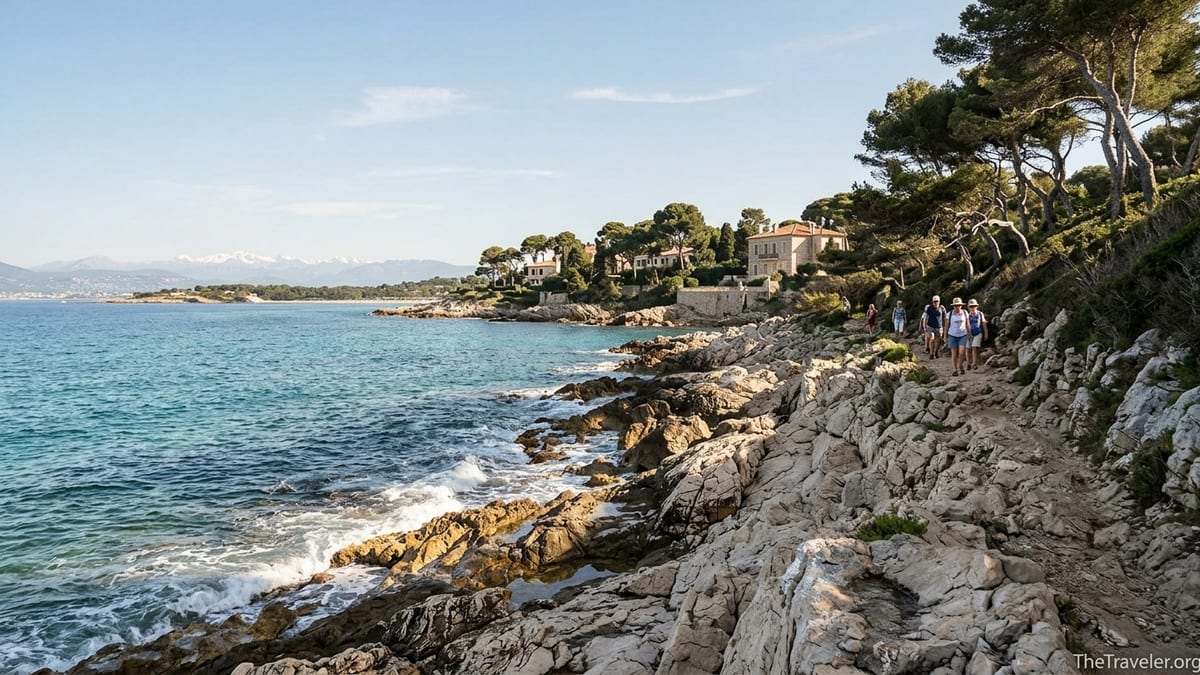
A Peninsula Many Travelers Glide Past
Cap d’Antibes sits between the old town of Antibes and the resort of Juan-les-Pins, about 30 minutes by train from Nice and 20 minutes from Cannes. Many visitors see the pine-covered headland from a distance as they stroll the ramparts of Antibes or sunbathe on La Salis beach, but never actually venture onto the peninsula itself. It is a quirk of Riviera travel: people will happily day-trip to Monaco or Saint-Tropez and ignore somewhere that is, quite literally, five minutes down the road.
Part of the reason is perception. Cap d’Antibes is often reduced to a single symbol in the travel imagination: the legendary Hôtel du Cap-Eden-Roc, the clifftop hotel where Slim Aarons photographed film stars and where today’s celebrities flock during the Cannes Film Festival. Rooms here in high season can run into four figures per night, and the hotel’s aura of exclusivity convinces many that the whole peninsula must be out of reach. In reality, most of Cap d’Antibes is publicly accessible, threaded with a coastal path, small free beaches and viewpoints that cost nothing but the effort to get there.
Another factor is logistics. There is no train station on the cape itself, and local buses from Antibes to the Garoupe area and beyond run less frequently than along the main coastal strip. Travelers on tight itineraries often choose the easier options. Yet a short taxi ride from Antibes station, a local bus, or even an electric bike rental can put you at the trailhead of one of the Riviera’s most memorable walks in under 20 minutes, making Cap d’Antibes a realistic half-day or full-day add-on to almost any Côte d’Azur trip.
The Coastal Path: One of the Riviera’s Great Walks
The main reason that skipping Cap d’Antibes is a mistake is the Sentier de Tire-Poil, also known as the Chemin des Douaniers, the old customs officers’ path that traces the outer edge of the peninsula. This rocky trail clings to the sea for several kilometers, weaving between sculpted limestone, low maquis shrubs and umbrella pines, with uninterrupted views across to the Lérins Islands and the distant Esterel mountains. On a clear winter morning or a crisp day in April, you may even see the snow-dusted peaks of the Alps beyond the Baie des Anges.
The classic route starts near Plage de la Garoupe, on the eastern flank of the peninsula. From the car park behind the beach, a signposted path leads down to the rocks and immediately sets the tone: you are on the very edge of the land, with turquoise water foaming just below your feet. The path is not technically difficult but can be uneven and narrow in places. Expect stone steps, patches of rough rock and short sections where waves can spray the trail on windy days. Solid shoes are far more comfortable than flimsy flip-flops here.
Most walkers take between two and three hours to complete the loop from Plage de la Garoupe around to the area near Villa Eilenroc and then back through the interior roads. In practice this can easily stretch to half a day if you stop for swims in sheltered coves, photograph the villas tucked into the pine forest or linger at viewpoints with particularly striking light. There are no cafés directly on the wildest parts of the path, so many visitors pick up picnic supplies in Antibes’ Provençal market or at a small supermarket near La Salis beach before heading out.
Because the path runs right along the sea, local authorities sometimes close it after heavy storms or when the mistral wind drives waves high against the rocks. There are usually notice boards at the entrance by Plage de la Garoupe indicating whether access is restricted. In high summer, aim to start early: setting out around 8 or 9 a.m. in July means you will be walking in softer light with fewer people, and you will likely reach the most exposed sections before midday heat sets in.
Plage de la Garoupe: Intimate Beach With a Storied Past
Plage de la Garoupe is the natural gateway to the cape and one of its loveliest places to linger. Tucked into a small horseshoe bay on the eastern side of the peninsula, the beach is a rare patch of sand on a coast dominated by pebbles and rock shelves. The water here is clear and usually calm, with bobbing boats anchored just offshore and a backdrop of pine-covered headland that feels worlds away from the bustle of central Antibes.
Garoupe’s glamour is not new. In the 1920s, American socialites Gerald and Sara Murphy rented a villa on the cape and devoted themselves to cleaning up this particular beach, clearing seaweed and old nets to tempt their circle of friends into summering here. Their experiment worked. Writers like F. Scott Fitzgerald and Ernest Hemingway, as well as painters including Pablo Picasso, all gravitated to Cap d’Antibes for long, languid seasons, helping shift the Riviera from winter resort to summer playground. When you stand on the sand today, looking across the bay toward Antibes’ old town, you are sharing the same view that convinced them to stay.
In summer, most of the sand is occupied by private beach clubs with rows of sun loungers and parasols. Prices vary by establishment and season, but it is reasonable to expect to spend several dozen euros per person for a front-row lounger with mattress and shade in July or August, plus food and drinks. One long-established option, Plage Keller, pairs beach access with a restaurant terrace above the sand, where grilled fish and simple pasta dishes come with sweeping sea views. For travelers on tighter budgets, a small public section of the beach remains accessible. It fills quickly on hot days, especially weekends, so arriving before mid-morning is wise.
Just behind the beach, a small parking area serves as a practical base for both swimmers and walkers. Spaces are limited and can fill by late morning in high season, prompting some visitors to park further back along Chemin de la Garoupe and walk down. If you are coming without a car, local buses from Antibes’ center typically stop a short walk uphill from the beach, and in recent summers many visitors have also been using electric bike rentals to reach the bay in 10 to 15 minutes from the town.
Hidden Coves and the Allure of Billionaires’ Bay
Beyond Garoupe, the coastline becomes more rugged, with a series of small coves and rocky shelves that appeal to swimmers, snorkelers and anyone seeking a quieter spot than the central town beaches. On the western side of the cape, facing Juan-les-Pins and Cannes, Plage des Ondes is a small sandy patch backed by old stone walls and a miniature folly-like tower built into the water. It is a favorite with locals in late afternoon, when the sun sinks toward the Esterel and the sea takes on a warmer glow.
Further along is Baie des Milliardaires, or Billionaires’ Bay, a rocky inlet that lives up to its name with a backdrop of sprawling, tree-shrouded villas but retains a surprisingly low-key feel at water level. Access typically involves a short path or staircase down from the road to a rough shoreline where people perch on flat rocks, spreading towels or rolling out thin mats to soften the stone. The seabed here is rocky, and many regulars bring water shoes to make getting in and out of the water easier. In return, you get exceptionally clear water and good snorkeling among submerged rocks and patches of seagrass, with schools of small fish darting around your legs.
These spots are unserviced. There are no lifeguards, loungers or beach bars, and little shade beyond what the surrounding pines cast in the later part of the day. Visitors come prepared: a foldable cooler bag with water, fruit, bread and cheese from Antibes’ market; a packable beach umbrella; reef-safe sunscreen that can stand up to repeated swims. Because parking along the narrow coastal roads is limited and heavily regulated, arriving on foot via the coastal path or by bicycle often proves less stressful than attempting to squeeze a rental car into a tight, half-legal space.
For many, the charm of these wild corners is the contrast they provide with the fuller-service beaches elsewhere on the Riviera. You might spend one day enjoying waiter-service sunbeds and chilled rosé at Plage de la Gravette or a beach club in Juan-les-Pins, then devote the next to rock-hopping your way into the sea at Billionaires’ Bay, with only the sound of cicadas and the slap of small waves against the stones. Both are part of the Riviera story, and Cap d’Antibes is one of the few places where you can easily experience them within a few kilometers of each other.
Iconic Villas, Lighthouse Views and Traces of History
Cap d’Antibes may feel dominated by hotels and private homes today, but it has layers of history that are easy to overlook if you simply drive past. High on the plateau above the Garoupe area sits the whitewashed chapel of Notre-Dame de la Garoupe, long a landmark for sailors. Inside, you will find ex-votos and maritime offerings, including model boats hung from the ceiling and plaques from local seafarers giving thanks for safe returns. Just outside, viewpoints take in almost the entire coastline, from the hills above Nice to the distant outline of Saint-Tropez on particularly clear days.
Beside the chapel stands the Garoupe lighthouse, one of the most powerful on the Mediterranean. While it is not generally open to casual visitors, the surrounding grounds offer space to sit under pines and watch the sea traffic sliding past below. This is a quiet, reflective counterpart to the high-energy glamour of the shore, and in late afternoon the light on the headland can be especially beautiful, with long shadows stretching across the scrubland.
Scattered across the cape are historic villas that hint at the area’s long-standing appeal to the wealthy. Château de la Garoupe, near the beach of the same name, is a turreted residence that has passed through various prominent owners over the decades, while other estates hide behind high walls and dense greenery, their presence betrayed only by ornate gates or glimpses of manicured gardens. Publicly accessible Villa Eilenroc, set within its own park near the tip of the peninsula, occasionally opens for visits and events, allowing travelers a rare look at the kind of belle époque property that helped cement Cap d’Antibes’ reputation as a place of refined retreat.
Even the coastline itself is documented with care. The surrounding bay and cape are part of a protected natural area, and local authorities have long studied erosion and sea-level impacts on beaches like La Salis and Garoupe. For visitors, the practical result is a commitment to maintaining bathing water quality, managing artificial sand replenishment on key beaches, and keeping the wild coastal path both safe and as untouched as possible, despite the pressure of thousands of summer walkers.
From Michelin Stars to Simple Beach Shacks: Eating on the Cape
Food is another reason not to dismiss Cap d’Antibes as the preserve of hotel guests only. At the very tip of the peninsula, the prestigious Hôtel du Cap-Eden-Roc hosts a range of dining options overseen by high-profile chefs, including a gastronomic restaurant that has attracted attention from guides such as Michelin. Here, multi-course dinners are served on elegant terraces overlooking the sea, with menus that might include delicately prepared Mediterranean fish, fine seasonal vegetables and intricate desserts. Prices match the setting, and reservations are essential, particularly in the short but intense high season around May’s film festival and the peak summer weeks.
Further back toward Plage de la Garoupe, restaurants like Plage Keller blur the line between beach club and serious table. At lunch, families in swimsuits might be sharing grilled dorade, bowls of linguine with clams and chilled local rosé at white-clothed tables perched above the sand. In the evenings shoulder seasons like May and September, the same terrace becomes a more formal dining room, with candles on tables and a dressier crowd arriving on foot from nearby villas or by taxi from Antibes’ hotels.
Not every meal on Cap d’Antibes has to be a splurge. Small snack bars and kiosks near the beach entrances sell sandwiches, ice creams and cold drinks, and many visitors simply bring their own picnics. A common pattern is to shop for provisions in Antibes’ covered market, picking up ripe tomatoes, local goat cheese, a baguette and a box of strawberries, then enjoy lunch on the rocks in a quiet cove midway along the coastal path. Do keep in mind local rules about litter: waste bins are scarce on the wilder sections of the trail, and taking all rubbish back with you is part of the unspoken code of using the path.
For evening options beyond the cape itself, nearby Juan-les-Pins offers a livelier, more casual scene, with seafront pizzerias and cocktail bars within a short taxi or rideshare of the Garoupe area. Many travelers choose to stay and dine in Antibes or Juan-les-Pins, then dedicate daytime hours to exploring Cap d’Antibes, combining the quieter, more residential feel of the headland with the nightlife and transport links of the neighboring towns.
Practical Tips for Visiting Cap d’Antibes
Reaching Cap d’Antibes is straightforward once you know your options, but it is rarely spelled out clearly in generic Riviera itineraries. The nearest major hub is Antibes, served by frequent regional trains along the coastal line between Nice and Cannes. From Antibes station, local buses connect to stops near La Salis, Garoupe and the interior of the cape, though timetables vary by season and services can be sparse at night and on Sundays. Taxis and rideshares pick up outside the station, and the fare to Plage de la Garoupe is typically modest compared with longer regional trips, especially when shared between two or three people.
For those staying in Nice, Cannes or even smaller towns like Cagnes-sur-Mer, a practical strategy is to take the train to Antibes in the morning, walk through the old town and along the seafront promenade to La Salis, then continue on foot or by bus to the cape. From La Salis it is around 20 to 30 minutes’ walk to Plage de la Garoupe along relatively quiet residential streets, with intermittent sea views and glimpses of villas. Electric bike rentals, widely available in Nice and increasingly in Antibes itself, cut that journey to under 15 minutes and make it easier to detour to higher viewpoints like the lighthouse.
Once on the peninsula, expect limited shade on the coastal path and at the rockier coves. A wide-brimmed hat, high-factor sunscreen and a refillable water bottle are essentials from late spring to early autumn. Outside of July and August, sea temperatures can be refreshing rather than warm, but hardy swimmers enjoy the relative emptiness of the path in April, May, late September and October. Footwear matters. A pair of light trainers or walking sandals with grip will make the Sentier de Tire-Poil much more enjoyable than thin flip-flops, especially on sections of limestone polished smooth by years of foot traffic and spray.
Parking is one of the peninsula’s few real pain points. On peak summer days, spaces near Garoupe can fill by mid-morning, and enforcement of parking restrictions along narrow roads is active. If you choose to drive, leave extra time to circle for a legal spot, and avoid the temptation to tuck your car into unsigned corners where fines or towing are a real risk. Some visitors choose to park in larger lots closer to Antibes’ center, then take a bus, shuttle or bike hire out to the cape, trading a little extra planning for a less stressful day by the sea.
The Takeaway
Cap d’Antibes is not simply a side note between better-known Riviera names. It is a compact distillation of what makes this coast so enduringly appealing: a wild, wave-sprayed path hugging limestone cliffs; sandy bays with literary history; discreet villas peeking through pines; and the option to move in a single day from a barefoot picnic on rocks to dinner at one of Europe’s most storied hotels. For travelers willing to look beyond the obvious icons, it offers a sense of discovery that is increasingly rare on such a famous coastline.
Skipping Cap d’Antibes because it seems too exclusive, too complicated to reach or too dominated by private property means missing that balance. In practice, the peninsula is accessible, walkable and welcoming to anyone prepared with good shoes, water and a little curiosity. Whether you devote a full day to circling the cape on the Sentier de Tire-Poil, or simply slip away from Antibes for an afternoon swim at Garoupe followed by a drink under the pines, this small headland can quietly become the highlight of a Riviera trip.
FAQ
Q1. Is Cap d’Antibes worth visiting if I am only in the Riviera for a few days?
Yes. Because it is so close to Antibes and Juan-les-Pins, you can easily fit Cap d’Antibes into a half-day or full-day outing, and the coastal path and beaches offer a very different experience from the busier city promenades.
Q2. How difficult is the Sentier de Tire-Poil coastal walk?
The walk is moderately easy for most reasonably fit visitors. The path is mostly at sea level but includes uneven rocks, steps and narrow sections. Good shoes are important, and families with younger children should supervise them closely near drops and waves.
Q3. Can I access Cap d’Antibes without a car?
Yes. You can take the train to Antibes, then use local buses, taxis, rideshares or rental bikes to reach Plage de la Garoupe or other starting points on the cape. Many visitors simply walk from Antibes via La Salis beach.
Q4. Are there free beaches on Cap d’Antibes?
There are small public sections at Plage de la Garoupe and other spots around the cape, as well as rocky coves like Baie des Milliardaires where you can swim without paying for a sun lounger, although there are no services or lifeguards in these wilder areas.
Q5. When is the best time of year to visit Cap d’Antibes?
Late spring and early autumn are ideal for walking the coastal path and enjoying the beaches with fewer crowds and milder temperatures. July and August are livelier and warmer, but also busier and more expensive.
Q6. Is Cap d’Antibes suitable for families with children?
Yes, provided you choose your spots carefully. Sandy areas at Plage de la Garoupe or Plage des Ondes are good for children, while the more rugged coastal path and rocky coves require closer supervision and may not suit very young kids.
Q7. Do I need to book in advance for beach clubs or restaurants on the cape?
In high season, it is wise to reserve sun loungers at popular beach clubs and to book restaurant tables, especially at well-known venues and during weekends or evenings. Outside peak months, same-day reservations are often sufficient.
Q8. Is swimming safe along the rocky parts of the coast?
Swimming is generally safe in calm weather, but there are no lifeguards on the wilder sections, and entry can be tricky over rocks. Water shoes help, and you should avoid swimming when the sea is rough or when authorities advise caution.
Q9. Can I visit Hôtel du Cap-Eden-Roc if I am not staying there?
Policies vary by season, but non-residents can often book a table at certain restaurants or bars at the hotel, especially outside the busiest periods. Dress codes apply, and advance reservations are usually required.
Q10. How long should I plan to spend on Cap d’Antibes?
If you want to walk the full coastal loop and enjoy a swim or leisurely meal, set aside at least half a day. Many travelers find that a full day allows them to explore the path, relax on a beach and still return to their base before late evening.