


Cap d’Antibes has long carried near-mythical status on the French Riviera, a pine-covered peninsula of discreet villas, glamorous hotels and rugged coastal paths between Nice and Cannes. But if you are planning a tight itinerary that might already include Nice, Cannes, Antibes old town or Saint-Paul-de-Vence, you may wonder whether carving out precious hours for Cap d’Antibes is genuinely worth it. The answer depends very much on what you value: quiet scenery or nightlife, wild coves or wide sandy beaches, luxury hideaways or casual seaside days. This guide breaks down exactly what Cap d’Antibes offers in 2026, with concrete examples, prices and logistics, so you can decide if it deserves a place on your French Riviera route.
Get the latest updates straight to your inbox!
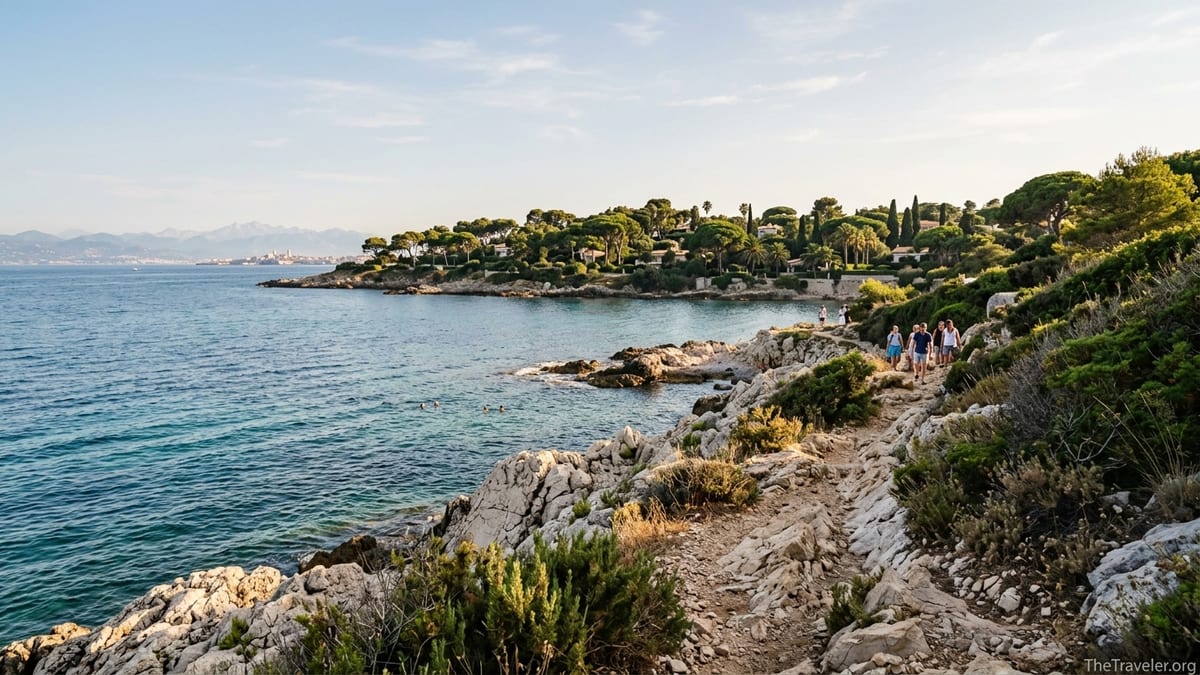
What Exactly Is Cap d’Antibes and How Does It Feel on the Ground?
Cap d’Antibes is a small, rocky peninsula attached to the town of Antibes, roughly halfway between Nice and Cannes. It covers just over 1.5 square kilometres yet manages to pack in Mediterranean pine forests, a string of small coves, a famous lighthouse and some of the Riviera’s most coveted addresses. Unlike the lively old town of Antibes or the bar-lined seafront at nearby Juan-les-Pins, Cap d’Antibes feels mostly residential and low-key. Outside of a few hotels and beach clubs, you will spend more time walking tree-lined lanes and coastal paths than browsing shops or cafés.
The atmosphere is noticeably more private than neighbouring resort strips. You may walk along Boulevard John Fitzgerald Kennedy or Chemin des Nielles and pass long stone walls hiding 19th-century villas, or glimpse manicured gardens through iron gates rather than souvenir stalls. This is where the legendary Hotel du Cap-Eden-Roc and other high-end properties sit behind cypress hedges, catering largely to guests who arrive by chauffeur-driven car or yacht tender. For a first-time visitor staying in Nice or Antibes, Cap d’Antibes will feel like a quiet, green escape from the busier urban seafronts rather than a destination with its own distinct “downtown.”
That character shapes whether it is worth your time. If your ideal Riviera stop is a pedestrian old town with markets, museums and nightlife, you will be better served basing yourself in Antibes proper and treating the Cap as a half-day excursion. If you crave quieter walks, cove swims and long views of the Esterel and the Baie des Anges, then spending a day or even a night on the peninsula can be one of the highlights of your trip.
Highlights: Scenic Walks, Hidden Coves and Classic Riviera Vistas
The strongest argument in favour of including Cap d’Antibes in your itinerary is the Sentier du Littoral, also known locally as the Sentier de Tire-Poil. This coastal path traces much of the peninsula’s eastern and southern edge, running roughly 2.5 to 3 kilometres between Plage de la Garoupe and the vicinity of Villa Eilenroc. Recent guides and the Antibes tourism office describe it as a one-and-a-half to two-hour walk at a relaxed pace, with sections of rocky steps and narrow walkways right beside the sea. On clear days you see not only the intense turquoise water below but, in the distance, the Mercantour mountains and the curve of the Riviera coastline.
The walk is not a manicured promenade. Parts of the path are uneven rock, with metal handrails bolted into the cliffs, and in winter or during strong swells the municipality sometimes closes sections for safety, particularly under the cliffs near Villa Eilenroc. In late 2025, local media reported partial closures of the trail under Eilenroc for cliff reinforcement, and hikers in 2026 should still check closure notices at the trailhead signboards before setting out. When it is open, though, travellers consistently describe it as one of the most memorable coastal walks on the Côte d’Azur, rewarding even for those who have already visited more famous capes such as Cap Ferrat.
Along the way you pass tiny rock inlets and natural swimming spots, though these are not organised beaches. There are no lifeguards or facilities, only rough rock shelves where locals might spread a towel and brave a jump into deep water. A more conventional beach experience awaits back at La Garoupe, where soft sand, a mix of public and private sections, and clear, generally calm water make it a favourite for families and couples. The setting, backed by umbrella pines with views towards Nice, is classic Riviera and is one of the key reasons many travellers single out Cap d’Antibes as a must-see even if they are staying elsewhere.
Beaches and Swimming: What You Really Get
Cap d’Antibes does not offer endless sandy strips like those around Fréjus or wide, pebbly urban beaches like Nice. Instead, you will find a patchwork of experiences: La Garoupe’s sandy arc with several private beach clubs, small coves such as Plage des Ondes with its photogenic stone tower, and rocky shelves accessible only from the coastal path. For many visitors staying in Antibes or Juan-les-Pins, La Garoupe is the main draw. In summer 2026, expect paid loungers at the beach clubs to start around 30 to 40 euros per person for a half-day including a sunbed and umbrella, rising on peak August dates or in front-row positions. Public sections remain free but fill quickly by mid-morning.
On the peninsula’s west side, facing Juan-les-Pins, you will find smaller public beaches such as Plage des Ondes and the sheltered area near Port de l’Olivette, where traditional wooden fishing boats bob just offshore. These spots are more modest than the glamorous image of the Riviera, yet they can feel wonderfully local on a weekday morning. Swimmers dip in for short sessions and then retreat under pine shade, and you are unlikely to hear much English beyond the occasional visiting family.
The wild coves accessed from the Sentier du Littoral are another story. Guides and local websites recommend treating them as scenic viewpoints rather than full beach days. The rock can be sharp, the sea deep and quickly changing, and there are no services or easy exits if conditions worsen. Practically, this means that if you want to sunbathe on a flat surface, have quick snack access and maybe rent a paddleboard, La Garoupe or the small west-side beaches will suit you better. If you are happy with a quick dip from the rocks mid-hike, the coastal path offers that thrill, but only for confident swimmers in calm conditions.
Access, Transport and How Much Time to Allocate
Cap d’Antibes sits only a short distance from Antibes old town, but the logistics can influence whether it feels worth the detour. From central Antibes, local buses run towards the Cap, usually via Juan-les-Pins, with stops near La Garoupe or on the main roads that cross the peninsula. In summer, these buses can be crowded and subject to traffic, so many travellers either walk or use a combination of bus and walking. Expect a 45 to 60 minute stroll from Antibes old town to La Garoupe via the seafront and Juan-les-Pins if you are a comfortable walker.
Arriving by car, you can drive onto the peninsula and look for signed public parking areas near La Garoupe or along certain roadside stretches. However, updated beach guides in June 2026 stress that spaces around the Cap are limited and fill very early in July and August mornings. It is common for visitors arriving after about 10:30 am on a sunny weekend to circle repeatedly or park further away and walk in. If your schedule allows, aim for a weekday visit outside the peak of August, or come in the late afternoon when day-trippers start to leave and golden-hour light makes the coastal path particularly beautiful.
In terms of time, a half-day is enough to walk the main section of the Sentier du Littoral, swim once or twice and have a simple lunch at La Garoupe or a snack you have brought with you. A fuller day allows for lingering beach time at La Garoupe, a slow walk to Port de l’Olivette to photograph the boats, and a climb up to the Garoupe lighthouse plateau by car or on foot to enjoy the panoramic views over Antibes, Nice and the bay. Unless you are staying in one of the Cap’s hotels, most travellers find that one dedicated day or two half-days are sufficient to enjoy the area without rushing.
Who Will Love Cap d’Antibes, and Who Might Skip It?
Cap d’Antibes is most rewarding for travellers who value scenery and relative calm over constant activity. If you like the idea of starting your day with a coastal hike, swimming in clear water from a sandy cove, and finishing with a quiet drink at a hotel bar while the light fades over the Esterel, the Cap delivers exactly that. It especially suits couples, photographers, and active travellers who enjoy easy to moderate hiking and do not need constant entertainment. Visitors who have previously loved coastal walks in places like the Calanques near Marseille or the path around Cap Ferrat often describe Cap d’Antibes as a smaller-scale but equally atmospheric experience.
Families with school-age children can also enjoy the peninsula, particularly La Garoupe beach, but should be realistic about the lack of playgrounds, casual snack bars and amusements. A day here might look like renting a couple of loungers at a mid-range beach club, ordering simple dishes such as salade niçoise or grilled fish for around 20 to 30 euros per main, and interspersing swims with a short walk along the start of the coastal path. For teenagers or younger kids expecting water parks or jet-ski hire, the Cap may feel too quiet compared with larger resort towns.
On the other hand, travellers seeking nightlife, shopping and a wide choice of restaurants might find better value in Nice, Cannes or Antibes old town. Bar streets and late-night venues are minimal on the Cap itself. You will find a few hotel lounges and refined restaurants, but not the kind of bar-hopping or café culture that defines central Nice or even Juan-les-Pins. Solo travellers without a car might also prefer to stay in Antibes or Juan-les-Pins and visit the Cap as a day trip, since walking back along unlit roads late in the evening after dinner on the peninsula is not especially appealing.
Costs, Dining and Accommodation: Is It Only for the Ultra-Wealthy?
Cap d’Antibes has a reputation for high prices, largely shaped by its most famous addresses like the Hotel du Cap-Eden-Roc. At this ultra-luxury property, summer nightly rates can run into four figures in euros, and poolside cabanas are priced accordingly. That level of spending is not necessary to experience the peninsula, but it does reflect the general tone: understated, high-end and non-budget.
Mid-range travellers have a few options. There are smaller hotels and guesthouses on or near the Cap where summer double rooms might start in the 250 to 400 euro range, varying by date. Many visitors, however, base themselves in Antibes old town or Juan-les-Pins, where three-star hotels outside the absolute peak weeks can be found for around 150 to 250 euros per night and then reach Cap d’Antibes by bus, taxi or on foot. This arrangement gives you access to the peninsula’s scenery while keeping dining and accommodation options broader and often more affordable.
Eating on the Cap skews towards sit-down restaurants or hotel dining rooms rather than casual takeaway. Beach clubs at La Garoupe typically offer lunch menus with main courses around 25 to 40 euros, plus drinks. A simple lunch of a shared starter, two mains and a glass of wine each can easily reach 80 to 100 euros for two at a mid-range spot in high season. You can, however, keep costs down by picnicking: stock up at a bakery and supermarket in Antibes, then enjoy sandwiches and fruit on the public section of La Garoupe or at a viewpoint along the coastal path, respecting local rules about litter and fire safety.
Practical Tips, Safety and Seasonal Considerations
Seasonality plays a big role in whether Cap d’Antibes feels magical or crowded. Between late June and late August, especially on weekends, La Garoupe and the small coves attract both international visitors and locals from the wider Alpes-Maritimes area. Parking scarcity, full beach clubs and busy buses are common. Water and air temperatures are at their warmest, though, which means more comfortable swims and long evenings outdoors. If your schedule is flexible, late May, early June and September often offer a better balance: the water is usually warm enough for swimming, yet crowd levels drop and restaurant reservations become easier.
On the coastal path, footwear matters more than in many other seaside strolls. While you will see some locals walking part of the way in sandals, updated trail descriptions and recent visitor reviews consistently recommend at least sturdy walking shoes, particularly for the middle section where the path cuts across bare rock with uneven steps. After storms or during winter swells, the commune sometimes temporarily closes parts of the trail. Check the information boards at Plage de la Garoupe before committing to the full loop, and never attempt to walk around closed barriers or during strong sea conditions, when waves can break directly onto the path.
Other practicalities are straightforward. There is little shade along much of the Sentier du Littoral, so bring water, a hat and sunscreen even in spring. Public toilets are limited; you will usually find facilities at or near La Garoupe and at some car parks, but not along the wilder sections of the path. Mobile reception is generally good, but you should not rely on it for emergency access, and it is wise to tell someone at your accommodation roughly when you plan to return if you are walking the path outside the main midday hours.
The Takeaway
So, is Cap d’Antibes worth visiting for your French Riviera itinerary? For many travellers the answer is yes, provided you know what it offers and plan accordingly. It is not a nightlife hub, a shopping district or a place of must-see museums. Instead, it rewards those who value coastal walks where the sound of waves drowns out traffic, sandy coves backed by pines rather than tower blocks, and glimpses of an older, discreet kind of Riviera glamour.
If you are already staying in Antibes, Juan-les-Pins, Nice or Cannes, setting aside a half-day or full day for Cap d’Antibes is a smart way to diversify your trip without long transfers. Begin with the Sentier du Littoral, swim at La Garoupe, linger over a late lunch or bring a picnic, and if time allows, climb to the Garoupe lighthouse plateau for sunset views back over Antibes and the Baie des Anges. If your schedule is extremely tight and your priorities are art museums, big-city buzz or budget-friendly nightlife, you may choose to skip it in favour of more urban stops. But for travellers seeking a quieter, more elemental stretch of coastline that still feels unmistakably Riviera, Cap d’Antibes more than earns its place on the map.
FAQ
Q1. How long do I need to visit Cap d’Antibes?
Most travellers find that a half-day to one full day is enough to walk part of the Sentier du Littoral, swim at La Garoupe and enjoy a relaxed meal without rushing.
Q2. Is the coastal path at Cap d’Antibes difficult?
The Sentier du Littoral is generally considered an easy to moderate walk, with some rocky steps and narrow sections. It is manageable for reasonably fit visitors wearing proper shoes and avoiding days with rough seas.
Q3. Can I visit Cap d’Antibes by public transport?
Yes. Local buses from Antibes and Juan-les-Pins stop near key access points such as La Garoupe. In summer they can be crowded, so allow extra time and consider walking one way.
Q4. Are there free beaches on Cap d’Antibes?
There are public sections at La Garoupe and several smaller coves and beaches on the west side of the peninsula. You pay only if you choose a private beach club sunbed or restaurant service.
Q5. Is Cap d’Antibes suitable for families with children?
Yes for relatively calm, beach-focused days, especially at La Garoupe’s sandy area. However there are limited playgrounds and amusements, so children who need constant activity may prefer larger resorts.
Q6. When is the best time of year to visit Cap d’Antibes?
Late May, June and September usually offer a good balance of warm weather, swimmable seas and fewer crowds. July and August are the busiest and hottest months but have the liveliest beach scene.
Q7. Do I need a car to enjoy Cap d’Antibes?
A car is convenient, especially if you are staying on the peninsula, but not essential. Many visitors base themselves in Antibes or Juan-les-Pins and reach the Cap by bus, taxi or on foot.
Q8. Are there affordable places to eat on Cap d’Antibes?
Most dining skews mid to high-end, especially at beach clubs and hotels. To save money, many travellers bring a picnic from Antibes and buy only drinks or snacks locally.
Q9. Is swimming safe along the coastal path?
Swimming from the rocky coves is only advisable in calm conditions for confident swimmers, as the water is deep and there are no lifeguards. For safer, supervised swims, use established beach areas like La Garoupe.
Q10. Should I stay overnight on Cap d’Antibes or just visit on a day trip?
Overnight stays suit travellers seeking a very quiet, upscale base. For most visitors, a day trip from Antibes, Juan-les-Pins, Nice or Cannes provides plenty of time to enjoy the main highlights.