


Cap d’Antibes has long been shorthand for billionaire villas and stately hotels glimpsed through high walls and iron gates. Yet for most travelers, the real magic of this rocky peninsula on the French Riviera lies in what you can actually access: wind‑sculpted coastal paths, pine forests that smell of resin and sea spray, quiet chapels, pocket‑sized beaches, and family run bistros where lunch stretches into late afternoon. Step away from the world of private estates and you will find a cap that feels surprisingly wild, human and rewarding to explore on foot.
Get the latest updates straight to your inbox!
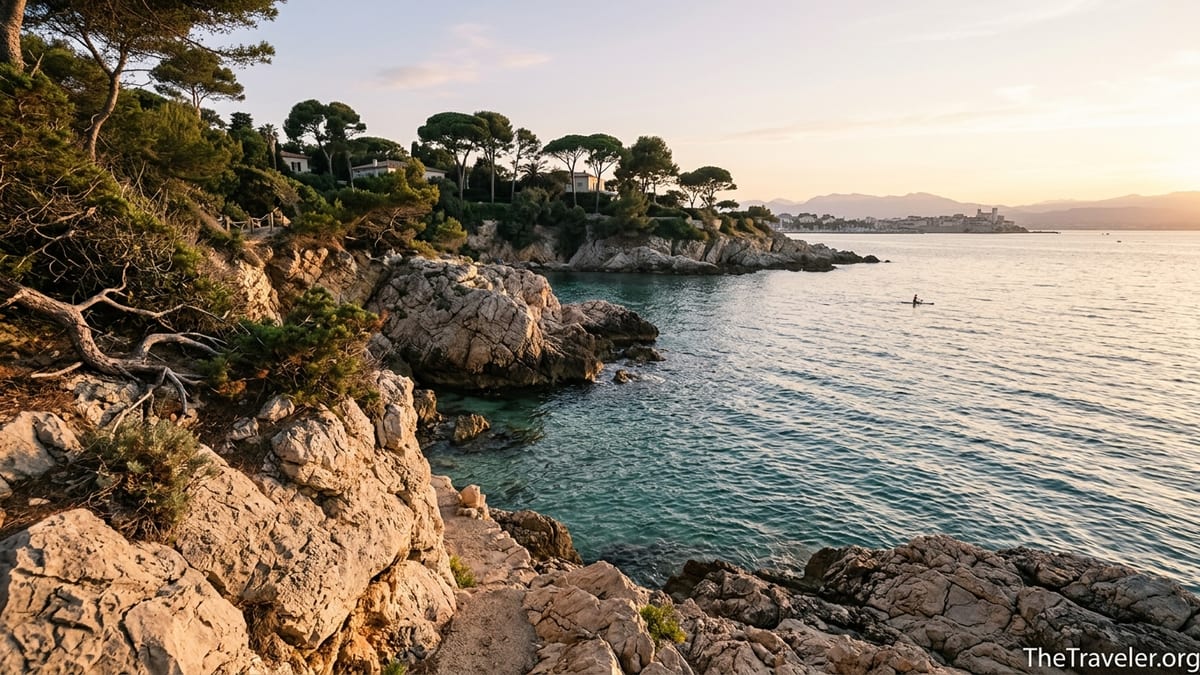
Walk the Sentier du Littoral for Wild Sea Views
The Sentier du Littoral, also called the Sentier de Tirepoil, is the single best way to understand Cap d’Antibes. This coastal path rounds the southern tip of the peninsula, hugging low cliffs just above the water. Official guides put it at roughly 4 to 5 kilometers one way, depending on where you start and finish, and most reasonably fit travelers complete the core section in about 1.5 to 2 hours at a relaxed pace. The classic approach is to begin near Plage de la Garoupe and follow the stone path as it threads between sculpted rock ledges and the turquoise sea.
Unlike the promenades in Nice or Cannes, this is still a genuinely natural path. Sections are uneven, with rock steps and narrow segments where you may need to let other walkers pass one by one. In early summer you will notice the scent of wild herbs crushed underfoot and hear cicadas in the pines above, while winter days can feel dramatic, with spray blowing up from the sea below. Sturdy trainers or light hiking shoes are enough for most people, and you will want a small backpack with water, a hat and sunscreen, since there is little shade along the southern stretch.
A practical way to build a day around the walk is to catch a bus or taxi from central Antibes to the Garoupe area in the morning, complete the coastal path before midday heat peaks, then loop back inland along quiet lanes lined with umbrella pines. If you prefer not to retrace your steps, local taxi companies will pick you up from roads above Billionaires’ Bay, though you will usually need to call ahead rather than rely on ride‑hailing apps. Budget travelers often bring a picnic and pick a flat rock above a cove to eat with views back toward the Alps and the old ramparts of Antibes across the water.
Conditions can change with the weather, so check locally before setting out, especially after storms when parts of the trail sometimes close for safety. On calm mornings in late September or early October, the path can feel almost private, with only a handful of other walkers and the occasional swimmer clambering in and out of hidden coves. It is a very different atmosphere from the grand hotels inland, and that contrast is precisely why many travelers rank this among the most memorable walks on the Riviera.
Swim and Sun at the Cap’s More Accessible Beaches
Cap d’Antibes does not have long, wide beaches like those in Juan les Pins, but it does offer an appealing mix of compact sandy bays and wild rocky coves. Plage de la Garoupe on the eastern side is the best known. Historically much of this small crescent was occupied by private beach clubs, but today a clearly defined public section allows anyone to spread a towel on the same golden sand without paying a cent. Expect clear, shallow water and a postcard view across the Baie des Anges toward Nice on a clear day.
Prices at the private sections of Garoupe fluctuate by season, but in high summer it is common to see a pair of sun loungers with an umbrella running somewhere in the range of 40 to 80 euros for the day, depending on proximity to the water and the prestige of the club. Many budget conscious visitors simply use the public area instead, then treat themselves to a drink or an ice cream at one of the cafes set back from the sand. Outside July and August, the beach is far quieter, and on mild winter days locals come to walk the shoreline in jackets and scarves, watching hardy swimmers take quick dips.
On the northern edge of the peninsula, close to where Cap d’Antibes meets Antibes proper, Plage de la Salis offers another accessible option. While technically just outside the cap itself, it makes a convenient starting or finishing point if you are exploring the peninsula on foot, with sandy shallows and a wide promenade that connects back to the old town. To the west, smaller beaches near the Port de la Gallice and Pointe Ouest tend to feel more local, with children jumping from low quays and paddleboards gliding past moored boats.
If you are comfortable with rockier entries and deeper water, the coves reachable from sections of the coastal path can be particularly rewarding. Here the seabed drops away quickly, so a simple mask and snorkel will reveal shoals of small fish hovering around the rocks and the occasional octopus hiding in crevices. There are rarely lifeguards in these wild spots, and waves can be stronger than they appear, so this kind of swimming is best left to confident swimmers on calm days. Always keep an eye on the sea state and avoid entering the water when swells are crashing against the rocks below the path.
Climb to the Garoupe Lighthouse and Chapel
High above the beaches, the Plateau de la Garoupe forms the cap’s natural lookout point, crowned by the Garoupe lighthouse and a small sanctuary dedicated to Notre Dame de la Garoupe. The climb from sea level is short but quite steep in places, rewarding your effort with some of the widest views on this part of the coast. On clear winter days, snow capped Alpine peaks frame the horizon behind Nice, while in summer evenings the light softens to warm gold over the tiled roofs of Antibes.
Most visitors reach the plateau by car or local bus to avoid the steepest part of the climb, but if you enjoy walking, you can combine the ascent with a round trip from either Plage de la Salis or the Garoupe area. Inland lanes linked by old stone steps lead you up through residential neighborhoods scented by pines and jasmine, giving you a rare glimpse of the peninsula as a lived in place rather than a postcard. Once at the top, information boards explain the history of the lighthouse, which has guided ships since the nineteenth century, as well as the maritime traditions associated with the chapel.
The chapel itself is small and atmospheric, filled with maritime ex votos left by sailors and fishermen over the years. Many travelers pause here for a few minutes of quiet before stepping back out to the viewing terrace, where a simple orientation table points out landmarks along the coast. Visiting does not require a ticket, though exact opening hours for the chapel can vary slightly with the season and religious calendar, so it is sensible to allow some flexibility in your schedule.
Travelers staying in Antibes often pair a late afternoon visit to the Garoupe plateau with an early evening drink back in the old town. The contrast between the peaceful hilltop, where you mainly hear the wind and distant surf, and the lively terraces around the covered market or on the ramparts, gives a satisfying sense of how the wider area fits together beyond the image of secluded villas.
Discover Quiet Gardens and Coastal Greenery
One of the most surprising aspects of Cap d’Antibes for first time visitors is just how green it feels once you venture beyond the main roads. Large sections of the peninsula are still covered in umbrella pines, cypresses and exotic specimens planted in private estates and institutional gardens over the past century and a half. Even without stepping inside any private property, you will walk under dense canopies that offer pockets of shade and a chorus of cicadas in high summer.
Among the few gardens with regular public access is a historical botanical collection established in the nineteenth century by a botanist attracted by the cap’s mild microclimate. Here, experimental plantings of species from other Mediterranean and subtropical regions have matured into a textured landscape of palms, eucalyptus, and towering pines. Entry fees, when charged, are usually modest, making this an attractive option for travelers who want a break from the beach while still staying outdoors.
Another highlight sits at the western side of the peninsula, where a municipal property combines formal gardens with direct sea views. Certain days of the week are dedicated to free or low cost visits to the grounds, though interior rooms may only be accessible during prebooked guided tours. Plan to spend at least an hour wandering through rose beds and along paths bordered by clipped hedges before heading down toward the rocky shoreline, where the manicured landscape gives way abruptly to raw stone and open water.
For many visitors, the most memorable moments in Cap d’Antibes occur not in any single garden or viewpoint, but in the transitions between them. You might leave a shaded alley perfumed by pittosporum, cross a sun soaked intersection where scooters buzz past, then turn down a narrow footpath that suddenly reveals the full sweep of the Mediterranean. Leaving yourself unstructured time to follow your nose, rather than a strict checklist, often leads to these small discoveries.
Explore on Two Wheels or by Paddleboard
Beyond walking, some of the most enjoyable ways to explore Cap d’Antibes are by bicycle or on the water. Confident cyclists will find that the peninsula’s roads undulate gently rather than climb steeply, with typical route profiles rarely rising more than a few dozen meters above sea level at a time. This suits what locals often describe as “advanced leisure bikers”: riders comfortable covering 20 to 30 kilometers in a day but not looking for mountain passes. Many hotels in Antibes and Juan les Pins partner with local rental shops that supply hybrid or electric bikes by the day, often in the range of 25 to 45 euros depending on the model and season.
A classic cycling loop begins in Antibes old town, follows the seafront to Plage de la Salis, then traces the coastal road around Cap d’Antibes. Along the way you can detour down to small harbors and viewpoints, locking your bike briefly while you duck down a stairway to the rocks for photos. Because roads are narrow in places and summer traffic can be busy, early morning is usually the most pleasant time to ride, particularly in July and August. Helmet use is strongly recommended, and basic lights are required if you expect to be out around dusk.
On the water, stand up paddleboards and kayaks are available from various operators around Antibes and Juan les Pins, especially in high season. Paddling along the northern shoreline of the cap in calm conditions gives you a low, intimate vantage point on cliffs and gardens that you can otherwise only glimpse through gates. Most rental outlets ask that you remain within a defined zone and avoid rounding the most exposed headlands, both for safety and to respect local navigation rules. Expect to leave a cash deposit or ID, and plan for at least one to two hours on the water if you want time to explore.
Travelers with sailing experience may look into half day or full day boat rentals from marinas in Antibes. Even a modest open deck motorboat allows you to anchor off small coves and swim directly from the ladder into clear water away from the busiest beaches. Prices vary widely with boat size and time of year, but basic self drive options in shoulder season can sometimes be found for a few hundred euros plus fuel, especially midweek. Always check insurance conditions carefully and be realistic about your comfort with docking in potentially tight harbor spaces.
Taste the Local Flavors Without Breaking the Bank
While Cap d’Antibes is known for high end hotels and destination restaurants, you do not need a celebrity budget to eat well here. The key is to seek out simpler spots and to time your meals. At the beaches, snack kiosks back from the sand often serve coffee, cold drinks and basic sandwiches at prices only slightly higher than those in Antibes town. A ham and cheese baguette or a simple salad is typically in the high single digit or low double digit euro range, and refilling a reusable water bottle is often possible if you ask politely.
In the residential interior of the peninsula, a handful of small bistros and cafes cater mainly to locals, offering daily lunch menus that combine a starter and main or main and dessert for a fixed price. While exact figures change from year to year, travelers commonly report formulas in the 18 to 28 euro range at low key addresses, especially at weekday lunchtime. Seasonal dishes often highlight local fish, sun ripened vegetables and Provençal herbs, and service tends to be relaxed rather than hurried.
For travelers who do want to experience one of the cap’s more renowned dining rooms, planning ahead is essential. Tables at waterfront restaurants attached to boutique hotels can book out days or weeks in advance during major events in nearby Cannes or during the peak August holiday period. Booking a weekday lunch rather than a Saturday night dinner can reduce both prices and crowds. Dress codes are generally smart casual, but it is worth packing one polished outfit if you hope to dine in the orbit of the peninsula’s grand hotels.
Do not overlook simple pleasures: a scoop of gelato eaten on a bench overlooking the sea, a glass of chilled rosé at sunset on a terrace above Plage de la Salis, or a take away rotisserie chicken from a shop in Antibes old town that you carry down to the beach for an informal picnic. These experiences often capture the relaxed Riviera mood as effectively as any Michelin starred tasting menu.
Experience Low Key Riviera Evenings
Cap d’Antibes itself becomes quite subdued at night compared with nearby Juan les Pins or Cannes. Most visitors staying on the peninsula are hotel guests or residents who dine on site or at a handful of neighborhood restaurants before returning to quiet villas and apartments. Street lighting along some residential roads is modest, and you will hear the sound of waves and wind more than bar music once you step away from the main access roads.
For travelers who enjoy a livelier atmosphere after dark, the solution is simple: base yourself in Antibes or Juan les Pins and visit the cap by day. Trains connect Antibes with Nice, Cannes and beyond until late evening, and the walk between Antibes old town and Juan les Pins takes under half an hour at a stroll. In Juan les Pins, beachfront bars set out loungers and low tables directly on the sand in summer, with live music and DJ sets drawing both visitors and locals. You can still be back in a quieter hotel room on the cap in a short taxi ride once you have had your fill of nightlife.
If you do stay overnight on Cap d’Antibes, embrace the slower rhythm. After dinner, a gentle walk along the quieter stretches of the coastal road can be particularly atmospheric, with the silhouettes of pines against the sky and the sparkle of lights reflecting off the sea toward Cannes. Always carry a small torch or use your phone light when walking on roads without continuous pavements, and wear something reflective if possible, especially outside peak season when traffic patterns are less predictable.
Families with young children often appreciate this calmer tone. Early nights mean rested kids ready for the beach or coastal path the next morning, and parents can still enjoy a glass of wine on a balcony while the cicadas sing. It is a version of the Riviera that feels a world away from red carpets and crowded promenades, yet lies only a few kilometers from major train lines and motorways.
The Takeaway
Cap d’Antibes may be famous for gated estates and legendary hotels, but travelers who focus solely on that glamorous image miss its most rewarding side. Beyond the villas, this small peninsula offers a remarkably accessible mix of coastal wilderness, manageable hiking, intimate beaches and a day to day rhythm shaped as much by local joggers and dog walkers as by visiting yachts.
Walk the Sentier du Littoral, even if you only tackle a portion of it, to feel the raw edge where rock meets sea. Climb to the Garoupe plateau to understand the geography of the bay at a glance. Swim off Garoupe or Salis, or paddle along the shore by kayak for a different point of view, then refuel at simple cafes that remind you the Riviera can still be relaxed and unpretentious.
Plan your visit with a mix of structure and flexibility: check trail conditions and opening hours in advance, but leave room for spontaneous detours down narrow stairways or into shaded lanes lined with pines. Whether you are staying in a grand hotel or a modest apartment, the best experiences on Cap d’Antibes are shared: a cool breeze on a hot afternoon, the smell of salt and resin in the air, and the satisfaction of discovering that there is far more to this peninsula than the famous villas everyone talks about.
FAQ
Q1. How long does it take to walk the Sentier du Littoral on Cap d’Antibes?
Most visitors allow 1.5 to 2 hours to walk the main coastal section at a relaxed pace, not counting photo stops or picnics.
Q2. Is the coastal path suitable for children and older travelers?
The path includes uneven surfaces, rock steps and narrow sections, so it suits reasonably sure footed children and adults but is not ideal for strollers or those with significant mobility issues.
Q3. When is the best time of year to visit Cap d’Antibes?
Late May, June and September often offer warm sea temperatures and fewer crowds than peak July and August; sunny winter days can be beautiful for walking.
Q4. Are there truly public beaches on Cap d’Antibes, or is everything private?
There are genuine public sections, including part of Plage de la Garoupe and nearby beaches toward Antibes, where you can swim and sunbathe without paying for a lounger.
Q5. Do I need a car to explore Cap d’Antibes?
A car is convenient but not essential; you can reach key access points by bus, taxi, bike or on foot from Antibes or Juan les Pins, especially in good weather.
Q6. Is swimming from the rocky coves safe?
On calm days confident swimmers enjoy the clear water, but there are no lifeguards, entries can be slippery, and conditions change quickly, so caution and good judgment are essential.
Q7. How expensive is it to rent a sun lounger on the cap in summer?
Prices vary by beach club and season, but in high summer a pair of loungers with umbrella at popular spots often falls in the broad range of 40 to 80 euros per day.
Q8. Can I cycle safely around Cap d’Antibes?
Yes, experienced leisure cyclists often enjoy loops around the cap, though roads are narrow in places; riding early in the day helps you avoid the heaviest traffic.
Q9. Are there budget friendly places to eat on the peninsula?
Simple snack bars near the beaches and a few low key cafes inland serve reasonably priced sandwiches, salads and daily lunch menus compared with the high end hotel restaurants.
Q10. Is Cap d’Antibes a good base without nightlife, or should I stay in town?
If you prefer quiet evenings and early mornings by the sea, staying on the cap works well; for more bars and late night options, base yourself in Antibes or Juan les Pins and visit the cap by day.