


More news on this day
Operations at Spain’s Málaga-Costa del Sol Airport were disrupted over the weekend when a KLM flight to Amsterdam was held on the ground for more than three hours after a bomb threat appeared not in a spoken warning or written note, but in the name of a passenger’s personal Wi-Fi hotspot.
Get the latest news straight to your inbox!
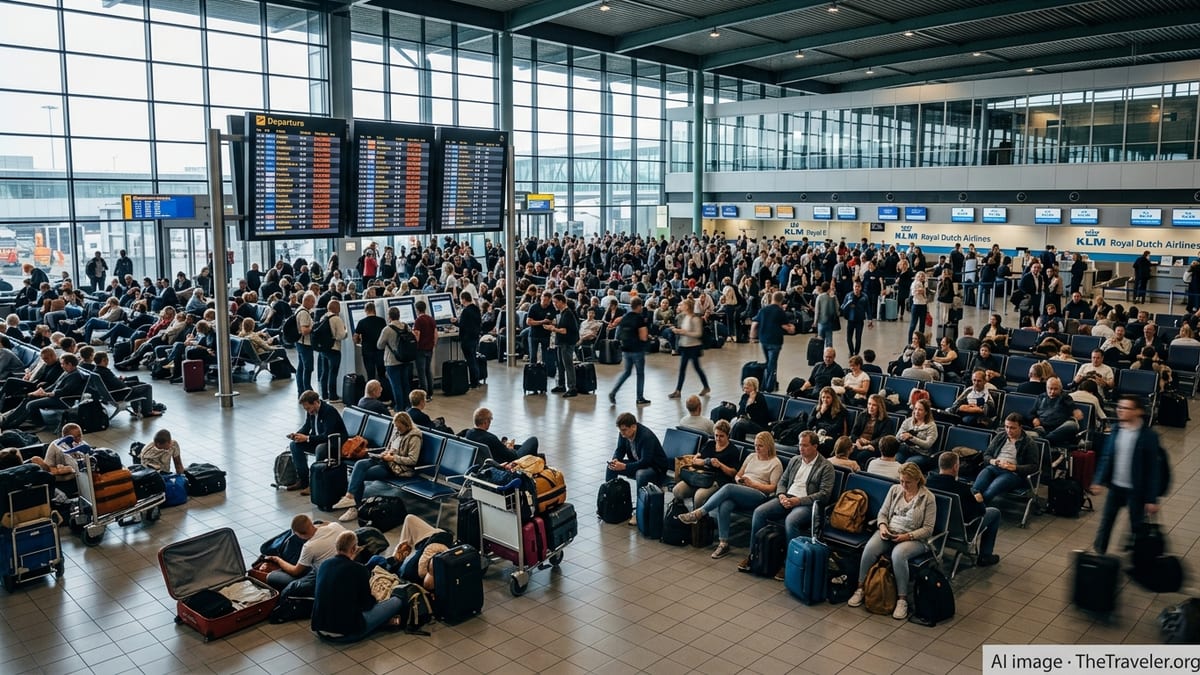
Hotspot Name Triggers Bomb Alert on the Tarmac
According to multiple European media reports, the incident unfolded on the evening of Saturday 10 May, when travelers were preparing to board KLM flight KL1548 from Málaga-Costa del Sol Airport to Amsterdam Schiphol. Shortly before departure, a passenger reportedly detected a nearby Wi-Fi network with a name combining a religious phrase and a bomb threat, visible to anyone scanning for available connections on board.
Publicly available information indicates that the hotspot name included the phrase “Allahu Akbar” alongside wording stating that there was a bomb on board. The alarming text was treated as a potential threat and relayed to the airline and airport security, immediately escalating what might have been intended as a “joke” into a full-scale security incident.
The aircraft, which had been scheduled to depart Málaga around 8:30 p.m. local time, was brought to a standstill on the apron. Passengers were ordered to leave the plane so security teams could assess the situation and determine whether there was any credible danger to the flight or the wider airport.
Reports from Dutch and Spanish outlets state that no explosive device or other suspicious items were ultimately found. Nevertheless, the episode was handled as a serious bomb alert until inspections were complete and the aircraft could be cleared.
Three-Hour Plus Delay for Málaga and Schiphol Passengers
The evacuation and subsequent security sweep resulted in a prolonged delay for those traveling between the Costa del Sol and the Dutch capital. Coverage from regional news sites suggests the aircraft’s departure was pushed back by more than three hours while checks were carried out on board and on baggage linked to the flight.
During that time, travelers were kept in the terminal as security teams, including specialist bomb disposal personnel, examined the cabin and cargo hold. With Málaga-Costa del Sol Airport serving as a major gateway for holiday and city-break traffic, the disruption rippled through evening operations, affecting connections and onward travel plans at Amsterdam Schiphol as well.
Once Spanish security services deemed the aircraft safe and routine preflight procedures could resume, the flight eventually departed Málaga late at night and arrived in Amsterdam in the early hours, several hours behind schedule. No injuries were reported and the flight continued without further incident.
Information made public so far has not clarified whether the individual responsible for setting the Wi-Fi name has been identified or what legal consequences might follow. Some reports note that investigations into the origin of the hotspot and potential criminal charges remain ongoing.
Security Protocols Leave Little Room for “Jokes” in the Air
The Málaga case underscores how modern connectivity on board aircraft has created new avenues for disruptive behavior that nonetheless intersect with well-established aviation security rules. Even though the bomb threat appeared only as a network name rather than a direct spoken or written message to crew, the wording mirrored classic threat language that aviation authorities are obligated to treat as credible until proven otherwise.
Publicly accessible information about KLM’s procedures highlights that the airline, like its peers, follows strict protocols for handling any suggestion of an explosive device. These steps typically include alerting local law enforcement, evacuating the aircraft, performing comprehensive checks and delaying departure until all parties are satisfied that there is no danger.
Similar incidents have been reported in recent years across the industry, in which references to bombs in Wi-Fi network names or social media posts from on board have led to diversions, evacuations, or extended delays. Each case has reinforced the message that there is no tolerance for humor, pranks, or “edgy” jokes when they intersect with the language of threats in an aviation context.
For airports such as Málaga, which handle large volumes of international traffic, the incident also serves as a reminder of the operational and financial impact when even a single passenger’s digital behavior triggers an emergency response.
Digital Etiquette and Legal Consequences for Passengers
Beyond immediate disruption, the episode raises broader questions about digital etiquette at airports and on board flights, particularly as more airlines introduce or expand inflight Wi-Fi. While travelers have long been advised against making verbal jokes about explosives during security screening, the Málaga case illustrates that the same principle now extends to online conduct and device settings.
Legal experts cited in past aviation security cases have noted that bomb hoaxes, including those transmitted via electronic means, can result in criminal charges, substantial fines, and even imprisonment, depending on national legislation and the perceived intent behind the act. Even if a perpetrator claims that a bomb-related Wi-Fi name was meant as a joke among friends, the resulting airport disruption can be treated in law as a serious offense.
For airlines and airports, incidents like this highlight the importance of communicating to passengers that network names, messaging apps, and social media posts fall under the same regulatory framework as spoken comments when they contain references to threats. Awareness campaigns and clear language in terms and conditions are increasingly seen as tools to reduce the likelihood of similar events.
For passengers, the message is straightforward: any reference to weapons or explosives in a digital context linked to an aircraft or airport can be enough to stop a flight, trigger evacuations, and prompt investigations that may follow them long after they reach their destination.
Operational Pressures at a Key Spanish Gateway
The bomb scare comes at a busy period for Málaga-Costa del Sol Airport, a key entry point for visitors heading to the Andalusian coast. The hub has been scaling up operations for the peak holiday season, with airlines such as KLM, Transavia, and a range of low cost carriers increasing capacity to meet demand from northern Europe.
Even a single high profile security incident can have knock-on effects on scheduling, resource allocation, and passenger perception. Aviation analysts observing these events note that airports must strike a balance between maintaining robust security responses and minimizing disruption to normal operations.
In this case, public information suggests that protocols were followed in full, contributing to a delay of more than three hours for flight KL1548. Although the threat proved unfounded, the aircraft could not depart until all checks were completed and authorities were satisfied that traveling to Amsterdam posed no risk.
As Málaga and other European airports contend with growing passenger numbers and increasing reliance on digital connectivity, the weekend’s events provide a timely reminder that a single ill considered Wi-Fi hotspot name can have outsize consequences, affecting hundreds of travelers and complicating already complex operational environments.