


More news on this day
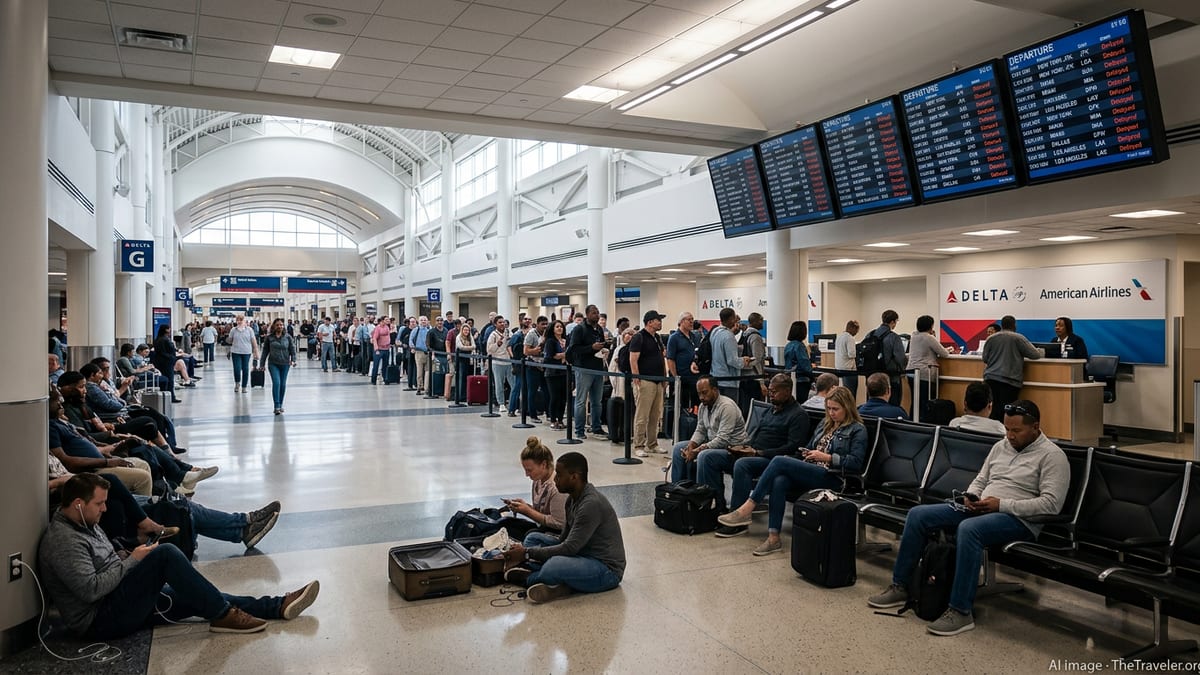
Operations at Hartsfield–Jackson Atlanta International Airport were severely disrupted on Sunday as a wave of 970 delays and 73 cancellations rippled across a network of flights linking the United States, Canada, Mexico, Europe, the Middle East and Latin America, leaving hundreds of passengers facing missed connections, overnight waits and rebookings.
Get the latest news straight to your inbox!
Major Hub Gridlocked by Systemwide Disruption
Hartsfield–Jackson Atlanta International Airport, the world’s busiest passenger hub and the primary base for Delta Air Lines, struggled to keep traffic moving as delays stacked up across domestic and international routes. Publicly available flight-tracking data pointed to rolling disruption affecting not only departures from Atlanta but also inbound services feeding the hub from across the United States and beyond.
The disruption hit a broad mix of carriers, including Delta and its regional affiliate Endeavor Air, as well as Southwest, American and Frontier. Together, these airlines operate a dense schedule of short-haul and long-haul services that connect Atlanta with cities throughout North America, as well as key long-haul gateways in Europe, the Middle East and Latin America. When operations falter at Atlanta, the effects can spread widely through airline networks.
On Sunday, that network effect became visible as scattered delays on early departures evolved into missed connection banks and aircraft out of position. Passengers on tightly timed itineraries found themselves stuck in Atlanta waiting for replacement aircraft or new routings, while others were diverted to alternate airports as capacity at the hub tightened.
Passengers Face Long Lines, Rebookings and Diversions
Reports from passengers on social media described crowded concourses, long lines at customer service desks and rebooking centers, and extended waits for information about new departure times. Travelers connecting from regional cities into Atlanta for onward flights to Canada, Mexico and Europe reported missed connections and overnight stays as later services filled up quickly.
Some flights were diverted away from Atlanta as the schedule backed up, pushing additional aircraft and passengers into nearby airports. Public posts from travelers indicated that airports in the broader region, including secondary hubs, briefly handled unusual volumes of traffic as aircraft waited out congestion in Atlanta before continuing to their destinations or returning to the hub once slots became available.
For many passengers, the most difficult part of the day was uncertainty. With departure times repeatedly revised in small increments, travelers were left weighing whether to stay at the gate, seek alternative routings, or leave the airport and attempt to return later. In some cases, delays stretched long enough that flights ultimately canceled after hours of rolling updates.
Wide Geographic Impact Across Three Continents
The disruption extended well beyond Georgia. According to publicly accessible tracking dashboards, the 970 delays and 73 cancellations linked to Atlanta affected itineraries spanning much of the Northern Hemisphere. Flights within the United States and Canada bore the brunt of the impact, especially routes feeding Delta and Southwest connection banks at Atlanta and other major hubs.
Internationally, a series of affected flights connected Atlanta to major European cities, including transatlantic services that typically depart in concentrated evening windows. Even modest delays of one or two hours on those departures risked missed connections in Europe for passengers bound for secondary cities, compounding the operational challenge for airlines and leaving travelers scrambling for hotel rooms and alternative seats.
Links to Latin America and the Caribbean were also drawn into the disruption as aircraft originating in or bound for Mexico and Central America circled back through the Atlanta hub. With many of these routes operating only once per day, a single cancellation or extended delay could translate into a full twenty-four hours of disruption for individual travelers attempting to reach their final destination.
Multiple Airlines Struggle With Knock-On Effects
The scale of the delays exposed how tightly interconnected airline operations are at a megahub like Atlanta. Delta, which operates the largest share of flights at Hartsfield–Jackson through both mainline and Endeavor-operated regional services, appeared to shoulder much of the burden as its banked connection model left little room to absorb unexpected disruption once early flights went off-schedule.
Other carriers also saw ripple effects. Southwest, which runs a point-to-point network with important service into Atlanta, contended with aircraft and crews arriving late from earlier sectors. For American and Frontier, which maintain smaller but growing presences at the airport, even a handful of cancellations could mean substantial disruption because spare aircraft and standby crews are less plentiful at a Delta-dominated hub.
Operationally, the airlines faced overlapping challenges: crews reaching duty time limits after extended delays, aircraft waiting for available gates, and congested taxiways as departures and arrivals tried to recover simultaneously. Publicly available historical data for Atlanta show that similar disruption events in recent years have taken many hours, and sometimes more than a day, to fully unwind once schedules fall significantly behind.
Outlook for Recovery and Advice for Travelers
By late Sunday, signs of gradual stabilization began to appear on tracking boards as some carriers trimmed schedules, consolidated lightly booked flights and repositioned aircraft to rebuild their networks. However, the sheer volume of delayed operations meant that residual impacts were likely to persist into Monday, especially for early-morning departures relying on aircraft and crews that were delayed overnight.
Travel analysts reviewing the situation noted that large hub disruptions of this scale often generate a second wave of delays as airlines work through backlogs of stranded passengers seeking seats on already busy flights. Even after weather or technical triggers resolve, the process of moving people and aircraft back into normal patterns can take several schedule cycles.
Publicly available guidance for travelers in such situations typically emphasizes proactive steps: monitoring flight status frequently, using mobile apps and self-service tools to pursue rebooking options, and considering nearby alternate airports when possible. With Atlanta functioning as a central node for travel across the Americas and transatlantic routes, disruptions on the scale of Sunday’s event can quickly cascade into a multinational problem, underscoring the vulnerability of global air travel to concentrated shocks at a single major hub.