


More news on this day
Hungarian ultra-low-cost carrier Wizz Air is set to become the first European budget airline to roll out high-speed Starlink Wi-Fi across its entire fleet from 2027, a move that analysts say could redefine what passengers expect from low-cost travel in Europe.
Get the latest news straight to your inbox!
Hungary’s Flagship Budget Airline Steps Into the High-Tech Spotlight
Publicly available information shows that Wizz Air, headquartered in Budapest and widely seen as Hungary’s flagship in the ultra-low-cost segment, has signed an agreement with SpaceX’s Starlink service to install satellite-based internet on all of its aircraft starting in 2027. Industry coverage indicates that the rollout would make Wizz Air the first European ultra-low-cost carrier to commit to a fleet-wide Starlink implementation at this scale.
The decision highlights how Hungary is increasingly associated not just with cheap fares and rapid network growth, but also with early adoption of aviation technology that was previously reserved for full-service airlines. Wizz Air operates an all-Airbus narrowbody fleet focused on short and medium haul routes across Europe, North Africa and parts of the Middle East, where onboard connectivity has historically been sparse or basic on low-cost carriers.
According to published reports, Wizz Air plans to use the Starlink system to deliver high-speed, low-latency connectivity that is closer to home broadband performance than to the patchy inflight Wi-Fi many travelers remember from earlier satellite generations. That capability, if delivered consistently, would allow passengers to stream video, join video calls and use data-heavy apps on some of Europe’s cheapest tickets.
Why Starlink on an Ultra-Low-Cost Airline Matters
Analysts note that the Starlink deal marks a strategic pivot in how ultra-low-cost airlines compete. Historically, carriers like Wizz Air have focused almost exclusively on price, dense seating and rapid turnarounds, leaving inflight entertainment and connectivity to legacy rivals. Recent coverage of the agreement suggests Wizz Air is betting that digital services are now central to customer expectations, even at the bottom end of the fare spectrum.
Starlink’s low-earth-orbit satellite network is designed to reduce latency and improve bandwidth compared with older geostationary systems. Aviation industry reports indicate that airlines using Starlink on long-haul fleets have reported significantly faster and more reliable connections than with many previous solutions. Bringing that standard of connectivity to a short-haul, ultra-low-cost product could narrow the perceived gap between budget and full-service flying for connected travelers.
For Hungary, the move strengthens the image of its leading airline as a technology-forward operator rather than solely a cost-driven one. Travel sector observers point out that Budapest has quietly become a nerve center for Wizz Air’s innovation push, from modern, fuel-efficient aircraft to experiments in digital ancillaries, and now to advanced connectivity.
Cost Pressures, Business Model Questions and Competitor Reactions
The decision to install high-speed Wi-Fi on an ultra-low-cost fleet raises questions about who will ultimately pay for the service. Coverage of the deal indicates that some rival budget carriers remain cautious, citing concerns that hardware, installation and bandwidth costs could erode their razor-thin margins. Reports on European low-cost competitors suggest that several are still modeling the impact of connectivity on ticket prices, turnaround times and ancillary revenue.
Market commentary indicates that Wizz Air appears to be taking a different view, treating connectivity as a potential revenue driver and brand differentiator rather than a pure cost center. Depending on how pricing is structured, the airline could bundle basic access into certain fare types, charge per flight, or experiment with subscriptions, all while using the onboard portal to promote seat upgrades, duty free sales and destination services.
Some aviation analysts also point to operational considerations. Installing Starlink hardware across a large narrowbody fleet requires coordinated downtime, engineering resources and certification. However, recent experience at major network carriers that have begun Starlink rollouts suggests that installation can often be synchronized with scheduled maintenance checks, limiting disruption to flying schedules.
What Passengers Can Expect on Future Wizz Air Flights
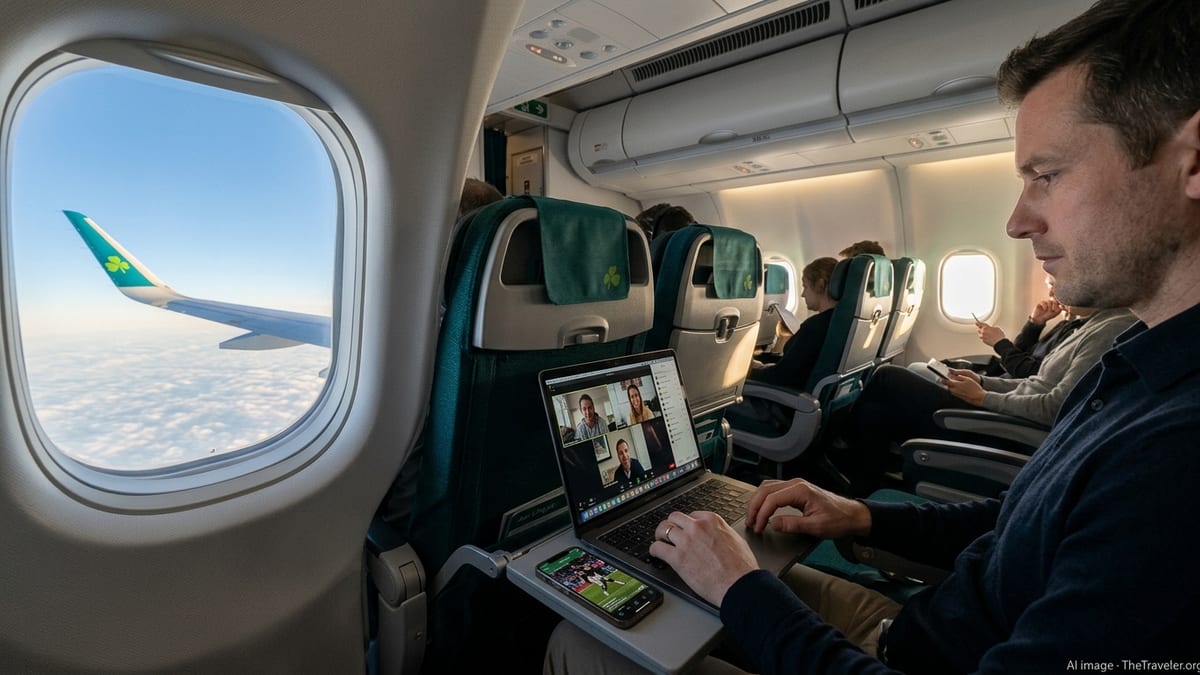
For travelers across Wizz Air’s network, the most visible change from 2027 will be the ability to connect personal devices to a fast onboard network that behaves more like a ground-based broadband service. Industry descriptions of Starlink’s aviation product highlight features such as near-instant page loading, smooth video streaming and the capacity to support an entire cabin of users simultaneously on popular single-aisle aircraft.
On short European routes, connectivity could reshape how passengers use their flight time, turning a two-hour hop into an extension of the office for business travelers or a streaming session for leisure passengers. Travel commentators suggest that this aligns with broader trends in which even budget travelers expect to remain continuously connected, particularly on cross-border trips where roaming costs can still be a concern.
There is also potential for Wizz Air to integrate connectivity with its broader digital ecosystem. Public information on the airline’s recent initiatives references expanding mobile app functionality, dynamic ancillaries and targeted offers. With reliable Wi-Fi onboard, that ecosystem could extend seamlessly from booking to boarding to arrival, reinforcing Wizz Air’s positioning as both a low-cost and high-tech travel option in Europe.
Europe’s Low-Cost Connectivity Race Enters a New Phase
While a number of full-service and hybrid European carriers have already signed connectivity agreements with Starlink and other providers, reports indicate that Wizz Air’s decision is a milestone for the ultra-low-cost end of the market. The move raises pressure on rivals that have so far delayed similar investments, particularly in regions where passengers can now choose between connected low-cost flights and offline alternatives at comparable fares.
Industry observers note that the competitive landscape is likely to evolve quickly. If Wizz Air’s Starlink deployment proves popular and financially sustainable, other low-cost carriers may feel compelled to accelerate their own inflight connectivity plans, whether with Starlink or with competing satellite providers. That dynamic could make Hungary, through Wizz Air’s leadership, a reference point in how digital services are integrated into the lowest fare categories.
For now, the announcement signals a shift in what “affordable” travel means in Europe. Instead of trading comfort and digital access for the lowest possible fare, passengers booking some of the continent’s cheapest tickets may soon find that high-speed internet is part of the package, placing Hungary and its homegrown ultra-low-cost carrier at the forefront of a new, high-tech era in budget aviation.